IRON MAIDEN - Somewhere in Time 12" Vinyl LP Album

- German and Dutch Release

"Somewhere in Time" is the sixth studio album by British heavy metal band Iron Maiden, released on 29 September 1986 on EMI in Europe and its sister label Capitol Records in the US (it was re-released by Sanctuary/Columbia Records in the US in 1998). The studio follow-up to the hugely successful Powerslave/Live After Death pair, it was the first Iron Maiden album to feature guitar synthesizers. Bruce Dickinson's song material was rejected in favour of the songs of guitarist Adrian Smith, who wrote the bulk of the songs identified with the album (including the singles "Wasted Years" and "Stranger in a Strange Land")


Album Front Cover Photo of IRON MAIDEN Somewhere in Time

Caught Somewhere in Time: Iron Maiden's Futuristic Odyssey
Album Description:

In the heart of the 1980s, amidst the neon glow of synthesizers and the rising tide of technological innovation, Iron Maiden embarked on a journey through time and space. Their 1986 masterpiece, "Somewhere in Time," captured a moment of musical exploration and conceptual ambition, leaving an enduring mark on the heavy metal landscape. The German and Dutch releases of the 12" vinyl LP stand as sonic monuments to this pivotal era.

Historical Context: A Brave New World

The mid-1980s marked a turning point for heavy metal. Bands were experimenting with new sounds and technologies, pushing the boundaries of the genre. Iron Maiden, always at the forefront of innovation, embraced this spirit of exploration. "Somewhere in Time" reflected a world on the cusp of change, where the past and future collided in a whirlwind of possibilities.

Musical Exploration: A Synthesized Symphony

Musically, "Somewhere in Time" was a departure from Iron Maiden's earlier works. The album incorporated guitar synthesizers, adding a futuristic sheen to their signature sound. Tracks like "Wasted Years" and "Stranger in a Strange Land" blended soaring melodies with intricate guitar harmonies, creating a unique sonic landscape. The album's progressive elements, coupled with Bruce Dickinson's powerful vocals, resulted in a sound that was both familiar and groundbreaking.

Genre-Bending Fusion: Heavy Metal Meets Science Fiction

"Somewhere in Time" transcended the boundaries of heavy metal, incorporating elements of science fiction and progressive rock. The album's lyrics delved into themes of time travel, technological advancement, and the human condition. Songs like "Caught Somewhere in Time" and "Heaven Can Wait" explored existential questions, while "Alexander the Great" offered a historical epic with a modern twist.

Controversies: A Clash of Visions

The album's experimental nature was not without its critics. Some purists felt that Iron Maiden had strayed too far from their roots, while others embraced the band's willingness to evolve. However, history has been kind to "Somewhere in Time," recognizing it as a bold and visionary work that expanded the horizons of heavy metal.

Production Team: Masters of their Craft

The album's production team, led by Martin Birch, played a crucial role in shaping its sound. Birch, known for his work with Deep Purple and Black Sabbath, brought his expertise to the project, ensuring that the album's sonic tapestry was both powerful and nuanced.

Recording Studio: A Creative Haven

"Somewhere in Time" was recorded at Compass Point Studios in Nassau, Bahamas, and Wisseloord Studios in Hilversum, Netherlands. These studios provided the band with the creative space and technical resources they needed to bring their ambitious vision to life.
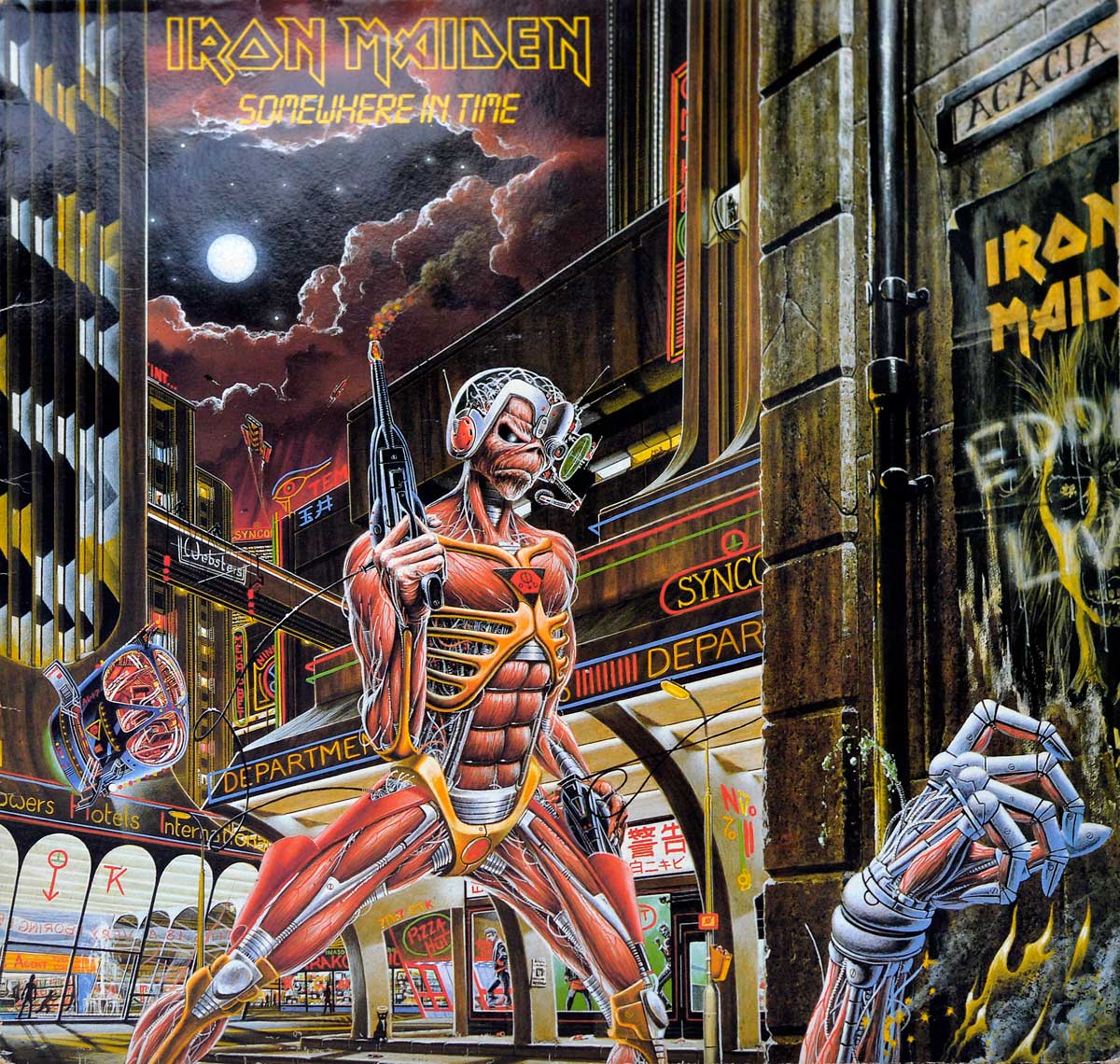
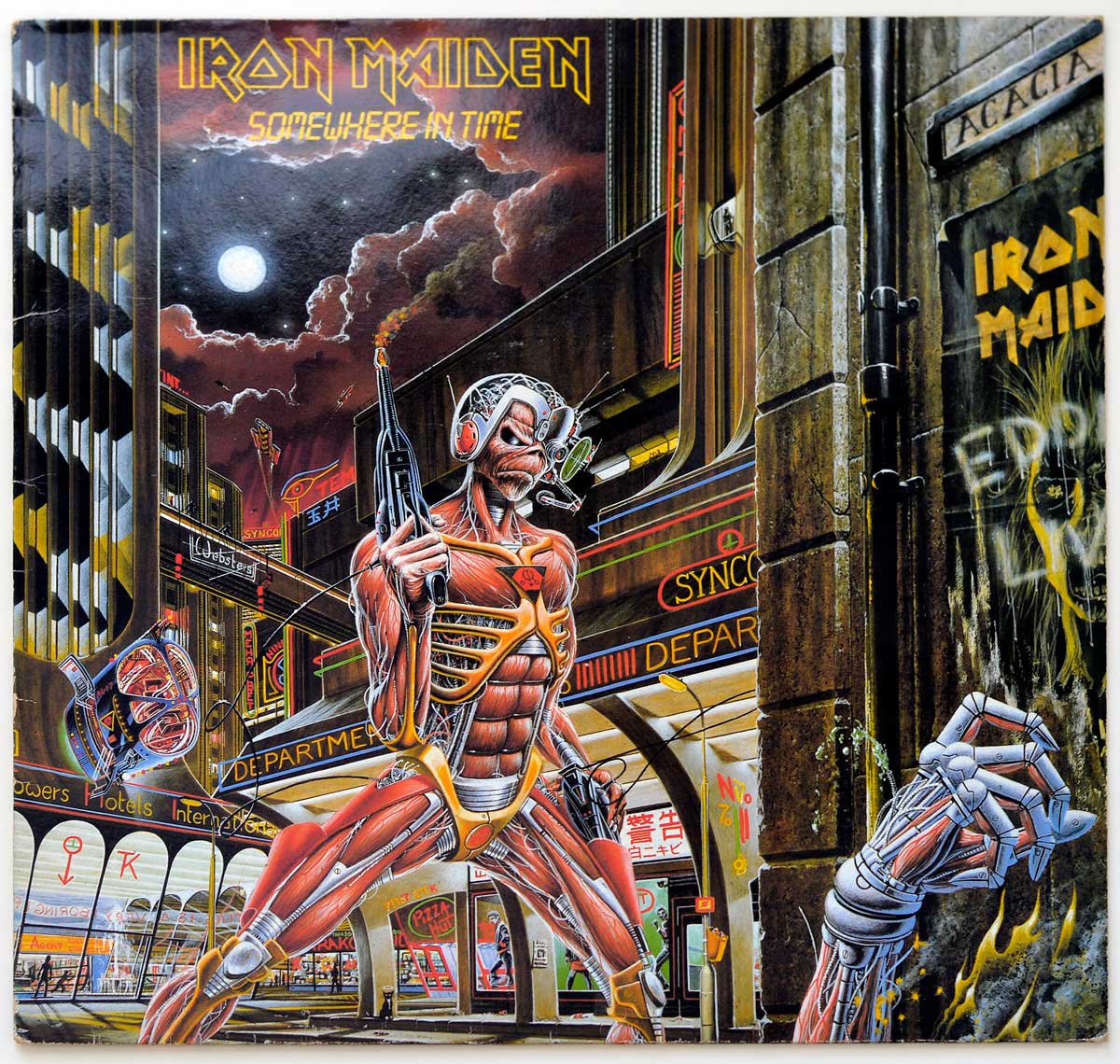
Essential Album Information For: IRON MAIDEN Somewhere in Time

Music Genre:

NWOBHM Heavy Metal

Label & Catalognr:

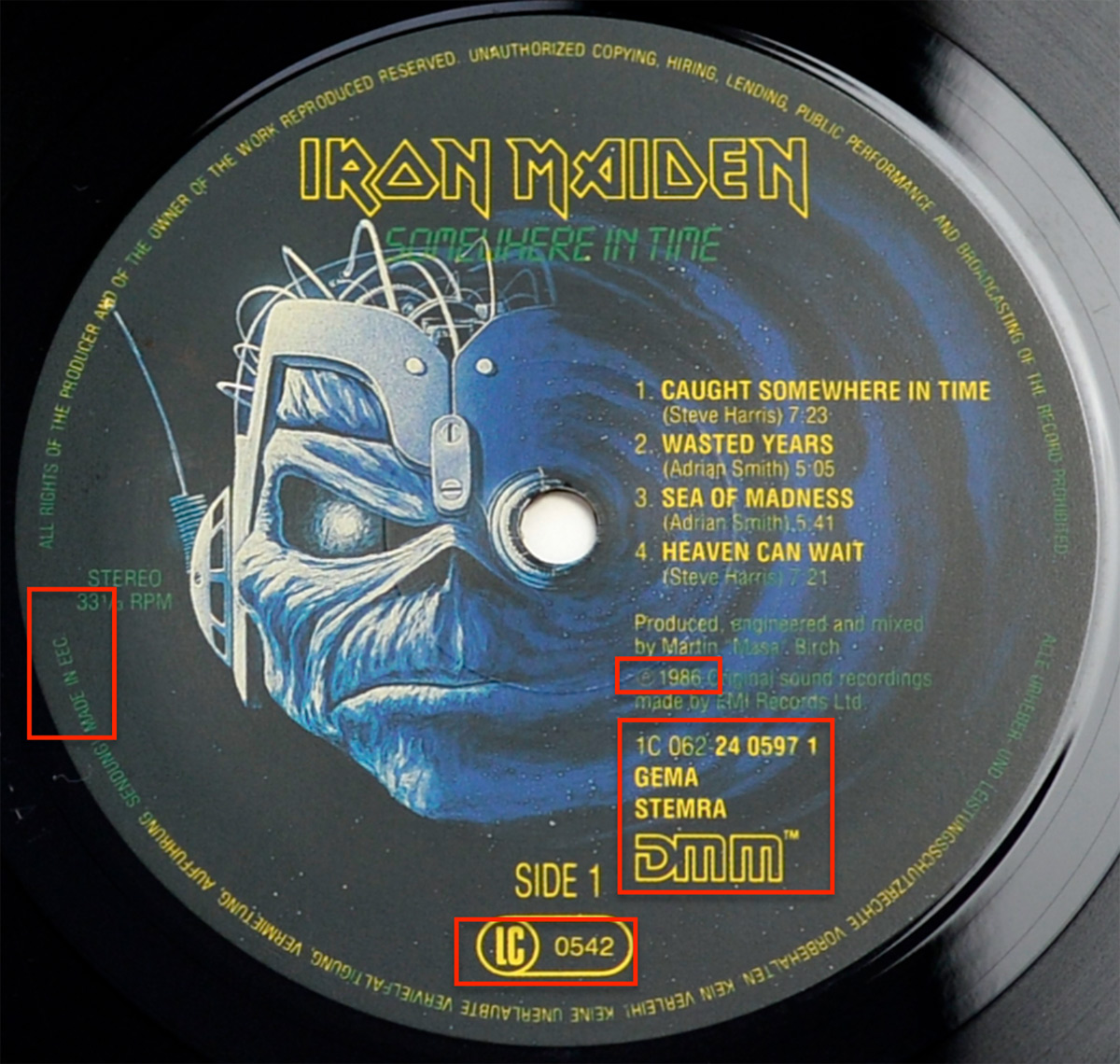
  EMI 1C 062-24 0597   , GEMA & STEMRA, LC 0542

Media Format:

Record Format: 12" Vinyl Stereo Gramophone Record
Total Album (Cover+Record) weight: 230 gram  

Year & Country:

1986 Made in EEC

IRON MAIDEN Somewhere in Time Production & Recording Information

Album Packaging

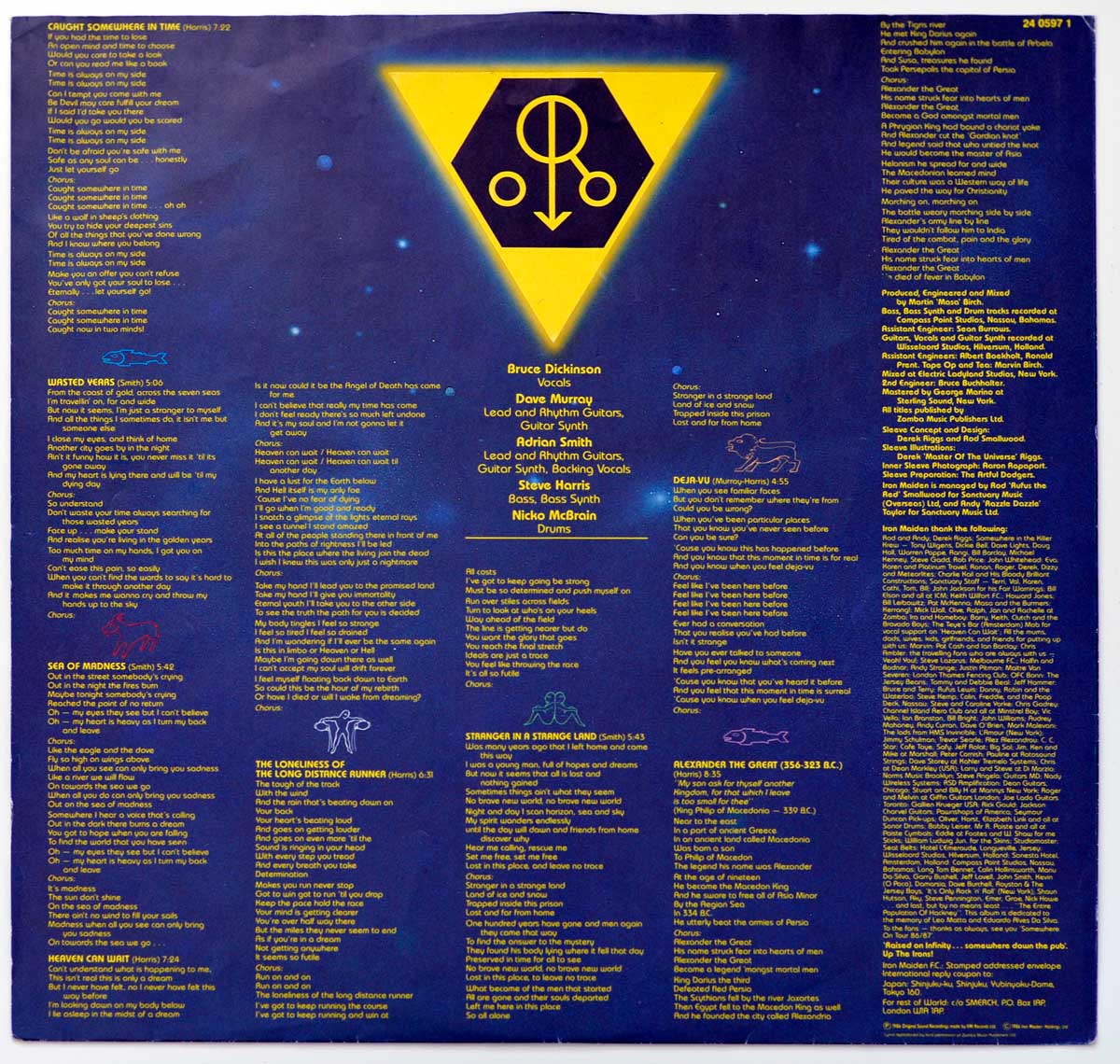
This album "IRON MAIDEN Somewhere in Time" includes the original custom inner sleeve with album details, complete lyrics of all songs by and artwork/photos

Producers:

Martin 'Mesa' Birch - Producer

  • Martin Birch – Producer, Sound Engineer

    Treat Martin Birch like the invisible band member: you don’t see him on the sleeve, but you sure hear him in the punch, the bite, and that “turn it up” clarity. His run is legendary—starting as an engineer in the late 1960s, sharpening the sound with Deep Purple in the early 1970s, helping Rainbow hit that dramatic hard-rock stride in the mid-to-late 1970s, powering the Dio-era Black Sabbath in 1980–1981, then basically going exclusive with Iron Maiden from 1981 to 1992 before he bowed out.

    Martin Birch, to my ears, is the guy who made heavy records feel both massive and surgical—tight low end, bright attack, and a midrange that cuts like fresh steel without turning into ear-pain. He built long relationships instead of quick drive-bys: Deep Purple, Rainbow, Whitesnake, Black Sabbath, and then that famous Iron Maiden stretch from "Killers" (1981) through "Fear of the Dark" (1992), after which he retired. That’s not just a resume, that’s a whole era with his fingerprints on it.

  • Iron Maiden is managed by Rod 'Rufus the Red' Smallwood for Sanctuary Music (Overseas) Ltd, and Andy 'Rzzle Dozzle' Taylor for Sanctuary Music Ltd

    Sound & Recording Engineers:

    Martin 'Mesa' Birch - Sound Engineer, Tape Op Operator

  • Martin Birch – Producer, Sound Engineer

    Treat Martin Birch like the invisible band member: you don’t see him on the sleeve, but you sure hear him in the punch, the bite, and that “turn it up” clarity. His run is legendary—starting as an engineer in the late 1960s, sharpening the sound with Deep Purple in the early 1970s, helping Rainbow hit that dramatic hard-rock stride in the mid-to-late 1970s, powering the Dio-era Black Sabbath in 1980–1981, then basically going exclusive with Iron Maiden from 1981 to 1992 before he bowed out.

    Martin Birch, to my ears, is the guy who made heavy records feel both massive and surgical—tight low end, bright attack, and a midrange that cuts like fresh steel without turning into ear-pain. He built long relationships instead of quick drive-bys: Deep Purple, Rainbow, Whitesnake, Black Sabbath, and then that famous Iron Maiden stretch from "Killers" (1981) through "Fear of the Dark" (1992), after which he retired. That’s not just a resume, that’s a whole era with his fingerprints on it.

  • Sean Burrows - Assistent Sound Engineer

    Albert Boekholt - Assistent Sound Engineer

    Ronald Prent - Assistent Sound Engineer

    Bruce Buchhalter - Second Sound Engineer

    George Marino - Mastering Engineer

  • George Marino – Mastering Engineer

    When my site brain goes full 1980s metal mode, his name keeps showing up like a hidden signature in the dead wax.

    George Marino is one of those behind-the-glass legends who made heavy music feel larger than the room it was playing in. Before the mastering console became his throne, he was a Bronx guitarist doing the NYC band grind in the 1960s with groups like The Chancellors and The New Sounds Ltd. Then he went pro for real: starting at Capitol Studios in New York (1967), and eventually becoming a long-running force at Sterling Sound (from 1973 onward). For a collector like me—living in that sweet spot where 1980s heavy metal, hard rock, and a dash of prog-minded ambition collide—Marino’s credits read like a stack of essential sleeves: Holy Diver (Dio), Tooth and Nail (Dokken), Stay Hard (Raven), Master of Puppets (Metallica), Somewhere in Time (Iron Maiden), Among the Living (Anthrax), Appetite for Destruction (Guns N’ Roses), Slippery When Wet (Bon Jovi), and Blow Up Your Video (AC/DC). That’s the kind of resume that doesn’t just “master” records—it weaponizes them, but with taste. George Marino Wiki

  • Recording Location:

    Boss, Boss Synth and Drum trucks recorded at Compass Point Studios, Nassau, Bahamas.

    • Compass Point Studios (Bahamas) Compass Point Studios, founded in 1977 by Chris Blackwell, the visionary owner of Island Records, stands as a pivotal and iconic institution in the realm of music production, particularly during the vibrant decades of the 1970s and 1980s. Nestled in the picturesque Bahamas, just outside Nassau, this studio emerged as a tropical oasis that not only offered a breathtaking setting but also fostered a distinctive creative atmosphere that left an indelible mark on the global music scene. The 1970s and 1980s witnessed a plethora of influential albums recorded at Compass Point Studios, spanning various genres such as rock, reggae, funk, and pop. Artists like Bob Marley, Grace Jones, Iron Maiden Talking Heads, and The Rolling Stones all left their mark on the studio, contributing to its legacy as a hub of musical innovation.

    Guitars, Vocals and Guitar Synth recorded of Wisseloord Studios, Hilversum, Holland.

    This album was Mixed at Electric Ladyland Studios, New York.

    This album was mastered at Sterling Sound, New York City

    Album Cover Design & Artwork:

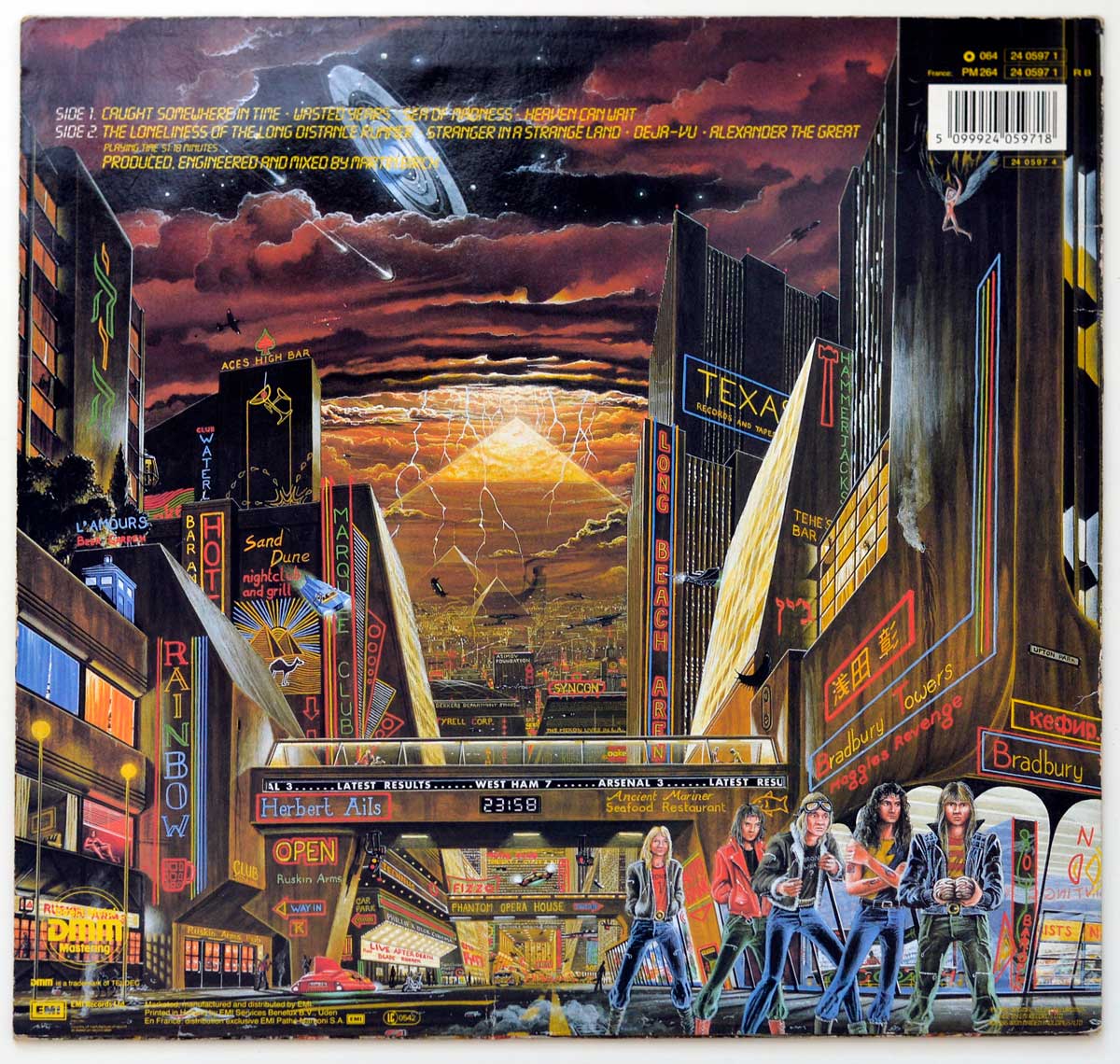
    Derek Riggs - Sleeve Concept and Design

  • Derek Riggs – Illustrator, Cover Artist Derek Riggs is the artist who gave Iron Maiden its visual soul by creating Eddie, one of the most recognizable mascots in heavy metal history. Since the band’s 1980 debut, his artwork fused sci-fi, horror, and dark fantasy into covers that were as confrontational and imaginative as the music itself. Riggs’ paintings didn’t just decorate records, they built a world that became inseparable from Maiden’s identity.
  • Rod Smallwood - Sleeve Concept and Design

    Derek 'Master Of The Universe' Riggs - Sleeve Illustrations

    The Artful Dodgers - Sleeve Preparations

    The Artful Dodgers were a Hertfordshire-based graphic design company, fronted by Keith Peacock, Neil Smith, and Michael Faulkner. Known for their sharp, distinctive visual style in the 1980s, they collaborated with major rock and metal acts, creating memorable sleeve layouts and packaging that complemented the dramatic artwork of illustrators like Derek Riggs for Iron Maiden.

    Photography:

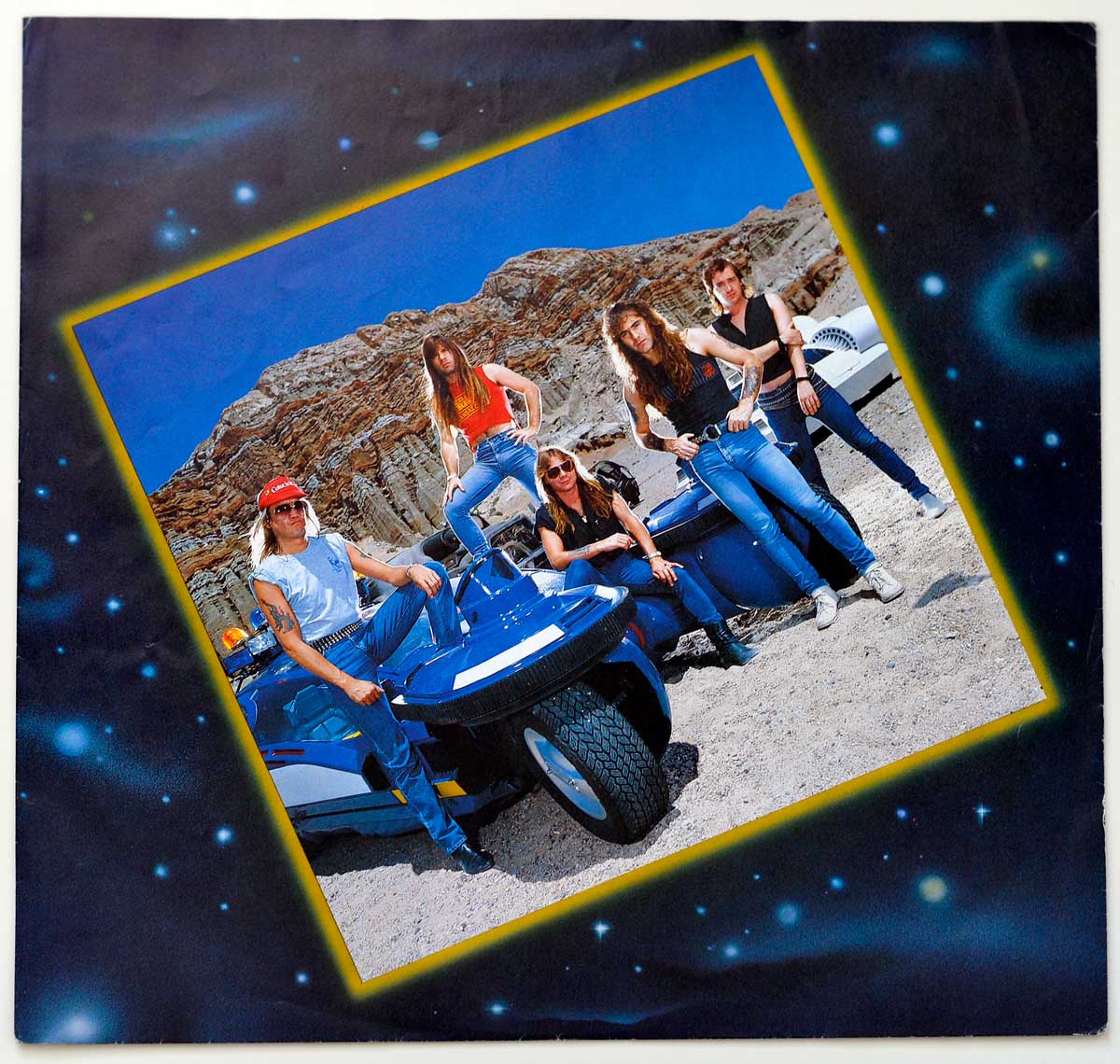
    Aaron Rapoport - Photographer.

    Aaron Rapoport is an American photographer renowned for his striking portraits of musicians and bands, capturing the raw energy of rock and heavy metal in the 1980s. His images defined the visual identity of many iconic artists, blending atmosphere and personality with precision.


    Musicians:
    • Bruce Dickinson
    • Bruce Dickinson – Vocals Bruce Dickinson, born August 1958, is the powerhouse vocalist who propelled Iron Maiden to legendary status. Joining the band in 1981, his operatic range, sharp phrasing, and commanding stage presence reshaped the group’s sound and ambition, defining era-classic albums like The Number of the Beast and Powerslave. Beyond Maiden, he built a parallel career as a solo artist, commercial pilot, author, and broadcaster, giving his legacy a reach that stretches well beyond heavy metal.
    • Dave Murray
    • Dave Murray – Guitar

      Maiden’s calm killer: smooth leads, twin-guitar harmony for days, and that melodic bite that makes the “gallop” feel cinematic instead of chaotic.

      Dave Murray (born 23 December 1956, Edmonton, Middlesex, England) is one of the defining lead guitar voices of heavy metal, and in my book he’s the melodic “second spine” of Iron Maiden. His timeline with the band starts early: joining in 1976, getting briefly pushed out in 1977, then returning in 1978 and staying locked in ever since—making him one of the longest-serving members in the whole Maiden saga. During that 1977 gap he spent around six months with Urchin (Adrian Smith’s band), which is a fun little historical glitch in the matrix if you like your Maiden lore messy and human. Beyond the main band, his most notable “outside the mothership” credit is the all-star charity metal project Hear ’n Aid (1985), because apparently even guitar lifers sometimes leave the bunker to do side quests. Dave Murray Wiki

    • Adrian Smith
    • Adrian Smith – Guitarist, Songwriter Adrian Smith is one of those players I always associate with Iron Maiden’s classic sound and its later revival. Joining in 1980, leaving in 1990, and returning in 1999, his melodic solos and sharp songwriting helped define albums from The Number of the Beast to Brave New World and beyond.
    • Steve Harris
    • Steve Harris – Bass Guitar, Songwriter

      Iron Maiden’s engine room: galloping bass lines, history-nerd lyrics, and “captain of the ship” energy baked into every riff.

      Steve Harris (born 12 March 1956, Leytonstone, England) is the rare bassist who doesn’t just hold the floor—he draws the whole blueprint. In my book, he’s the founder and primary songwriter who’s kept Iron Maiden on its rails from 1975–present, with that instantly recognizable “gallop” driving huge chunks of the catalogue. The pre-Maiden grind matters too: first band days in Influence/Gypsy’s Kiss (1973–1974, including a documented gig run in 1974), then the older, blues-leaning Smiler period (1974–1975) where his more ambitious writing basically forced the next step: forming Maiden. Outside the mothership, he’s fronted his own hard-rock outlet British Lion (2012–present), a project that grew out of connections going back to the early 1990s and finally hit the world as his solo debut in 2012.

    • Nicko McBrain
    • Nicko McBrain – Drums Nicko McBrain, born 1952, is the powerhouse drummer who has driven Iron Maiden’s thunderous engine since joining in 1982. His playing combines brute force with swing and pinpoint timing, giving albums like The Number of the Beast and Powerslave their unstoppable momentum. Before Maiden, his work with Trust and the Pat Travers Band sharpened his style, culminating in a career that redefined metal drumming.
    Tracklisting Side One:
    1. Caught somewhere in Time
    2. Wasted Years
    3. Sea of Madness
    4. Heaven can Wait
    Tracklisting Side Two:
    1. The Loneliness of the long distance runner
    2. Stranger in a Strange Land
    3. Deja-Vu
    4. Alexander the Great

    Front Cover Photo Of IRON MAIDEN Somewhere in Time
    Front Cover Photo Of IRON MAIDEN Somewhere in Time

    Note: The images on this page are photos of the actual album. Slight differences in color may exist due to the use of the camera's flash. Images can be zoomed in/out ( eg pinch with your fingers on a tablet or smartphone )

    Photo Of The Back Cover IRON MAIDEN Somewhere in Time
    Photo of album back cover IRON MAIDEN Somewhere in Time
    Photo of the custom inner sleeve IRON MAIDEN Somewhere in Time
    Photo of album back cover IRON MAIDEN Somewhere in Time
    Photo of the custom inner sleeve IRON MAIDEN Somewhere in Time
    Photo of album back cover IRON MAIDEN Somewhere in Time
    Close up of IRON MAIDEN Somewhere in Time record's label
    Photo of record label of IRON MAIDEN Somewhere in Time

    IRON MAIDEN - Vinyl Records Discography Home Page