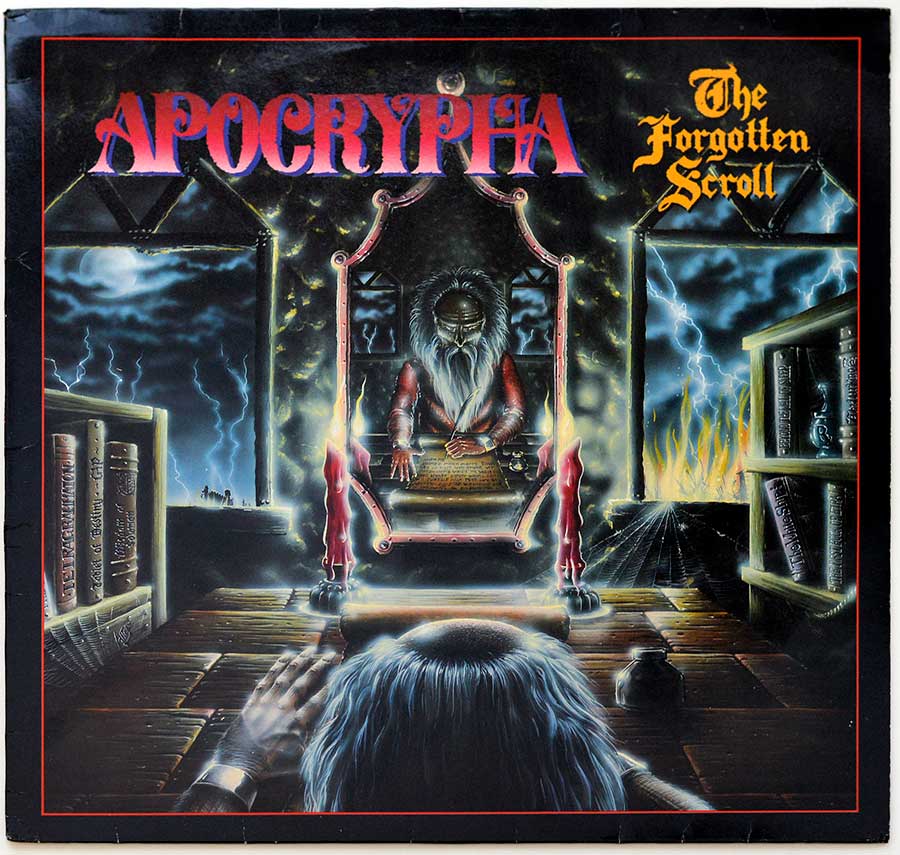
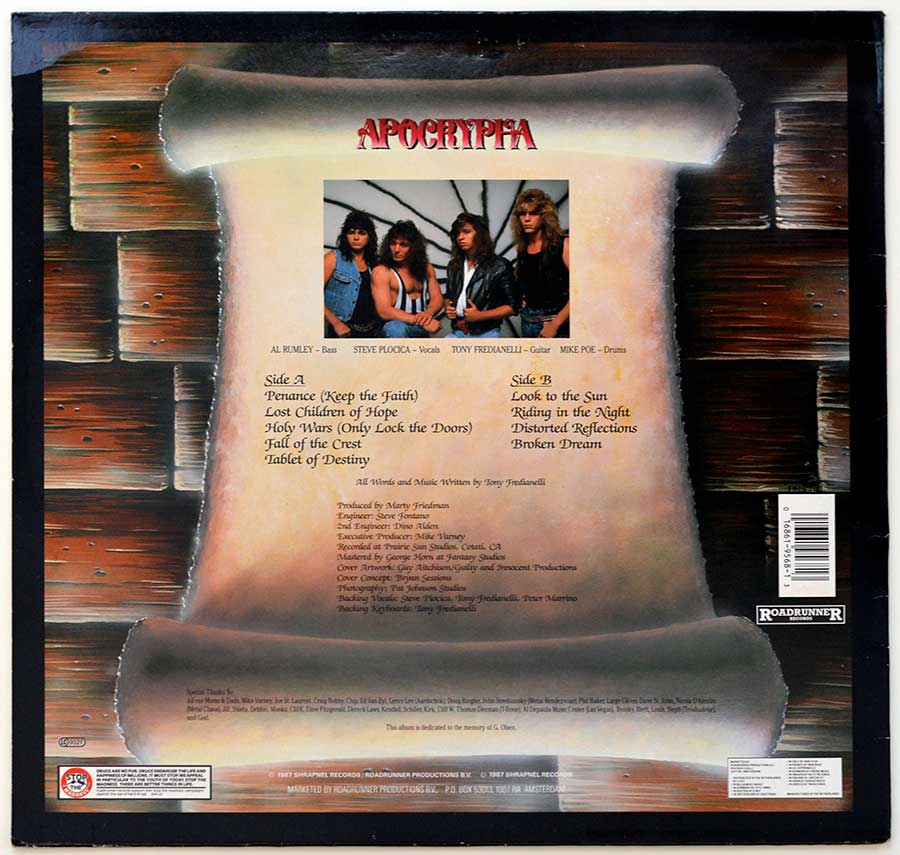
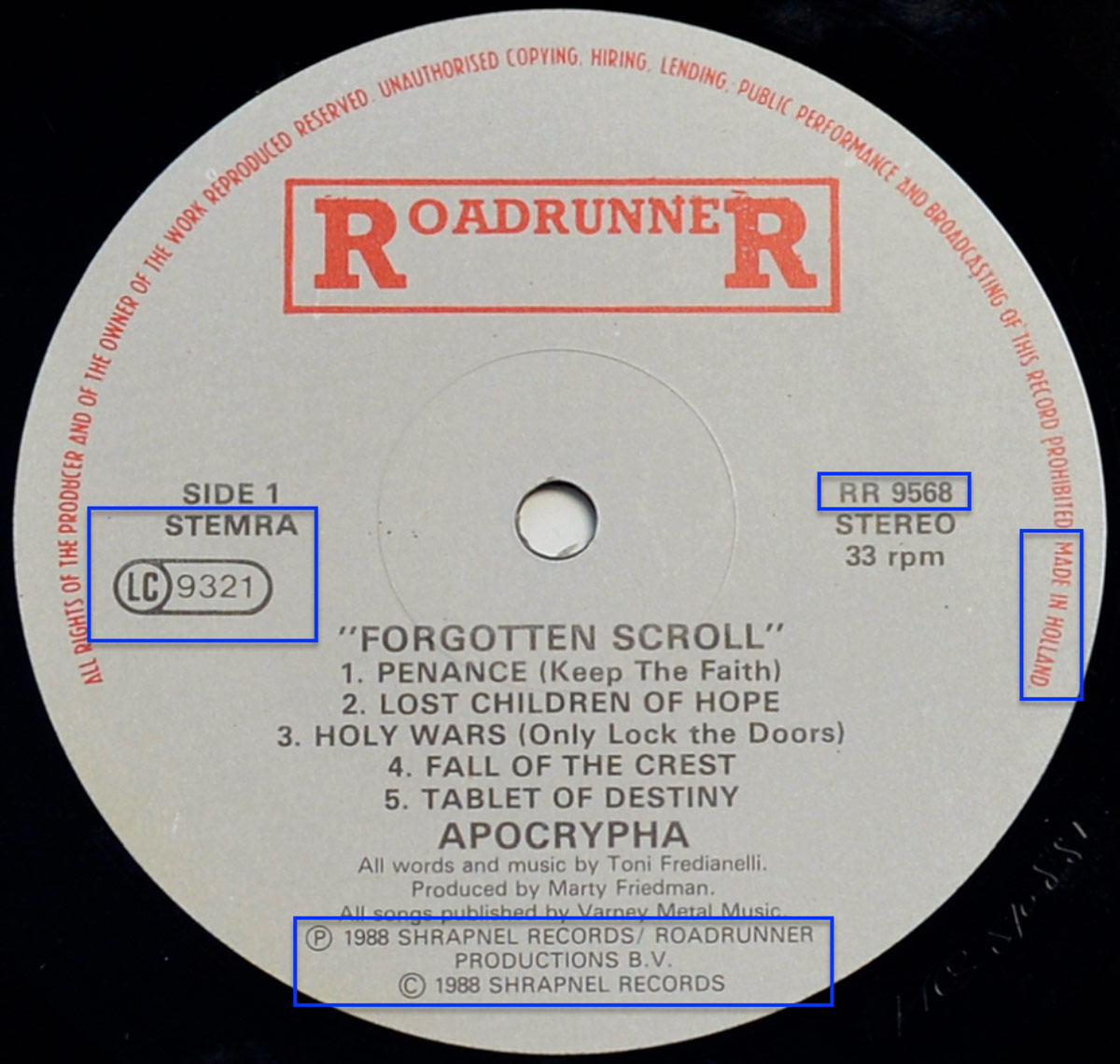
Released in 1987 on Shrapnel Records, "The Forgotten Scroll" is the debut studio album from the American heavy metal band Apocrypha. Hailing from Las Vegas, Nevada, the band emerged during a time when power metal and speed metal were gaining momentum in the United States. While not achieving mainstream success, the album solidified Apocrypha's place as a significant contributor to the American power/speed metal scene.
Historical Context and Genre
"The Forgotten Scroll" arrived at a time when power metal and speed metal were flourishing in the underground metal scene. Bands like Helloween, Running Wild, and Riot were leading the charge, inspiring a new generation of American bands to embrace the genre's fast tempos, melodic vocals, and epic song structures. Apocrypha's debut album captured the essence of this movement, with its blend of technical proficiency, aggressive energy, and melodic sensibilities.
The album's music is a potent mix of power metal and speed metal, with elements of thrash metal and traditional heavy metal. The vocals are soaring and powerful, the guitars are fast and intricate, and the rhythm section is tight and energetic. The band's sound is characterized by its complex song structures, intricate guitar solos, and powerful drumming.
Musical Exploration
"The Forgotten Scroll" showcases Apocrypha's songwriting talent and their ability to craft memorable heavy metal anthems. Tracks like "Penance (Keep the Faith)," "Lost Children of Hope," and "Holy Wars (Only Lock the Doors)" are full of energy and passion, while "Fall of the Crest" and "Tablet of Destiny" showcase the band's more melodic and atmospheric side. The album's diversity reflects the band's willingness to experiment within the power/speed metal framework, creating a sound that was both familiar and distinctive.
Lyrically, the album explores themes of fantasy, mythology, and social commentary. The lyrics are often poetic and evocative, creating a sense of epic storytelling that complements the music's grandeur.
Production and Recording
The album was recorded at Prairie Sun Recording Studios in Cotati, California, and mastered at Fantasy Studios in Berkeley, California. The production team, led by Marty Friedman (ex-Megadeth), captured the band's raw energy while ensuring a polished sound that met the standards of the time.