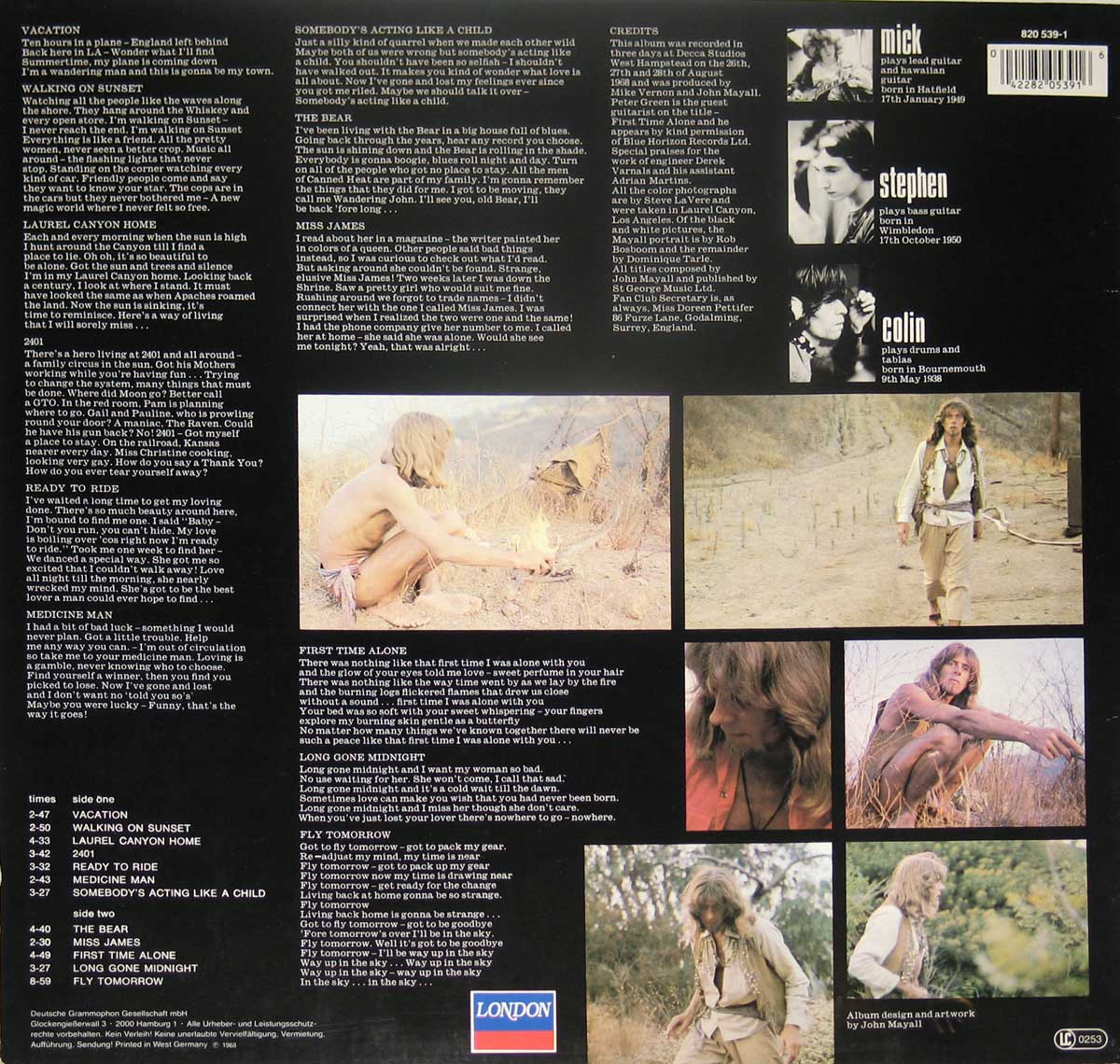
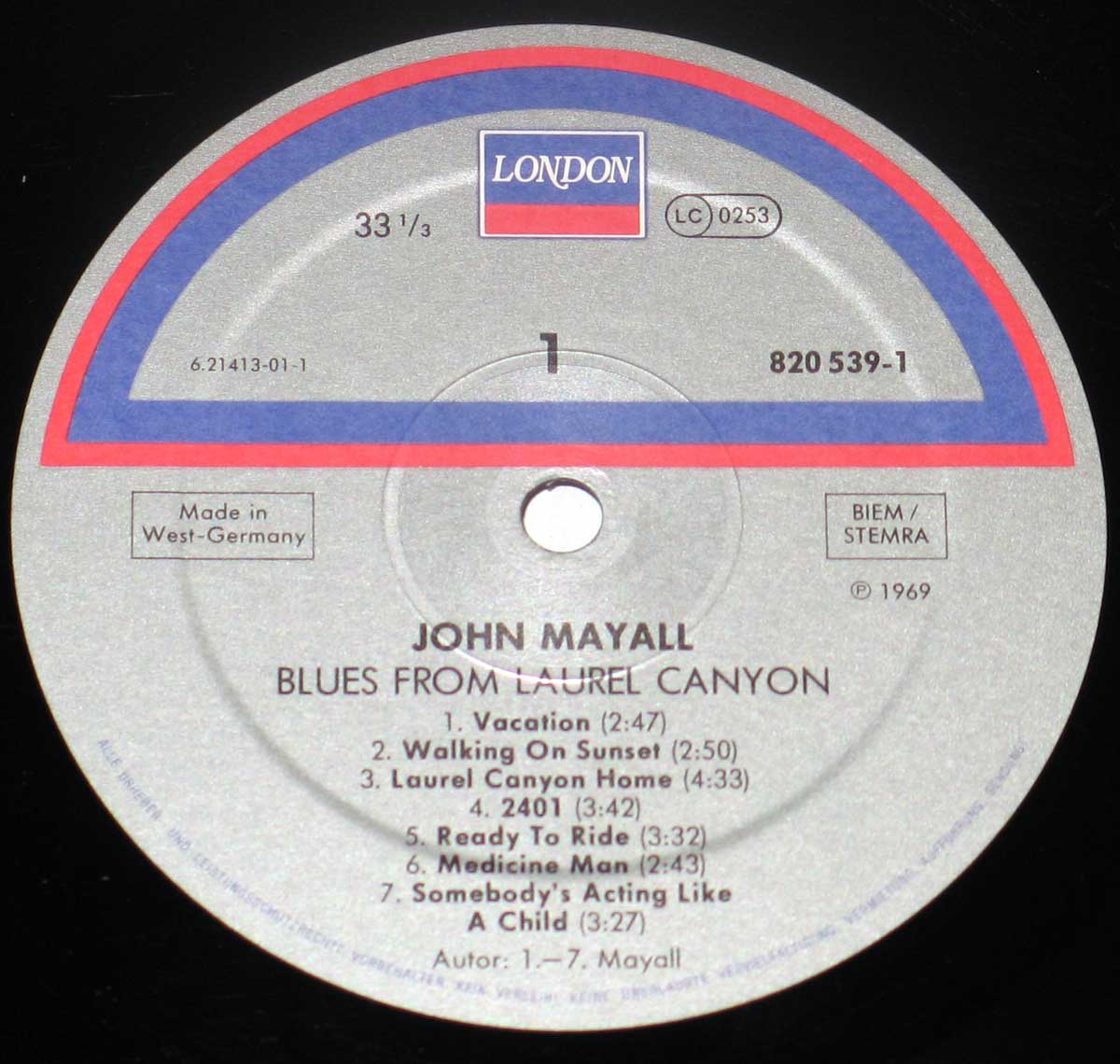
- 1969 West-German Release
John Mayall's "Blues from Laurel Canyon" marks a pivotal shift for the British blues icon. Recorded in Hollywood in 1968, the album captures Mayall embracing the laid-back, psychedelic Laurel Canyon scene while maintaining his blues roots. The result is a unique blend of electric blues, acoustic guitar, and improvisational jams. The album's lyrics reflect Mayall's experiences in Laurel Canyon, making it a personal and evocative musical journey. Standout tracks include the title track, "The Bear," and "Room to Move." "Blues from Laurel Canyon" showcases Mayall's willingness to evolve and experiment, solidifying his place as a blues innovator.
I always hear this album as John Mayall deliberately stepping off the well-lit British blues stage and walking straight into the California sun. "Blues From Laurel Canyon" captures a moment where Mayall stops being the curator of other people’s guitar heroes and becomes the narrator of his own life, mid-transition, mid-culture shock, mid-reinvention. It’s not about proving anything anymore; it’s about documenting a headspace.
By 1968, Mayall had already built and burned several legendary lineups, and the Bluesbreakers era had run its course. Laurel Canyon offered distance from the British blues treadmill and freedom from expectations. This record is what happens when a restless mind relocates, listens more than it talks, and starts writing songs that feel lived in rather than designed.
The late sixties were loud, political, psychedelic, and slightly unhinged, especially in California. Laurel Canyon wasn’t just a place, it was a mood board of long nights, open doors, and musicians borrowing ideas from each other without asking permission. Against that backdrop, Mayall’s blues loosened up, absorbed the West Coast air, and stopped clinging to tradition for safety.
Recorded quickly and without overthinking, the album feels like a journal set to tape. Mayall surrounds himself with musicians who could listen as well as play, letting songs stretch when they needed space and pull back when the story mattered more than the solo. The production stays grounded, never flashy, because the point was clarity, not spectacle :contentReference[oaicite:0]{index=0}.
This isn’t Chicago blues cosplay and it isn’t full psychedelic drift either. Acoustic guitars sit comfortably next to electric runs, rhythms sway instead of punch, and Mayall’s voice sounds conversational, almost relaxed. Tracks like the title piece and “The Bear” feel like postcards written at 3 a.m., equal parts affection and observation.
Compared to heavier British blues records of the same period, this album refuses to shout. While others were turning amps up and digging deeper into volume wars, Mayall leaned into narrative and atmosphere. It shares DNA with contemporaries exploring roots and reflection, but it stays unmistakably his, grounded in blues discipline.
Some listeners wanted the old battle-hardened Bluesbreakers sound and didn’t get it. A few called it soft, others called it unfocused. Those reactions miss the point. This was never meant to be a crowd-pleaser; it was a personal snapshot, and snapshots don’t owe anyone drama.
What stands out is the lack of ego wrestling. No one is trying to steal the frame. The playing supports the songs instead of competing with them, which gives the album its unusual calm. It feels collaborative in a human way, like musicians trusting each other to leave space.
At release, it confused some fans and quietly impressed others. Decades later, it reads like a hinge in Mayall’s career, the point where exploration replaced expectation. It hasn’t aged into nostalgia; it’s aged into honesty.
Every time I return to "Blues From Laurel Canyon," it smells faintly of warm vinyl, late nights, and borrowed sunshine. It’s not the loudest Mayall record, not the flashiest, and definitely not the safest. That’s exactly why it still matters.
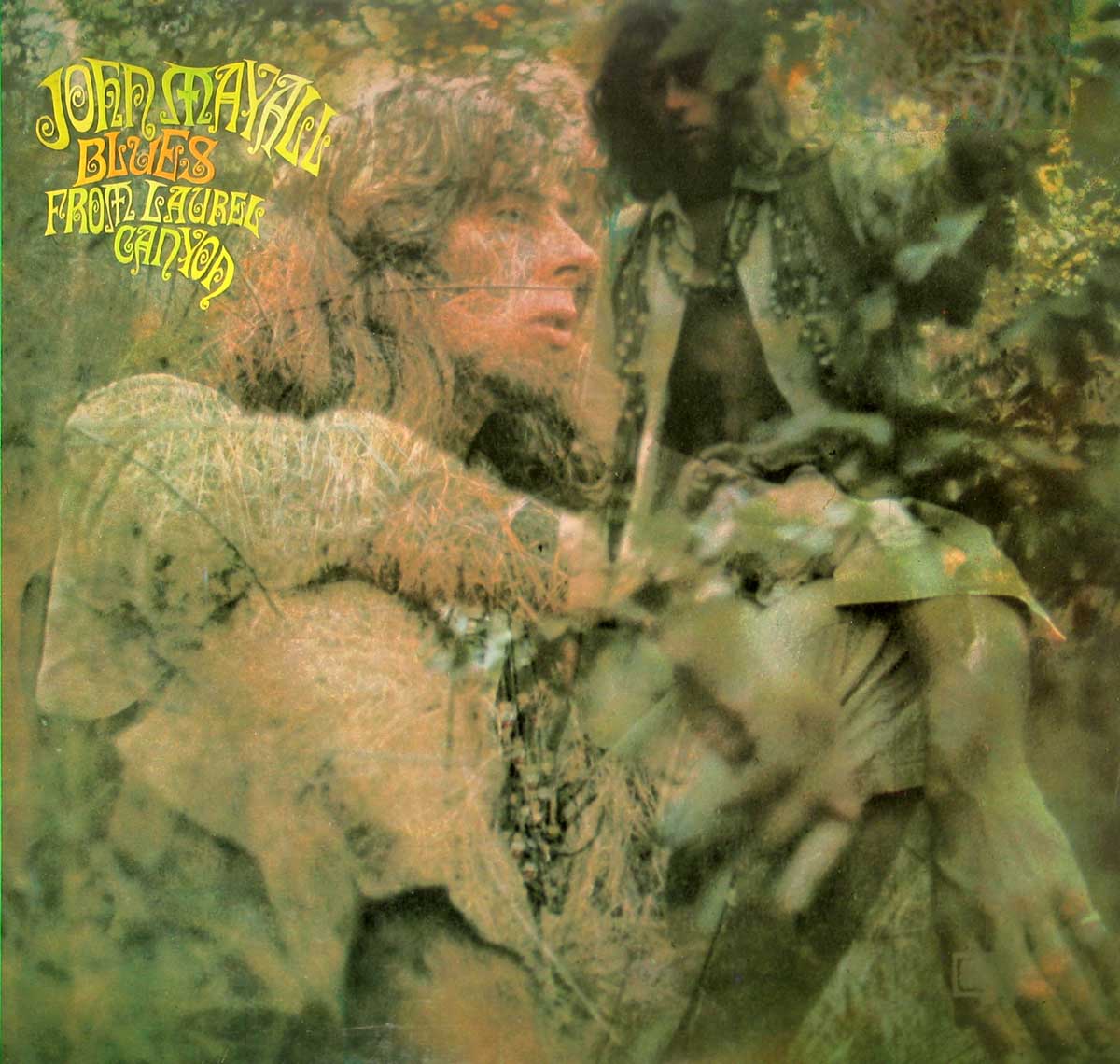
Blues
London 820 539
Record Format: 12" Vinyl Stereo Gramophone Record
Total Album (Cover+Record) weight: 230 gram
1969 Made in Germany
John Mayall - Producer
Mike Vernon - Producer
A behind-the-desk catalyst who helped British blues grow teeth and confidence. Read more...
Mike Vernon is one of those producers I’ve learned to trust blindly. When his name shows up on a sleeve, something honest is about to happen. He cut his teeth in the early 1960s, steeped in American blues, and by the mid-sixties he was already shaping the sound of John Mayall’s Bluesbreakers through their Eric Clapton and Peter Green eras. That momentum carried straight into the late 1960s, when he produced Fleetwood Mac in their raw, blues-driven phase and Ten Years After at full throttle. In the early 1970s he briefly crossed paths with David Bowie during his pre-Ziggy years, before focusing on Blue Horizon and later projects where musicianship mattered more than studio tricks. His career feels like a continuous jam session across decades, best summed up by Mike Vernon Wiki.
Recorded in three days at the Decca studios West Hampstead 26-28 August 1968
Peter Green (Real-name: Peter Allen Greenbaum) Peter Green was an English guitarist and singer-songwriter born on 29 October 1946, in London, England. He was best known as the co-founder and original guitarist of the rock band Fleetwood Mac, one of the most successful bands of the 1970s. Green's musical style was rooted in blues, and he was recognized for his virtuosic guitar playing and soulful singing.
Read more about Peter Green...Green joined Fleetwood Mac in 1967 and was a key member of the band during its early years, contributing to several albums and helping to shape the band's blues-rock sound. He wrote and sang several of Fleetwood Mac's most famous songs, including "Albatross," "Black Magic Woman," and "Oh Well." Green's guitar playing was characterized by his fluid and lyrical playing style and his use of distortion and feedback, which was innovative for its time.
Green left Fleetwood Mac in 1970 and began a solo career, releasing several albums and collaborating with other musicians. However, he struggled with personal and health problems, including depression and drug use, and he retired from the music industry for several years in the late 1970s and 1980s.
In the 1990s, Green re-emerged on the music scene and began playing and recording again. He was inducted into the Rock and Roll Hall of Fame as a member of Fleetwood Mac in 1998 and continued to perform and record music until his death on 25 July 2020. Green's contributions to the development of blues-rock and his influence on other musicians make him one of the most important figures in the history of rock music.
Note: The images on this page are photos of the actual album. Slight differences in color may exist due to the use of the camera's flash. Images can be zoomed in/out ( eg pinch with your fingers on a tablet or smartphone )
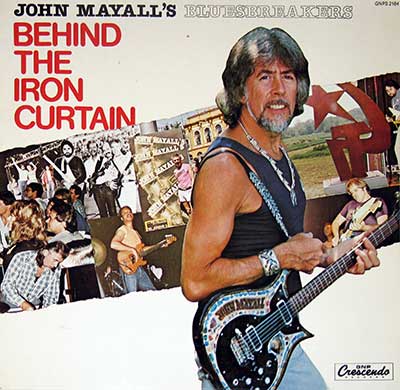
GNP Crescendo GNPS 2184 , 1985 , Germany
John Mayall, often referred to as the "Godfather of British Blues," has been a driving force in the blues genre for decades. His seminal work with The Bluesbreakers has left an indelible mark on the blues landscape, influencing countless musicians and shaping the course of blues music.
Behind the Iron Curtain 12" Vinyl LP
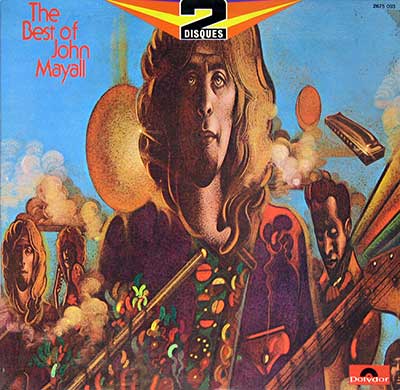
Polydor 2488 209 / Album 2675 093 D.R. , 1973 , France
Now, don't let the "Best of" title fool you. This ain't no watered-down, radio-friendly collection of hits. Mayall digs deep into his back catalog, unearthing hidden gems and showcasing his evolution from a purist bluesman to a genre-bending experimenter. You get a taste of his early days
The Best of John Mayall 12" Vinyl LP
Decca SKL 4804 , 1971 , Holland
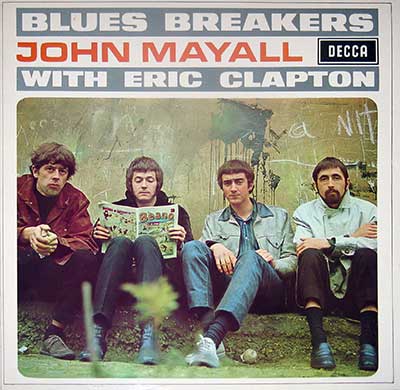
John Mayall & the Bluesbreakers' "Blues Breakers with Eric Clapton," often called the "Beano album," is a landmark in British blues. This 1966 release features a young Eric Clapton's fiery guitar work, a raw sound that revolutionized blues rock. With Clapton's Les Paul through a Marshall amp
Blues Breakers - With Eric Clapton 12" Vinyl LP
Decca 6.28 117 , 1970 , Germany
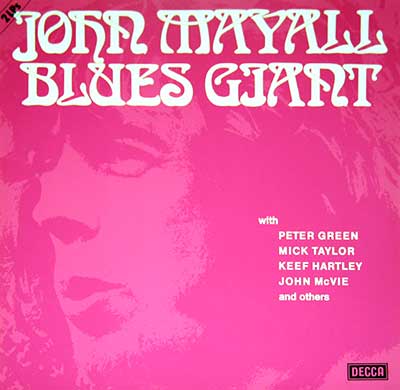
At the heart of "Blues Gigant" lies Mayall's ability to assemble a stellar lineup of musicians who were influential figures in their own right. Mayall himself is a master of the blues, known for his soulful vocals and skilled harmonica playing.
Blues Giant 12" Vinyl LP
London 820 539 , 1969 , Germany
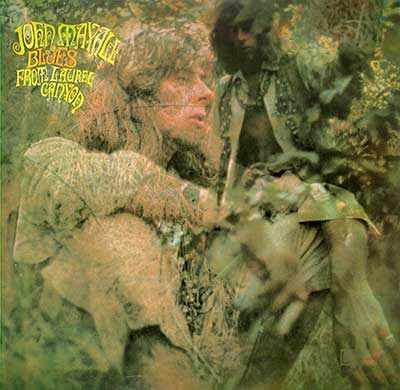
Recorded in 1968, John Mayall's "Blues from Laurel Canyon" is a sonic snapshot of his immersion in the Laurel Canyon music scene. Blending electric blues with acoustic guitar and psychedelic influences, the album showcases Mayall's evolving sound and storytelling prowess.
Blues From Laurel Canyon (Germany) 12" Vinyl LP
Decca FFSS SKL.4972 (ZAL 8532) St George Music , 1968 , England
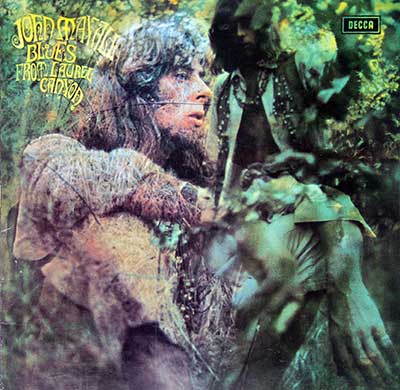
Forget your dusty Delta blues and your Chicago shuffles. Mayall and his band of merry pranksters are channeling the electric mudslide of Jimi Hendrix and the psychedelic swirl of Cream, filtering it through the lens of their own British blues sensibilities. This is blues rock for the Age of Aquarius, baby,
Blues from Laurel Canyon ( Decca, UK ) 12" Vinyl LP
Decca 6399 111 , 1981 , Holland / Netherlands
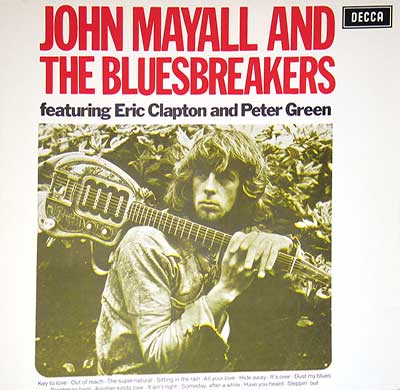
John Mayall & The Bluesbreakers' 1981 self-titled album, featuring Eric Clapton and Peter Green, stands as an iconic milestone in the blues and rock music panorama. This 12" Vinyl LP, complete with liner notes in Dutch, encapsulates the essence of British blues at its zenith. I
The Bluesbreakers - Featuring Eric Clapton & Peter Green 12" Vinyl LP
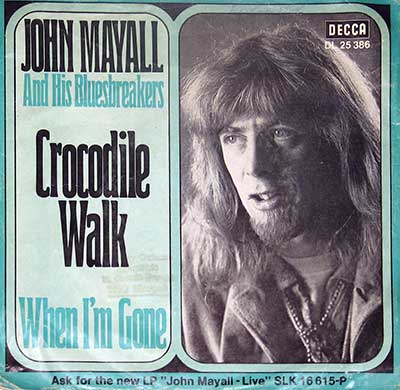
DECCA DL 25 386 , 1965
This ain't your polished, overdubbed LP experience. It's a sonic snapshot of the band tearing up Klooks Kleek club in London, circa 1964. The air crackles with electricity, the crowd roars, and Mayall's harmonica wails like a banshee on a bender. This is blues with its sleeves rolled up, ready to brawl.
Crocodile Walk / When I'm Gone 7" Vinyl Single
Decca SKL 4853 / YAL 7652 , 1967 , Holland
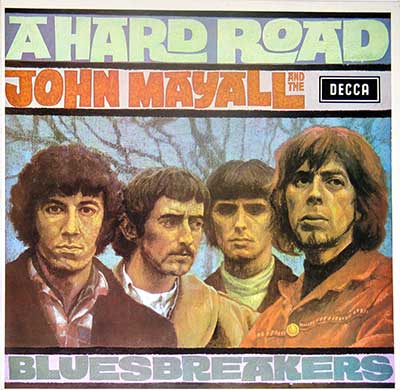
"A Hard Road" was the third studio album released by John Mayall & the Bluesbreakers, following their successful self-titled debut and "Blues Breakers with Eric Clapton" (1966). This album marked a transitional phase for the band, as it saw the departure of Eric Clapton and the arrival of Peter Green.
A Hard Road With Peter Green 12" Vinyl LP
ABC Records AA-1086 , 1978 , USA
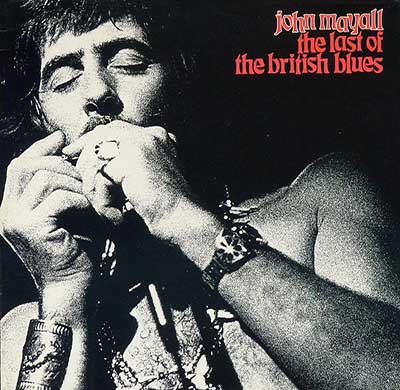
This is blues for the bicentennial generation, a raw, unvarnished sound that harkens back to the smoky clubs where Mayall cut his teeth. But it's also a glimpse into the future, with hints of jazz fusion and funk creeping into the mix. Mayall, ever the restless innovator, refuses to be pigeonholed by genre
Last Of The British Blues 12" Vinyl LP
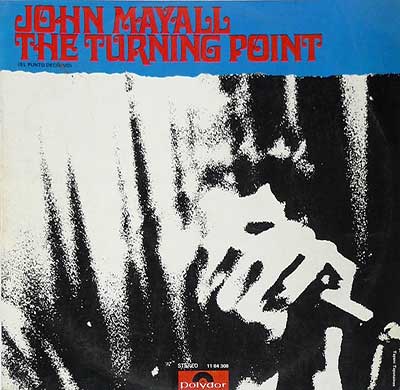
Polydor 184 308 , 1969 , Spain
This ain't your typical Mayall jam. Gone are the wailing guitars and thundering drums. Instead, we get acoustic guitars, flutes, saxophones, and Mayall's ever-present harmonica. It's a stripped-down, intimate sound, a sonic campfire gathering in the midst of a rock and roll hurricane.
The Turning Point 12" Vinyl LP
Decca 6.25 333 (625333) , Germany
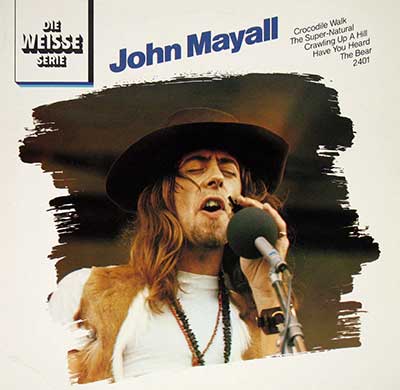
This is a Rare German release called: Die Weisse Serie. John Mayall's Weisse Serie 12" Vinyl LP is a collection of recordings from the 1960s and 1970s, showcasing his exceptional blues songwriting and performances. A true gem for fans of Mayall's work and classic blues in general.
Weisse Serie 12" Vinyl LP