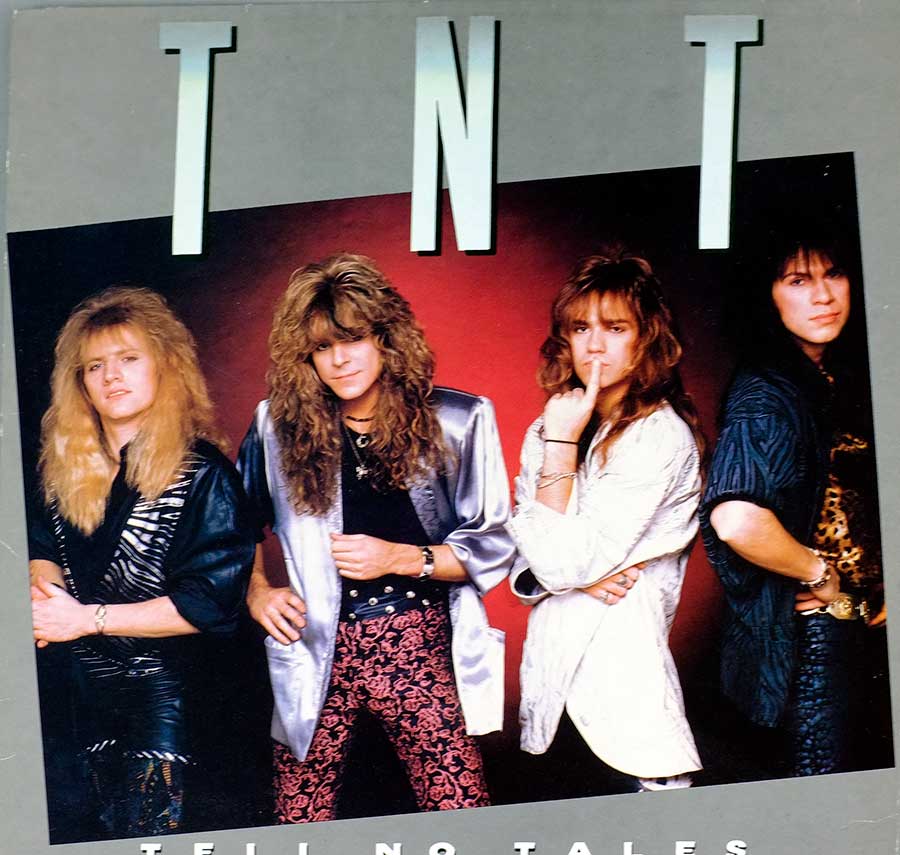
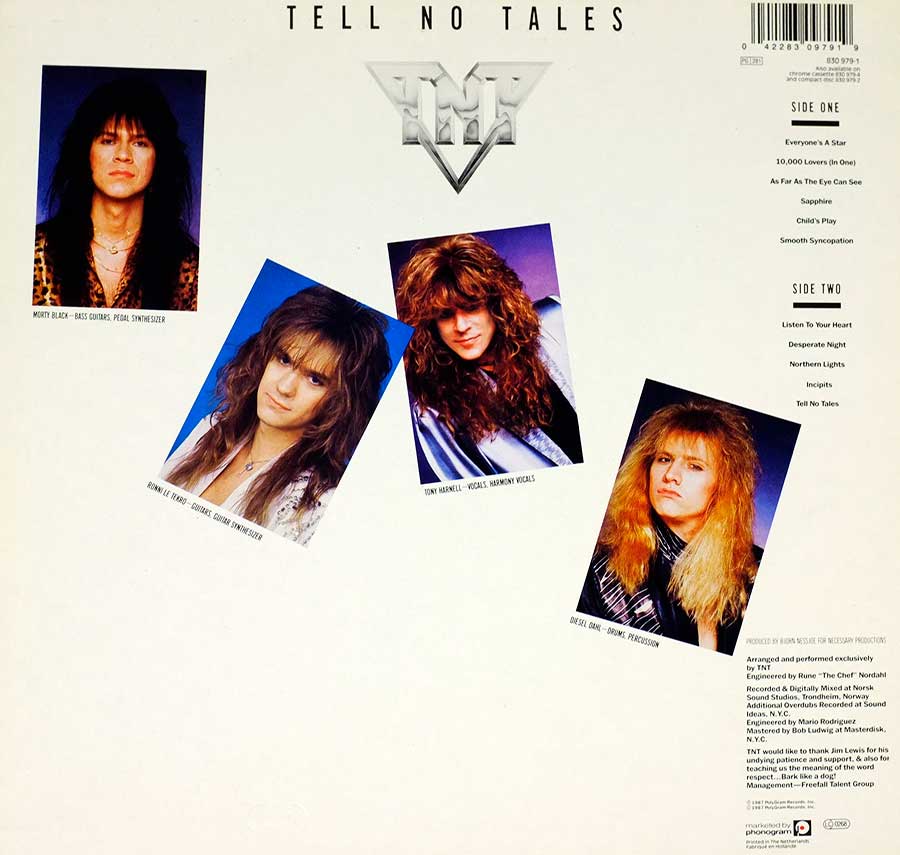
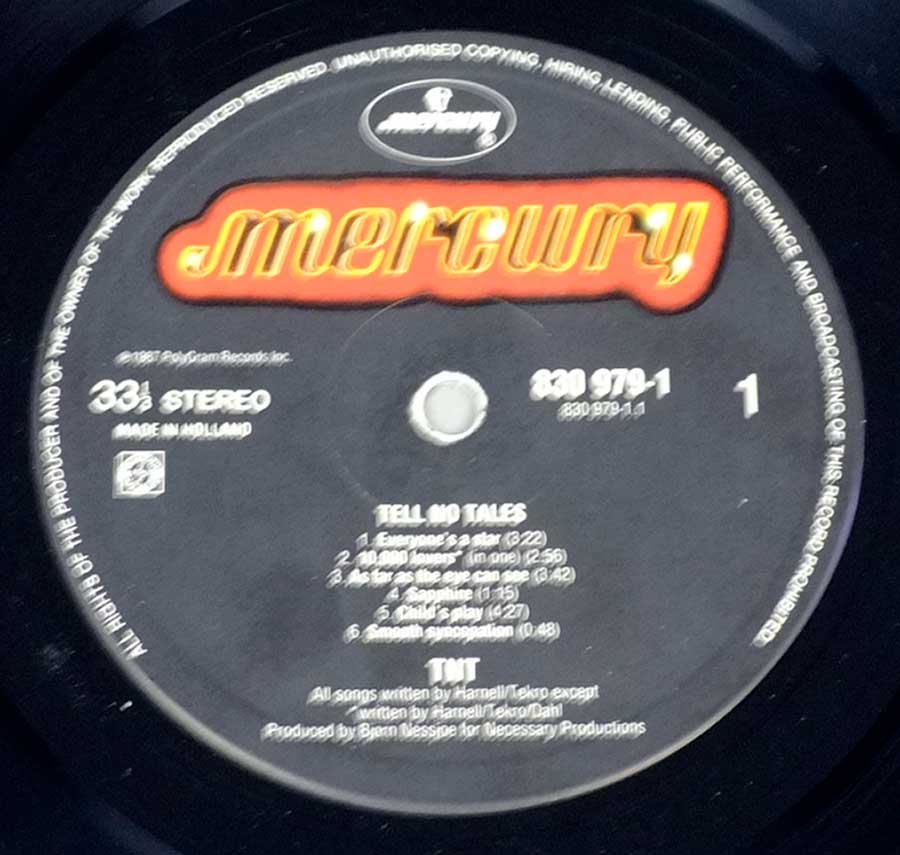
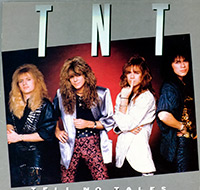
Released in 1987, TNT's third studio album, "Tell No Tales," marked a significant turning point for the Norwegian hard rock band. This 12" LP vinyl record solidified their international presence and showcased a shift towards a more glam metal-oriented sound.
Historical Context and Musical Exploration
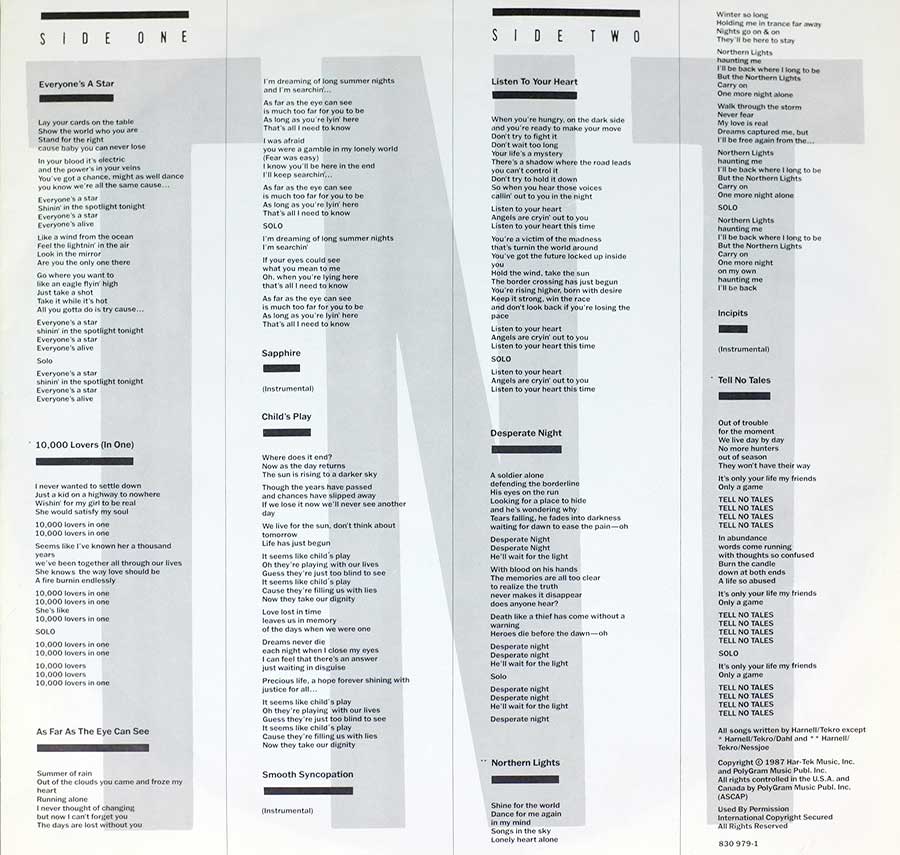
"Tell No Tales" arrived during the peak of the glam metal era, dominated by bands like Mštley Crue, Poison, and Bon Jovi. TNT embraced this trend, incorporating catchy hooks, soaring vocals, and flashy guitar solos into their established hard rock sound. The album's ten tracks, including hits like "10,000 Lovers (In One)" and "Everyone's a Star," demonstrated the band's ability to write commercially successful songs without sacrificing their musical integrity.
The album's production was polished and radio-friendly, a departure from the rawer sound of their previous releases. This shift in sound allowed TNT to reach a wider audience and gain significant airplay on MTV, further solidifying their place in the glam metal scene.
Controversies and Challenges
The band's move towards a more commercial sound was met with mixed reactions from fans and critics. Some praised the band's ability to evolve and adapt to the changing musical landscape, while others criticized them for abandoning their heavier roots. This internal conflict within the band eventually led to the departure of original vocalist Tony Harnell in 1989.
Production Team and Studio
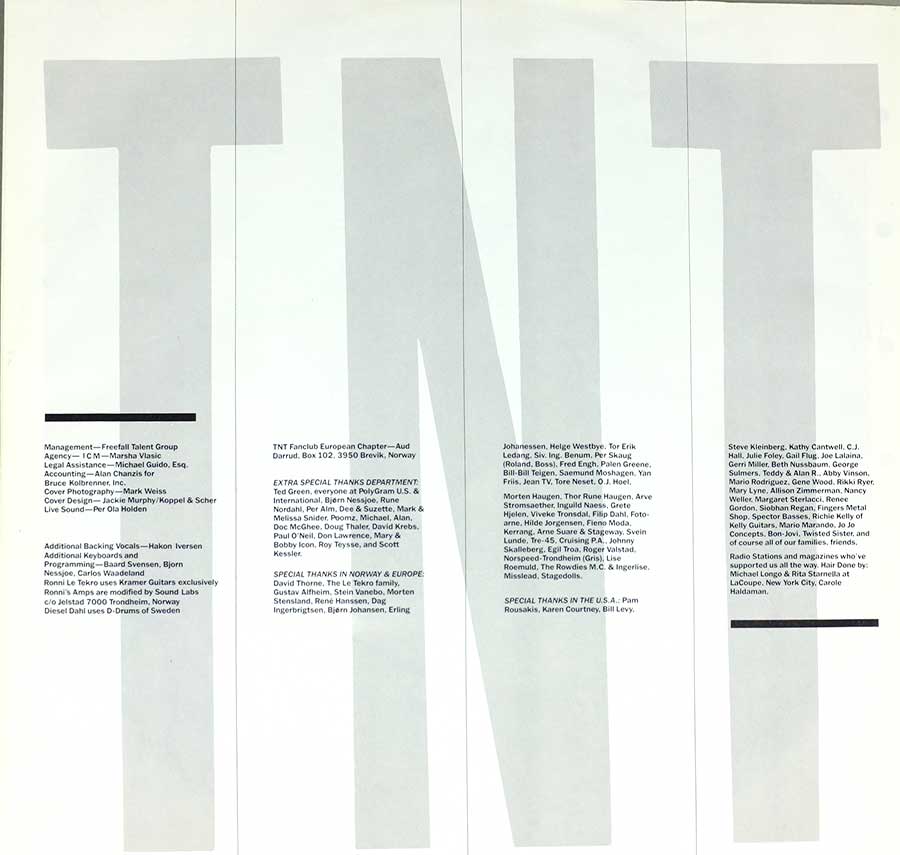
"Tell No Tales" was produced by Bj¿rn Nessj¿, a well-known Norwegian producer who had previously worked with the band on their first two albums. The recording took place at various studios in Norway, including Nidaros Studio in Trondheim and Studio Studio in Oslo. Nessj¿'s experience in capturing the band's energy and translating it into a polished sound was crucial to the album's success.
Frontman and Creative Vision
Tony Harnell, the band's charismatic frontman, was instrumental in shaping the album's sound. His powerful vocals and flamboyant stage presence were a perfect fit for the glam metal aesthetic. Guitarist Ronni Le Tekr¿, with his lightning-fast solos and melodic riffs, was the other driving force behind the band's musical direction.