- the arena-breakout record that turned Canadian hard rock into a global statement
Released in 1981, “Allied Forces” captures Triumph at the exact moment when relentless touring, disciplined songwriting, and arena-level ambition finally aligned. This album isn’t about excess or flash; it’s about confidence. Built on big hooks, clean power, and a belief that melody could still dominate hard rock, the record delivered radio staples without losing its muscle. From the surge of “Magic Power” to the rallying cry of “Fight the Good Fight,” “Allied Forces” documents a band stepping beyond national borders and proving that Canadian hard rock could stand shoulder to shoulder with the biggest acts of the era.
By 1981, Triumph were no longer just another hard-rock power trio grinding it out north of the border. “Allied Forces” is the sound of a band stepping onto the big stage with both boots on, confident enough to write anthems without apology and tight enough to make them hit like steel girders. This record captures Triumph at the exact moment when ambition, discipline, and crowd-tested muscle locked into place.
The early ’80s were a strange and glorious crossroads. Punk had already burned the house down, New Wave was repainting the walls, and hard rock responded by getting louder, cleaner, and unapologetically epic. In 1981, albums like Van Halen’s “Fair Warning” and Rush’s “Moving Pictures” proved that precision and power could coexist. “Allied Forces” lives squarely in that moment: arena-sized hooks, but still played by humans with calloused fingers.
Triumph didn’t drift into this album by accident. Years of relentless touring had sharpened them into a road-ready machine, and by the time they entered Metalworks Studios, they knew exactly what worked in front of thousands of raised fists. Producing the album themselves wasn’t ego; it was control. They wanted a record that sounded like Triumph, not a label committee’s idea of Triumph.
“Allied Forces” balances muscle and melody with surprising grace. The guitars bite but never blur, the rhythm section hits like a freight train that somehow keeps perfect time, and the vocals aim straight for the cheap seats without losing sincerity. Songs like “Magic Power” and “Fight the Good Fight” don’t just ask for belief; they demand it, fists in the air, chorus shouted back at the stage.
Compared to other hard-rock records of 1981, this album sits in a sweet spot. It doesn’t chase the flash of Los Angeles glam, nor does it dive into prog-rock complexity. Instead, it shares DNA with bands who understood momentum: solid songs, clear messages, and choruses built to survive bad sound systems and spilled beer. Triumph sounded Canadian only in the sense that they worked twice as hard.
There was no major controversy around “Allied Forces,” unless you count critics grumbling that it was too earnest, too clean, or too optimistic. Some muttered the dreaded word “commercial.” Fans, meanwhile, turned it up louder. The record didn’t need outrage; it had conviction.
What makes this album hold together is the band dynamic. This is a group pulling in the same direction, even when sharing vocal duties and spotlight. You can hear trust in the way the songs breathe, stretch, and then slam back together. No indulgent solos for their own sake, just players serving the song and the moment.
At the time, “Allied Forces” confirmed Triumph’s rise; decades later, it explains their staying power. Fans still reach for it not out of nostalgia alone, but because it delivers exactly what it promises. The production hasn’t aged badly, the songs haven’t shrunk, and the intent still feels honest.
Listening to my copy of “Allied Forces” today, I still hear sweat, ambition, and that unmistakable early-’80s belief that rock music could lift a room full of strangers into the same chorus. Decades later, the vinyl still smells faintly of beer, electricity, and confidence that hasn’t learned how to apologize.
Canadian Hard Rock / Heavy Metal
ATTIC – Cat#: 6.24890
Record Format: 12" LP Vinyl Stereo Gramophone Record
Total Weight: 230g
Release Date: 1981
Release Country: Made in Germany
The band kept the wheel in their own hands, shaping “Allied Forces” into a polished arena beast without sanding off the bite. Read more...
Triumph, producing this album themselves, locked the sound to what the songs demanded: big, melodic hard rock with enough punch to survive an arena and enough clarity to make the hooks land clean. The choices feel deliberate—tight performances up front, choruses built to travel, and a confident balance between muscle and polish that screams “we know what works live, now let’s bottle it.”
The guy catching the lightning in the room—clean enough for radio, tough enough for hard rock. Read more...
Mike Jones, as recording engineer on “Allied Forces,” is the reason the album feels both powerful and readable—every hit, riff, and vocal sits where it should, instead of dissolving into mush. The engineering keeps the band’s tightness intact, so the record sounds like three (and occasionally more) humans playing hard, not a lab experiment. The end result is that “Allied Forces” punches with confidence while still leaving space for the melodies to breathe.
One of the hands behind the console work that keeps the album’s impact crisp instead of messy. Read more...
Rick Capreol, engineering on this album, helped turn a great live band into a great studio document—tight, controlled, and still energetic. The work shows up in the small victories: clarity when the arrangements get busy, separation when the guitars and drums start throwing elbows, and the kind of steadiness that lets the songs sound “big” without sounding bloated.
A key part of the team that kept the sessions sharp, focused, and actually listenable at high volume. Read more...
Ed Stone, engineering on “Allied Forces,” contributed to the album’s punchy, disciplined feel—the kind of sound that doesn’t fall apart when the chorus hits and the volume knob gets “accidentally” nudged. The engineering support keeps the performances locked, the edges clean, and the overall vibe confident rather than chaotic.
The behind-the-scenes glue that keeps sessions moving while the band focuses on performances, not chaos. Read more...
Dave Dickson, assisting during recording, supported the day-to-day reality of making this album happen—keeping takes organized, sessions flowing, and the technical side steady so the creative side could stay loud and focused. That kind of work doesn’t show up as a flashy “sound,” but it absolutely shows up as momentum: fewer broken vibes, more finished songs, and a record that feels tight instead of tired.
Session support that helps turn “we’ve got it” into “it’s on tape and it actually rules.” Read more...
Mark Woods, assisting during the recording of “Allied Forces,” helped keep the capture process consistent and reliable—exactly what a hard-rock album needs when the performances are high-energy and the margin for technical drama is zero. The contribution is practical but crucial: stable sessions, clean documentation, and support that lets the band and engineers stay locked on the music.
The Metalworks Studios – Mississauga, Canada (1980–1981)
The room where this album’s power got captured with enough clarity to keep the hooks sharp and the punches heavy. Read more...
The Metalworks Studios, as the recording home for “Allied Forces” during 1980–1981, provided the controlled environment where Triumph’s arena-ready sound could be captured without losing its edge. The studio setting supports what’s most important here: definition under pressure, so the album stays big and bold rather than smeared and loud-for-the-sake-of-loud.
Mastering that tightens the bolts, balances the heat, and makes the album feel expensive the second the needle drops. Read more...
Bob Ludwig, mastering “Allied Forces” at Masterdisk in New York City, is the finishing step that helps the album hit with authority instead of just volume. The mastering work makes the hard-rock impact feel controlled and intentional—choruses jump, quieter moments stay clear, and the whole record holds together like it was built for repeated loud plays on decent speakers.
My quick tell for a record that’s about to sound expensive: “Mastered by Bob Ludwig” quietly lurking in the credits. Read more...
Bob Ludwig, for me, is the final boss of “make it hit”: cutting lacquers at A&R in the late ’60s, shaping the 1970s at Sterling Sound, the 1976–1992 Masterdisk era, then building Gateway Mastering in Maine (founded 1992) before retiring in 2023. His mastering fingerprints run from classic rock to metal to modern pop—Led Zeppelin and Lou Reed through Metallica, Nirvana, Tool, and Daft Punk.
Masterdisk – New York City, USA
The final checkpoint where “Allied Forces” got its edge aligned and its punch packaged for vinyl. Read more...
Masterdisk, as the mastering studio for this album in New York City, is where the record’s overall balance gets locked in—so the big moments stay huge, the detail stays present, and the whole side plays like a cohesive statement rather than a pile of separate tracks. On vinyl especially, that “finished” feeling matters, and this album comes across as built, not merely assembled.
The visual steering that makes the album look as bold as it sounds before the record even leaves the sleeve. Read more...
Joe Stelmach, handling art direction for “Allied Forces,” shaped the album’s first impression—turning the record into a statement object, not just an audio container. The contribution is all about framing: presenting Triumph as confident, arena-ready, and serious about the world they’re building around the music.
Illustration that gives the album its mythic, hard-rock mood—like the music, but frozen in ink. Read more...
Brian Zick, providing illustration for this album, added the kind of visual identity that sticks in collector memory—something you recognize across a room of sleeves. The artwork doesn’t just decorate; it sets expectation, nudging the listener toward that heroic, high-energy headspace the record delivers.
Direction that keeps the visual parts aligned, so the album’s look feels intentional instead of accidental. Read more...
Joe Owens, credited with direction, helped pull the visual and presentation elements into one coherent package—cover, layout, and overall feel working together as a single “front door” into the album. That cohesion matters when the record is designed to live in the real world: on shelves, in hands, and under lamp light while the needle drops.
Photography that sells the band’s presence—clean, direct, and built for the era of big stages and bigger confidence. Read more...
Nick Sangiamo, as the photographer for “Allied Forces,” contributed the human face to the package—giving the album a visual anchor that matches the music’s directness. In collector terms, that’s part of the ritual: the sleeve doesn’t just protect the record, it introduces the world the record lives in.
The logistics engine that helps turn “album energy” into “tour reality” without everything catching fire. Read more...
Alex Andronache, coordinating the tour around this era, supported the real-world backbone of the “Allied Forces” moment—keeping schedules, people, and movement aligned so the band could focus on performing these songs night after night. That touring momentum is part of why the album feels so confident: it comes from a group built to function on the road.
The paperwork-and-planning side of keeping the machine running while the band does the loud part. Read more...
Susan Adach, handling tour administration, contributed to the stability behind the scenes—organizing the practical details that keep a tour functional and a band sane. That kind of structure matters when an album like “Allied Forces” is designed to be lived on stage, not just stored in a rack.
Representation that helps the band’s momentum translate into real opportunities and real rooms. Read more...
Wally Meyrowitz, representing Triumph at ICM, supported the career infrastructure surrounding “Allied Forces”—helping position the band for the kind of exposure and touring reach this album clearly aimed for. That push matters in hard rock: the songs can be great, but they still need stages and audiences to become anthems.
Part of the representation network that keeps the band visible, bookable, and moving forward in the 1981 hard-rock ecosystem. Read more...
Vinny Cinquemani, representing Triumph at Platinum Artists, contributed to the business-side momentum that lets an album like “Allied Forces” do its job—getting the band into the right circuits, the right conversations, and the right venues where these songs could explode into crowd staples.
Another key piece of the representation puzzle helping Triumph’s post-release world stay loud and busy. Read more...
Neil Warnock, representing Triumph at Bron, supported the album’s wider life beyond the studio—helping ensure “Allied Forces” could meet listeners where hard rock actually lived in 1981: on the road, in venues, and through sustained visibility rather than a single release-week splash.
The Howard Bloom Organization – New York City, USA
The kind of publicity muscle that helps an album leave the shelf and start living in people’s heads. Read more...
The Howard Bloom Organization, handling publicity from New York City, supported the album’s public-facing push—helping get attention onto “Allied Forces” in the markets where hard rock visibility mattered. Publicity is the amplifier outside the speakers: it doesn’t write riffs, but it helps make sure the riffs get heard.
Rosie Levine – Travel to the Stars
The practical wizardry that keeps a band moving so the album can become a touring reality instead of a “nice idea.” Read more...
Rosie Levine, managing travel through Travel to the Stars, supported the physical motion behind the “Allied Forces” era—making the difference between a band with a strong album and a band that can actually get to the next city to play it. Travel planning isn’t glamorous, but it’s the hidden scaffolding that lets the music meet its audience.
Matching last names are cheap. Proof is better. And in this case, the paper trail does the heavy lifting: multiple sources plainly identify Triumph’s bassist/keyboardist Mike Levine as married to Rosie Levine. A 2005 Globe and Mail obituary for a family member name-checks “Mike Levine and his wife, Rosie, of Toronto,” which is about as unambiguous as a public record gets.
The “when” is trickier, because nobody seems to have published a neat wedding date (sadly, the rock world rarely files love in a tidy Discogs field). But there’s a strong timeline clue floating around a documented TV appearance: a retro recap of a 1996 Wheel of Fortune episode describes Mike as “married to Rosie for 23 years,” and also mentions their son Matthew. If that show intro is quoted accurately, it points to a marriage starting around 1973. That’s not a certificate date—more like a collector-grade estimate—but it’s still a solid breadcrumb.
Now for the fun part: Rosie isn’t just “someone in the background.” Her name shows up early in Triumph’s own orbit. On Triumph’s 1977 album “Rock & Roll Machine,” Rosie Levine is credited for background vocals—an official, printed-in-the-world kind of mention that says she was already part of the extended band ecosystem in the late ’70s.
By 1981—right in the “Allied Forces” era—Rosie appears again, but this time in the gritty, unglamorous category that keeps tours (and bands) from collapsing into airport-floor tragedy: travel management. Discogs credits list “Management [Travel] – Rosie Levine, Travel To The Stars” on “Allied Forces,” which is basically the adult version of rock ’n’ roll: getting people to the gig on time, alive, and with luggage.
So the story isn’t “two Levines, probably related, vibes.” It’s a repeated pattern across decades: Rosie’s name appears in Triumph’s documented credits (late ’70s vocals, early ’80s tour logistics), and later public records explicitly identify her as Mike’s wife. That’s the kind of continuity collectors live for—because it’s real, verifiable, and connected to the actual artifacts.
Triumph’s melodic sharpshooter, turning arena-sized hooks into something that still feels personal on headphones. Read more...
Rik Emmett, the band’s singing guitarist and the face of Triumph’s “melody-with-muscle” identity, brings the album’s most immediate sense of lift. On “Allied Forces,” the guitars are both weapon and glue: punchy riffs that stay crisp, plus bright, open chords that make choruses like “Magic Power” feel built for stadium air. The vocal performances lean confident rather than dramatic—clean enough to carry big hooks, gritty enough to keep the hard-rock edge intact.
The low-end architect who keeps the whole album standing upright while the choruses try to blow the roof off. Read more...
Mike Levine, bassist and resident texture-builder, gives “Allied Forces” its backbone and its extra dimension. The bass work is tight and supportive, locking Triumph into that power-trio punch without ever feeling thin, and the keyboards add a subtle sheen where the songs need atmosphere rather than more distortion. The result is that the album sounds “big” without becoming bloated—solid foundations, then tasteful color on top.
The engine and the second frontman, making the record hit hard while still sounding like actual humans in a room. Read more...
Gil Moore, drummer and co-lead vocalist, is the reason “Allied Forces” moves with that relentless, road-tested confidence. The drumming is punchy and disciplined—no fancy detours, just drive—and it gives tracks like “Air Raid” and the title cut their sense of forward motion. Vocally, the shared spotlight adds tension in the best way: two voices pushing the songs from different angles, keeping the album from feeling one-note even when the riffs are built to crush.
The stealth ingredient that makes the choruses land cleaner, brighter, and more “arena” without turning cheesy. Read more...
Elaine Overholt, credited on background vocals, adds that extra lift that separates a solid hard-rock chorus from a chant that sticks in your skull for days. On “Allied Forces,” those harmonies help widen the soundstage—especially in the big hook moments—without stealing focus from the band’s core trio identity. The contribution is subtle, but it’s the kind of subtle that makes a record feel finished.
Disclaimer: Track durations shown are approximate and may vary slightly between different country editions or reissues. Variations can result from alternate masterings, pressing plant differences, or regional production adjustments.
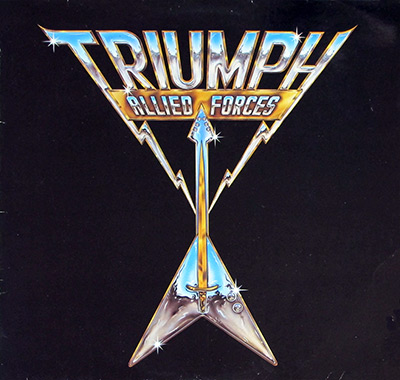
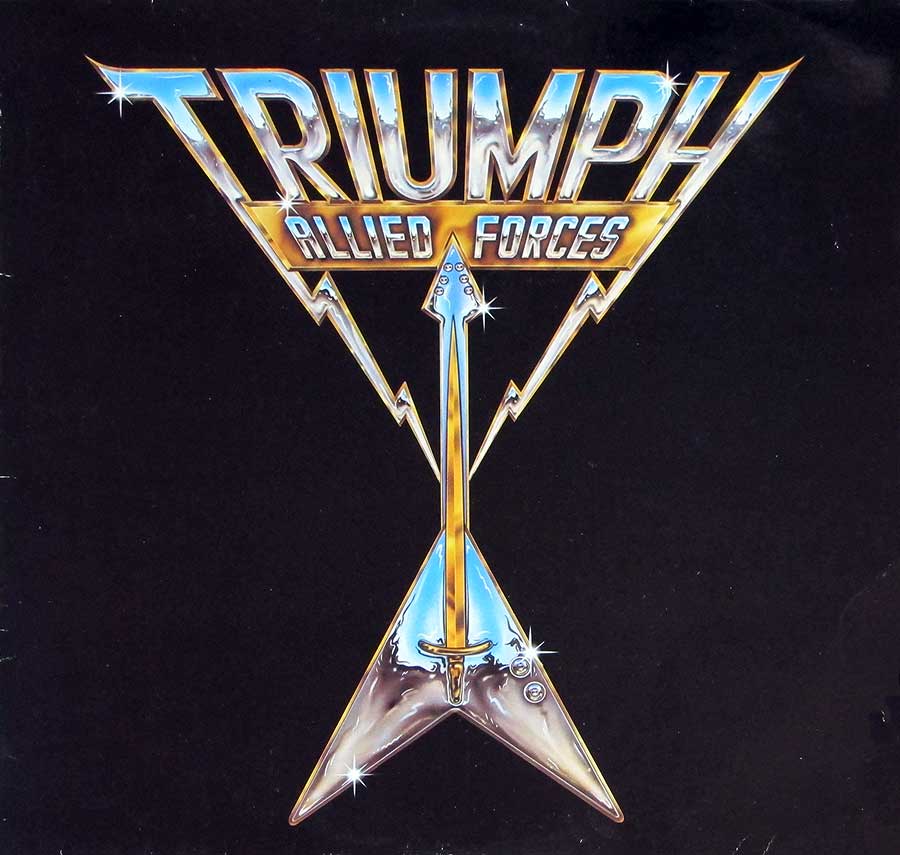
This photo shows the original front cover of “Allied Forces” by Triumph, shot straight-on from my own 12" vinyl LP. The whole design is built around one bold idea: a glossy, nearly solid-black field with a single, oversized metallic emblem floating in the center, leaving tons of negative space around it. That clean layout matters to collectors because it makes wear and handling marks easier to spot, and it also makes the artwork pop even from across a room of sleeves.
At the top, “TRIUMPH” is rendered in giant block lettering with a chrome-and-blue look, edged in warm gold like a plated badge. Directly underneath, “ALLIED FORCES” sits on a horizontal gold banner, the letters spaced tightly and styled to match the metal theme. On both sides of the banner, sharp lightning-bolt shapes angle downward, creating a symmetrical V outline that frames the central graphic and screams early-’80s hard rock branding.
Running down the middle is the visual punchline: a sword-and-guitar hybrid. The “blade” is really a long guitar neck in gold with blue highlight strips, and the headstock at the top shows tuning pegs like a real instrument. The lower half becomes a highly polished Flying V-style body, silver and reflective, with a small sword hilt detail across the center where you’d expect hardware. Printed starburst “sparkles” appear at multiple points on the chrome—top edges of the logo, near the center, and on the lower body—making the metal look extra glossy and expensive, even before the record comes out of the sleeve.
Minor colour variation in this photo is caused by flash use during photography, most noticeable where the “chrome” shifts slightly toward blue or silver depending on the reflective area. Edges and corners of the sleeve are visible against the dark background, and the cover art itself is clean and uncluttered: no track list, no band photo, no extra text clutter—just branding and impact. That stripped-down approach is exactly why this sleeve design stays iconic in a collector stack: instant recognition, maximum contrast, and a logo that looks like it was designed to survive a thousand record-store flips.
Note: Images can be zoomed in or out on tablets and smartphones for close inspection.
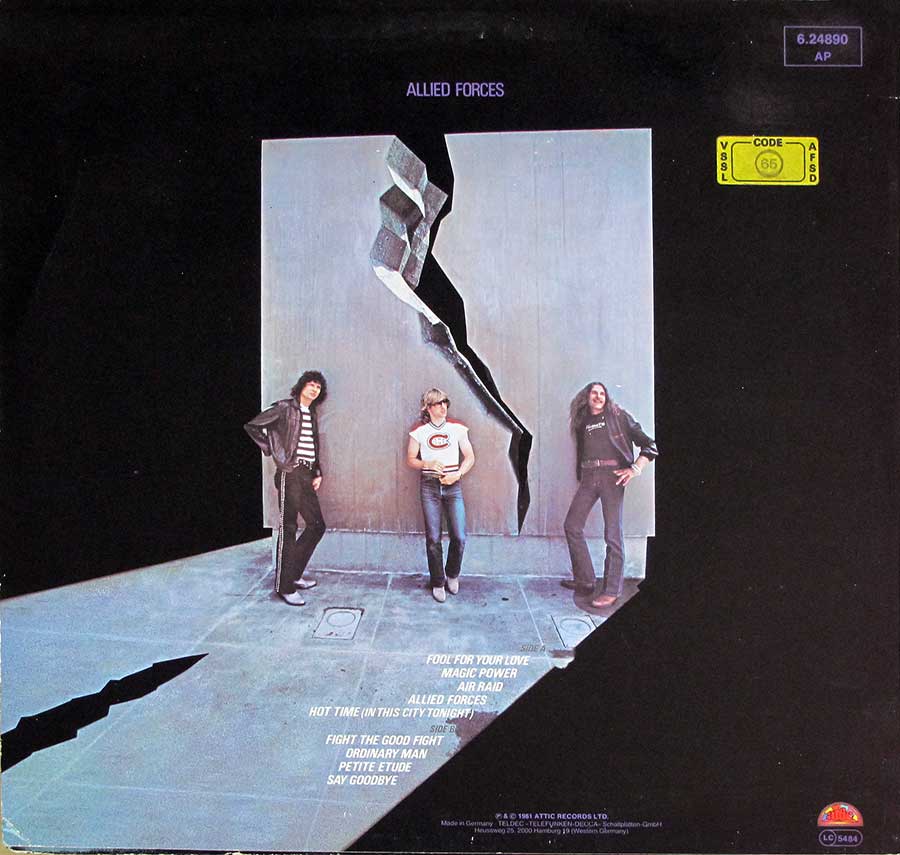
This is the back cover of Triumph’s “Allied Forces” sleeve, photographed from my own 12" LP, and it’s the kind of back design collectors love because it mixes visual concept with real-world edition clues. Most of the sleeve is deep black, with a single large rectangular photo dropped into the center like a framed scene. Above that photo, “ALLIED FORCES” is printed in small, clean, white uppercase text—minimal and deliberate, leaving the image to do the heavy lifting.
The central photo shows three band members posed on a grey concrete floor in front of a tall, flat grey wall. A dramatic, jagged crack runs down the wall in a lightning-bolt shape, with chunky broken blocks piled near the top edge of the split, like the wall got hit and never recovered. The floor continues the “fracture” theme: a dark crack shape cuts into the lower left corner, and the lower right corner is swallowed by a large black triangular area, making the whole scene feel staged, sharp-edged, and very early-’80s hard rock.
Clothing and posture are part of the story here: the left person wears a dark jacket over a striped shirt and dark pants, standing relaxed with one hand on the hip. The center person wears a white T-shirt with a bold red logo, jeans, and light shoes, standing squarely and looking off to the side. The right person has long hair, a dark jacket, and dark pants, posed wide with hands on hips like the band just claimed the room. Faces are small at this distance, but the attitude reads clearly: casual confidence, no clutter, no “posed glamour,” just a hard-rock stance inside a cracked-wall concept.
Collector-relevant print details sit where they should: top right shows a small boxed marking with “6.24890” above “AP,” and just below that a yellow rectangular stamp reads “CODE 65” with vertical letters “VSG” on the left and “AFD” on the right. Down on the floor area of the photo, the tracklisting is printed in white with “SIDE A” and “SIDE B” labels, listing “Fool for Your Love,” “Magic Power,” “Air Raid,” “Allied Forces,” “Hot Time (In This City Tonight),” then “Fight the Good Fight,” “Ordinary Man,” “Petite Etude,” and “Say Goodbye.” At the very bottom, small text includes “© 1981 ATTIC RECORDS LTD.” plus “Made in Germany” and “TELDEC-TELEFUNKEN-DECCA Schallplatten GmbH,” and the Attic logo sits at the bottom right above the boxed “LC 5484.” These little stamps and codes are exactly the stuff that helps pin down which pressing and market a sleeve belongs to.
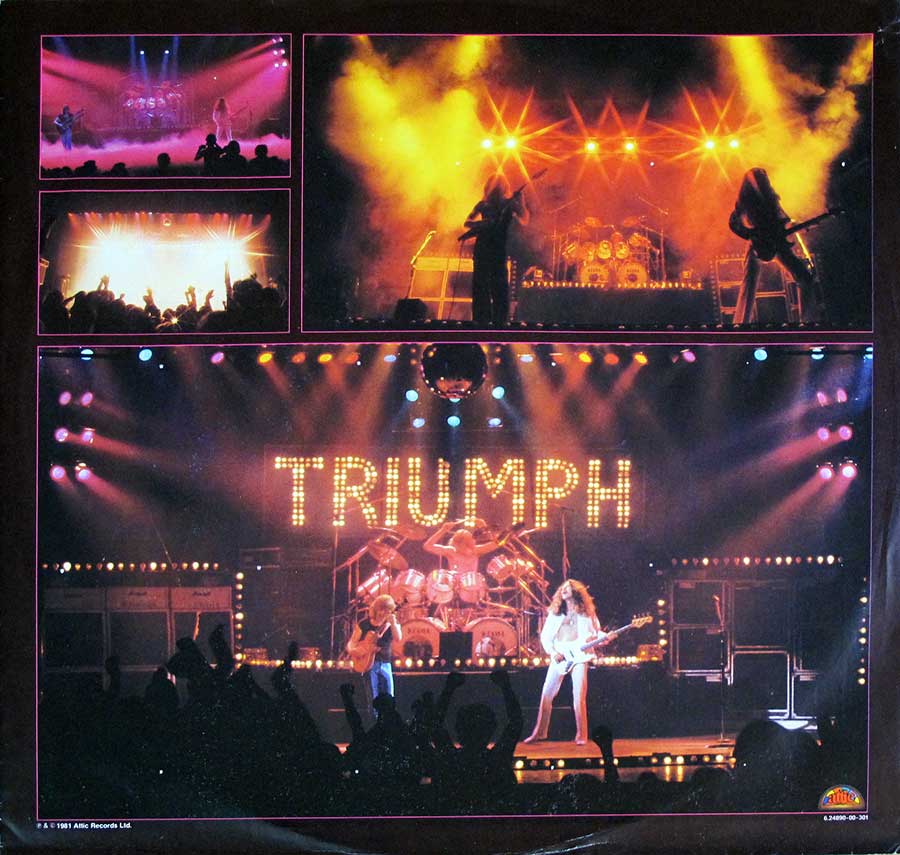
This image shows the first side of the original custom inner sleeve included with my 1981 Triumph “Allied Forces” 12" LP. The whole sleeve face is a live-performance collage printed on a dark background, with thin magenta/pink border lines dividing the layout into multiple rectangular photo panels. The design choice is practical and very collector-relevant: it’s a quick visual proof that this is the custom printed inner (not a generic white replacement), and it documents the band’s stage identity from the era the album was sold into.
The largest panel runs across the entire bottom half and shows a full stage view. A giant “TRIUMPH” sign made of individual bulb-like lights spans the back of the stage, glowing warm yellow against the dark. Center stage, the drummer is elevated on a riser, framed by large drum hardware and multiple cymbals; the kit sits under a heavy canopy of colored lights. In front of the stage, the audience appears as black silhouettes with raised arms, forming a dense, jagged horizon line across the lower edge of the photo. Along the top of the stage scene, a row of multicolored spotlights runs left to right, and a round mirror ball (disco ball) hangs near the center, catching small highlights.
Above and to the left, three smaller photos add atmosphere and scale. One top-left image shows a wide stage scene with heavy pinkish lighting and haze, with the crowd in silhouette at the bottom edge. Below it, a smaller left-side image is dominated by a bright white stage blast that silhouettes raised hands in the foreground—high contrast, almost like a flashbang, the kind of shot that screams “loud night.” The large top-right image shows the band in near-silhouette amid thick yellow-orange smoke and starburst light flares; multiple stage lights form sharp, spiky points, and the figures are dark against the glow, emphasizing the production spectacle rather than facial detail.
Small-print collector tells sit along the bottom edge: tiny copyright text appears at the lower left (“p & c 1981 Attic Records Ltd.” is visible), and at the lower right the Attic logo sits in color, next to a printed catalog-style code line that includes “6.24890” with additional suffix numbers. The corners show slight curvature and surface reflections from the photography angle and lighting, the usual real-world proof that this is a photographed physical sleeve and not a flat digital scan. Overall, this inner sleeve side is all about stage presence: lights, smoke, crowd energy, and that glowing TRIUMPH sign doing the branding work from twenty meters away.
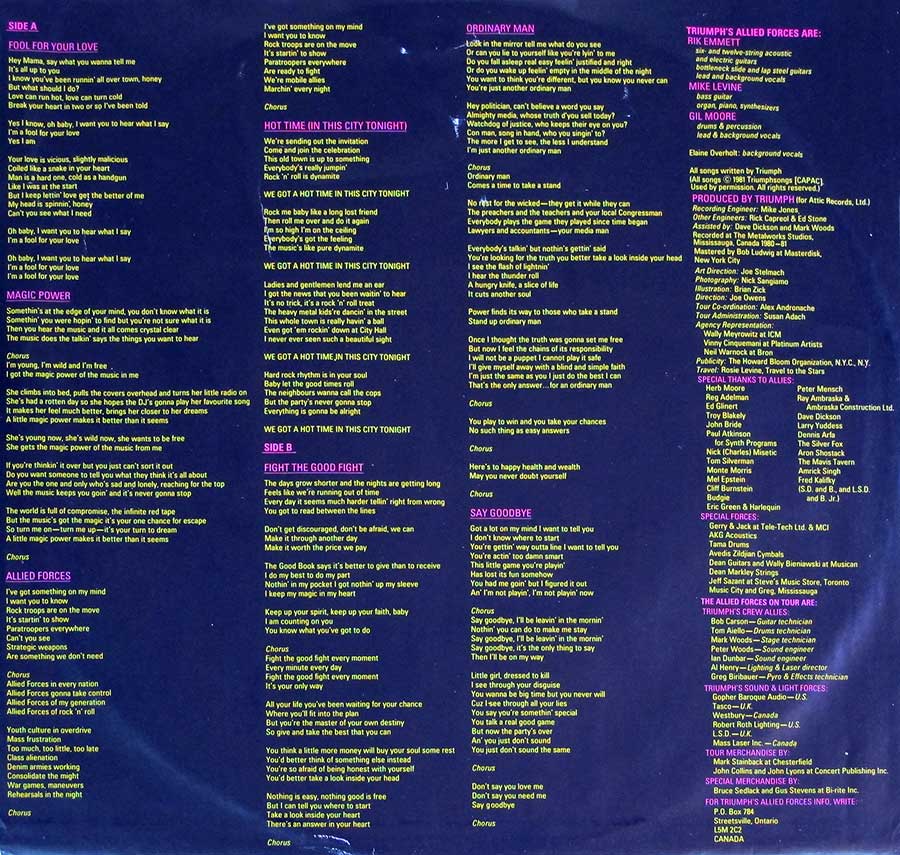
This photo shows the reverse side of the original custom inner sleeve for Triumph’s 1981 “Allied Forces” 12" LP, and this is the side that collectors actually use: lyrics, credits, and all the little print details that confirm you’re holding the real inner and not some random replacement. The entire background is a dark, inky blue-to-purple field, with text laid out in tight, newspaper-style columns. The printing is dense but organized, and the typography is clearly designed for readability under normal room light—important, because this is the page you stare at while the record plays.
Across the left and center sections, song lyrics are grouped by track with titles in a bright pink/magenta uppercase style. “SIDE A” appears at the top left, followed by “FOOL FOR YOUR LOVE,” then “MAGIC POWER,” and “ALLIED FORCES,” each with white lyric text underneath. In the middle column, “HOT TIME (IN THIS CITY TONIGHT)” sits in the same magenta heading style with its lyrics below. The right-center column starts with “ORDINARY MAN,” and below it the “SIDE B” material continues with “FIGHT THE GOOD FIGHT” and “SAY GOODBYE.” Choruses are visibly marked with the word “Chorus,” helping the eye jump around even in a blocky layout.
The far-right column is the collector gold: a full credits stack headed with “TRIUMPH’S ALLIED FORCES ARE:” listing the band members and their roles, followed by production and recording details. The same area includes “PRODUCED BY TRIUMPH (for Attic Records, Ltd.)” and the engineering chain (recording engineer plus additional engineers and assistants), the recording location “The Metalworks Studios, Mississauga, Canada 1980–81,” and mastering credit “Bob Ludwig at Masterdisk, New York City.” Below that, design and visual credits appear (art direction, photography, illustration, and direction), then tour coordination, tour administration, agency representation, publicity, and travel. The lower right continues with long thanks and crew lists in smaller text, including technical crew roles and additional acknowledgements—exactly the type of stuff that varies between editions and makes this inner sleeve worth documenting.
Overall condition in the photo reads as clean: the ink field is even, the columns remain sharp, and there are no obvious tears or missing chunks. Minor surface glare and slight color shift are visible from photography lighting, especially in the darker areas, but the print remains legible. This inner sleeve side is basically the album’s paperwork: lyrics for every major track and a full credit map that anchors this pressing in time, place, and production lineage.
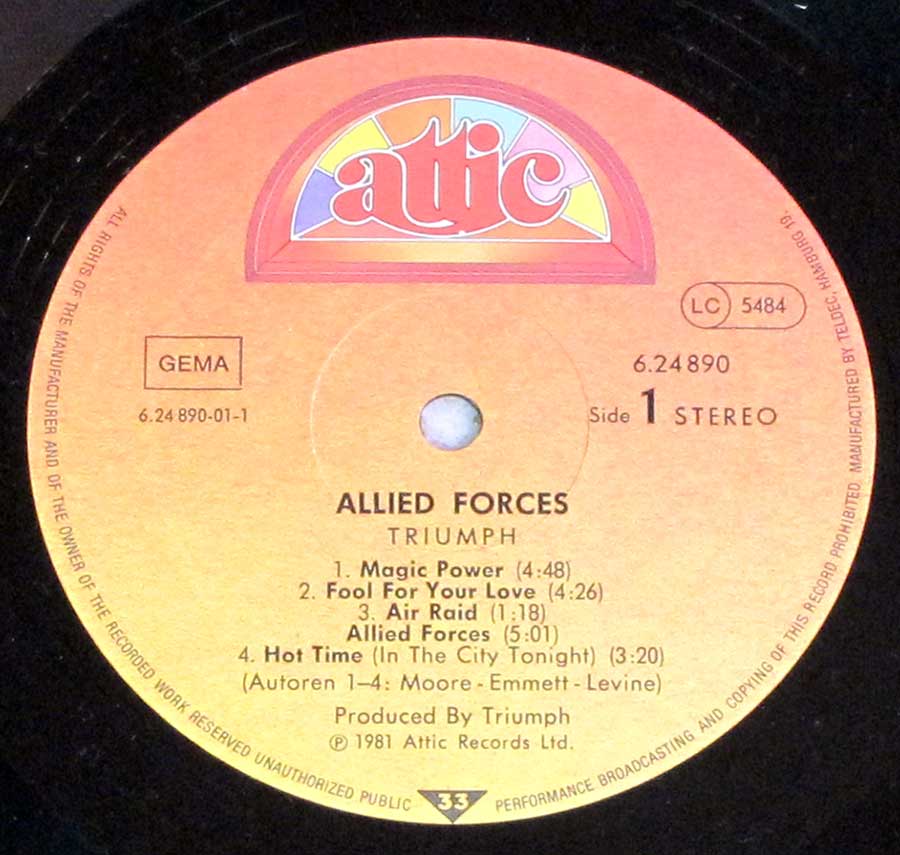
Close-up photo of the Side 1 center label for Triumph’s “Allied Forces” on Attic Records. The label is built around a warm orange-to-yellow gradient that fades from deeper orange near the top into a paler, almost honey tone toward the bottom, with the black vinyl grooves framing it as a thick dark ring. The spindle hole sits dead center, and a faint circular “press ring” is visible around it, the kind of subtle imprint collectors look for when comparing pressings and label layouts.
At the very top sits the Attic logo: the word attic in a rounded, stylized lowercase font, placed inside an arch shape. Behind the letters is a segmented, fan-like rainbow panel (multiple colored wedges) that reads like a sunrise window. The logo’s job is simple: instant label identification from a distance and a consistent branding stamp across releases—especially useful when the rest of the label text is small and practical.
On the right side, the catalog number 6.24890 is printed clearly, with “Side 1” and “STEREO” aligned nearby, making the side designation unmissable during handling. Above that, a boxed rights code LC 5484 appears, and on the left side a boxed GEMA mark identifies the rights society for this edition. Below the GEMA box, a smaller line reads 6.24890-01-1, which is exactly the kind of extra numbering that helps separate a “looks similar” label from the exact one in your hand.
The album title ALLIED FORCES is printed in bold uppercase at center, with TRIUMPH directly beneath it. Under that, the track list is laid out as a neat numbered block, each title followed by a timing in parentheses: “Magic Power (4:48),” “Fool For Your Love (4:26),” “Air Raid (1:18),” “Allied Forces (5:01),” and “Hot Time (In The City Tonight) (3:20).” A credit line in German appears underneath: “(Autoren 1-4: Moore - Emmett - Levine),” tying the writing credit to the first four tracks as printed on this label.
Lower on the label, the production and copyright info is printed as a compact block: “Produced By Triumph” and “℗ 1981 Attic Records Ltd.” At the bottom edge, a bold 33 inside a small emblem marks the playing speed, and the outer rim text forms a circular legal ring that includes manufacturing and rights warnings. Along the right rim, “MANUFACTURED BY TELDEC ‘HAMBURG’” is printed, which is the big “Made in Germany” tell for this particular edition—useful when matching the label to the sleeve codes and the back-cover manufacturing line.
Attic’s label here is a classic early-’80s “collector friendly” layout: loud color wash, clean typography, and all the codes placed where your eyes naturally land while cueing the record. The design is doing two jobs at once—brand recognition up top (that rainbow-arch attic logo) and hard data everywhere else (catalog numbers, rights marks, speed, and side info) so you can identify the exact edition without needing the sleeve in your hand.
All images on this site are photographed directly from the original vinyl LP covers and record labels in my collection. Earlier blank sleeves were not archived due to past storage limits, and Side Two labels are often omitted when they contain no collector-relevant details. Photo quality varies because the images were taken over several decades with different cameras. You may use these images for personal or non-commercial purposes if you include a link to this site; commercial use requires my permission. Text on covers and labels has been transcribed using a free online OCR service.
“Allied Forces” still stomps: crunchy riffs, huge hooks, zero filler energy
Need a straight shot of early-’80s hard rock? "Allied Forces" hits with tight crunch and big-chorus swagger. Rik Emmett keeps the guitars sharp and melodic, Gil Moore brings the punch and vocal grit, and the record flips from radio-friendly heat ("Magic Power") to fist-in-the-air grind ("Fight the Good Fight"). The title track throws the big-stadium flag in the ground, then "Say Goodbye" cools the engines. This copy’s inner sleeve seals the vibe with lyrics and live shots.
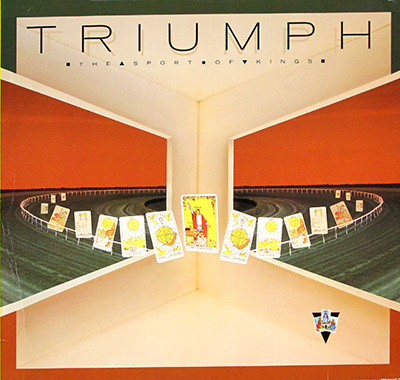
Triumph's album "Sport of Kings" is a sonic masterpiece expertly brought to life by producer and engineer Mike Glink. Thom Trumbo's role as Executive Producer adds to its creative vision. The album reaches its pinnacle with the mastering expertise of Mike Reese at Masterdisk, Los Angeles, California
Sport of Kings 12" Vinyl LP
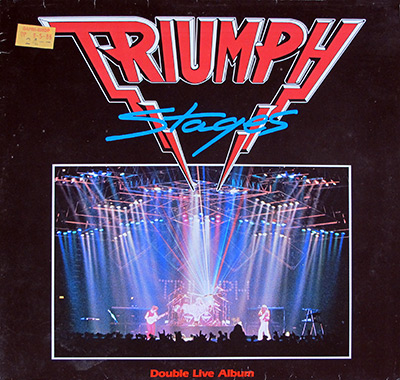
Triumph's double live album, "Stages," released in 1985, is a dynamic collection of live performances spanning from 1981 to 1984, featuring two new studio tracks, "Mind Games" and "Empty Inside." This monumental release was produced by the band themselves
Stages 12" Vinyl 2LP
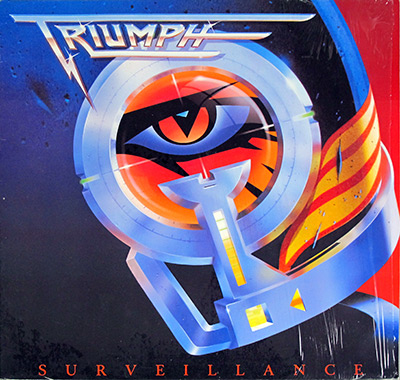
Triumph's "Surveillance," their ninth studio album, marked a significant moment in their history, released on July 27. Recorded at Metalworks Studios in Mississauga, Ontario, Canada, it also served as the final album with original guitarist and singer Rik Emmett. The album was expertly produced by Thom Trumbo
Surveillance 12" Vinyl LP
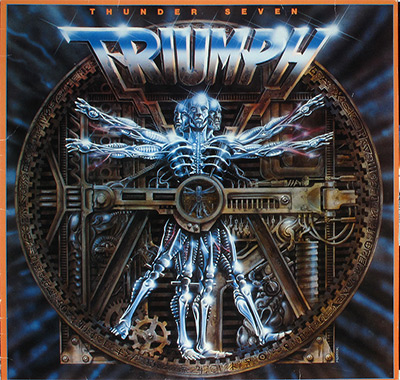
Triumph's "Thunder Seven" is a monumental hard rock 12" vinyl LP album, released in November 1984. This concept album showcases the Canadian heavy metal band's creative prowess as their seventh studio release. With its captivating themes and powerful music, "Thunder Seven" solidified Triumph's place in the pantheon
Thunder Seven 12" Vinyl LP