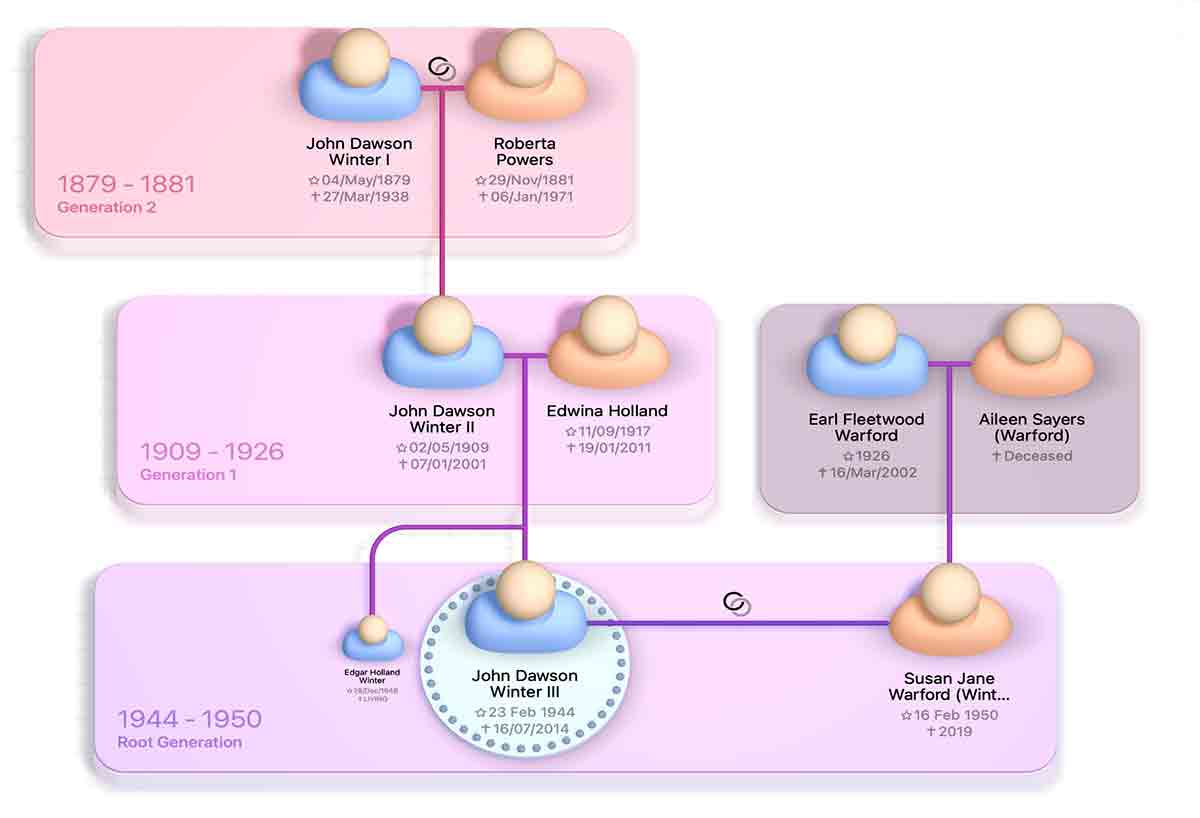
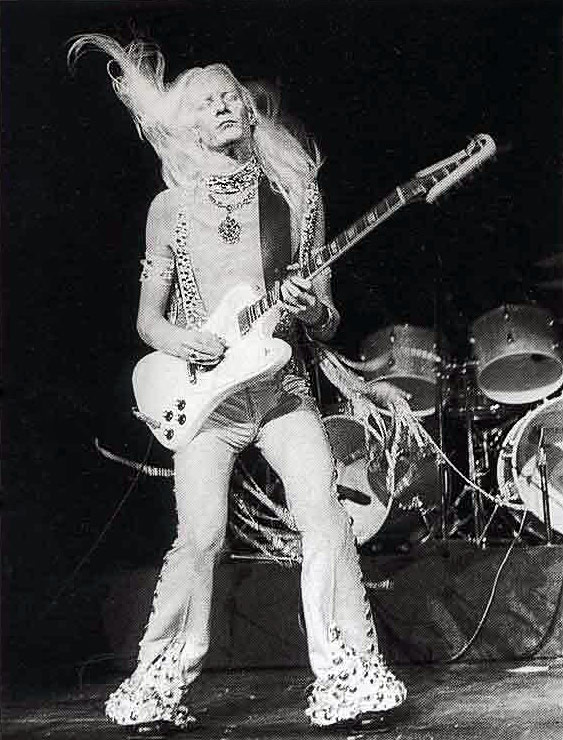
John Dawson Winter III, famously known as Johnny Winter, was born on 23rd February 1944 in Beaumont, Jefferson, Texas, USA. He was the first child of John Dawson Winter Jr., born on 2nd May 1909, and Edwina Holland, born on 11th September 1917. His upbringing in Beaumont exposed him to a wide range of music from an early age, from gospel and blues to country and rock.
When Johnny was five, he began his musical journey by playing the clarinet. However, his father, concerned about the possibility of buck teeth from playing the instrument, encouraged him to stop. Johnny switched to the ukulele, which his father initially taught him. Yet, it wasn’t long before his father advised him to transition to the guitar, stating, “The only two ukulele players I ever knew that did anything were Arthur Godfrey and Ukulele Ike, and I think you got a much better choice of making it with a guitar.”
As Johnny’s passion for music grew, so did his skills. Alongside his brother Edgar, the two performed as a duo, mimicking the Everly Brothers’ style. At age 11, they even auditioned for Ted Mack’s Original Amateur Hour. Johnny learned country licks from Luther Nalley, a Beaumont music store employee, while absorbing the rich blues and gospel sounds of the region. His early influences included local blues and gospel as well as the rock tunes of the 1950s.
After school, Johnny attended Lamar Technical College, specializing in a commercial branch. However, his weekends were spent hitchhiking to Louisiana, where he performed in small nightclubs. After six months, he dropped out of college, dedicating himself entirely to music. By 1964, Johnny Winter made the critical decision to abandon his studies and pursue his career as a full-time musician.
In the early 1960s, Johnny traveled to Chicago, seeking to immerse himself in the authentic blues scene. He briefly joined his friend Dennis Drugan’s band, The Gents, but by the end of 1963, he had returned to Texas. There, Johnny recorded the single Eternally for
Ken Ritter’s KRCO label
, which was leased to Atlantic Records. The song became a regional hit, leading to opportunities to open for major acts like The Everly Brothers and Jerry Lee Lewis.
Despite his initial struggles, Johnny Winter’s persistence paid off. In 1968, Larry Sepulvado’s article in Rolling Stone famously described Johnny as “a hundred-and-thirty-pound, cross-eyed albino with long fleecy hair, playing some of the gutsiest, fluid blues guitar you have ever heard.” This led to Johnny being invited to perform at
Steve Paul’s Scene club
in New York, which propelled his career to new heights.
That same year, Johnny’s breakthrough album, Progressive Blues Experiment, was released. It featured his own band, with Tammy Shannon on bass and John Turner on drums. His performances at Fillmore East and collaborations with icons like Muddy Waters solidified his place in the blues and rock world. In 1969, Johnny signed a major recording contract with Columbia Records and released his eponymous debut album, Johnny Winter, which was recorded in Nashville and featured Willie Dixon and Edgar Winter.
Family and Later Life
Johnny Winter’s personal life was marked by significant milestones. On 11th March 1993, he married Susan Jane Warford, who was born on 15th January 1950. Johnny was 49 years old at the time, and Susan was 43. Together, they had one daughter, Judith Elerick.
As Johnny’s career soared, he continued to face personal challenges. His father, John Dawson Winter Jr., passed away on 7th January 2001, when Johnny was 56 years old. A decade later, Johnny lost his mother, Edwina Holland, on 19th January 2011, at the age of 66.
Johnny Winter spent his later years in Easton, Fairfield, Connecticut, where he lived until his passing on 16th July 2014 in Zürich, Switzerland, at the age of 70. He was buried in Union Cemetery, Easton, Fairfield, Connecticut. His wife, Susan Jane Warford, passed away five years after him, around 2019.
A Lasting Legacy
Johnny Winter’s contribution to music, especially to blues and rock, is undeniable. From his early years playing gospel and country in Beaumont to performing on international stages, his journey was marked by dedication and a love for the blues. His collaborations with greats like Muddy Waters and his powerful slide guitar performances made him a legend in his own right.
Though Johnny faced many struggles along the way—physically, emotionally, and musically—his resilience and passion left an indelible mark on the music world. Today, he remains a towering figure in blues history, remembered for his distinctive style and unforgettable performances.