Rick Derringer and Johnny Winter: A Dynamic Blues-Rock Partnership

-

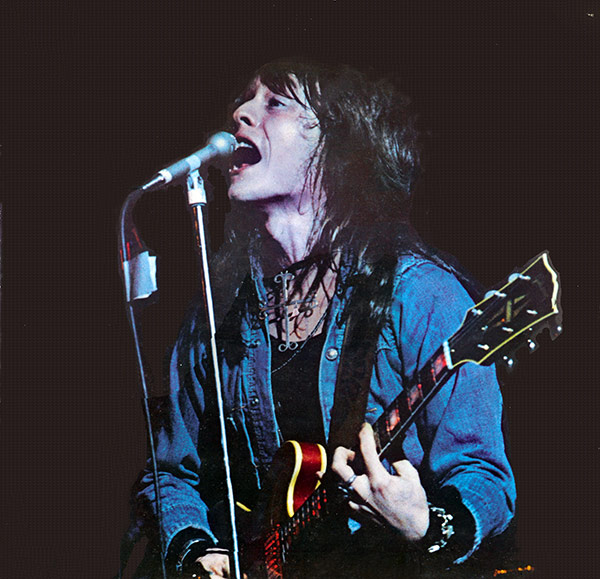
Live concert photo of Rick Derringer singing into a microphone while playing an electric guitar - https://vinyl-records.nl/
Seen from slightly above, Rick Derringer is caught mid-belt into a silver mic, long dark hair flung forward, denim shirt glowing under hard stage light. A red sunburst electric guitar rides high on the strap, fretting hand clenched like the next chord is a challenge. Sweat, volume, no manners — pure stage urgency.

Rick Derringer hit the national bloodstream as a teenager with The McCoys when “Hang On Sloopy” went No. 1 in 1965 — one of those choruses that grabs a room by the collar and doesn’t let go. As the ’60s burned out, he drifted into Johnny Winter’s orbit in New York, and by September 1970 the fuse was lit on "Johnny Winter And". My copy still plays like a bar fight in a phone booth: sharp, loud, and weirdly controlled. The follow-through mattered — "Live Johnny Winter And" (1971) caught the band in motion, and Derringer later helped steer Johnny’s "Still Alive and Well" (1973) from the producer’s chair. And yeah, “both Winter brothers” isn’t just brochure talk: Derringer also produced Edgar’s "They Only Come Out at Night" (1972). “Sloopy” was the handshake — “Hoochie Koo” was the grin that said he wasn’t here to behave.

The Biography of Rick Derringer

- "Hang On Sloopy" in one hand, "Rock and Roll, Hoochie Koo" in the other, and zero interest in behaving

Rick Derringer (Richard Dean Zehringer, 5 August 1947 – 26 May 2025) never really fit in the “one lane” part of the highway. Born in Celina, Ohio, raised in Fort Recovery, he went from teenage hit-maker to hard-working guitarist/producer who kept popping up wherever loud guitars and sharp instincts were needed. Not the clean kind of career. The useful kind. The kind that leaves fingerprints.

First time "Hang On Sloopy" hits a jukebox, the room changes shape. That’s not theory — that’s physics. In 1965, the McCoys took that chorus to No. 1 in the U.S., and Derringer was still basically a kid with a guitar and a grin that said “this is going to get out of hand.” Their debut LP wasn’t some vague footnote either: it was the "Hang On Sloopy" album in November 1965.

Muddy Waters had that perfect line: “The blues had a baby and they named it rock and roll.” Derringer lived inside that family tree. Plenty of pop on the surface, but the bite underneath was always blues-rock muscle trying to break through the shirt buttons.

Then comes the sharp left turn that matters to anyone who cares about the Winter universe: the McCoys core sliding into Johnny Winter’s orbit. September 1970: "Johnny Winter And" lands, produced by Johnny and Derringer, with Derringer on guitar alongside Randy Jo Hobbs and Randy Zehringer. The “And” wasn’t decoration — it was a working band, tight enough to snap, loud enough to peel paint, and hungry enough to make New York look over its shoulder.

The Edgar side of the story has its own gasoline smell. Derringer worked with Edgar’s White Trash/Edgar Winter Group world and produced "They Only Come Out at Night" (released November 1972). "Frankenstein" and "Free Ride" didn’t stroll into history — they kicked it open. “Frankenstein” even picked up a Grammy nomination, which is basically the academy saying: “we don’t understand it, but we can’t ignore it.”

1973 is where Derringer stamps his name in block letters: "All American Boy" and his hit version of "Rock and Roll, Hoochie Koo". That riff doesn’t “feature” — it lunges. It’s got the exact same “turn it up and see what breaks” attitude as "Sloopy", just with a meaner grin and better shoes.

Solo records kept coming — "Spring Fever" (1975) and later "Guitars and Women" (1979), where a young Neil Giraldo turns up on guitar and piano before the Pat Benatar world fully ignites. Derringer’s career keeps doing that: pulling in future heavy hitters, then moving on before anyone has time to pin a label on him.

The 1980s? Here’s the part that still makes people blink. Derringer produces “Weird Al” Yankovic — including "Eat It" (1984), the Grammy-winning comedy-rock gut punch, and later "Fat" (1988), which won for Best Concept Music Video. That’s not “novelty.” That’s craft. Parody only works when the music hits hard enough that the joke can ride shotgun.

Add pro wrestling to the list, because reality is absurd and music is happy to help. Derringer produced WWF’s "The Wrestling Album" (1985) and co-wrote/performed "Real American" — a chorus designed to be yelled by thousands of people who don’t care what key it’s in. Subtle? No. Effective? Unfortunately, yes.

End result: a musician who kept moving until the very end, dodging neat career boxes and leaving a trail from garage rock to blues-rock to satire-pop and stadium-size chants. Willie Dixon had it right: “The blues are the roots, everything else is the fruits.” Derringer kept hopping branches — and somehow the fruit still tasted like electricity.

References

Rick Derringer and The McCoys

- from Union City garages to NYC neon, with a riff that wouldn’t sit down

Teenagers in Union City, Indiana, 1962: cheap amps, loud opinions, and Rick Zehringer playing guitar like he already wanted out of town. Randy Zehringer hit the drums like a dare. Dennis Kelly held the low end together long enough for the name to mutate from “Rick and the Raiders” to “The Rick Z Combo” and finally something that would stick: The McCoys. When Kelly left for college, the lineup got rougher around the edges (in the good way): Randy Jo Hobbs on bass, Ronnie Brandon on keys, and even sax man Sean Michaels in the mix for a moment. Nothing about it felt “bubblegum” from where I’m sitting; it felt like kids trying to make the room smaller by sheer volume. :contentReference[oaicite:5]{index=5}

The McCoys and "Hang On Sloopy"

Summer 1965 didn’t ask politely. It kicked the door in with "Hang On Sloopy" on Bang Records, and suddenly the McCoys weren’t a Midwest secret anymore. The single hit the U.S. chart in August and parked itself at No. 1 in early October, while the UK gave it a respectable Top 5 nod. That track has the exact kind of chorus that makes you forget your beer is getting warm — pure hook, pure grin, no apology. :contentReference[oaicite:6]{index=6}

The follow-ups tried to keep the same street-level stomp — "Fever" got the gritty treatment, and later they landed another Top 40 moment with a cover of Ritchie Valens’ "C’mon Let’s Go." Some of the later singles didn’t bite as hard, but that’s the point: pop history is a knife fight, not a graduation ceremony.

By the end of the decade the band had peeled off the “teen idol” sticker and started reaching for longer shadows: "Infinite McCoys" (1968) and "Human Ball" (1969) aimed more progressive, more downtown, less AM-radio manners. The Scene in New York became their kind of room — smoky, loud, and allergic to polite. :contentReference[oaicite:7]{index=7}

Albums Rick Derringer recorded with The McCoys

1965: Hang On Sloopy

1966: [You Make Me Feel] So Good

1968: Infinite McCoys

1969: Human Ball

Down at The Scene, club owner Steve Paul did what good instigators do: he paired the McCoys core with a rising blues hurricane named Johnny Winter and billed it as “Johnny Winter And…”. That ellipsis wasn’t punctuation — it was a fuse. Around this stretch Rick stopped being Zehringer in public and started answering to Derringer, which sounds like a stage move because it was one. :contentReference[oaicite:8]{index=8}

Rick Derringer’s run with Johnny & Edgar Winter

Early ’70s New York had that bright, slightly dangerous shine, and Derringer fit it. "Johnny Winter And" landed in September 1970 with Winter and Derringer producing, and the band basically being ex-McCoys muscle behind Johnny’s bite. The live follow-up kept the heat on. This is where the playing stops sounding like “career steps” and starts sounding like a band trying to light up the block. :contentReference[oaicite:9]{index=9}

Then Edgar’s world: Derringer produced and played with Edgar Winter’s White Trash, including the live double "Roadwork" (released 1972), a big, sweaty revue kind of record — the type that smells like a stage even through the sleeve. :contentReference[oaicite:10]{index=10}

November 1972 brought the monster: the Edgar Winter Group’s "They Only Come Out at Night", produced by Derringer, with "Frankenstein" and "Free Ride" turning into permanent classic-rock fixtures. "Frankenstein" went No. 1, and yes, it took home the pop instrumental Grammy hardware — not bad for something that sounds like it was stitched together with a soldering iron and a grin. :contentReference[oaicite:11]{index=11}

Solo ignition: "Rock and Roll, Hoochie Koo"

1973: Derringer steps out with "All American Boy" and suddenly "Rock and Roll, Hoochie Koo" is everywhere it can reasonably misbehave. That riff doesn’t stroll — it lunges. The song later hit the U.S. Hot 100 as a single release, and it still sounds like it’s looking for a stage monitor to kick. :contentReference[oaicite:12]{index=12}

Same era, same hustle: Derringer wrote/produced Johnny’s comeback-leaning "Still Alive and Well" (1973) and kept shaping Edgar’s hit run from behind the board. The funny part is how casual it all looks on paper. In real life it’s mileage, arguments, late nights, and a phone that doesn’t stop ringing.

The Derringer Band, sessions, and the left turns

Mid-’70s brought The Derringer Band and a string of records that didn’t beg for approval. By the time the ’80s rolled in, Derringer was bouncing between sessions, production work, and whatever gig paid for the next loud idea. That kind of career looks scattered until you realize it’s a single habit: always keep moving.

"Weird Al", WWF, and pop culture whiplash

Mid-’80s: the plot takes a hard right and somehow it works. Derringer produced “Weird Al” Yankovic, including the Grammy-winning "Eat It" (and later "Fat"), proving the man could make a parody record hit like real rock instead of a novelty toy. If that sounds easy, it isn’t — most parody records sound like wink-wink cardboard. These didn’t. :contentReference[oaicite:13]{index=13}

Then the wrestling chapter: Derringer produced WWF’s "The Wrestling Album" (1985) and co-wrote/performed "Real American" — the kind of chorus built to be yelled by thousands of people who aren’t even sure what key they’re in. Subtle? No. Effective? Unfortunately, yes. :contentReference[oaicite:14]{index=14}

Later collaborations

By 1990 Derringer was back on stage with Edgar again, and the two kept circling each other’s orbit like they never really left it. Later projects came and went — reunions, live records, collaborations — and the details blur the way they always do when somebody never stops working. The main point stays sharp: Derringer wasn’t a “moment.” He was a long, stubborn streak of electricity that kept finding new outlets. :contentReference[oaicite:15]{index=15}

References

Rick Derringer on Johnny Winter during an interview with Tom Guerra

-

Guitar great Rick Derringer talks candidly with Tom Guerra for Vintage Guitar magazine about his days performing as a bandmate of Johnny Winter in Johnny Winter AND, and producing some of Winter's most popular albums. Look for a new book on Derringer and other '70s rock guitarists, due to hit stores in late 2001.

TG : Hi Rick, great to talk to you again. When did you first become aware of Johnny Winter?

RD : It was through Steve Paul (owner of The Scene nightclub in NYC). Steve had read that now-famous Rolling Stone article on Johnny Winter and mentioned to everybody that he was going to find him. Sure enough, he found Johnny and brought him back to New York. The first time I saw Johnny play was at the Fillmore East, and I think it was in 1968. I didn't meet Johnny that night, but I did a few months later when Steve brought both Johnny and Edgar to see The McCoys at a club called The Tarot Club.

TG : How was it decided that The McCoys become the "AND" in Johnny Winter AND?

RD : Well, both Johnny and Edgar were sufficiently impressed when they saw The McCoys that night, and that's when Steve hit us with the idea that both Johnny and The McCoys should do something together. The McCoys were in a bad situation... our music had become characterized as "bubblegum," and we didn't want to be seen like that. We wanted a way to gain some credibility since we thought we were pretty good players. Johnny came on the scene with some real respect, so we saw this as an opportunity to get some respect ourselves (laughs)!

TG : Johnny Winter said your playing complemented his and he enjoyed playing with you. How did you guys figure out who was going to play what?

RD : We didn't, and that's why it worked. I've always been supportive by nature, so I came into the situation wanting to support Johnny and make it work. I first learned to play rhythm guitar, which allowed me to complement Johnny, who was primarily a lead guitarist. He wasn't really a rhythm guitar player. So, our roles became defined very naturally. I took the rhythm parts, which a lot of people didn't know how to do as I could, and this was the first time Johnny had a rhythm guitar player. When he gave me a solo, I certainly knew how to take advantage of that opportunity.

TG : When you played with Johnny, what were you guys playing in terms of guitars and amps?

RD : I was mostly playing my Les Paul and Gibson 355. Johnny was playing his Epiphone in those days, that little solid-body model. For amps, we both used Marshalls.

TG : You produced several of Johnny's best albums, including Johnny Winter AND, Johnny Winter AND Live, Still Alive and Well, Saints and Sinners, and JDWIII. What was working in the studio with Johnny like?

RD : I produced all of his stuff that went gold or platinum (laughs)! Johnny was great in the studio. We lived right next to each other and had a rehearsal studio that was just ours, part of Johnny's house, so we could rehearse every day. We played all the songs on the first Johnny Winter AND album every day before recording them, so when we got into the studio, it was easy because we knew exactly what we wanted. My job was to communicate Johnny's wishes to the engineers and people in New York. He felt that on his first projects with Eddie Kramer, he needed "somebody to translate" (spoken with a Texas accent). He felt like his wishes weren't getting through. As a guitar player, someone with common sense, and as his friend, I could communicate his wishes to the hierarchy.

TG : Johnny did some of your songs. Did you write them for him or were they already written? What did you think of his versions?

RD : I wrote "Rock N' Roll Hoochie Koo" for Johnny and that band. We also did "Out on a Limb," "Ain't That a Kindness," and my brother wrote a song called "Am I Here?". Johnny was the boss, so my feelings about them weren’t really relevant. But when I got the chance to go back and record them myself, I reflected on what I could improve.

TG : And your recording of "Hoochie Koo" just got an award, right? Congratulations...

RD : Yes, it just received an award from BMI for one million airplays.

TG : You did a tour with Johnny a few years back (in 1997), how was that?

RD : That was great. It brought Johnny back to life in some ways. Without someone to push him or give him competition, Johnny, like anyone, might get a little bored or complacent. Those shows allowed Johnny to hear us perform before him every night, and once again hear me trying my best. I'm a competitive guy, and Johnny responded. Each night, his solos got hotter, and I think it worked out pretty well.

TG : You've been playing a lot of blues over the past ten years or so. How did playing with Johnny influence your blues playing?

RD : Frankly, his influence on my blues playing wasn’t that significant. The influence he did have was with his slide playing. The first time I heard Johnny at the Fillmore East, I wasn’t impressed. Everyone told me how great he was, but I didn’t hear it. He overplayed, and due to his eyesight issues, he would sometimes hit the wrong notes. I was a kid from Ohio into perfection, and I just didn’t get it. Then he picked up the slide guitar, and I said, “Now I get it.” Nobody at that time was playing slide guitar like Johnny, and certainly not many white guys were playing country blues on acoustic guitar like he did. That’s when I realized what Johnny had to offer.

He taught me things directly, like open tunings and fingerings. He showed me everything I know about slide guitar and country blues.

TG : Moving on to your own career, how are things going, and when can the readers expect another album?

RD : My life has changed a lot in the past couple of years. In the '90s, I was doing those Blues Bureau records, but recently, I’ve gone back to my Christian roots and been born again. I’ve been working on an all-Christian album. I just finished a 12-song demo and have been taking it around to Christian labels in Nashville. Some of the biggest Christian artists, like Charlie Peacock, Phil Keaggy, John Elefante, and others, have agreed to help. My family is involved, and my wife Brenda is a great writer who helps me with everything. She also sings with me, and our kids Lory and Marty also sing on the record.

What makes me happy has changed too. For years, hearing a guy who's been drinking all day tell you you're great might make you happy. But after almost 40 years in the entertainment business, I’ve found more satisfaction in hearing people say that my music is helping them in their faith and their lives. I never knew music could have that kind of power. I'm excited about this new phase in my life.

TG : Are there any other experiences with Johnny Winter you'd like to share?

RD : No, just that I have great respect for Johnny, and I still do. He’s really great, and I really enjoyed my time with him. We both learned a lot together.