"Atom Heart Mother" (1970) Album Description:
By 1970, Pink Floyd were no longer the Syd Barrett phantom act and not yet the sleek machine that would later fill arenas with perfectly aimed melancholy. Britain had moved from late-1960s psychedelic fog into bigger rooms, longer tracks, heavier expectations, and a faint smell of prog self-importance hanging over everything. "Atom Heart Mother" lands right in that awkward stretch. Good. Awkward records are usually the ones worth keeping.
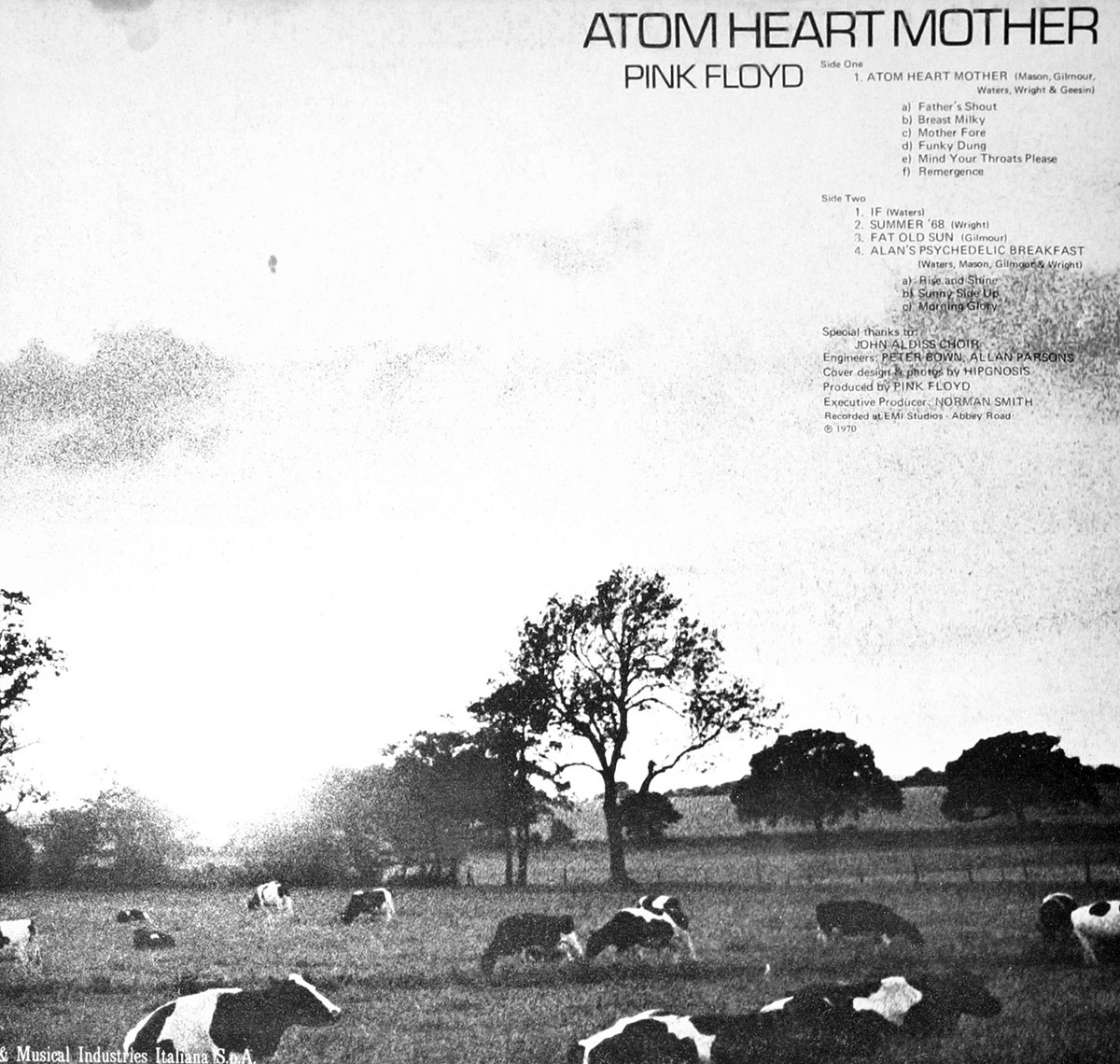
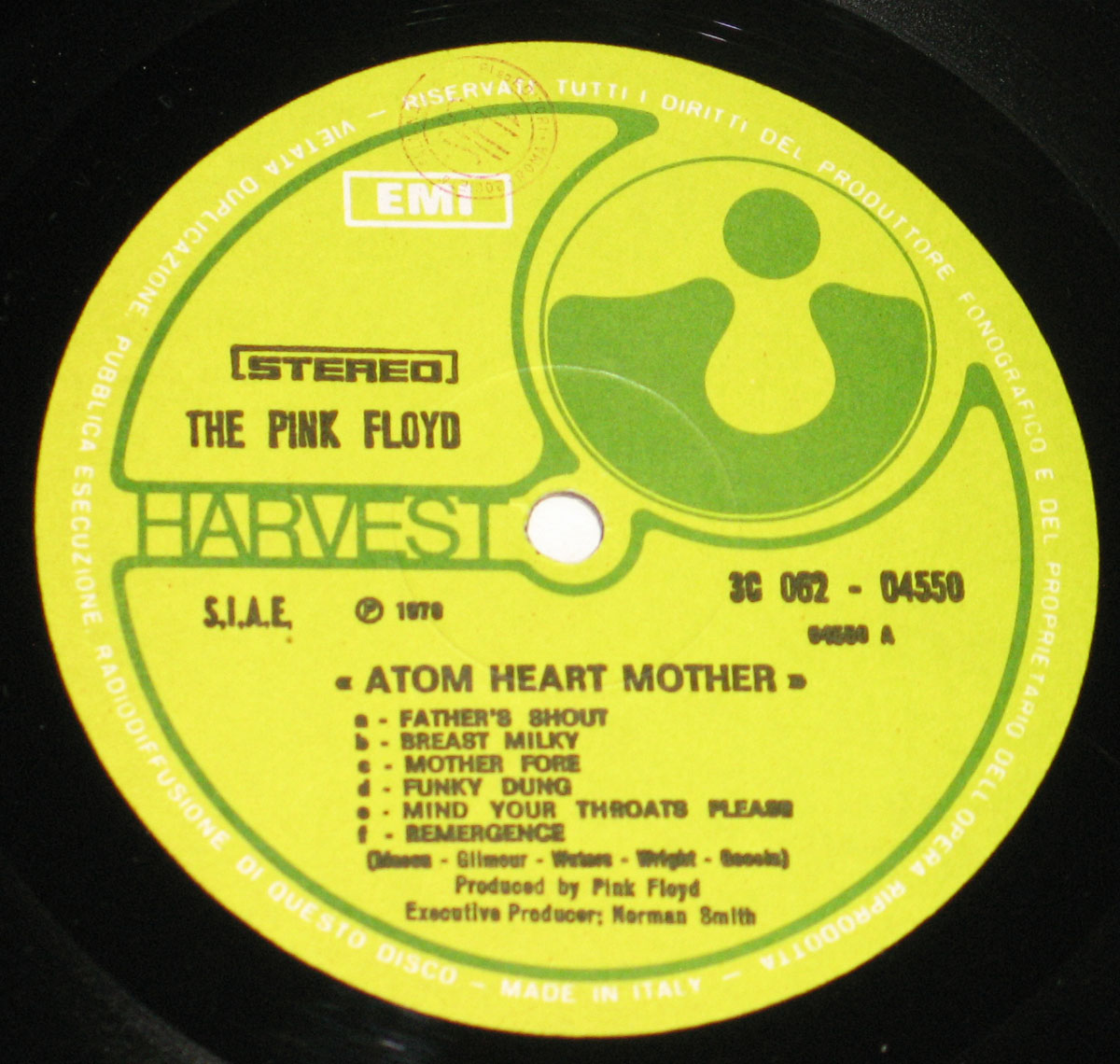
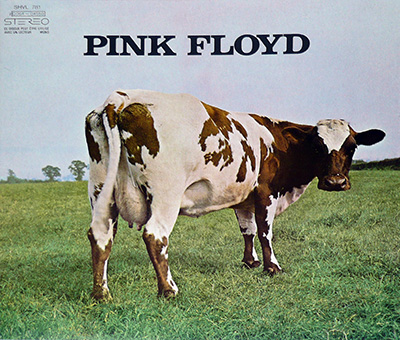
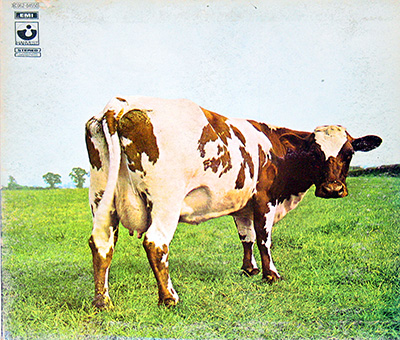
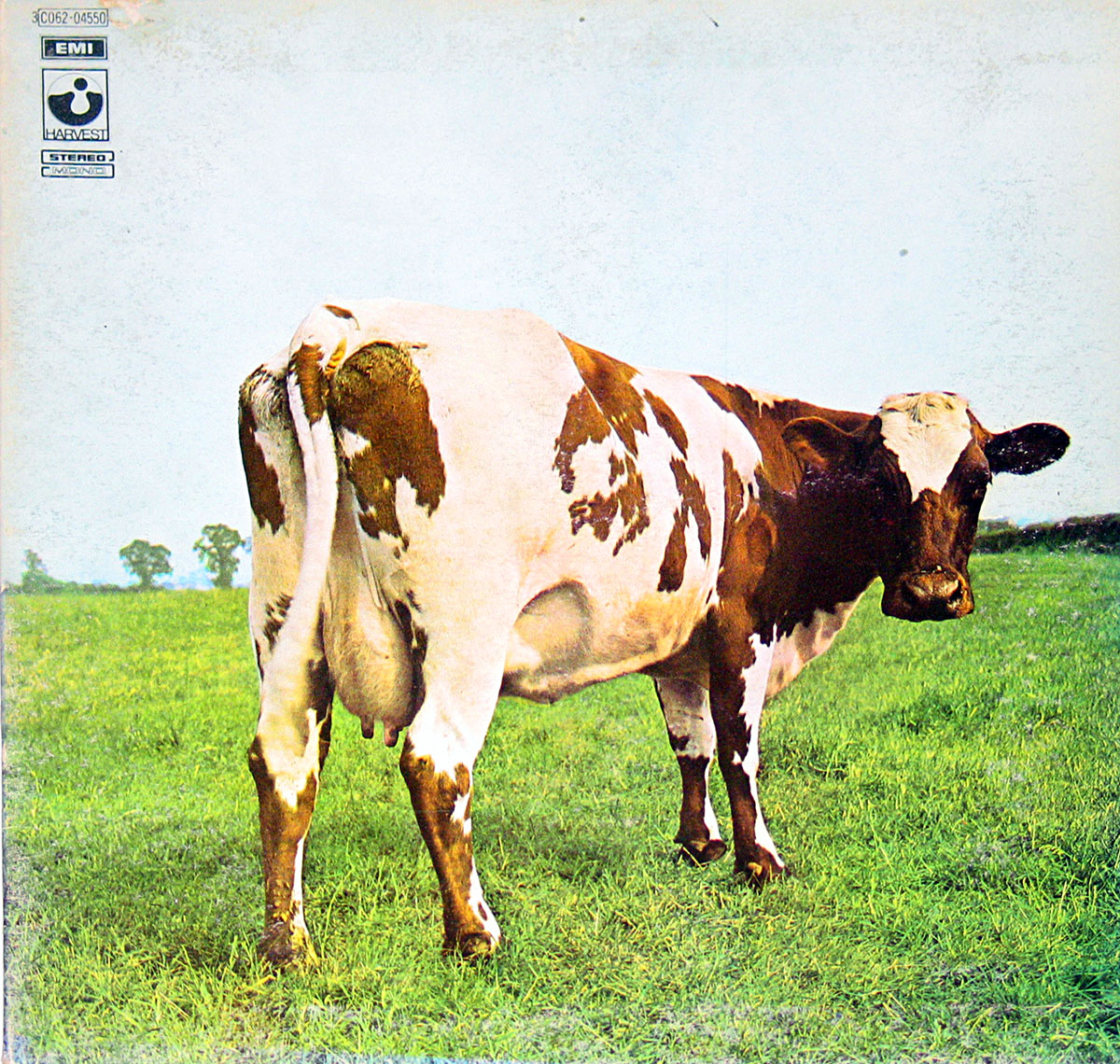
The cow gets the gossip, but the real story starts when the sleeve opens and the details begin to talk back. Norman Smith is there keeping the thing from coming apart, Abbey Road hands Peter Bown and Alan Parsons are helping hold the tape together, Hipgnosis are being brilliantly obstructive, and this Italian first issue leaves its own fingerprints in the upper-left catalogue box, the S.I.A.E. stamp, and those dated matrix marks. On paper it sounds half-mad. In the grooves, it sounds even better and worse than that, which is exactly why the hidden part is where the fun starts.
Floyd had been limping through an identity problem ever since Barrett slipped out of the center of the band and David Gilmour stepped in. That change did not instantly produce a new master plan; it produced searching, detours, and the occasional glorious overreach. "Atom Heart Mother" sounds like a group testing how much weight it can carry without folding in on itself. Sometimes that weight becomes grandeur. Sometimes it becomes a very expensive wobble.
Side One is the big gamble: the title suite lurches, surges, opens up, then comes stomping back with brass and choir like some pastoral parade that took a wrong turn into a laboratory. Ron Geesin helped shape those arrangements, and you can hear both the ambition and the strain in every swelling passage. It is not smooth. It is not meant to be. The piece moves in slabs and weather fronts, not neat little song sections, and that is part of its nerve.
Side Two is where the record stops flexing and starts breathing. "If" pulls inward with a plainspoken ache that Roger Waters would mine more ruthlessly later on. "Summer '68" gives Richard Wright a smart, slightly sour little spotlight, "Fat Old Sun" lets Gilmour stretch into that warm, open-air drift he was already very good at, and "Alan's Psychedelic Breakfast" is either charmingly eccentric or the sound of a band amusing itself in the kitchen while the tape keeps rolling. Depends on the day. Depends on the listener. I would still rather hear that kind of risk than another polished lump of respectable prog.
In the same year, King Crimson were turning prog into something sharp and apocalyptic, Yes were tightening their long-form brightness, Soft Machine were pushing deeper into jazz-rock tangles, Van der Graaf Generator were sounding like a nervous breakdown with organ pedals, and Deep Purple were dragging hard rock toward brute force. Floyd did not really fit any of those lanes. "Atom Heart Mother" has psych residue all over it, some acid haze still hanging in the corners, but it also drifts toward symphonic prog without fully trusting that world. That in-between quality is why the album still feels human. It has not yet learned how to pose.
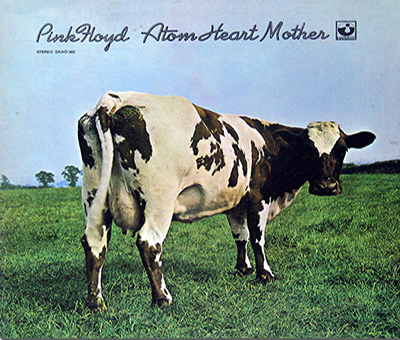
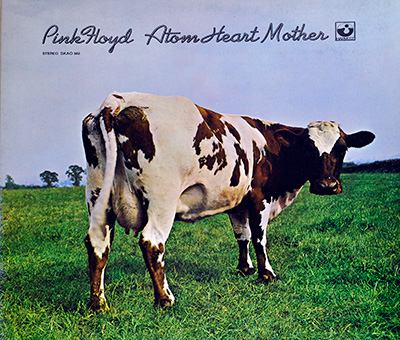
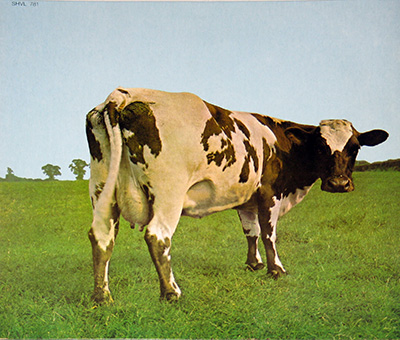
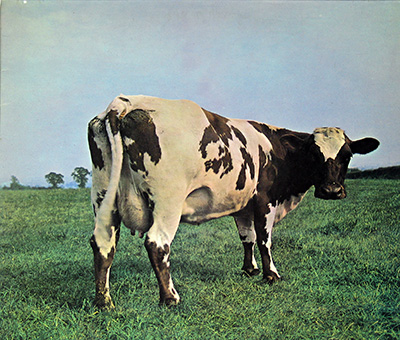
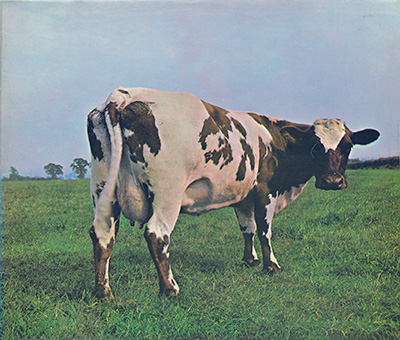
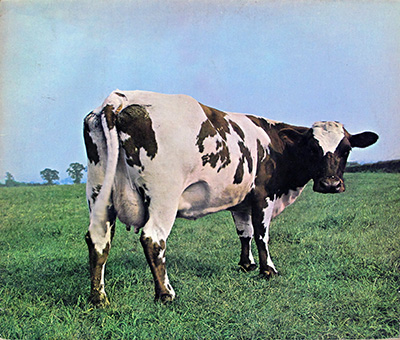
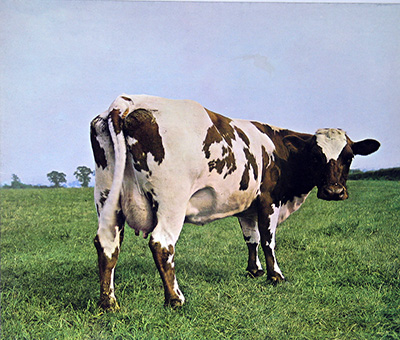
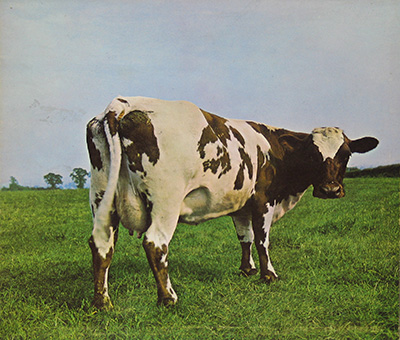
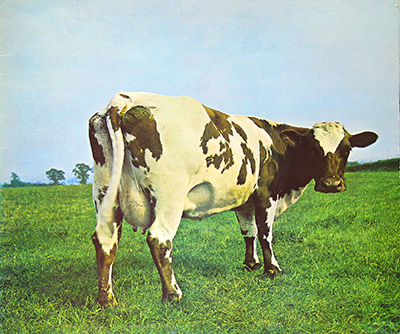
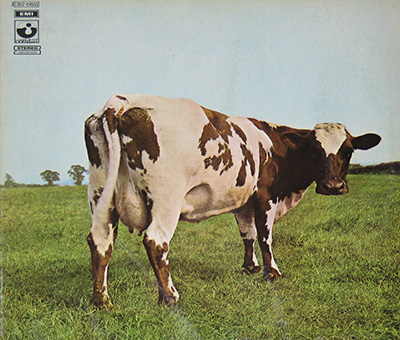
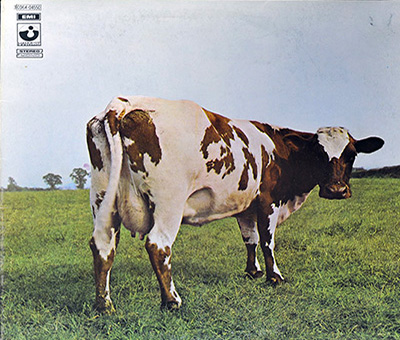
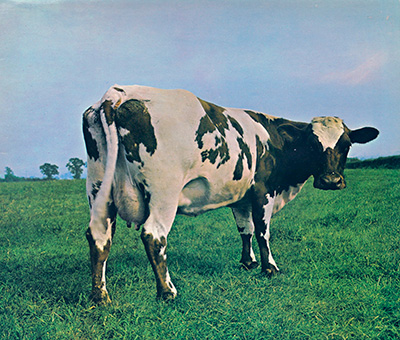
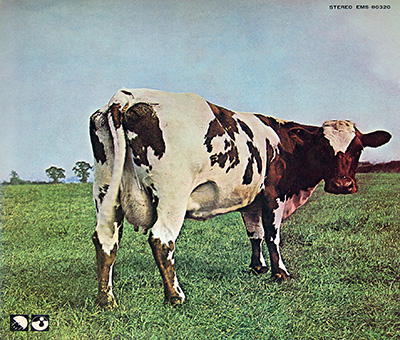
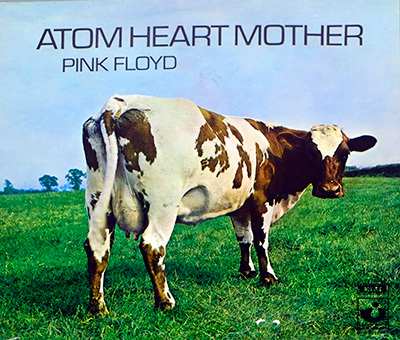
Norman Smith deserves more credit than lazy summaries usually give him. He had already been through the EMI system, handled difficult sessions before, and knew how to stop ambitious musicians from drowning in their own ideas without killing the spark. Peter Bown and Alan Parsons were part of that practical backbone at Abbey Road, the unglamorous side of record-making that keeps brass, choir, band, and tape from turning into soup. Then Hipgnosis stroll in and do the opposite of what most rock sleeves were doing: one cow, one field, no pleading, no psychedelic fuss, no need to decorate the mystery with extra nonsense.
No real scandal came with the album. No moral panic, no proper uproar, nothing that would have frightened anyone except perhaps a record executive who preferred tidy singles. The lasting misconception is that the cow must hide some grand pastoral theory or coded manifesto. Sometimes a sleeve works because it refuses to grovel for meaning. That is a harder trick than people admit.
One of the first things that still grabs me about this Italian copy is not the music at all but that little block in the upper-left corner of the front cover. In a dim second-hand shop, that is enough to make a collector stop mid-browse and pull the sleeve out properly instead of doing the usual lazy flick.
And that is where this pressing earns its keep. The gatefold has the right physical presence, the S.I.A.E. mark on the label is one of those small local details that makes a copy feel rooted rather than generic, and the matrices "04550-A 26-10-70 I" and "04550-B 26-10-70 I" pin the thing down with satisfying bluntness. It is not some ruinously rare Floyd grail. Fine. Not every worthwhile record has to demand a second mortgage. Some just need enough character, enough history, and enough oddness to make you reach for them again.
References
- Vinyl-Records.nl page with high-resolution album cover photos and Italian pressing details
- Pink Floyd official album page for "Atom Heart Mother"
- Wikipedia overview of the album, credits, and release context
- Discogs master release for sleeve and pressing comparisons
- Ron Geesin notes on the title suite and arrangement background