"Nice Pair" Album Description:
In the ever-evolving landscape of music, certain albums hold a unique place in history, transcending their time of creation to become iconic pieces that continue to captivate listeners across generations. One such gem is Pink Floyd's "Nice Pair," a 2LP vinyl album that emerged onto the scene in 1973, offering a unique blend of the band's early masterpieces.
A French Release: Unveiling the Missing Text
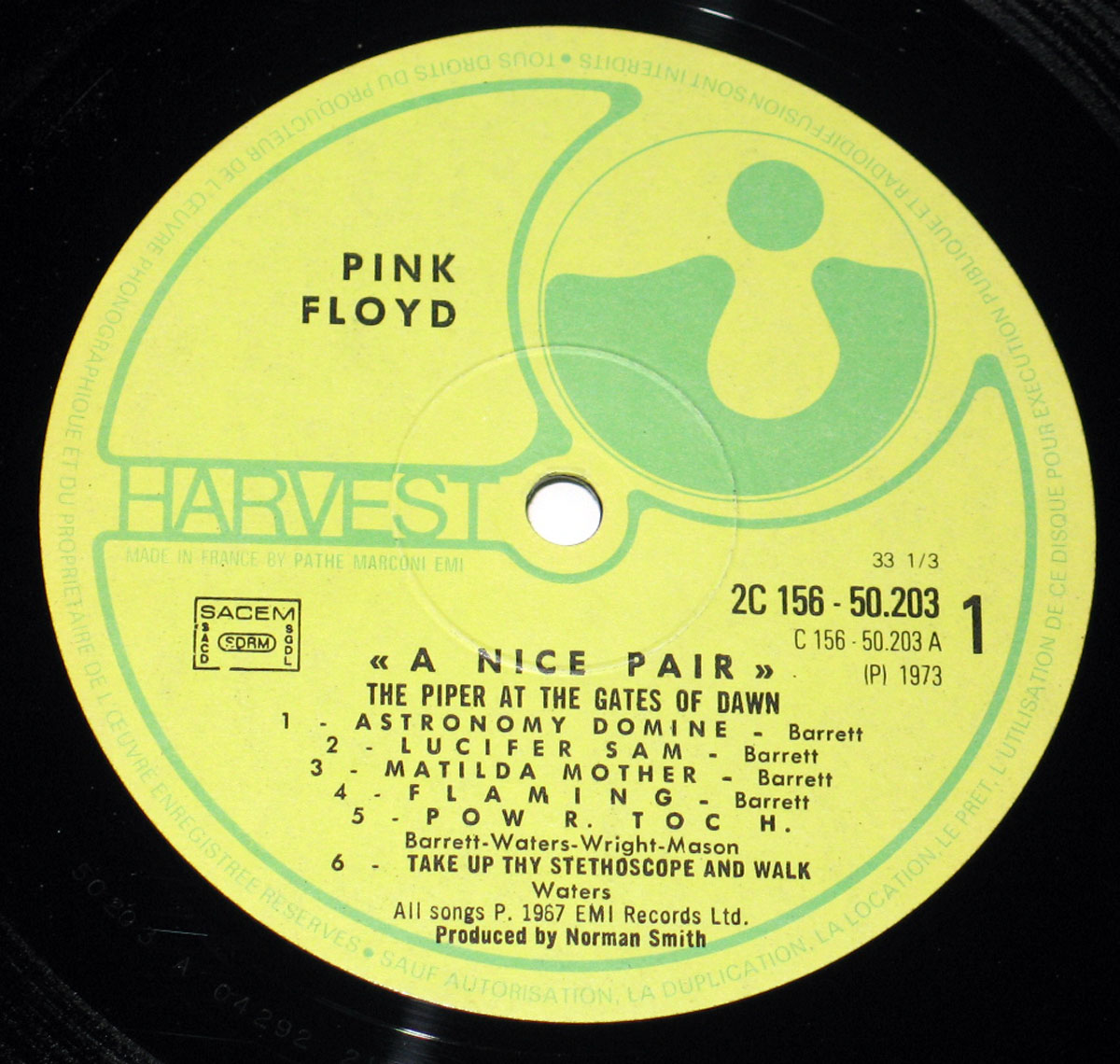
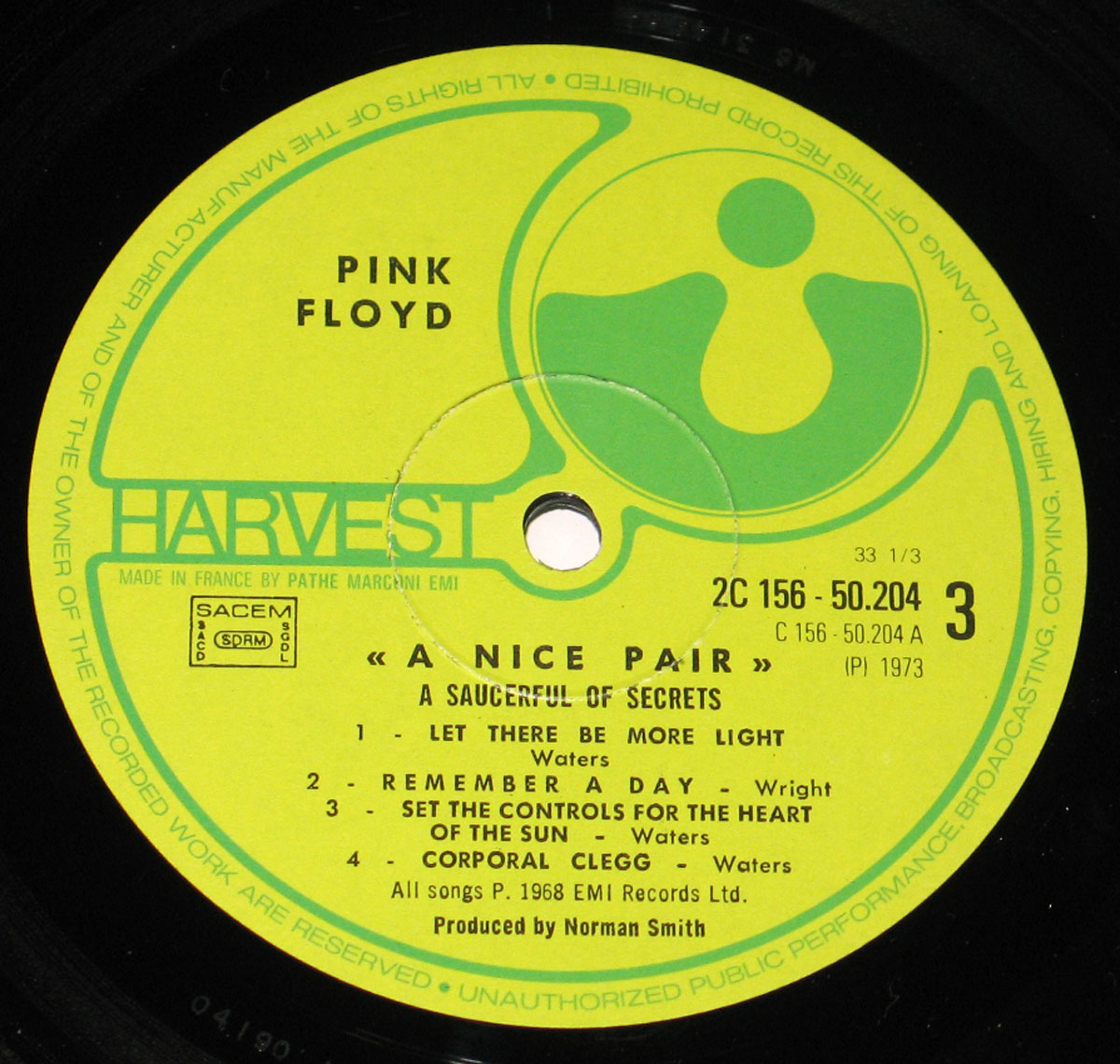
The version in focus here is the French, known for its distinctive absence of the text "STEREO - Ce Disque Peut Etre Utilise Avec un Lecteur MONO" on the left middle of the label. This omission, intentional or not, adds an intriguing layer to the album's history, sparking curiosity among collectors and enthusiasts alike.
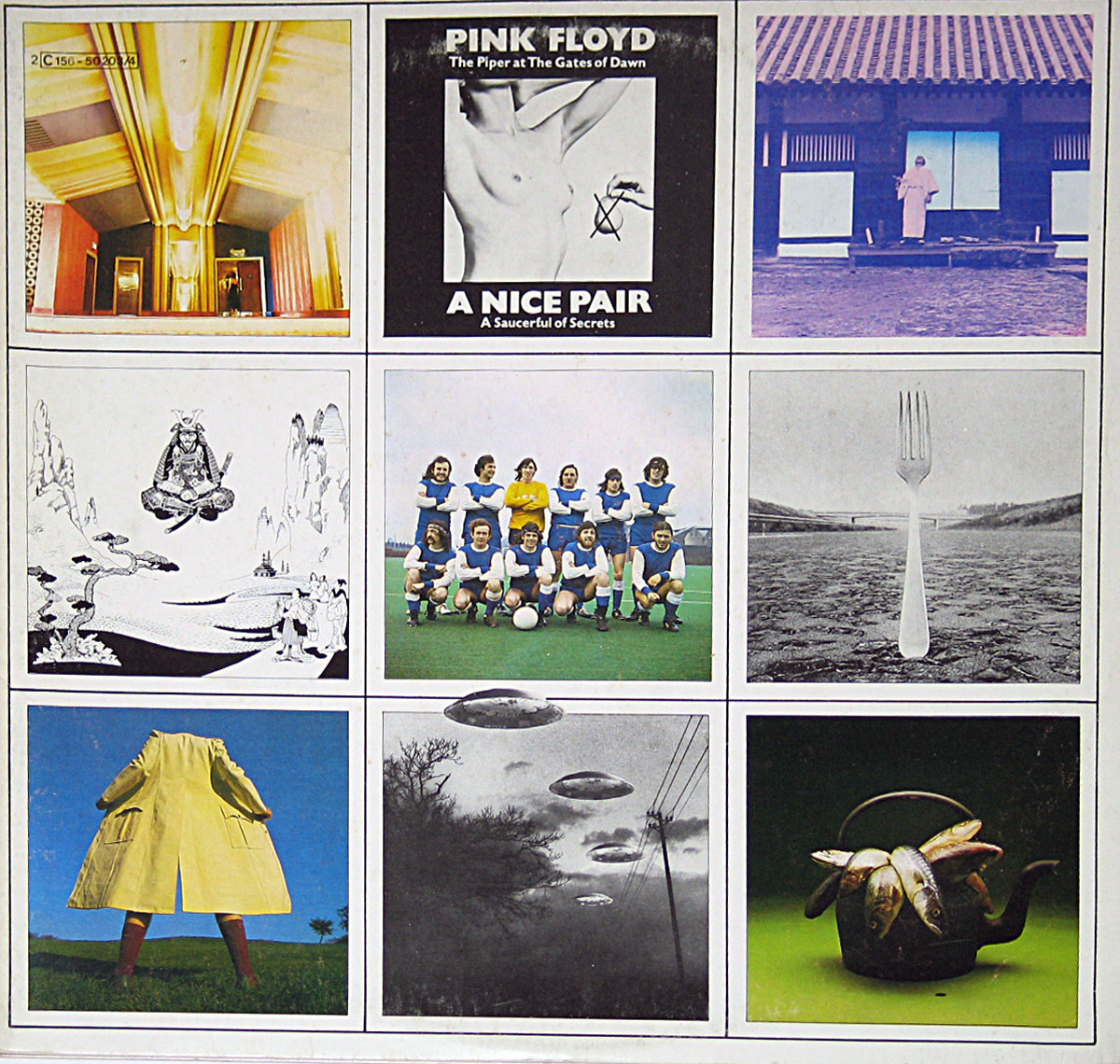
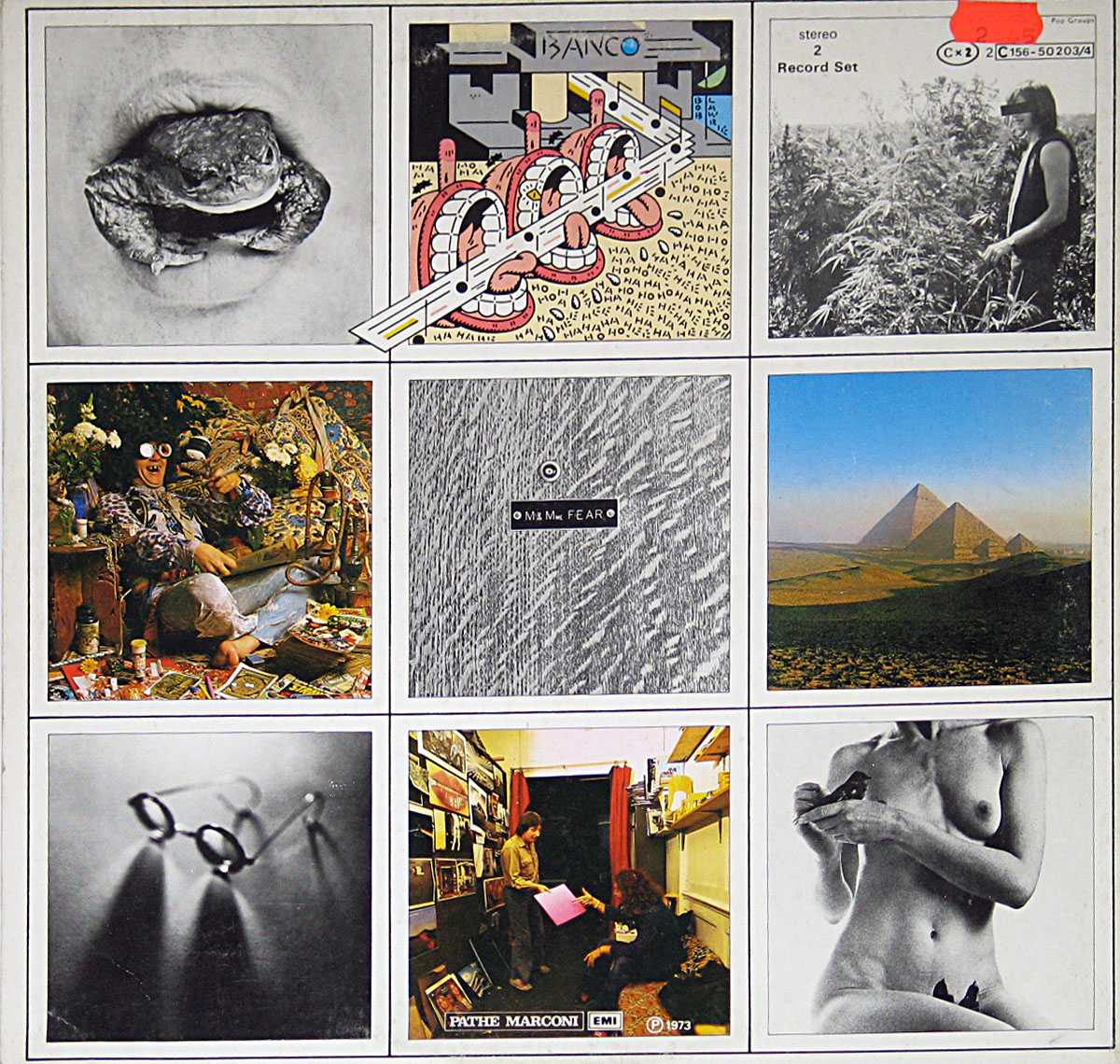
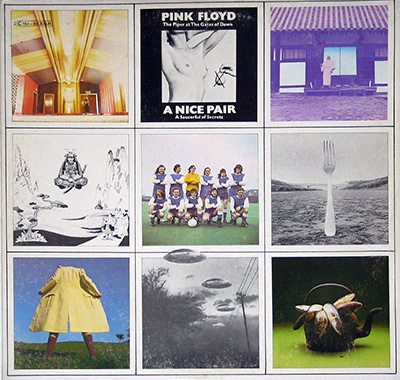
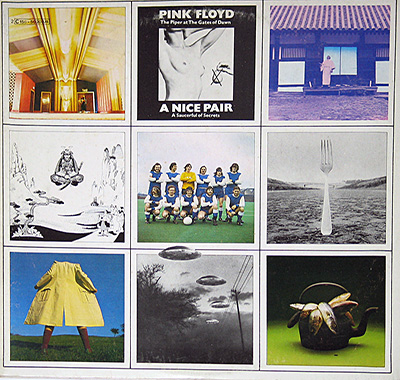
The uncensored nature of both the front and back covers further contributes to the mystique surrounding this release. In an era where album covers often became a canvas for artistic expression, Pink Floyd pushed boundaries, creating visuals that resonated with the themes embedded in their music.
A Journey Through Soundscapes: The Musical Content
At its core, "Nice Pair" encapsulates the essence of Pink Floyd's early creativity by featuring the band's first two LPs: "The Piper At The Gates of Dawn" and "Saucerful of Secrets." These albums mark the genesis of Pink Floyd's sonic experimentation, laying the foundation for the progressive rock genre.
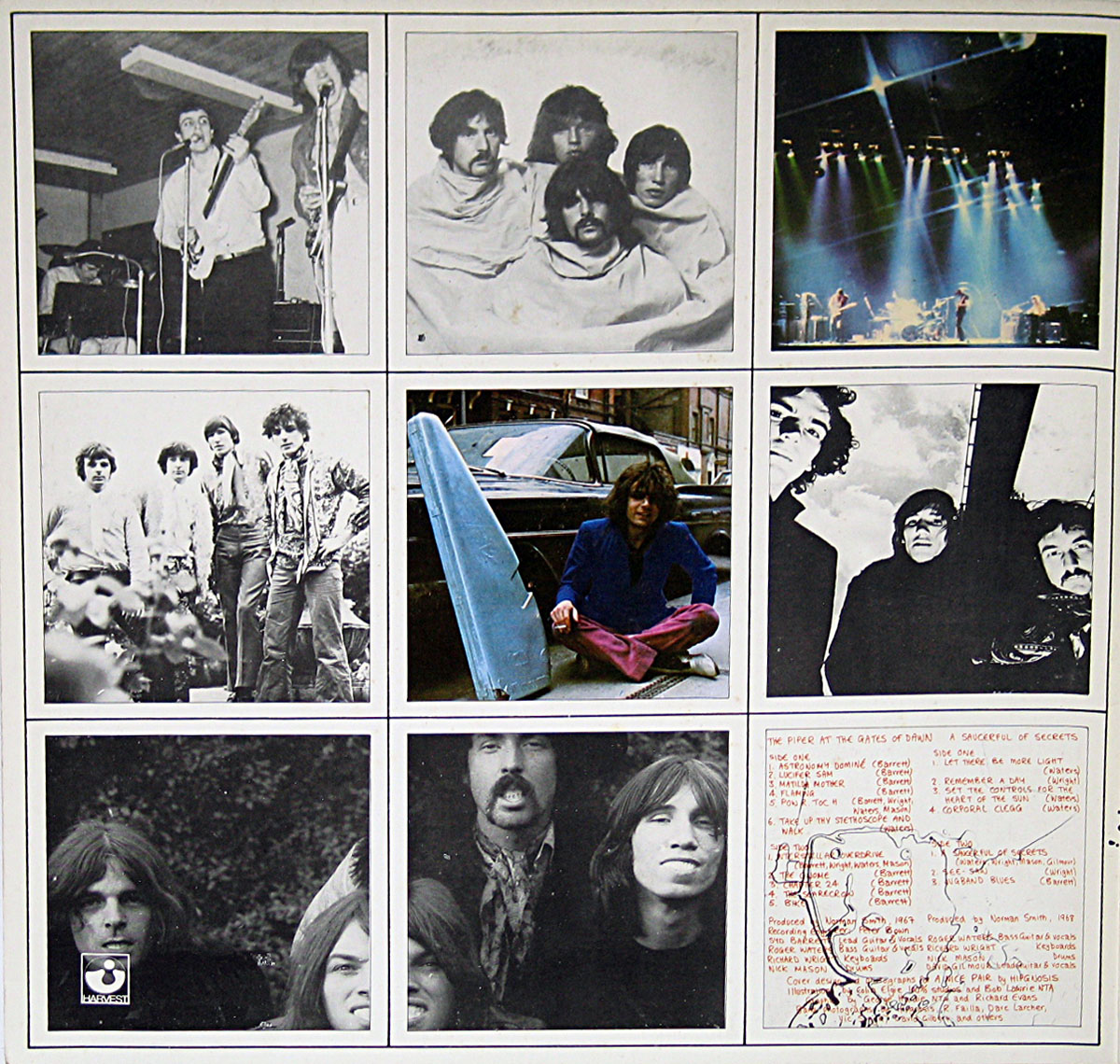
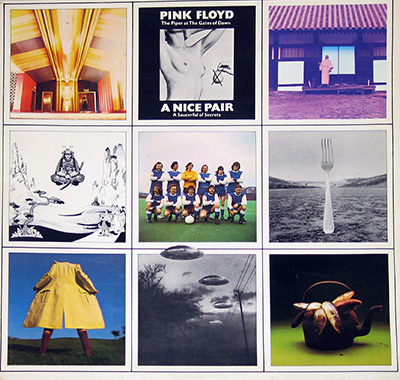
The inclusion of the two original custom inner sleeves, adorned with the front covers of "Piper at the Gates of Dawn" and "Saucerful of Secrets," adds a nostalgic touch for collectors who appreciate the tactile connection with music. These inner sleeves are not merely protective covers; they are time capsules that transport listeners back to the visual aesthetics of the early '70s.
Behind the Scenes: Norman Smith's Production
"Nice Pair" bears the stamp of Norman Smith's production, a name synonymous with Pink Floyd's formative years. Smith's influence played a crucial role in shaping the band's sound during their early studio endeavors. As the producer of these albums, his imprint on the sonic landscapes of "The Piper At The Gates of Dawn" and "Saucerful of Secrets" is evident, making this French release a testament to a bygone era of music production.
Harvesting Timeless Sounds: The Label and Release Details
The album is cataloged under Harvest with the reference 2C 156-50.203, a code that holds significance for collectors seeking authenticity. The "Made in France" tag further solidifies the album's global journey, highlighting its export status and contribution to the international dissemination of Pink Floyd's musical prowess.
This album includes the two original custom inner sleeves with the front covers of the "Piper at the Gates of Dawn" as well as "Saucerful of Secrets"
This is the French export version and is missing the the text "STEREO - Ce Disque Peut Etre Utilise Avec un Lecteur MONO" printed on the left middle of the label Uncensored Front and Uncensored Back Cover
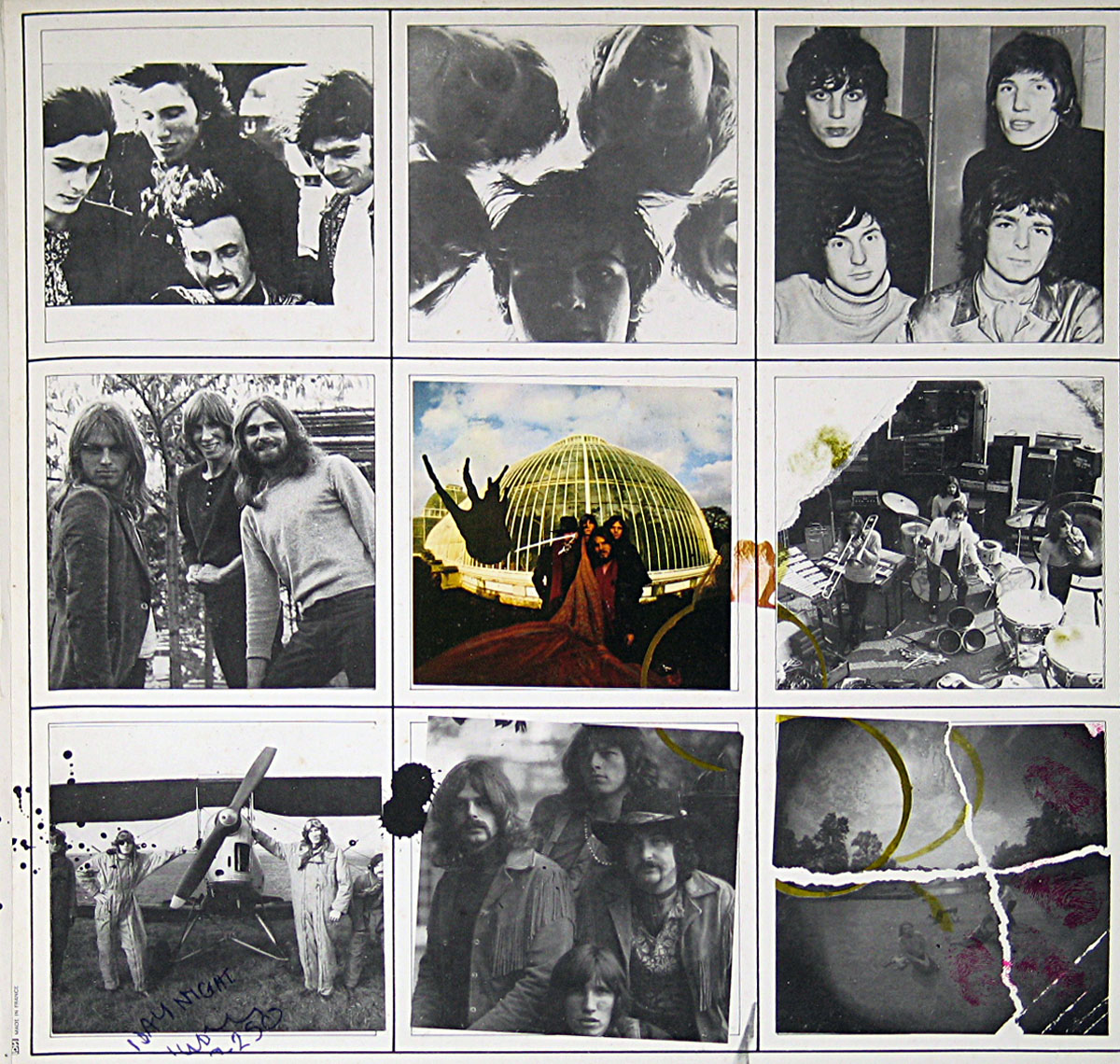
Band Members and Musicians on: Pink Floyd Nice Pair (Piper At The Gates of Dawn, Saucerful of Secrets) Uncensored
|
Pink Floyd Band/Musicians
- Roger Waters
- Roger Waters – Bass, vocals, songwriter
Roger Waters is the guy I blame (politely) when a Pink Floyd song stops being “spacey vibes” and starts staring straight through you with lyrics that feel like a courtroom cross-examination. Read more... Roger Waters is, to my ears, Pink Floyd’s razor-edged storyteller: bassist, singer, and the main lyric engine who pushed the band from psychedelic drift into big, human-scale themes. His key band period is Pink Floyd (1965–1985), where he became the dominant writer through the 1970s and early 1980s, before leaving and launching a long solo career (1984–present). After years of public tension, he briefly reunited with Pink Floyd for a one-off performance at Live 8 in London on 2 July 2005—basically the musical equivalent of spotting a comet: rare, bright, and gone again. Since the late 1990s he’s toured extensively under his own name, staging huge concept-driven shows that revisit Floyd classics like "The Dark Side of the Moon" (notably on the 2006–2008 tour) and "The Wall" (2010–2013), because apparently subtlety is not the point when you’ve got something to say.
- Richard Wright
- Richard Wright – Keyboards, vocals
Richard Wright is the secret atmosphere machine in Pink Floyd: the guy who can make one chord feel like a whole weather system, and then casually add a vocal harmony that makes it hit even harder. Read more... Richard Wright (born Richard William Wright) is, for me, the understated genius of Pink Floyd: co-founder, keyboardist, and occasional lead vocalist whose textures are basically baked into the band’s DNA. His main performing period with Pink Floyd runs from 1965 to 1981 (including the early albums through the massive arena years), then he returned as a full member again from 1987 to 1994 for the later era tours and albums. In between those chapters, he didn’t just vanish into a fog machine: he released a solo album, "Wet Dream" (1978), and later "Broken China" (1996), and he also had a proper side-project moment with Zee (1983–1984), which produced the album "Identity" (1984). He passed away in 2008, but his playing still feels like the part of Pink Floyd that makes the air shimmer.
- Nick Mason
- Nick Mason – Drums, percussion
Nick Mason is the steady heartbeat I always come back to in Pink Floyd: the only constant member since the band formed in 1965, quietly holding the whole weird universe together while the rest of the planet argues about everything else. Read more... Nick Mason is Pink Floyd’s drummer, co-founder, and the one guy who never clocked out: his main performing period with Pink Floyd runs from 1965 to the present, and he’s the only member to appear across every Pink Floyd album. Outside the mothership, he’s had a very “I’m not done yet” second act: in 2018 he formed Nick Mason’s Saucerful of Secrets (2018–present) to bring the band’s early psychedelic years back to the stage. He’s also stepped out under his own name with projects like the solo album "Nick Mason’s Fictitious Sports" (released 1981), which is basically him taking a left turn into jazz-rock just to prove he can. And yes, he was part of that blink-and-you-miss-it full-band moment at Live 8 in London in 2005, when the classic lineup briefly reunited and reminded everyone why this band still haunts people.
- Syd Barrett
- Syd Barrett – Guitar, vocals, songwriter
Syd Barrett is the original Pink Floyd spark plug I always think of when the music sounds like it was beamed in from a kinder, stranger universe—he co-founded the band in 1965 and shaped their early psychedelic identity before everything went sideways. Read more... Syd Barrett (born Roger Keith Barrett) is, to me, the “before” and “after” line in Pink Floyd history: the frontman, guitarist, and main songwriter in the band’s formative years, then the haunting absence everyone kept orbiting. His key band period is Pink Floyd (1965–1968), where his songs and playing defined the early sound and led to the debut album era, before his departure in 1968. After that, he had a short, intense solo period (1968–1974), highlighted by the albums "The Madcap Laughs" (released 1970) and "Barrett" (released 1970), after which he largely withdrew from the music world. It’s a brutally brief career arc for someone so influential, which is exactly why his shadow still feels weirdly present whenever early Floyd comes on.
- David Gilmour - Guitar, Vocals
- David Gilmour – Guitar, vocals
David Gilmour is the voice-and-fingers combo I hear whenever Pink Floyd turns from “spacey” into straight-up cinematic: he joined in 1967 and basically helped define what “guitar tone with emotions” even means. Read more... David Gilmour is, for me, the calm center of Pink Floyd’s storm: an English guitarist, singer, and songwriter whose playing can feel gentle and devastating in the same bar. His earliest band period worth name-dropping is Jokers Wild (1964–1967), before he stepped into Pink Floyd in 1967 as Syd Barrett’s situation unraveled. From there his main performing era is Pink Floyd (1967–1995), including the post-Roger Waters years where the band continued under his leadership and released "A Momentary Lapse of Reason" (1987) and "The Division Bell" (1994), with a later studio coda in "The Endless River" (2014). Outside Floyd, he’s had a long solo run (1978–present) with albums ranging from "David Gilmour" (1978) to "Luck and Strange" (2024), and he even did a sharp side-quest in 1985 with Pete Townshend’s short-lived supergroup Deep End. And for one historic night, the classic lineup reunited at Live 8 in Hyde Park, London on 2 July 2005—one of those “you had to be there (or at least press play)” moments.
|