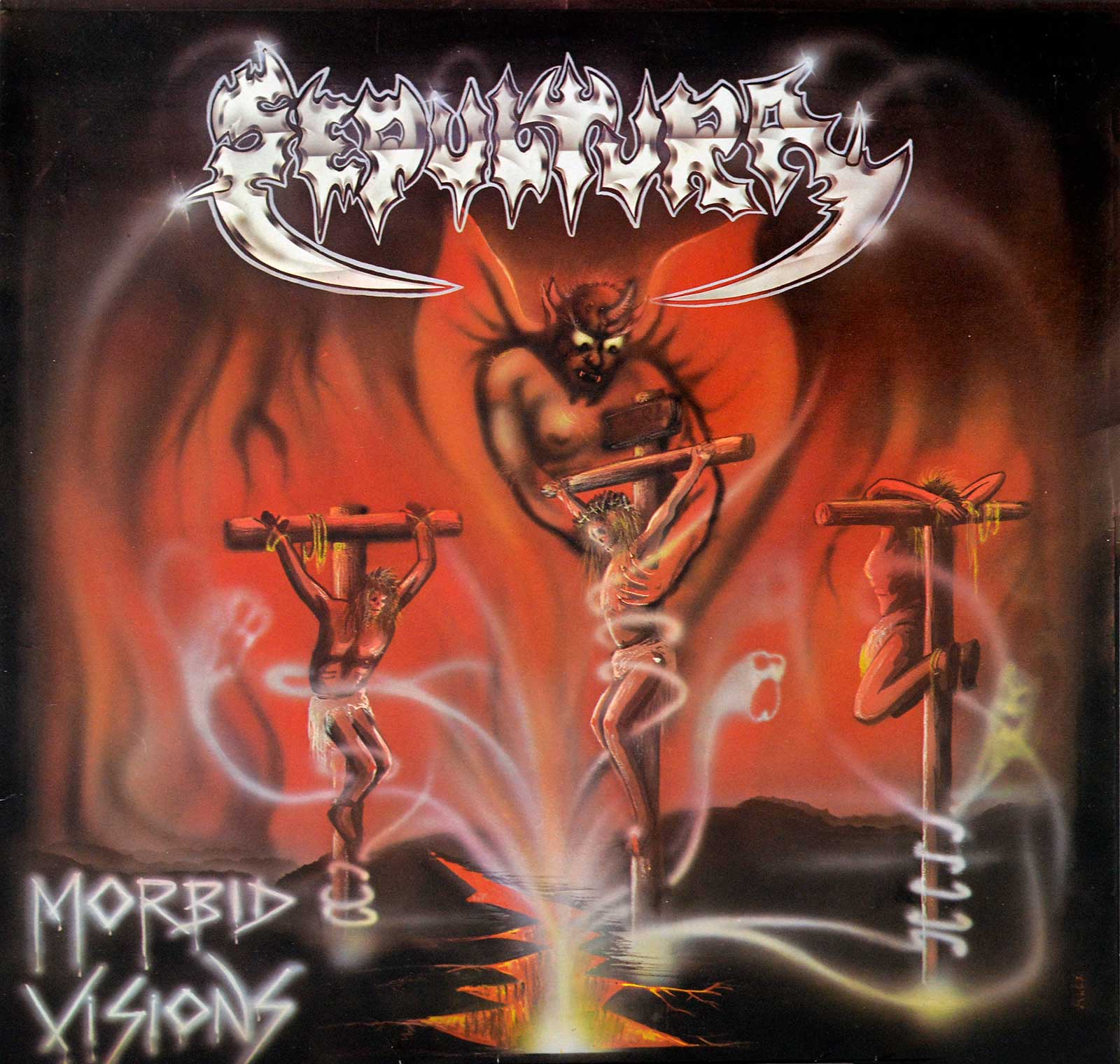
"Morbid Visions" (1987) Album Description:
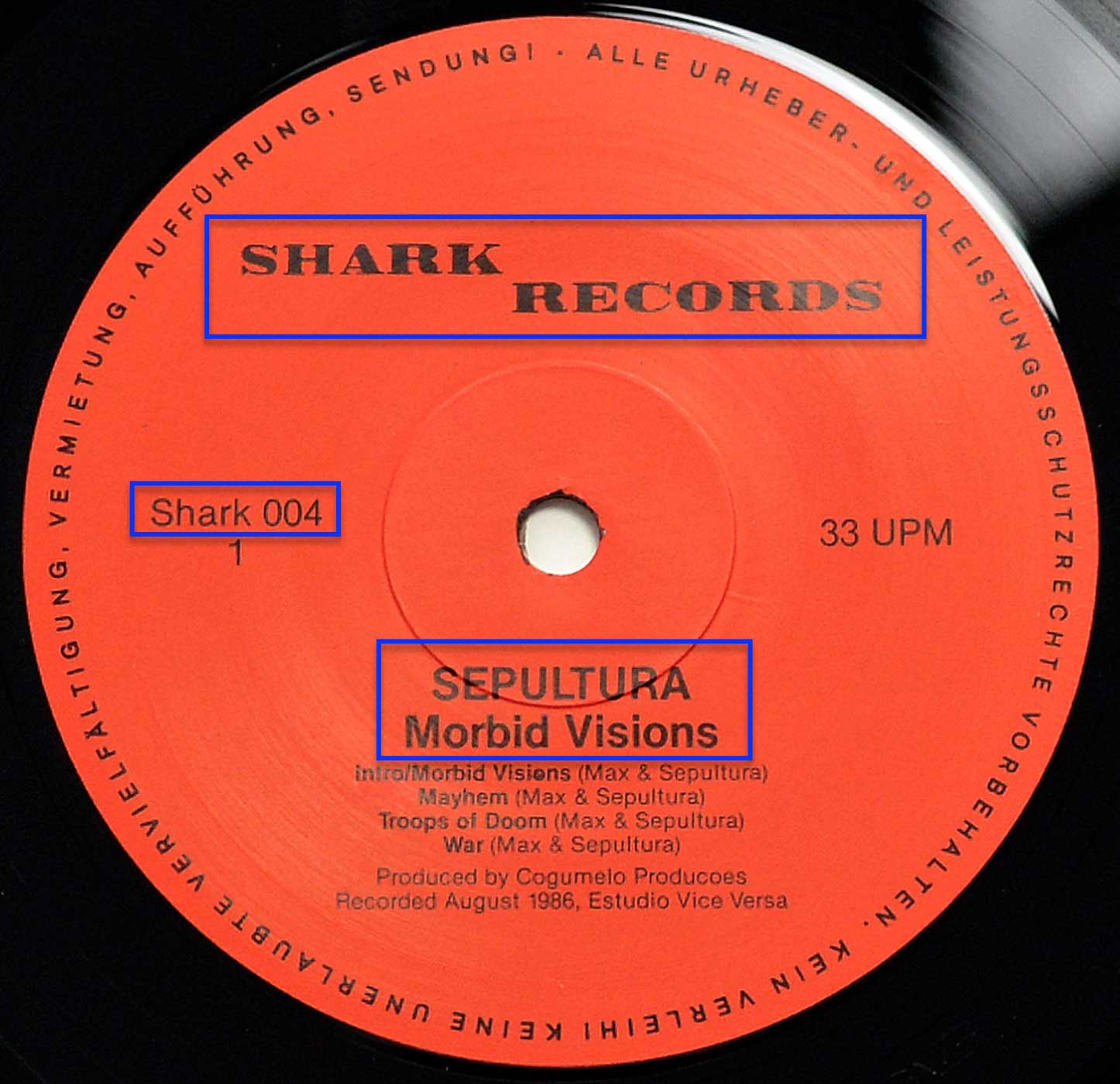
"Morbid Visions" is what Brazilian Thrash Metal sounded like before anybody had the money, the patience, or the bad judgment to clean it up. This West German Shark Records pressing catches Sepultura at the point where the band still felt more like a threat than a finished machine: Max Cavalera barking and hacking his way through riffs, Jairo T. Guedz spraying loose-edged lead guitar over the top, Igor Cavalera driving the songs with a young man’s sense of impact rather than finesse. Plenty of records from 1986 and 1987 wanted to look evil. This one actually sounds like it was made in a room that smelled of hot amplifiers, dust, and nerves.
What makes this album worth opening up is not just the noise. It is the mess around the edges: the Belo Horizonte scene that had to invent half its own infrastructure, the German Shark issue that sits in a very different collector lane from the earliest Brazilian copies, the line-up still hardening under your hands, and a sleeve that practically shouts before the needle drops. Dig a little deeper and the record gets stranger, meaner, and more human than the usual lazy "primitive first album" label suggests.
Belo Horizonte in the mid-1980s was not exactly rolling in spare cash, polished rehearsal spaces, or major-label couriers. That scarcity matters. The local metal scene grew on tape trading, stubbornness, photocopied attitude, and the useful absence of outside supervision. Cogumelo did not wave a magic wand over Sepultura; it did something more practical and more valuable. It helped get the band on record and out into circulation, which is how this rough little beast escaped Brazil and started gnawing at the international underground.
Set this beside Slayer, Venom, Sodom, Kreator, Hellhammer, or the earliest Celtic Frost and the differences show up fast. Slayer had sharper attack and far more control. Sodom and Kreator were already pushing German thrash toward a harsher, drilled violence. Venom was chaos with theatre attached. Sepultura, at this stage, sounds more cramped than all of them, more boxed in, more feral, and a good deal less interested in appearing competent for its own sake. That is not a weakness here. It is the whole atmosphere.
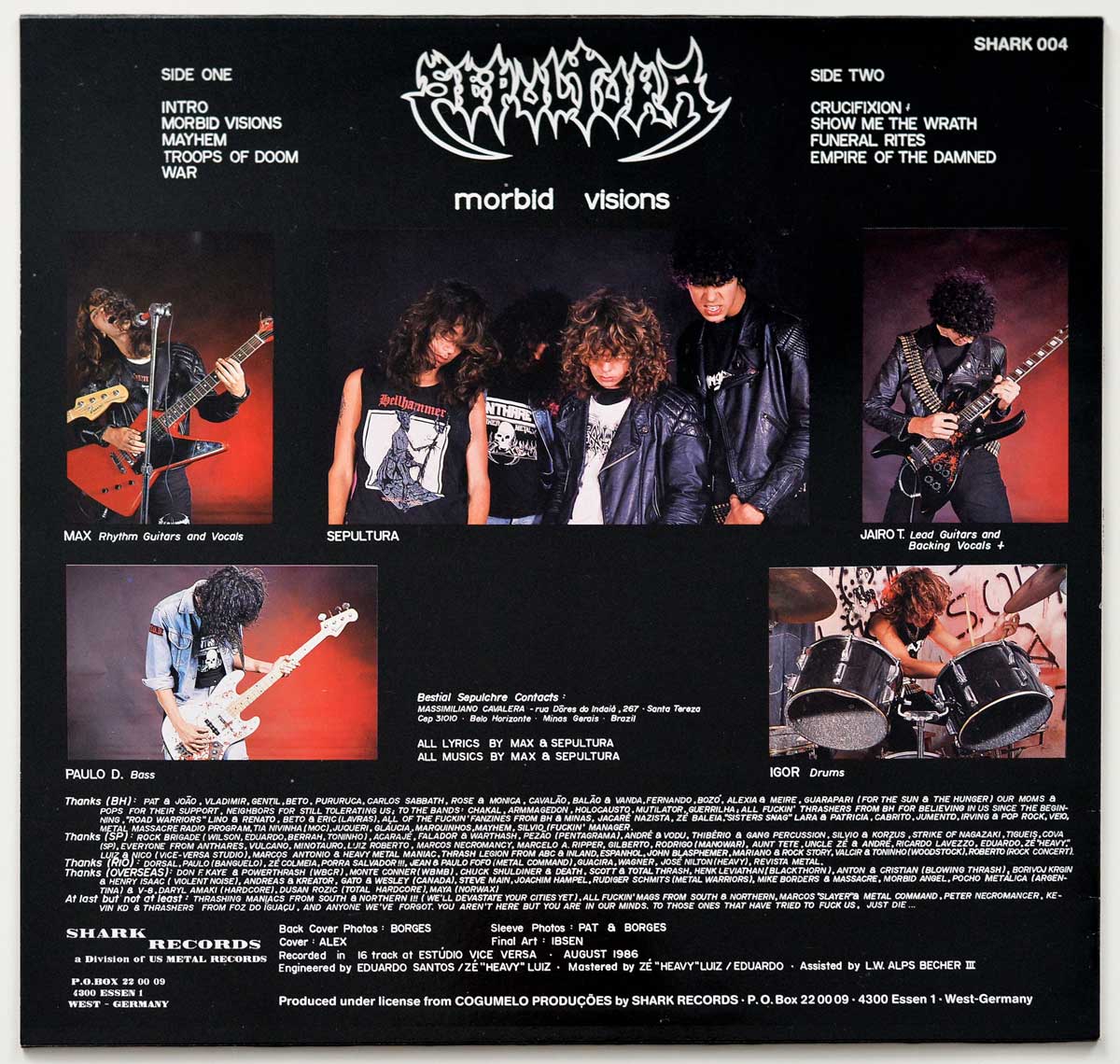
The sound itself is dry, scraping, and narrow in a way that suits the material. Eduardo Santos and Zé "Heavy" Luiz did not turn this into studio furniture; they kept the attack intact, while L. W. Alps Becher III helped stop the mastering from falling apart altogether. Recorded at Estudio Vice Versa in August 1986, the album never opens out into big theatrical space. It presses inward. Guitars rub against the drums, vocals sit like hot grit on top, and the whole record feels as though it was trapped in the room with the band and told to cope.
Max is the centre of gravity, no question, but not in the later iron-willed way people tend to remember. Here he sounds hungry, volatile, still shaping his method in real time. Jairo T. Guedz is just as crucial. His lead work adds that unstable early-Sepultura character, the sense that the solos might either rip the song open or crash headfirst into the wall. That looseness disappears once the band moves into a more disciplined frame of mind, and there are days when I prefer this awkward danger to the cleaner command that came later. Not every listener will agree. Tough.
Igor Cavalera’s drumming is another big part of why the album still lands. There is no slick trickery to hide behind, just blunt force, speed, and the sort of instinctive push that makes a young thrash record feel alive instead of merely fast. Bass on these earliest Sepultura recordings has always carried a faint haze around it in fan conversations, and that kind of confusion is common when bands come out of small scenes with limited resources and even more limited paperwork. What matters on the actual record is the physical result: low-end pressure, not virtuoso display.
No major scandal hangs over "Morbid Visions" itself, despite the usual outsider panic about demons, crosses, and adolescent blasphemy. The real misconceptions are duller and more persistent. One is that every copy of this album lives in the same collector world. It does not. Another is that this was already the fully armed Sepultura of later years. It was not. This is a band still learning how to turn obsession into form, which is exactly why the album keeps its bite.
Tracks like "Troops Of Doom" and "Show Me The Wrath" carry the record because they understand movement. The riffs do not just chug along like dutiful thrash homework; they lurch, bite, and surge forward with that slightly off-balance feel that gives early extreme metal its real pulse. Even the rougher cuts matter because they thicken the mood. Nothing here sounds curated. It sounds thrown together under pressure by people who believed that atmosphere could cover for any technical shortfall, and damned if they were not right more often than they were wrong.
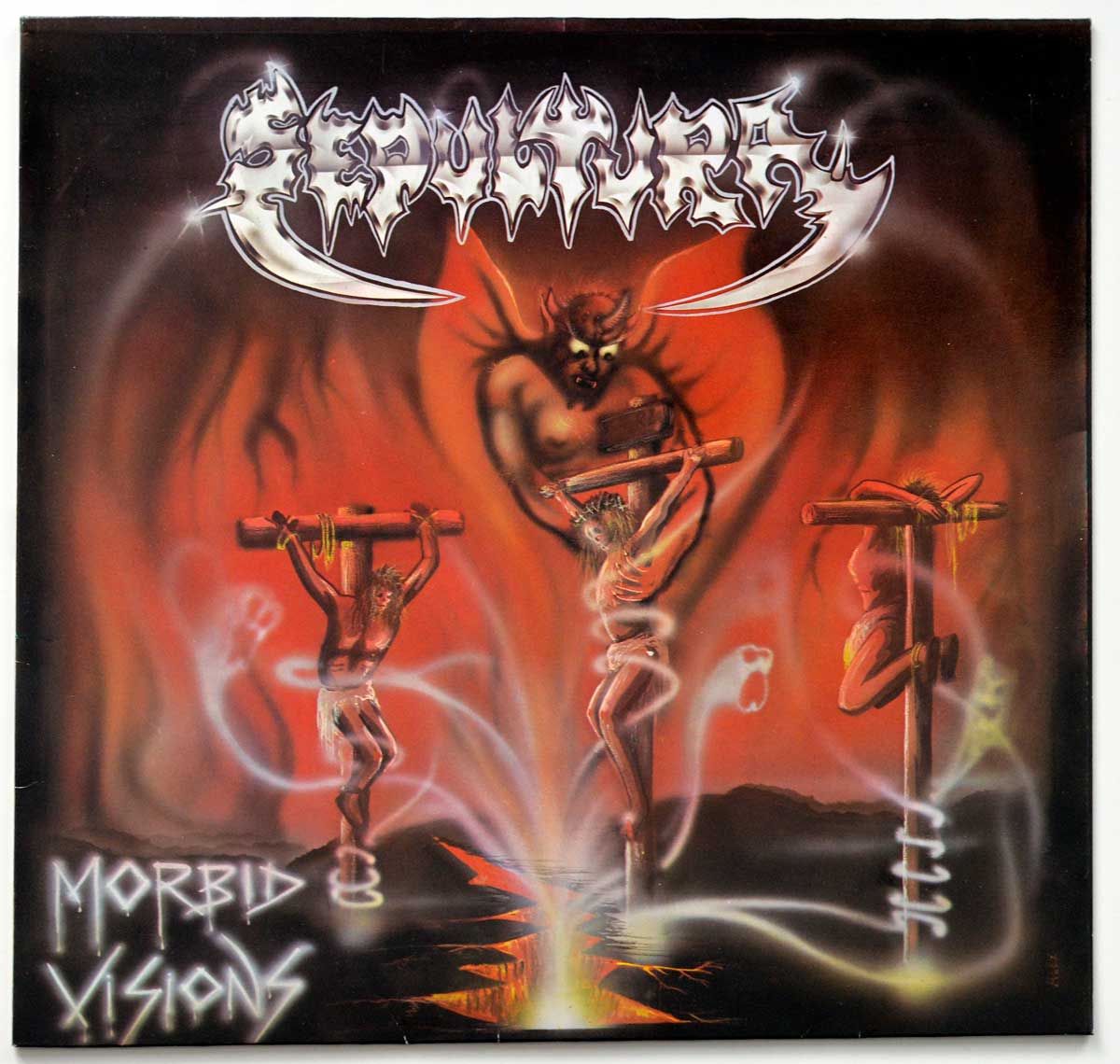
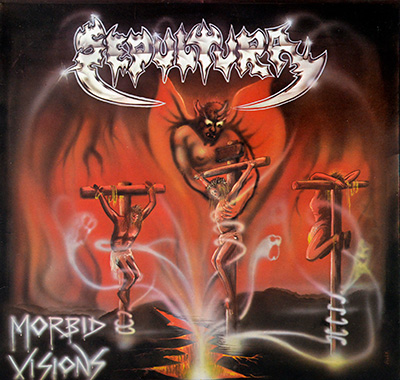
The Shark Records sleeve helps too. Alex and Ibsen did not package this album as a tasteful artefact; they pushed it toward lurid excess, which was the correct decision. On a late shelf under bad fluorescent light, the silver logo and red-orange inferno do exactly what they should do: they pull the eye before the music gets a chance. A copy like this always reminds me of those last ten minutes in a record shop when you are supposed to be leaving, but one nasty-looking sleeve keeps whispering, "Not yet."
That is why this German pressing still earns space. Not because it is flawless. Not because it predicts every strength the band would later sharpen. It earns space because it catches the sound of a scene pushing outward through bad conditions, a young band still rough at the joints, and a form of Brazilian Thrash Metal that had more heat than polish and more nerve than manners. Some records arrive dressed for history. This one arrives with ash on its boots.