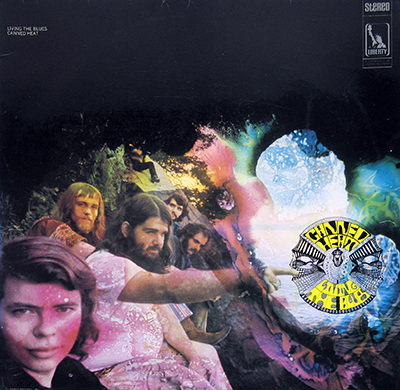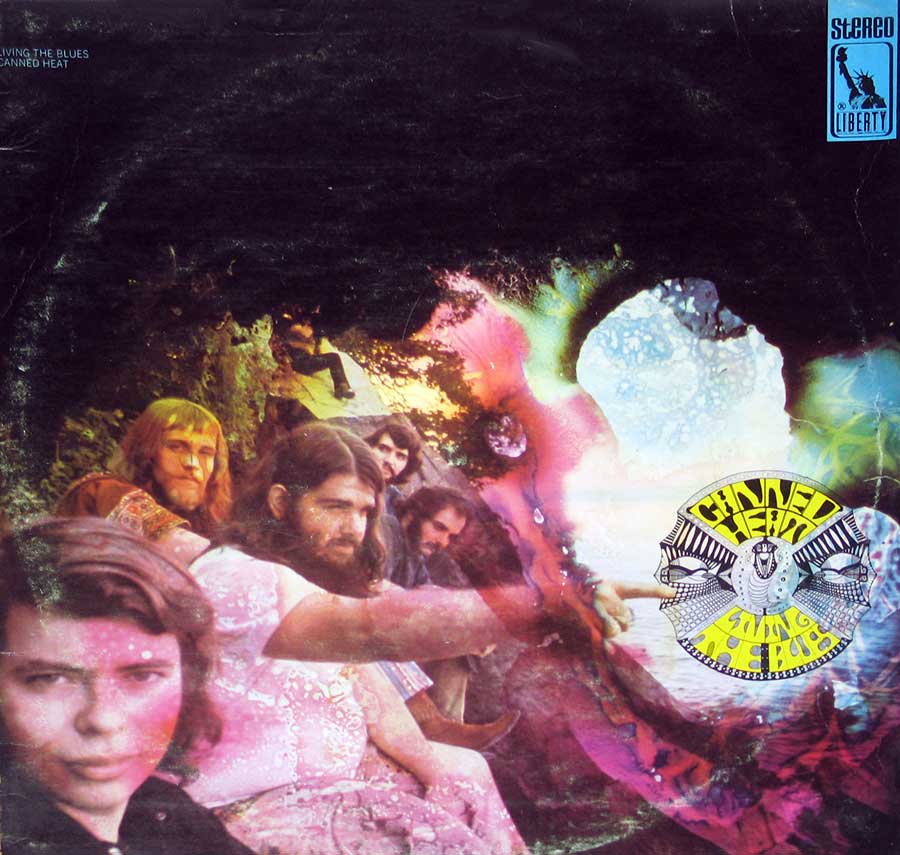
"Livin' the Blues" (1968) Album Description:
"Livin' the Blues" is Canned Heat refusing to stay in the “fun boogie band” box. Late 1968, America’s running on nerves and bad headlines, and they answer with a gatefold double LP that actually climbs the charts—because of course the loud, sweaty one does. Then “Going Up the Country” wanders in, light on its feet, and suddenly everybody thinks they’ve always known it.
Here’s the part nobody tells you until it’s too late: the album isn’t built like a normal record. It’s built like a night that keeps getting stranger. Studio sweat on the first sides, then a hard pivot into a long, live boogie that was cut at the Kaleidoscope in Hollywood—because of course the place called the Kaleidoscope is where the walls start breathing. And along the way, you get unannounced visitors at the piano and a detour called “Parthegenesis” (yes, spelled like that on this page) that doesn’t so much “start” as seep in.
1968 in the USA: smoke in the air, stereo on the table
You hear the year in the way this record breathes. The news is a constant buzz, crowds are restless, and rock is split between “three-minute miracle” and “let it run until it tells the truth.” Canned Heat doesn’t pick one. They stomp on the gas, then they keep going, like the room dared them to stop.
That’s the trick: it still swings, even when it gets weird. Especially when it gets weird.
Blues-rock peers that year (same planet, different weather)
In ’68, a lot of bands are orbiting the blues, but they’re wearing different disguises. Cream turns it into a bright, loud flex. The Paul Butterfield Blues Band keeps it sharper, city-bred. Early Fleetwood Mac leans into UK bite. The Grateful Dead drifts into long-room fog. Canned Heat plants both feet in boogie and grinds until the floorboards complain.
The sound: grit, glare, and the boogie engine
Side One opens with “Pony Blues” and it’s not a “tribute,” it’s a shove. “My Mistake” tightens the screws. “Sandy’s Blues” stretches out, the band settling into that heavy, rolling feel like a big machine finally finding its rhythm. Then “Going Up the Country” shows the other face: breezy, deceptively simple, a tune that makes you picture road dust even if you’re sitting perfectly still.
“Walking by Myself” and “Bear Wires” get an extra jolt from John Mayall on piano—dry, practiced, no fireworks, just that stubborn blues backbone. And when “Boogie Music” hits, Dr. John shows up and smears a little New Orleans spice into the mix, like somebody slipped something into the punch.
Production, label, and that physical gatefold feel
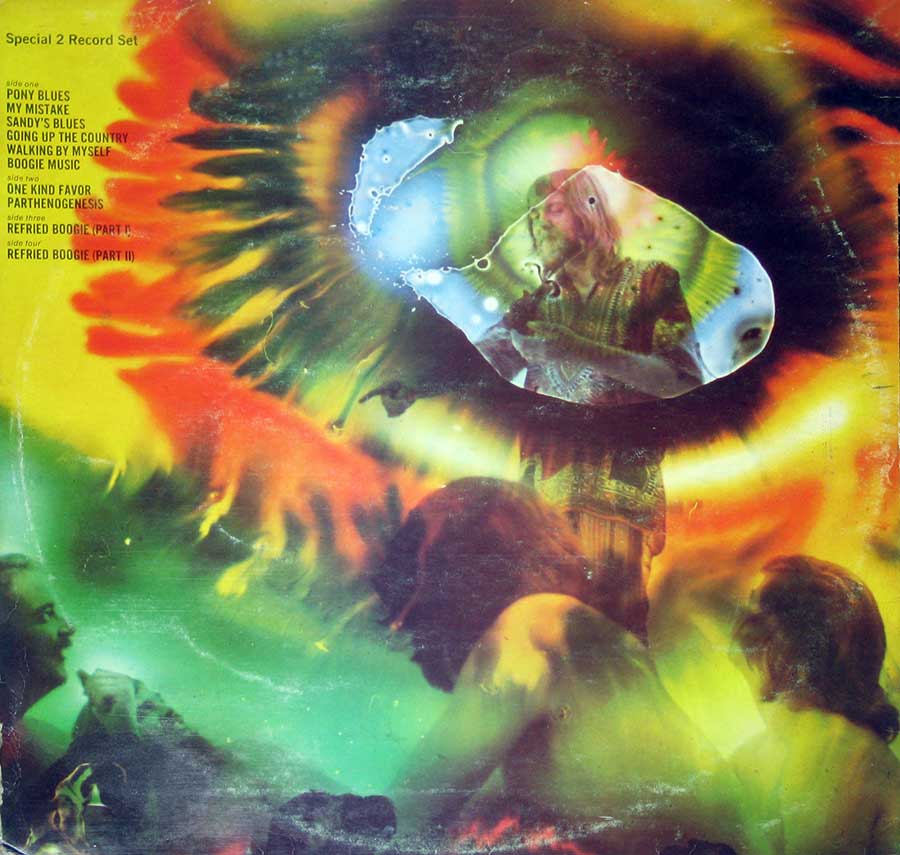
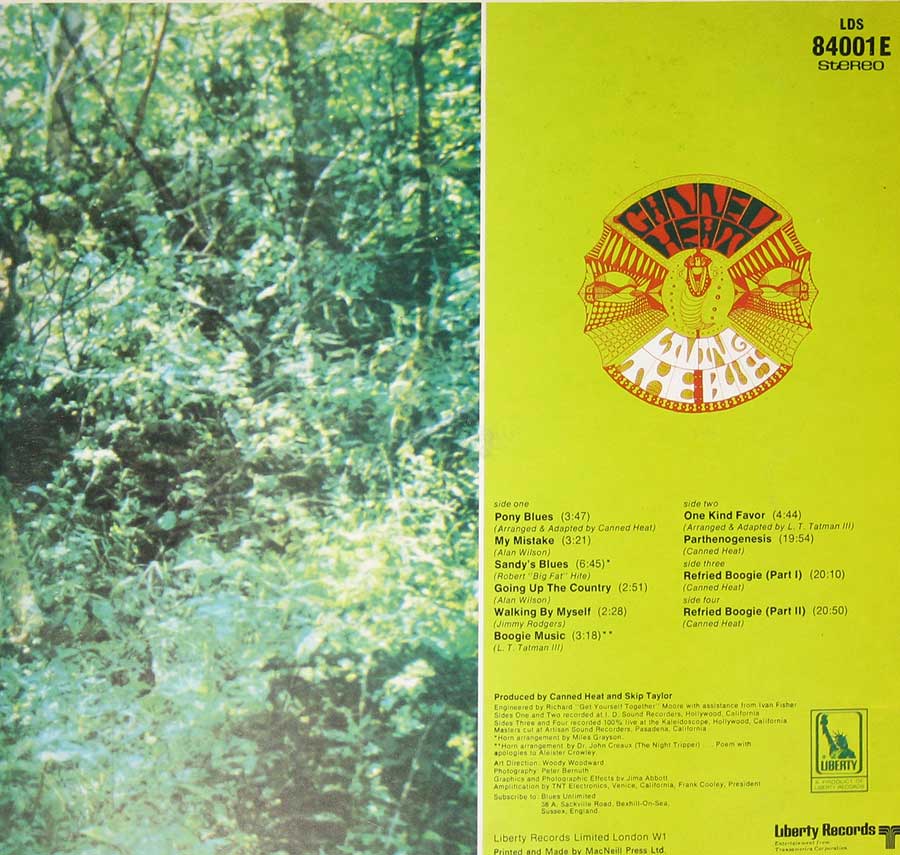
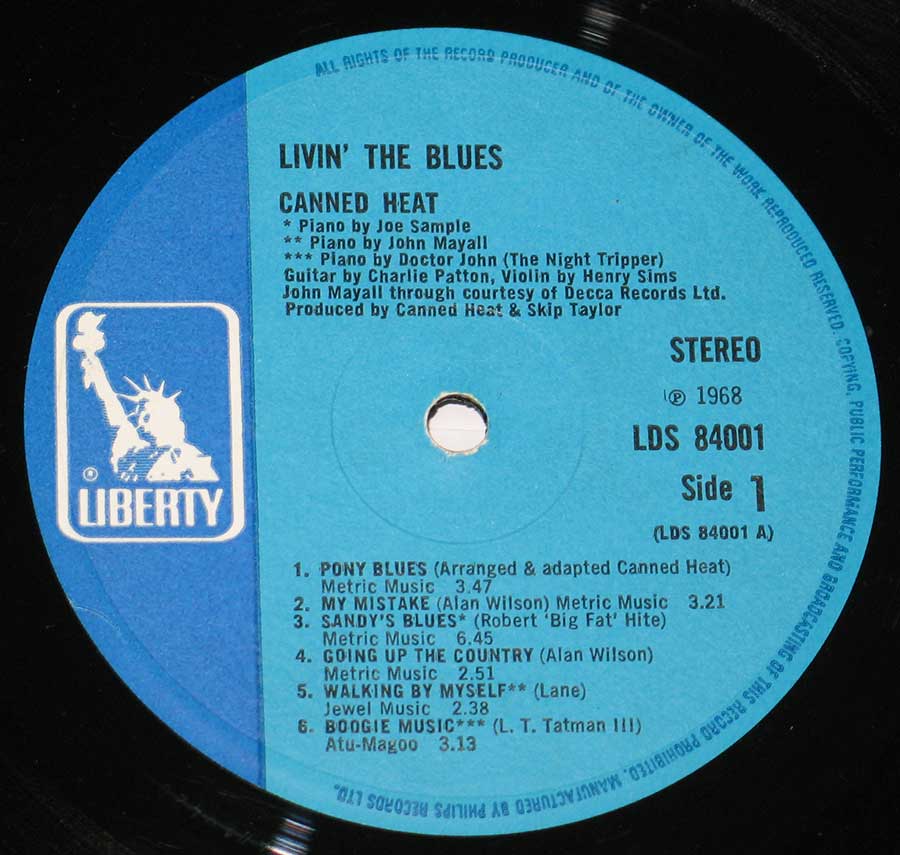
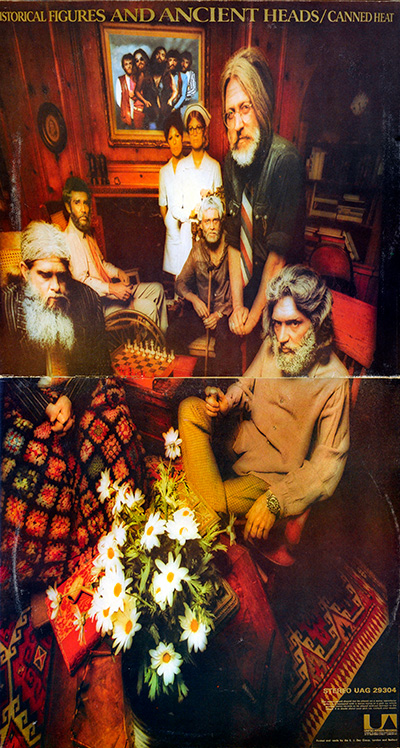
The production credit on the page says Canned Heat and Skip Taylor, and it sounds like it: fast capture, not fancy polish. Liberty LDS 84001 sits on the label in blue, and the gatefold packaging matches the music—open it up and it feels like you’re stepping into the same humid room the band was living in.
The acid-blues detour: “Parthenogenesis”
“Parthenogenesis” (often misspelled if someone’s typing in a hurry) is where the album stops smiling and starts staring. It drifts and mutates like a late-night radio experiment that’s gone on just long enough to make you wonder if you should turn it off. You don’t. Not if you’re smart.
“Refried Boogie” (Parts I & II): when the jam turns physical
“Refried Boogie” is the big, greedy creature here, split across Parts I and II. These sides were recorded live at the Kaleidoscope in Hollywood, and you can feel it: crowd air, time bending, the band digging into the same idea until it stops being a riff and becomes a pulse. It’s not “background.” It’s a weather system.
If you came here for neat songcraft, you’re in the wrong gatefold. That’s the point.
Controversy? No. Misconceptions? Constant.
This release didn’t trigger a big public freakout. The confusion is quieter and more annoying: people drop the “the,” call it “Livin’ Blues,” or swear the album is only “Going Up the Country” plus that endless boogie. The truth is sitting right here: it’s a double LP that acts like a double LP, which means it refuses to shrink into one easy story.
One quiet personal anchor
Late-night FM is still the best habitat for this record: low light, volume just high enough to feel the kick drum, and “Going Up the Country” sounding like it’s coming from somewhere outside your window.
You either surrender to the sprawl or you complain about it. I know which one I do.