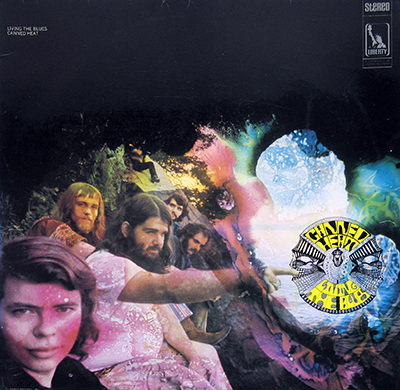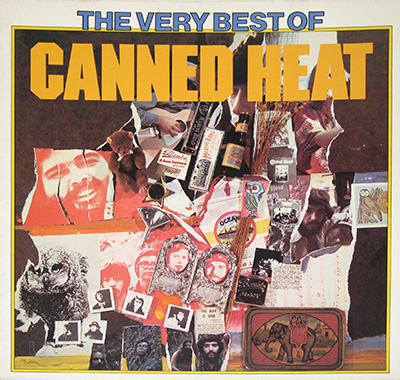
"Canned Heat" (1967) Album Description:
"Canned Heat" hits like a July night in Los Angeles where the air sticks to your shirt and the amps hum even after you kill the lights. No grand manifesto, no polite introductions. Just Bob Hite barking from the gut while Alan Wilson threads that tight, nervous harp-and-guitar buzz through the room like a live wire.
Los Angeles, 1967: the heat haze version
The country’s noisy that year: Vietnam on the TV, cops jumpy, kids drifting west like they’ve got a compass made of incense. In L.A. you can feel the scene splitting into two tribes—one chasing kaleidoscopes, the other digging backward into old blues 78s like buried treasure. Canned Heat always sounded like the second tribe got tired of talking and finally plugged in.
Wilson and Hite started as record-heads first—collectors, arguers, the kind of people who can ruin a party by naming the matrix numbers. It mattered. You can hear it in the way this record doesn’t “borrow” blues so much as grab it by the collar and drag it into a rock room that smells like warm tubes and spilled beer.
What the record actually does
The groove doesn’t stroll. It lurches forward with that boogie insistence, like a car that won’t stay in one lane. The guitars scratch and flare—Henry Vestine throws sparks, not “licks,” and the band keeps the floor moving under him. Wilson’s harmonica cuts thin and bright, a mosquito made of chrome, and then he flips to guitar and suddenly the whole thing feels tighter, meaner.
A lot of the material is older blues, but they don’t treat it like a museum piece. They speed it up, rough it up, and leave fingerprints all over it. When the band locks, it’s not “tasteful.” It’s hungry.
Who’s driving the bus (and who’s lighting matches)
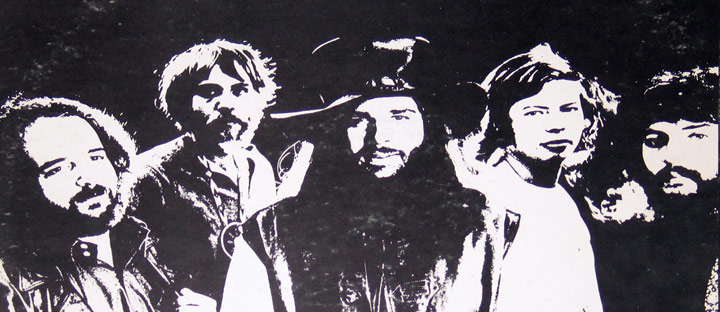
- Bob “The Bear” Hite — vocals that sound like gravel in a coffee can; he sells the danger, not the pretty parts.
- Alan “Blind Owl” Wilson — harmonica and guitar; he brings the strange little angles, the anxious shimmer, the slightly haunted air.
- Henry Vestine — lead guitar; all sting and snap, like he’s allergic to sitting still.
- Larry Taylor — bass; keeps the boogie from falling over itself.
- Frank Cook — drums; practical and blunt, pushing the tempo like he’s late for work.
- Cal (Calvin) Carter — producer; gets them on tape fast and tough, without sanding off the corners.
Genre context: same year, different animals
If you were flipping around the dial in ’67, you’d catch a bunch of bands orbiting the blues, each with their own costume:
- The Paul Butterfield Blues Band — sharper suits, tighter posture, Chicago manners.
- Electric Flag — big-city muscle, horns and ambition, trying to be everything at once.
- Cream — louder and flashier, like the blues got stretched on a rack.
- Grateful Dead — long, drifting rooms of sound; Canned Heat prefers the floorboards.
- The Blues Project — clever downtown angles; Heat plays it more like a bar fight.
Band events as cause and effect (not a timeline on a plaque)
They form in Los Angeles in 1965 around Wilson and Hite, and it starts out closer to a jug-band hang than a “career move.” Then the lineup hardens, the volume goes up, and by spring 1967 they’re recording for Liberty with the band you hear here. The push toward bigger stages comes fast—festival bills, road miles, the whole machine—because this kind of sound works better when it’s loud enough to rearrange your organs.
A quick reality check, since people love mixing up the facts: the big radio monsters most folks hum at you in supermarkets come later. “On the Road Again” lives on "Boogie with Canned Heat" (1968), and “Going Up the Country” shows up with "Living the Blues" (1968). This debut is the rougher doorway—less anthem, more sweat.
Controversy? Not really. Misconceptions? Plenty.
The record itself didn’t kick off some national scandal. No senate hearings, no pearl-clutching headlines about “the youth.” The confusion usually comes from people stapling the later hits onto this album in their memory, like all late-’60s boogie happened on one magic afternoon.
The messier story is the road story: arrests, nerves, money getting weird, and the band learning the hard way that America loves your music right up until you behave like musicians. That tension is part of the sound—this record doesn’t relax, because the world around it didn’t.
One quiet personal anchor
I remember seeing "Canned Heat" in a shop bin late at night, the Liberty label peeking out like a dare. I took it home, dropped the needle, and the room immediately felt smaller, hotter, and more honest.
Put it on when modern rock feels too clean and well-behaved. This one still leaves scuff marks on the floor. Good.
References
- Vinyl Records and Album Cover Gallery (high-resolution cover photos)
- Canned Heat (official site biography)
- Canned Heat (band) — formation, lineup, early history
- "Canned Heat" (album, 1967) — release and track context
- MusicBrainz — "Canned Heat" (1967) release credits (incl. producer)
- "Boogie with Canned Heat" (1968) — where “On the Road Again” appears
- “Going Up the Country” — song credits and album placement ("Living the Blues")