"Full Speed Ahead" (1978) Album Description:
France, 1978: disco strutting down the boulevard, punk picking fights in the alley, and down in the Rhône there’s a band that answers with boots-on-concrete boogie. "Full Speed Ahead" doesn’t flirt, doesn’t posture, doesn’t ask permission. It just leans into the throttle—French blues-rock with steel dust in its hair and a grin that looks like it’s missing one tooth on purpose.
Givors, not Paris
Ganafoul start in 1974 in Givors, a working town south of Lyon—warehouse birth, not art-school birth. Even the name gives it away: “ganafoul,” local patois for “like a madman.” You can almost hear the place in it: the bluntness, the impatience, the way the groove keeps moving even when the guitar wants to stop and show off.
They called what they did “sider-rock,” which sounds goofy until you remember siderurgie means steel. Hard blues-rock, tempered in a factory town. That’s the vibe: sweat, cheap coffee, and amps that don’t get turned down just because someone in the back is trying to have a conversation.
The line-up shift that tightened the bolts
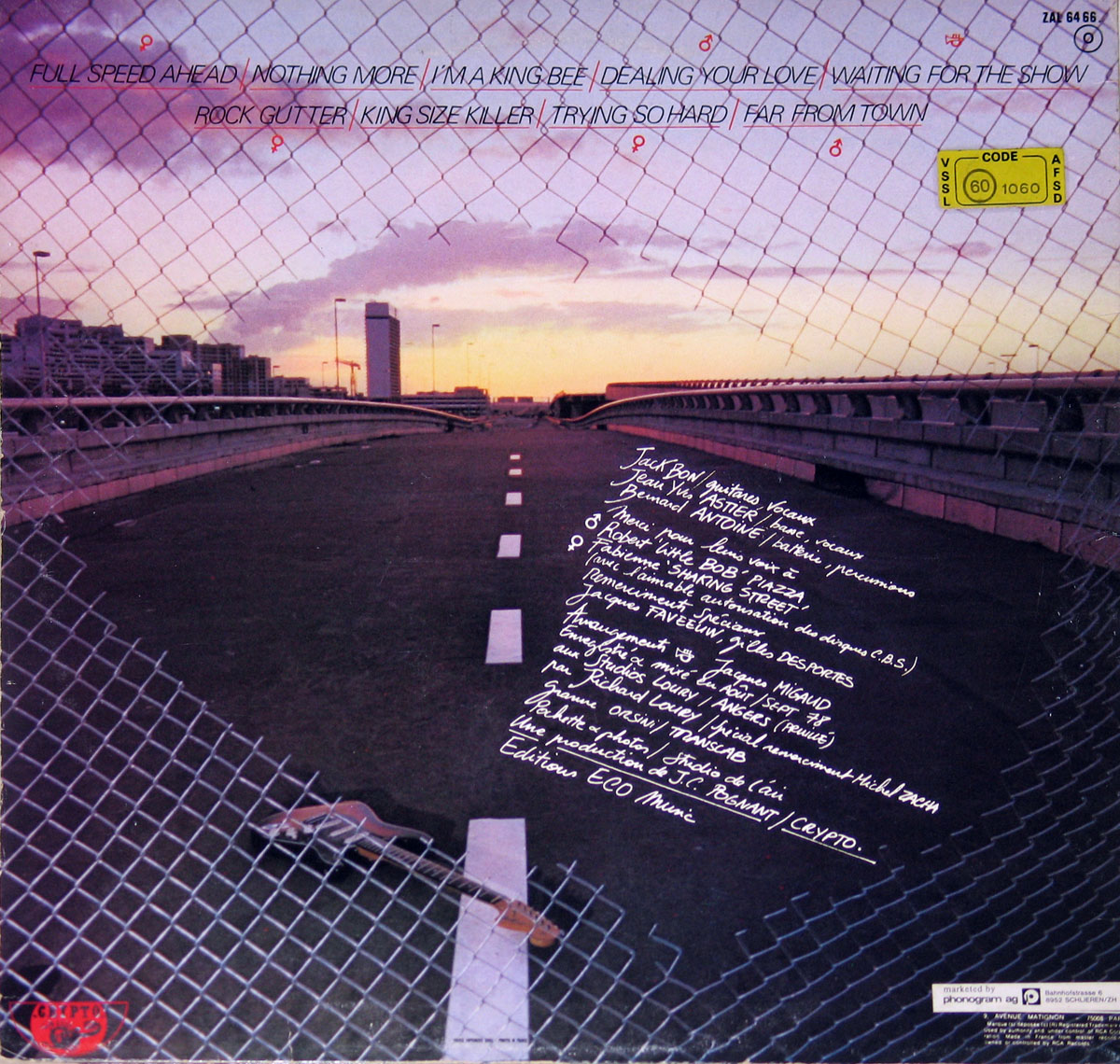
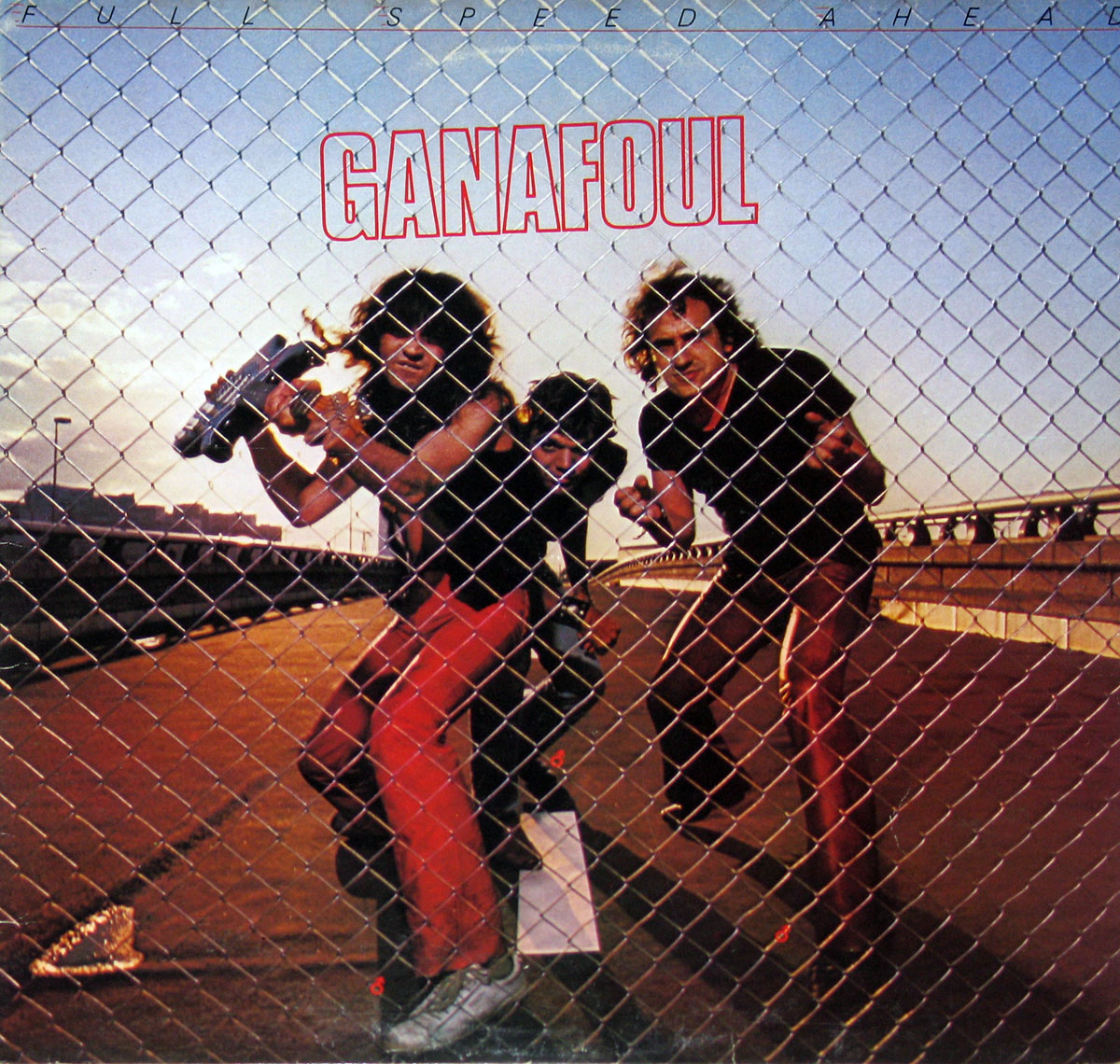
The band begin as a bigger unit, then shave it down to what actually hits: a trio. Jack Bon takes guitar and lead vocal, Jean-Yves Astier holds the bass and adds vocals, and the drum stool becomes the pressure point—Yves Rothacher out, Bernard Antoine in, right in time for this stretch of the story.
That change isn’t trivia. It’s the difference between a band that jams and a band that drives. The songs stop meandering. The backbeat stops apologizing.
Angers, late summer ’78: capture, don’t polish
They record and mix it in August and September 1978 at Studios Loury in Angers, with Richard Loury credited for the recording and mix. And you can feel that decision in the sound: it’s more “get the take” than “perfect the take.” The guitars stay up front where they can do damage, the drums sound like skins and wood, and the bass doesn’t act polite.
The disc gets mastered (and cut) at Translab. No fairy dust. Just the kind of practical finishing that lets a loud band stay loud without turning into mush.
Where it sits in 1978 (and who it shoulders aside)
In 1978, rock is splitting into tribes—some sprinting toward punk speed, others sinking into disco gloss. Ganafoul don’t join a tribe. They plant their flag in the old soil—boogie, blues, hard rock—and dare you to call it outdated while it’s still punching you in the chest.
- Little Bob Story: same French grit, same refusal to clean up the edges.
- Shakin’ Street: louder lipstick, but the same urge to hit hard and mean it.
- Dr. Feelgood: that clipped, dangerous tightness—no wasted motion.
- Status Quo: the hypnotic chug, except Ganafoul play it like they’re late for work.
- AC/DC: not the same accent, same attitude about volume and momentum.
How it sounds (physical, not theoretical)
Bon’s guitar doesn’t shimmer; it scrapes and snaps. You get that sweet-and-sour amp thing—edge of breakup, strings buzzing a little, the pick attack visible like a knuckle. Astier’s bass sits under it like a moving floor, not a warm blanket.
Antoine plays with a workman’s swing—straight enough to drive the boogie, loose enough to keep it human. No fancy drumming ego here. Just pressure, push, and the occasional stomp that makes the whole band jump forward a half-step.
Songs that tell you what kind of record this is
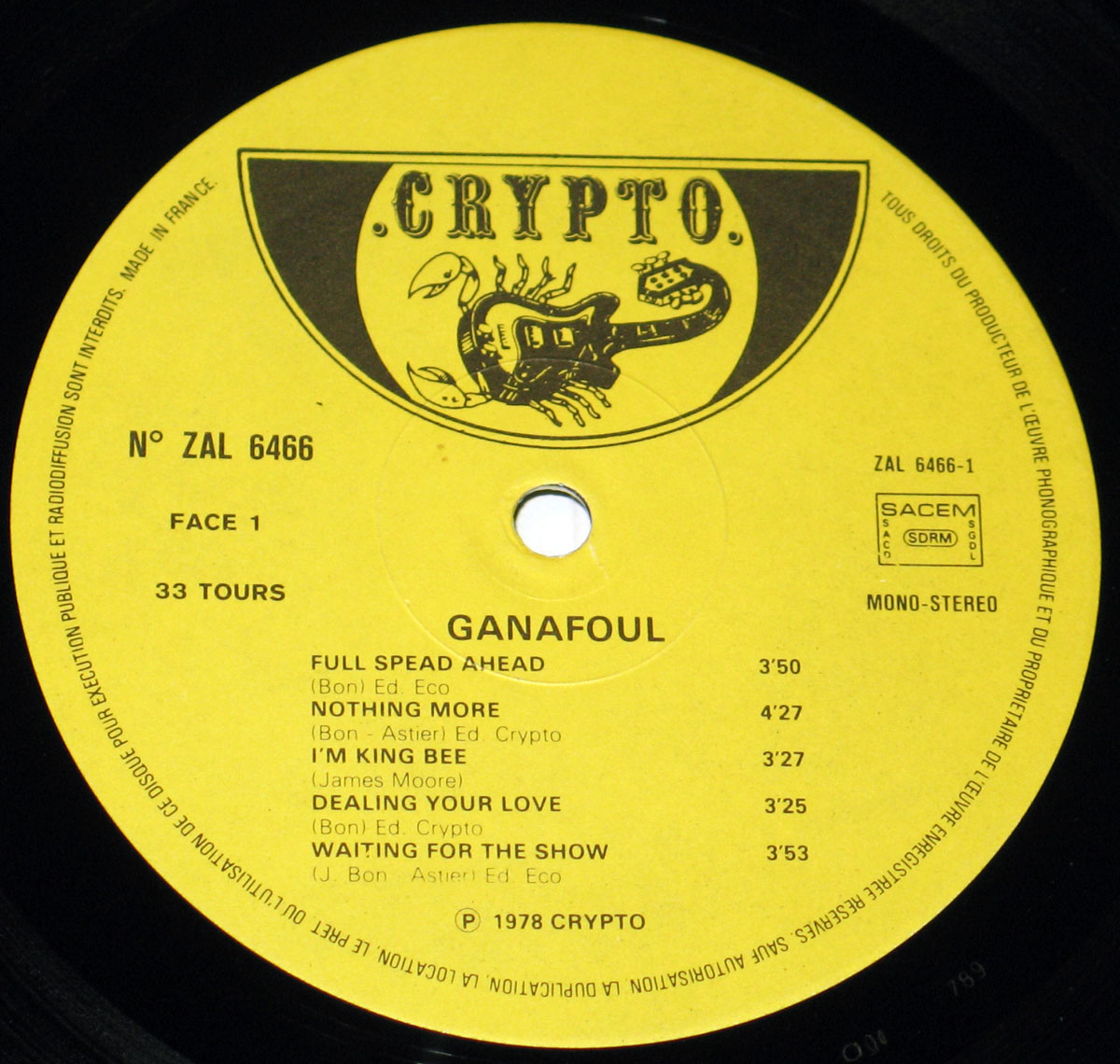
The title track “Full Speed Ahead” comes on like a dare. “Nothing More” rides the groove until it starts feeling slightly dangerous—like the band might actually miss a corner and laugh about it afterward.
Then there’s the cover: Slim Harpo’s “(I’m) King Bee.” And yes, the title sometimes shows up as “I’m King Bee” in one place and “I’m A King Bee” in another, because rock history is often held together with chewing gum and inconsistent typography.
The guest vocals are the scene stepping into the room, not a marketing sticker: Fabienne (Shakin’ Street) turns up on “Full Speed Ahead” and “Rock Gutter,” and Robert “Little Bob” Piazza drops in on “Dealing Your Love” and “Far From Town.” It’s not celebrity. It’s comradeship—one mic, a few takes, everybody smoking too much.
No scandal—just the usual myths
There’s no big controversy attached to this release. No court cases, no banned sleeve, no moral panic. The mess is smaller and more realistic: some sources list the release as 1979, while the album is commonly documented as recorded late summer 1978 and released in October 1978. Paperwork drift. It happens.
The bigger misconception is worse: that this is just Hendrix worship in a French jacket. That’s lazy listening. The riffs here aren’t trying to be sacred. They’re trying to move bodies in a hot room.
One quiet personal anchor
This is the kind of LP you find half-hidden in a shop bin—crease in the corner, faint smell of old cardboard—then you take it home and suddenly your living room feels like a small club with bad lighting and a very good problem: the neighbors.
References
- Vinyl-Records.nl: high-resolution cover & label photos for "Full Speed Ahead"
- Ganafoul official site: origin in Givors + line-up history
- Bibliothèque municipale de Lyon: Ganafoul + “sider-rock” context
- RockMeeting: recording (Aug–Sep 1978) + release timing notes
- Bad Reputation: artist page (Givors background + line-up change)
- Wikipedia (FR): session dates/location overview (cross-check)
- Discogs master page: credit variants + release-year discrepancies