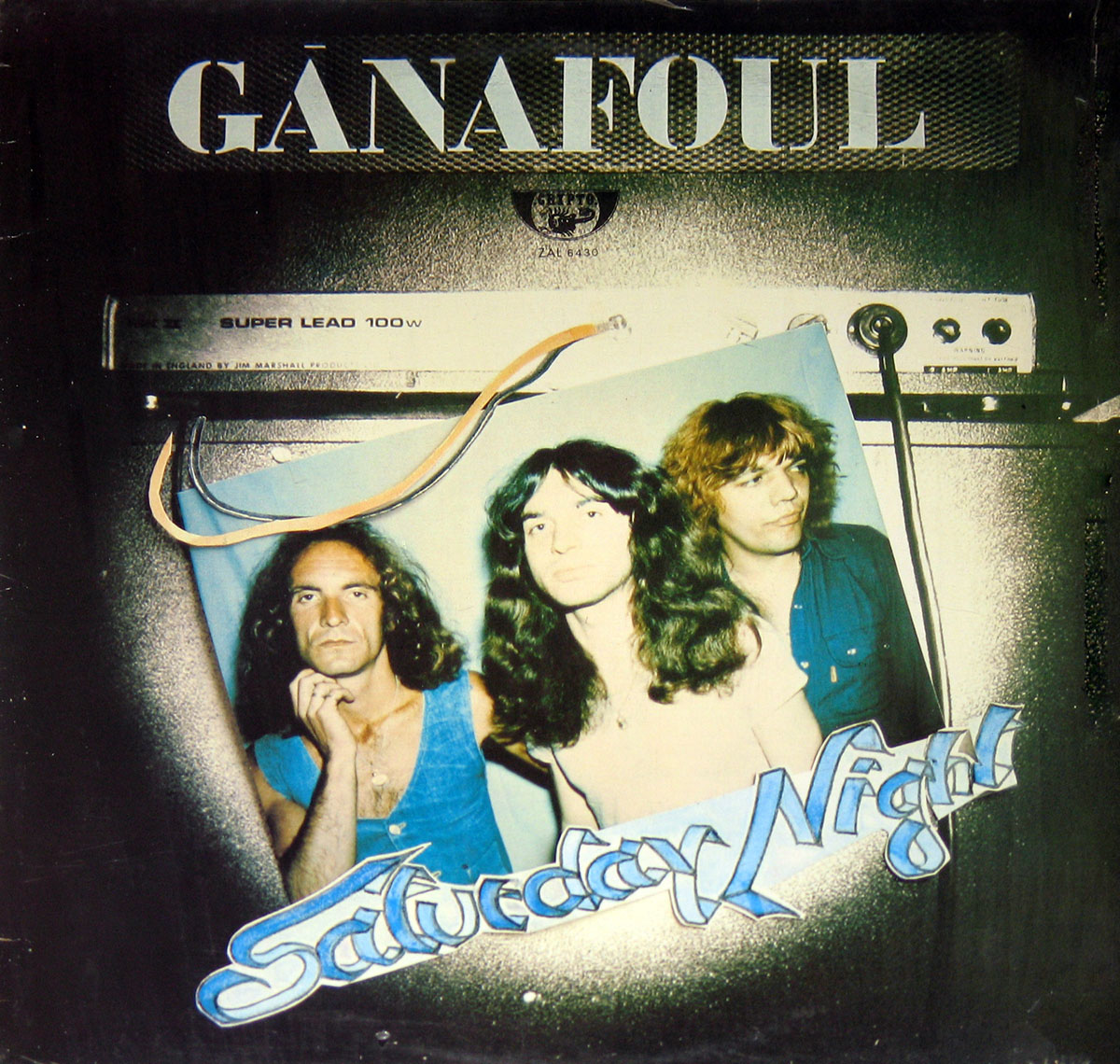
"Saturday Night" (1977) Album Description:
"Saturday Night" smells like wet pavement, cigarette fog, and a valve amp warming up while somebody argues with the club owner about the door money. Cut at Studio 20 in Angers in late August 1977, it is Blues & Boogie Rock with its sleeves rolled up and its knuckles already split. No Paris haircut, no polite framing, just three men playing like the week has been long and the room is finally theirs.
France, 1977: the air felt crowded
France in 1977 had that late-70s tension where everything looked modern on paper but still ran on old habits: factories, suburbs, cheap beer, and a lot of people pretending nothing was changing. Punk was starting to poke holes in the wallpaper, disco was busy winning the night, and loud guitar music was being treated like an embarrassing cousin at the family table.
Ganafoul come out of Givors, south of Lyon, and that matters because industrial towns teach you one thing fast: noise is not a philosophy, it is a tool. Rehearsals in warehouses and backrooms do not produce “nuance.” They produce survival. This album carries that stubbornness like a smell in the jacket.
Blues & Boogie Rock placement: who they rubbed against
In the same year, Telephone were pushing a cleaner French rock snap, Little Bob Story had that dockside pub-rock bite, and Trust were lining up to turn irritation into metal. Meanwhile the punk crowd (Stinky Toys, Metal Urbain) were already daring everybody to stop being tasteful.
"Saturday Night" does not chase any of them. It stomps its own lane: barroom boogie, hard blues, and a refusal to decorate the truth.
How it actually hits: attack, space, and that shuffle-stomp
The guitars sit forward and hot, like the cabinet is pointed at your knees on purpose. Drums stay dry, not “big,” and that is the point: the snare cracks, the kick pushes, and the whole thing moves like a working boot on a sticky floor. Bass does the unglamorous job properly, which is exactly why the record stands upright.
Space is earned by restraint, not studio perfume. The groove keeps leaning forward, that classic boogie impatience where even the slower moments feel like they are waiting for the next shove.
Track run: not a concept, a set
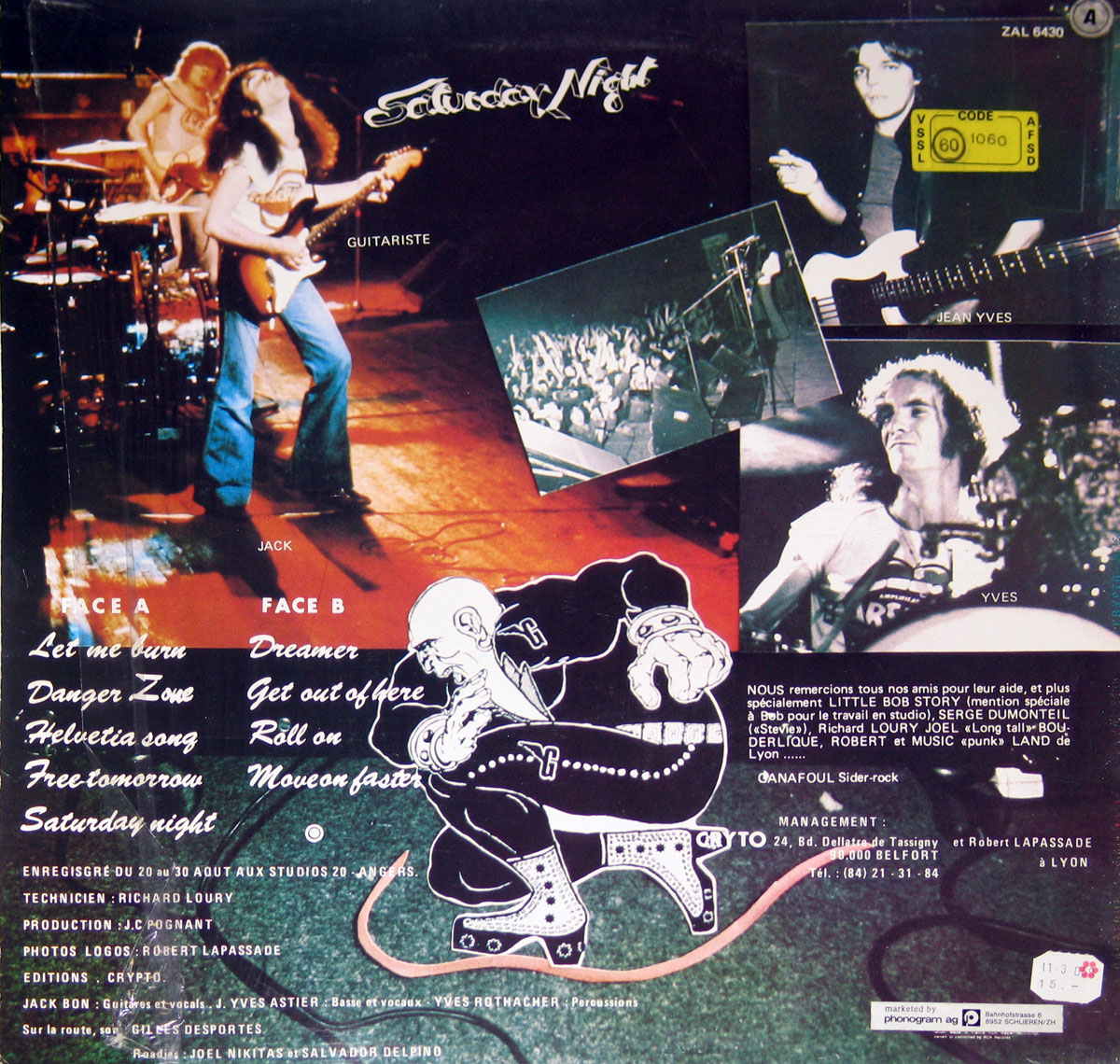
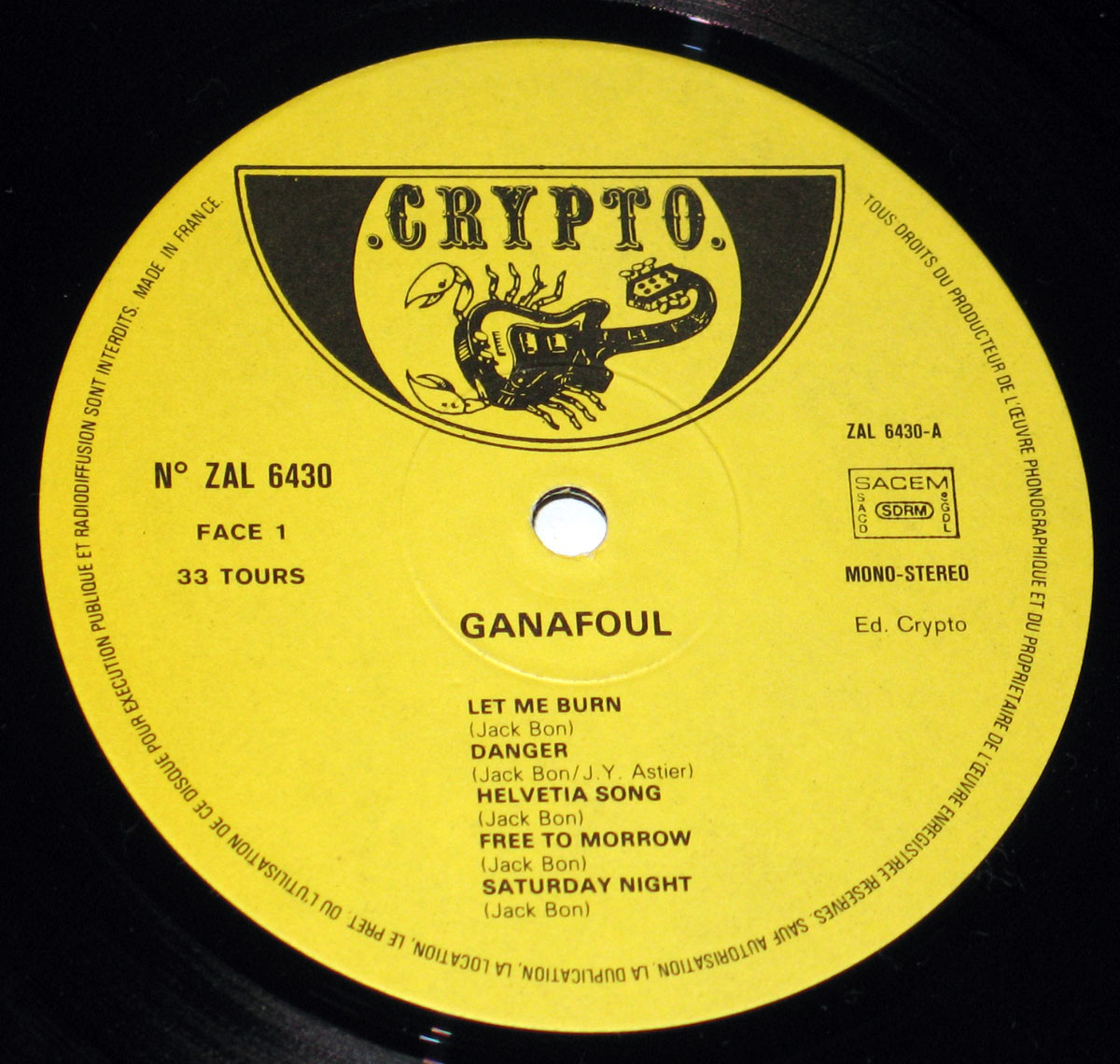
Side One runs like a band trying to win the room fast. "Let Me Burn" lights the fuse, "Danger Zone" keeps the shoulders squared, and "Helvetia Song" flashes a sideways grin without softening the punch. "Free Tomorrow" opens the window a little, then "Saturday Night" slams it shut with a grin that is half invitation, half warning.
Side Two feels later. "Dreamer" stretches the mood without going soft, "Get Out of Here" snaps the tempo back into line, and "Roll On" does what the title promises: keep moving, no apologies. "Move on Faster" ends like an exit sign you can hear.
The people who made this thing stick to tape
Producer J.C. Pognant is credited on the record and the sound behaves like a producer who did not try to civilize the band. The balance favors impact: guitars upfront, rhythm tight, vocals left rough enough to feel human. That is a choice, not an accident.
Richard Loury is listed as the technician, and the recording carries that Studio 20 realism: not sterile, not lush, just present. Gilles Desportes is credited for live sound, and that little detail explains a lot -- the album listens like a band that expects a stage, not a laboratory.
Robert Lapassade handled photos/logos, and the visuals match the music: straight-ahead, allergic to glamour, built for a real band rather than a poster fantasy. Editions Crypto sits on the publishing credit, which is the boring part until you remember boring is how records actually get out into the world without being strangled.
Band shape: why the trio feels like a fist
Early on, the group started larger and tightened down into a tougher unit. By the time "Saturday Night" lands, everything sounds decided: guitar and vocal up front, bass and backing voice holding the spine, drums keeping the boots moving. A trio does not get to hide behind arrangements, and this one does not try.
One small reality check: release details can look different depending on which pressing or listing you are staring at. The record itself keeps the argument short. Needle down, debate over.
Controversy, or the more common misunderstanding
No real scandal hangs off this release -- no banned sleeve, no court case, no tabloid nonsense worth chasing. The misconception is simpler and more annoying: people filing it under “regional curiosity” like that is an insult instead of a description of how real rock survives.
One quiet personal anchor
Late-night radio is where this album behaves best -- the hour when the DJ stops trying to be clever and just plays something that sweats a little. The riff hits, the room shrinks, and suddenly the week does not own you for three minutes.
References
- Vinyl Records Gallery: high-resolution cover photos + page notes
- Ganafoul official site
- Discogs: "Saturday Night" master (pressings, credits)
- Spirit of Metal: Ganafoul profile (line-up/context)
- Bad Reputation Records: Ganafoul overview
- Rock Made In France: Ganafoul entry
Some records beg to be “rediscovered.” This one just keeps playing, like it never asked to be rescued in the first place.