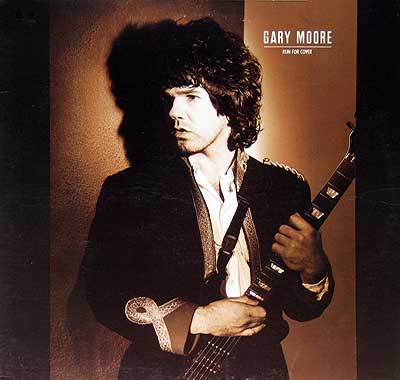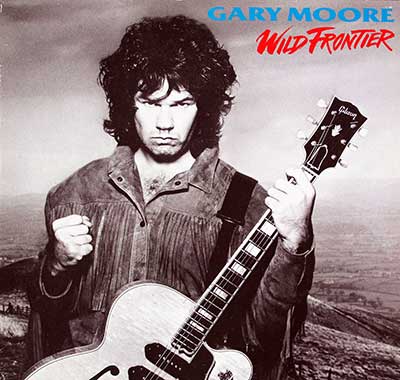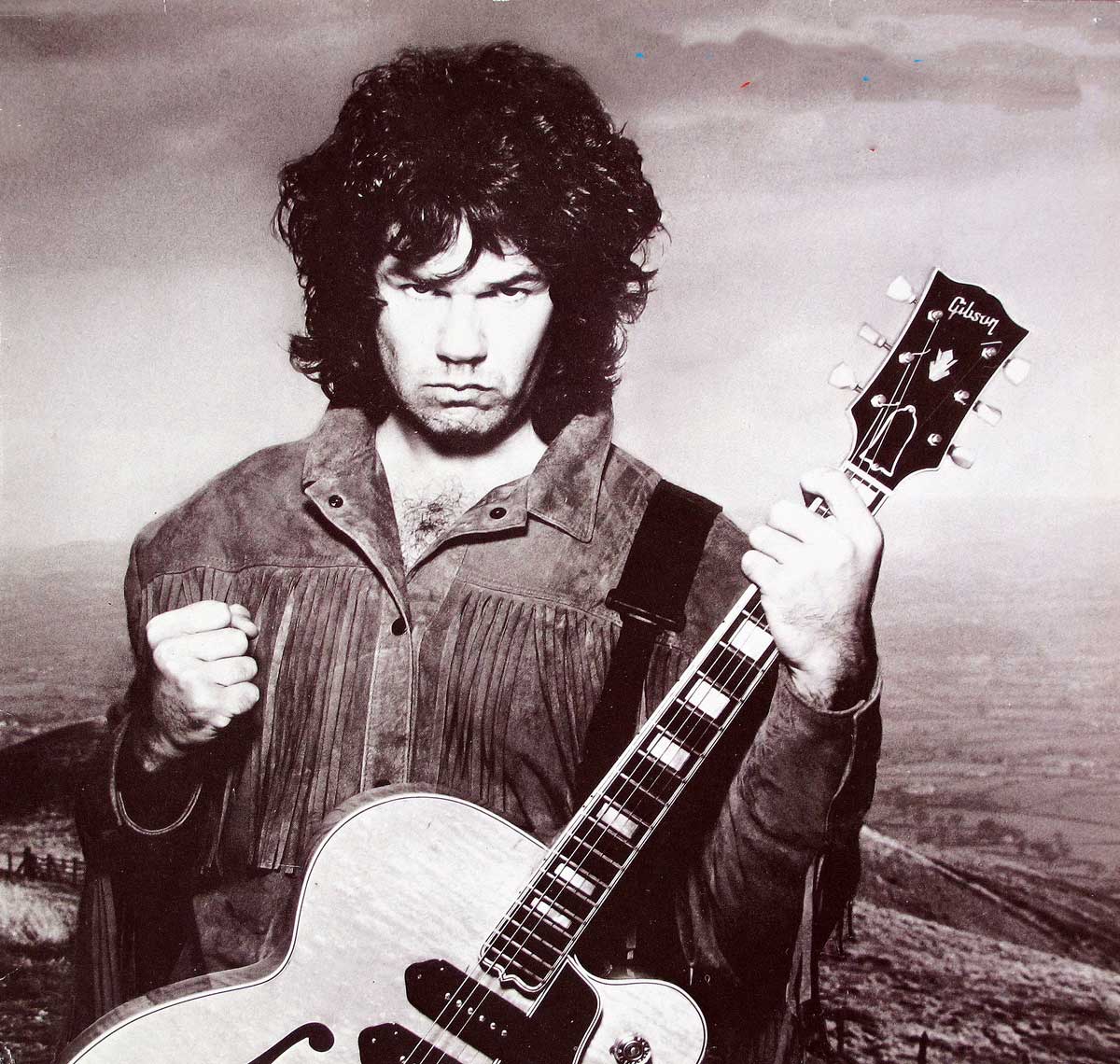
Album Description:
Gary Moore: Belfast Fire, Blue Notes, No Apologies
His Career
Gary Moore (born Robert William Gary Moore, Belfast, 4 April 1952) never really did “tasteful background guitar.” He came in like a thrown chair: loud, sharp, and weirdly precise. You can call it blues-rock, hard rock, metal, whatever label makes the filing cabinet happy. The point is: when Moore hit a note, it didn’t just ring—it hung there, daring you to blink first.
Dublin first. Clubs, amps, sweat, and the original Irish Skid Row orbiting around Brendan “Brush” Shiels. Phil Lynott had already been in that early lineup as a singer before peeling off toward his own future, and Moore arrived as the teenage kid who could suddenly make the whole room turn its head. The stories from that era always sound the same: somebody hears him play and instantly starts rethinking their life choices.
I’ve got one very ordinary memory attached to him: a cheap radio, a kitchen, and “Parisienne Walkways” stopping everything mid-motion. Not because it’s complicated—because it’s not. It’s that long, aching climb with Phil Lynott’s voice sliding in like a late-night confession, and suddenly you’re not doing the dishes anymore, you’re staring at the wall like it personally betrayed you. That single hit the UK Top 10 in 1979 for a reason: it didn’t feel “performed.” It felt admitted.
Thin Lizzy? Moore wasn’t a permanent resident; he was the dangerous visitor who shows up, lights the place up, and vanishes before anyone can argue about rent. The 1974 studio cut of “Still in Love with You” is the neat example: Lynott’s song, yes, but Moore’s guitar gives it that slow-burn bite that later guitarists kept chasing on live versions for years. He didn’t just play “emotional.” He played like he was trying to make the emotion physically uncomfortable.
Then comes the zig-zag solo road: the punchy rock years, the glossy 80s moments that sometimes aged like milk, and the parts that still rule because the playing is simply too good to argue with. If you want a pin stuck in the map, “After the War” has Moore taking shots at the era’s clone wars with “Led Clones” (yes, with Ozzy Osbourne on lead vocal—because subtlety was clearly not the goal). And then, in 1990, he pulls the handbrake and pivots hard into “Still Got the Blues”, dragging proper royalty into the room (Albert King, Albert Collins, George Harrison) and showing he could slow down without shrinking.
His collaborations weren’t “guest appearances” so much as collisions. The power trio BBM (with Jack Bruce and drummer Ginger Baker) is a good example: three big personalities, one album (“Around the Next Dream”), and enough push-and-pull to make the grooves feel tense in a good way. And Moore’s best live nights? They had that specific danger where you could tell the solo might go long, might go loud, might go somewhere nobody planned. Perfect.
Moore didn’t die on a neat “legacy completed” moment. He died in 2011, and it still feels like the door got slammed mid-sentence. That’s probably the right ending for him: unfinished, a little irritating, and impossible to file away as a wholesome story. Some players leave you with a discography. Moore leaves you with a sound—that stubborn, singing sustain that keeps arguing after the song is already over.