"Victims of the Future" Album Description:
Late 1983 into early 1984, the world felt like it was running hot. TV news had that grey, jittery tone, and pop culture was strutting around with shoulders wide enough to land a small aircraft. Then Gary Moore shows up with "Victims of the Future" and doesn’t strut at all. He lunges.
This is the era where Moore stops being “a guitarist” and starts sounding like a warning system. The tone is all bite and nerve. Notes don’t just sing, they scald. He lets chords hang in the air long enough to make you uncomfortable, then he rips the comfort away with a solo that sounds like he’s arguing with the amp and winning.
And it isn’t just him in a room flexing. Jeff Glixman keeps the whole thing tight enough to punch, recorded and mixed at The Townhouse in London in October and November 1983. You can hear a band that knows when to push and when to duck. Ian Paice sits behind the kit like a man who’s done this in arenas and has zero interest in showing off about it. Neil Carter brings that extra layer of shape and tension, and the low end (Neil Murray / Bob Daisley depending on the cut) gives the riffs a spine instead of a puddle.
The title track is Moore staring straight at the decade and not blinking. "Murder in the Skies" doesn’t do vague apocalypse poetry either; it carries the sting of real headlines, written as a protest against the Soviet shoot-down of Korean Air Lines Flight 007. "Empty Rooms" is the other ambush: not loud, not polite, just bleak and beautiful in that way that makes you stop whatever you’re doing. He liked it enough to re-record it later, which tells you something about how much that song haunted him.
Then he flips the mood on you, because he can. "Hold On to Love" isn’t some syrupy breather; it’s Moore trying to keep one hand on the heart while the other one is still gripping the knife. "The Law of the Jungle" stomps in with that hard-rock grind that makes you want to walk faster than necessary. And the Yardbirds cover, "Shapes of Things", isn’t a history lesson. Moore tears it open, drags it into the 80s, and leaves it smoking.
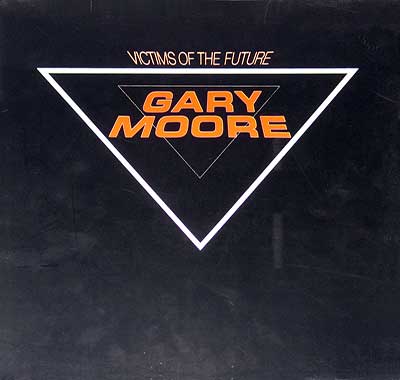
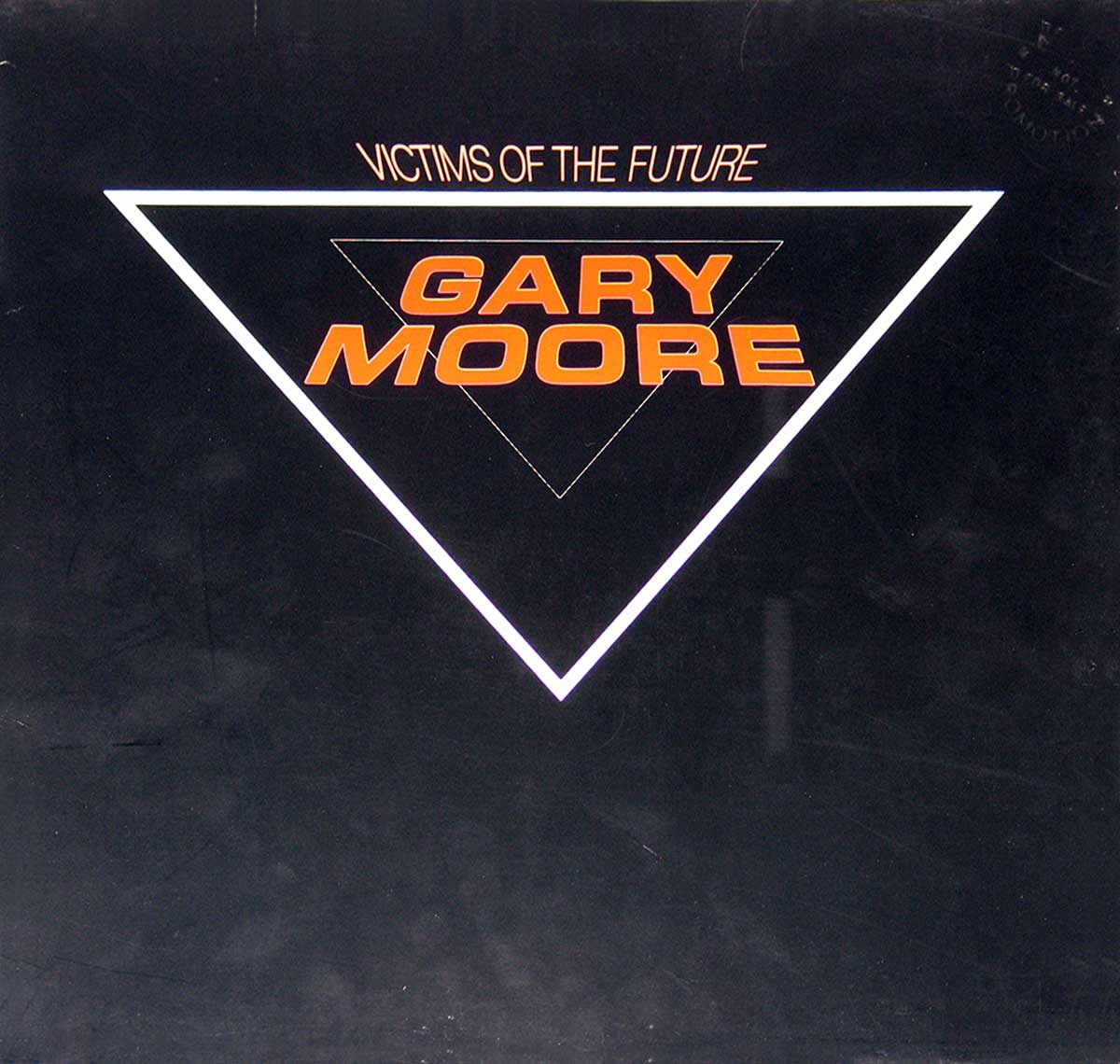
Even the sleeve gets to the point. A lot of copies wear that black cover with the stark inverted triangle like a hazard sign: minimal, cold, unapologetic. No fantasy artwork needed. Just: warning. Some markets got alternate artwork, sure, but the vibe stays the same either way. This record looks like it means business because it actually does.
One quiet anchor: I remember putting this on when the house was doing that boring mid-afternoon silence thing, the kind that makes you hear the refrigerator breathe. Side A starts, and suddenly the room isn’t neutral anymore. Moore has moved in. That’s the trick of "Victims of the Future"—it doesn’t “age well,” it still behaves like a live wire. Turn it down if you want. I never do.
References
- Vinyl Records Gallery (high-resolution album cover photos): Gary Moore - "Victims of the Future"
- Wikipedia: "Victims of the Future" (album overview, recording/release context)
- MusicBrainz: "Victims of the Future" (release group and release years)
- Wikipedia: Greg Lake (1981) (Gary Moore participation context)