- A groundbreaking fusion of classical mastery and hard rock power – RainbowÕs bold leap into the 80s with a Beethoven-inspired anthem
Rainbow's fifth studio album, "Difficult to Cure" (1981), marked a pivotal moment in the band's evolution. Led by Ritchie Blackmore and featuring Joe Lynn Turner, the album blended hard rock with classical influences, notably incorporating Beethoven's "Ninth Symphony." The result was a musical masterpiece that showcased the band's virtuosity and left an indelible mark on the rock genre.
"Difficult to Cure" is the moment Rainbow clicks into early-80s hard rock with a grin that’s just a little too confident to be innocent. This is Ritchie Blackmore steering the ship into sleeker waters, with Joe Lynn Turner out front selling big hooks like they’re a natural resource. On this 1981 German Polydor pressing (2391 506), the whole thing feels like a band deliberately evolving in real time—louder, tighter, and weirdly classy for a record that literally plays with Beethoven.
1981 is that sharp corner where the 1970s finally lets go of your sleeve and the 80s starts pushing you toward neon, precision, and radio-sized choruses. Hard rock is getting cleaner, faster, and more “designed,” whether the old guard likes it or not.
In that climate, "Difficult to Cure" lands like a statement: Rainbow isn’t here to cosplay the past. They’re here to take the classic hard rock muscle and dress it in something that can survive the new decade without looking tired.
You can feel the intent behind this one: a band stepping into a new era with a lineup that’s built for momentum. With Blackmore leading, Don Airey adding that wide-screen keyboard bite, and Roger Glover anchoring the low end and the bigger-picture thinking, it plays like a unit that knows exactly what it wants.
The setting matters too, because this record was recorded at Sweet Silence Studios in Copenhagen, Denmark with Flemming Rasmussen as recording engineer—one of those “okay, now it’s serious” names that suggests the sound is being built to last. And the cover art credit to Hipgnosis is basically the visual equivalent of a raised eyebrow: expect something memorable, not just functional.
Sonically, this album is British hard rock with the edges polished just enough to cut cleaner. The guitars don’t wander—they strike. The keys don’t politely decorate—they widen the room. The rhythm section moves like it’s hauling the whole chorus on its back and enjoying the job.
The opening run sets the mood fast: "I Surrender" comes in hot with that “turn it up and don’t overthink it” energy, then "Spotlight Kid" keeps the pace like the band is jogging through a stadium tunnel. "Magic" leans into that sleek, melodic confidence that screams early-80s without losing the rock bite.
And then there’s the centerpiece flex: "Beethoven Ninth". On paper it sounds like the kind of idea that gets people kicked out of band practice. On vinyl, it becomes the album’s weird, bold signature—classical drama welded to hard rock power like it was always meant to share the same stage.
In the wider 1981 hard rock world, a lot of bands are choosing between grit and gloss. "Difficult to Cure" refuses to pick one lane, and that’s the trick: it’s strong enough to punch, but sharp enough to shine.
Where some records of the era feel like they’re chasing “modern,” Rainbow sound like they’re shaping it—especially with that blend of tight songcraft and theatrical confidence. They don’t just rock; they present. Big difference.
If this album caused any argument, it’s the kind that always happens when a band gets cleaner and more melodic: some listeners call it “smart,” others mutter “sellout,” and the rest of us just turn it louder and let the speakers litigate.
The classical twist can do the same thing. Some people hear "Beethoven Ninth" and think “bold.” Others hear it and think “who invited the orchestra to the bar fight?” Either way, it gets a reaction—which is kind of the point.
This lineup feels built around contrast: Blackmore brings the authority and the drama, while Turner brings the smoother vocal confidence that makes the hooks land like they’ve always existed. That push-pull between steel and shine is basically the album’s personality.
And the band sound tight in a way that suggests focus, not chaos. It doesn’t feel like five people fighting for space; it feels like five people agreeing that the songs come first, ego comes later, and the chorus is the real boss.
What sticks with me is how this record captures a band pivoting without flinching. "Difficult to Cure" doesn’t sound like an experiment that might collapse—it sounds like a blueprint for how Rainbow could live in the 80s and still feel like Rainbow.
The German Polydor LP presentation adds its own collector charm too: it’s a physical snapshot of that moment—1981, Made in Germany, and pressed for the era when hard rock was learning to wear sharper clothes.
As a collector, I love albums that feel like a band stepping through a door and not looking back, and "Difficult to Cure" is exactly that: a confident early-80s hard rock machine with just enough weirdness to keep it dangerous. You drop the needle and the room suddenly feels bigger, brighter, and slightly more theatrical—like somebody installed stage lights in your living room. Decades later, the riffs still smell faintly of beer, sweat, and that wonderfully misplaced optimism that the future was going to be sleek and painless. Spoiler: it wasn’t. The album still is.
|
Music Genre: British Hard Rock |
|
Album Production information: The album: "RAINBOW - Difficult to Cure" was produced by: Roger Glocer Sound/Recording Engineer(s): Flemming Rasmussen Sweet Silence Studios founder/engineer whose fingerprints show up on metal records that sound way bigger than the room they were made in. Read more... Flemming Rasmussen is one of those behind-the-glass names I keep spotting like a quality stamp: a Danish producer and sound engineer, and the founder of Sweet Silence Studios in Copenhagen. His timeline reads like a metal history syllabus I actually want to study: Rainbow (1981), then Metallica (1984–1988: Ride the Lightning, Master of Puppets, ...And Justice for All), followed by Artillery (1990), Morbid Angel (1993), Blind Guardian (1995–1998), Ensiferum (2003–2004), and Evile (2007). He even won a Grammy for producing Metallica’s "One" (1989), which is kind of hilarious when you remember that song is basically anxiety with military boots on. This album was recorded at: Sweet Silence Studios in Copenhagen, Denmark
Sweet Silence Studios in Copenhagen, Denmark is a Danish music recording music in Copenhagen, Denmark. It is owned by Freddy Hansson and Flemming Rasmussen (producer of Metallica albums).
Mastered at Sterling Sound, New York City by Greg Colvy Album cover design and photos Hipgnosis Hipgnosis is my favorite proof that a record sleeve can be a full-on mind game, not just a band photo with better lighting. Read more... Hipgnosis is the legendary London-based art design group that turned rock sleeves into visual myths. The core duo, Storm Thorgerson and Aubrey "Po" Powell, were childhood friends of the Pink Floyd inner circle in Cambridge—a connection that allowed them to bypass the stiff mandates of EMI’s in-house design department in 1968. Their debut, "A Saucerful of Secrets," was only the second time in EMI history (after The Beatles) that an outside firm was granted creative control. The very name "Hipgnosis" was a piece of found art; Syd Barrett, during one of his more enigmatic phases, scrawled the word in ballpoint pen on the door of the South Kensington flat he shared with the duo. Thorgerson loved the linguistic friction of it: the "Hip" for the new and groovy, and "Gnosis" for the ancient, hidden knowledge. While Peter Christopherson later joined as a third partner in 1974, that initial Barrett-endorsed moniker defined a decade of surrealist mastery for bands like Led Zeppelin, Genesis, and 10cc, before the group dissolved in 1983. |
|
Record Label & Catalognr: Polydor 2391 506 |
|
Media Format: 12" LP Vinyl Stereo Gramophone Record Total Album (Cover+Record) weight: 230 gram |
|
Year & Country: 1981 Made in Germany |
Personnel/Band Members and Musicians on: RAINBOW - Difficult to Cure |
|
Complete Track-listing of the album "RAINBOW - Difficult to Cure" |
|
The detailed tracklist of this record "RAINBOW - Difficult to Cure" is:
|
High Quality Photo of Album Front Cover "RAINBOW - Difficult to Cure" |
|
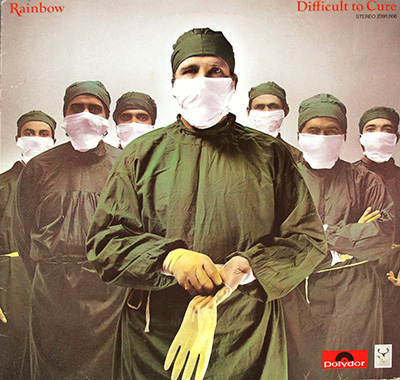
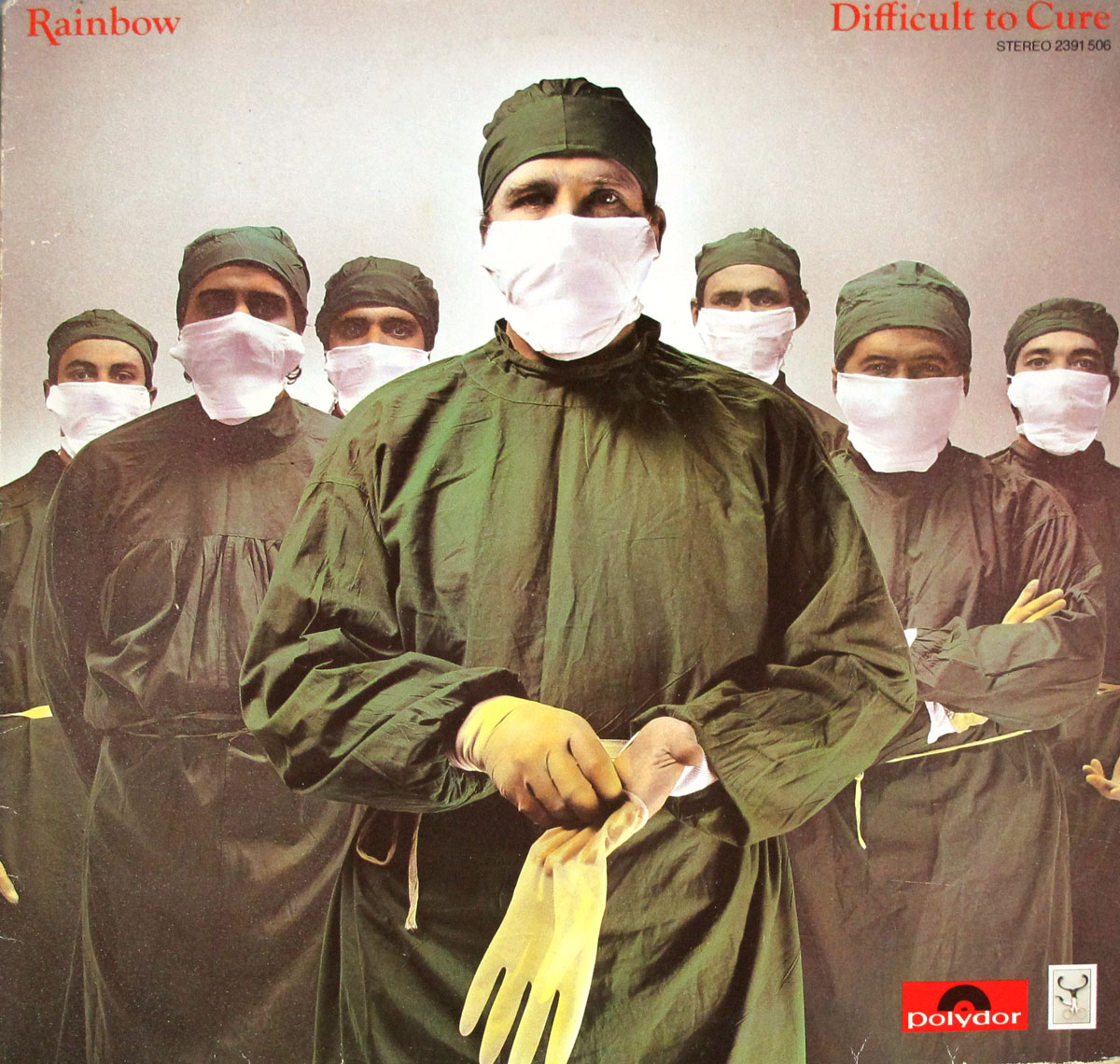
Album cover of Rainbow's 1981 LP "Difficult to Cure", German pressing on Polydor Records. The image features seven men dressed as surgeons in dark green operating room scrubs, white surgical masks, and green caps. Their expressionless eyes are the only visible part of their faces. The central figure stands slightly ahead of the others, facing the viewer directly while slowly pulling a yellow rubber glove over his right hand. His stance is deliberate and slightly menacing, giving off a mix of clinical detachment and theatrical drama. The lighting is stark and casts subtle shadows on their garments and background, emphasizing the sterile yet unsettling aesthetic. The background fades to a pale gray, allowing the figures to dominate the composition. The band name Rainbow is printed in red in the top left corner, and the album title Difficult to Cure appears in the top right, both in a serif font. In the lower right are the Polydor logo and a stylized image of the Mercury man (indicating distribution). The entire image walks the line between parody and uneaseÑperfectly matching the albumÕs ironic title.
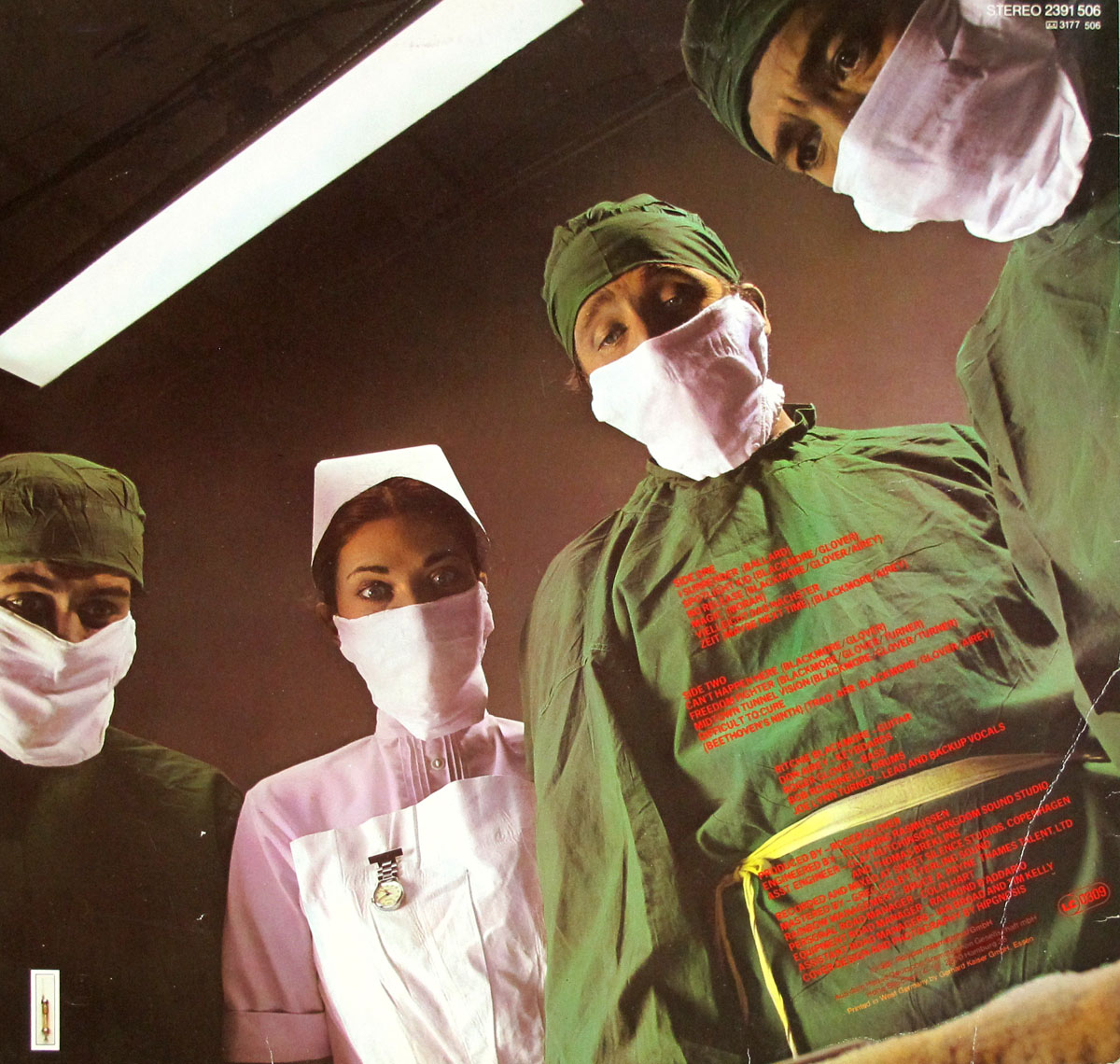
Back cover of Rainbow's 1981 LP "Difficult to Cure", German pressing. The photograph is taken from a low, almost patient-like perspective, as if the viewer is lying on an operating table. Four medical personnel loom overhead under a bright rectangular operating lamp: three male surgeons in dark green scrubs and one female nurse in crisp white attire, all wearing white surgical masks. The expressions behind their eyes range from neutral to slightly ominous, enhancing the eerie atmosphere. The central figure again appears to be the same lead surgeon from the front cover, this time facing slightly downward toward the viewer. A nurse stands just left of center in a white dress and cap, the only bright element in the image aside from the harsh overhead light. The entire scene is cast in a reddish-brown ambient tone, giving the image a claustrophobic, theatrical quality. Bright red textÑtrack listings and creditsÑis printed across the chest and torso area of the central surgeonÕs gown, laid out as if scribbled directly onto the fabric. The Polydor logo and catalogue number appear again in the lower right corner. The dramatic angle and ominous lighting continue the satirical Òmedical procedureÓ theme of the albumÕs title, blending dark humor with a touch of the absurd.
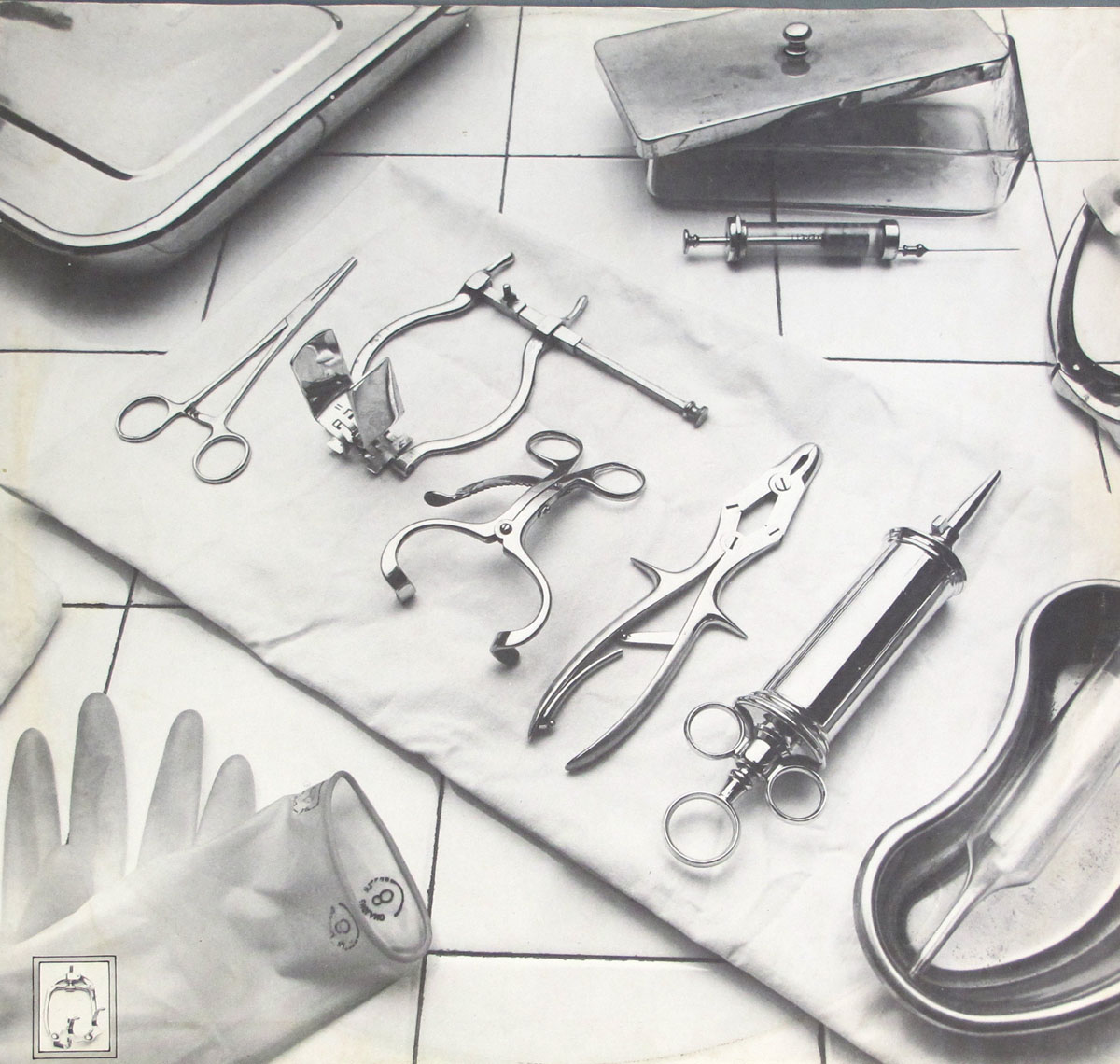
Insert image from Rainbow's 1981 LP "Difficult to Cure", German edition. This stark black-and-white photograph shows a neatly arranged set of vintage surgical instruments placed atop a sterile-looking tiled surface. The toolsÑsome instantly recognizable, others vaguely medievalÑinclude various types of forceps, spreaders, a speculum, and two large metal syringes with piston grips. They are arranged carefully on a white cloth, giving the whole scene an oddly ceremonial tone. To the left, a large, unused rubber glove lies next to its packaging, labeled with the number Ò8Ó and a circular medical symbol. In the lower right corner sits a kidney-shaped surgical tray with faint residue inside, reinforcing the medical theme. Stainless steel trays, containers, and lids frame the scene on all sides. Despite the clinical subject matter, the artistic lighting and monochrome contrast lend the image an almost surreal, dystopian qualityÑfitting seamlessly into the albumÕs satirical take on surgery and the idea of being Òdifficult to cure.Ó
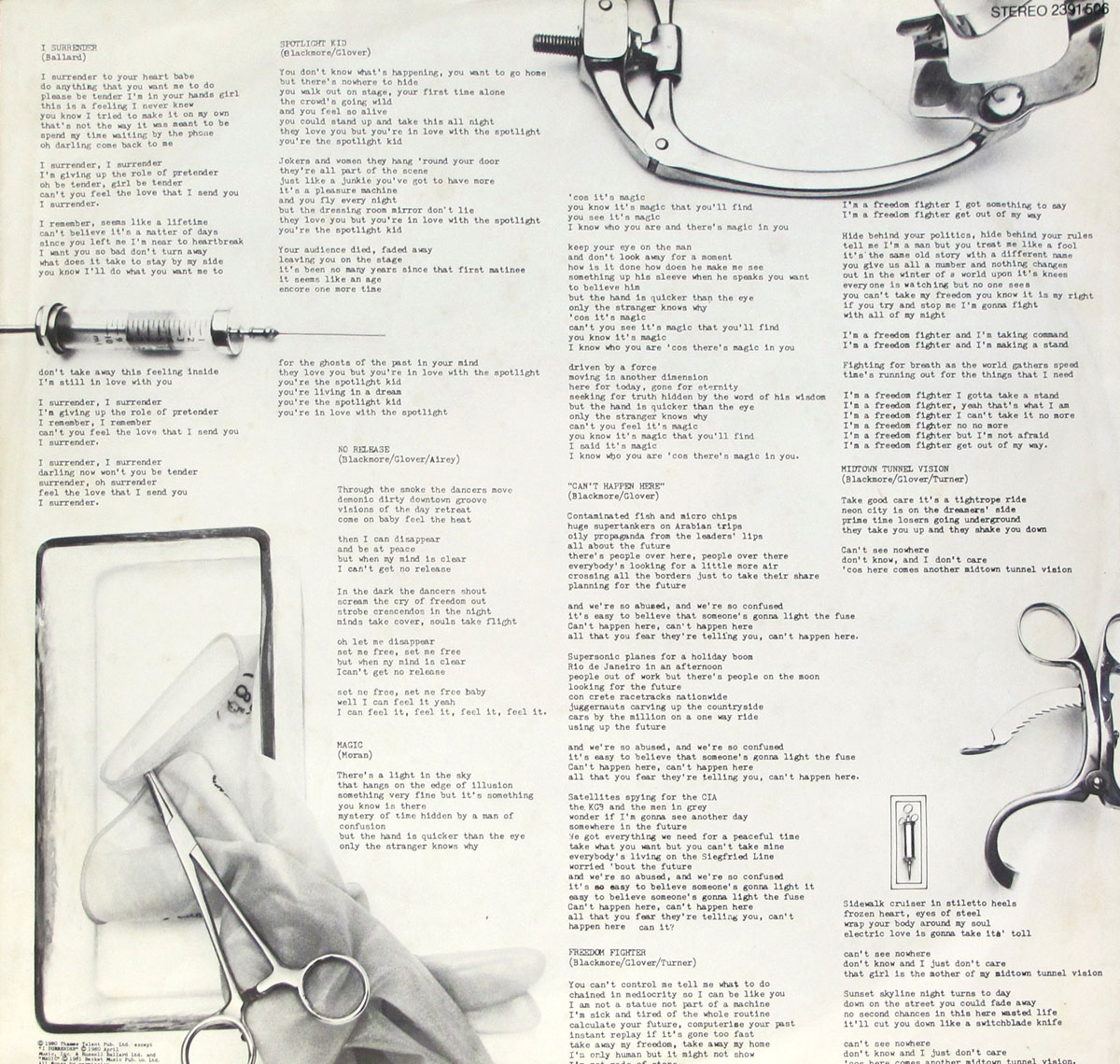
Insert sleeve of Rainbow's 1981 LP "Difficult to Cure", German pressing. This full-page layout features the printed lyrics for the albumÕs songs in black type, arranged in five vertical columns over a white background. The text is punctuated by ominous illustrations of surgical tools, reinforcing the albumÕs bizarre medical theme. In the lower left corner lies a carefully staged composition of a glove, gauze, and surgical scissors resting in a shallow tray, while a large syringeÑfilled and poisedÑsits horizontally across the first column. In the top right corner, a speculum looms, partially cropped, with another set of forceps encroaching from the lower right. The stark, clinical visual tone is accentuated by the high contrast black-and-white presentation, mimicking the sterile coldness of an operating room. The layout is meticulous and efficient, much like medical documentation, yet it serves a satirical artistic functionÑjuxtaposing themes of bodily intrusion and pop rock bravado. A small illustration of a thermometer appears near the bottom center, sealing the unsettling fusion of medicine and metal that defines this albumÕs aesthetic.
Side A of the vinyl LP "Difficult to Cure" by Rainbow, German pressing released on the Polydor label in 1981. The image shows the classic 12-inch black vinyl record resting on a flat light-gray background. The center label is a bright red-orange with black text, bordered by a circular legal disclaimer in German around the outer edge. At the top of the label is the iconic Polydor logo in bold red and black print, followed by the band name RAINBOW in all caps. Below that is the catalog number 2391 506 along with the GEMA rights society logo and the text ÒMade in West Germany.Ó The album title Difficult To Cure is printed prominently in the lower section, along with the track listing for Side A, writing credits, and copyright information. The record itself shows light grooves that reflect ambient lighting, adding a subtle shimmer across the surface. The circular format and bold coloring of the label contrast dramatically with the dark vinyl, making this a classic and unmistakable artifact from RainbowÕs early 1980s era. |
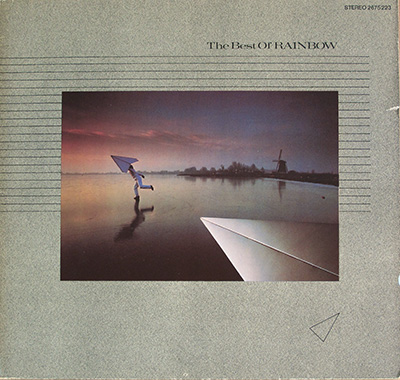
"Rainbow Best of Rainbow" is a compilation album by the British rock band Rainbow, which was released in 1981. It features some of Rainbow's most popular and well-known tracks from their first six studio albums
Best of Rainbow 12" Vinyl LP
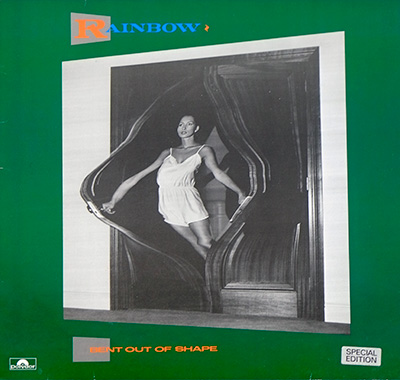
"Bent Out of Shape," a final studio album pre-Deep Purple reunion, marked a pivotal moment in the band's history. Released on vinyl LP in Germany, it showcased Ritchie Blackmore and Roger Glover before their return to Deep Purple.
- Bent Out of Shape (1983, France) - Bent Out of Shape (1983, Germany)
Rainbow's fifth studio album, "Difficult to Cure" (1981), marked a pivotal moment in the band's evolution. Led by Ritchie Blackmore and featuring Joe Lynn Turner, the album blended hard rock with classical influences
Difficult to Cure
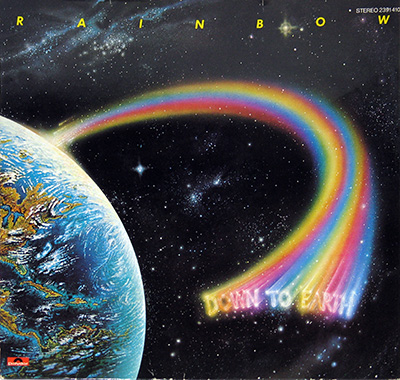
"Down To Earth" album is a timeless classic that showcases the band's exceptional talent and musical prowess. With its memorable songs, exceptional performances, and the added visual element of the 12" photo insert/leaflet
Down To Earth 12" Vinyl LP
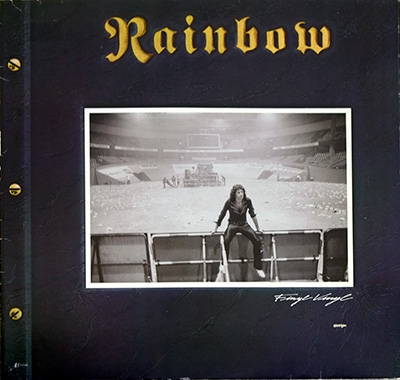
"Final Vinyl" is a collection of live recordings and B-sides by Rainbow and was released in 1986, after the band had already ceased to be when Blackmore and Glover were part of the Deep Purple reformation.
Finyl Vinyl 12" Vinyl LP
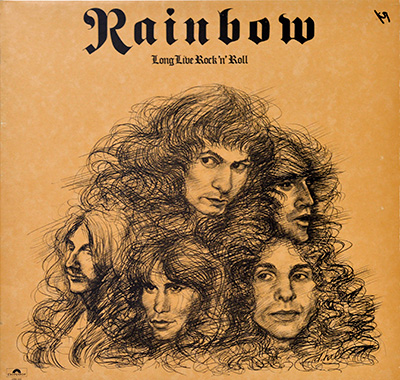
"Long Live Rock and Roll," released on 9 April 1978, represents a pivotal moment in rock history. The collaboration between Ritchie Blackmore and Ronnie James Dio produced a groundbreaking album
- Long Live Rock 'n' Roll (1978, Germany) - Long Live Rock 'n' Roll ( 1978 , Netherlands ) - Long Live Rock 'n' Roll (1978, West-Germany)
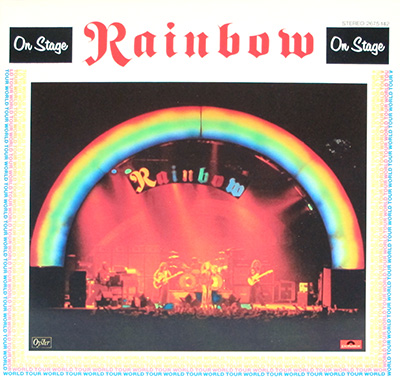
"Rainbow - On Stage" is a live album by the English rock band Rainbow, recorded in 1977 and released in 1978. It was recorded at Long Beach Arena in California and captures the band's performance during the "On Stage" tour in support of their album "Rising"./p>
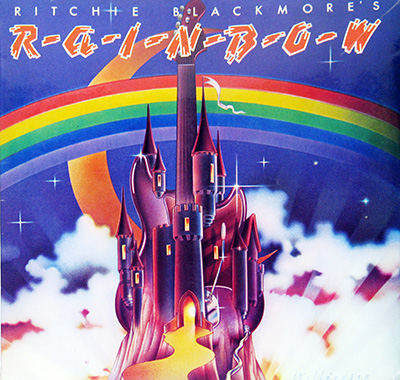
On Stage 12" Vinyl 2LP“Ritchie Blackmore’s Rainbow” (1975) sounds like thunder trapped in crystal — a hard rock masterpiece infused with mysticism. Blackmore’s lyrical guitar and Dio’s soaring vocals ignite tracks like “Man on the Silver Mountain” and “Catch the Rainbow,” where medieval imagery collides with amplifier power in one timeless debut.
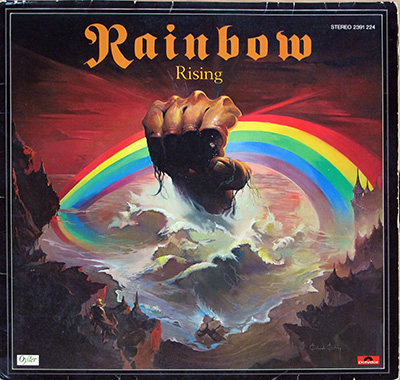
"Rising" is the 2nd heavy metal album by Rainbow, released in 1976 . With founder Ritchie Blackmore retaining only Ronnie James Dio from the previous album, Rising has become known as the best album of Rainbow's career
- Rising (1976, Austria) - Rising (1976, Germany) - Rising (1978, USA)
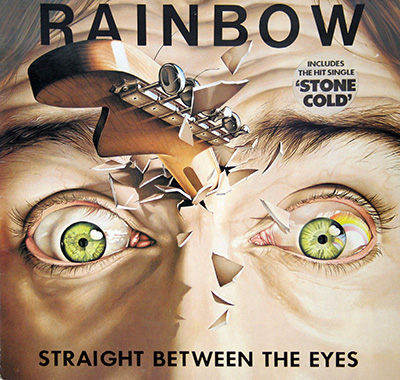
Released in 1982, Rainbow's "Straight Between the Eyes" is a hard rock album featuring vocalist Joe Lynn Turner. Backed by Ritchie Blackmore's guitar, the album blends strong vocals with melodic hard rock
- Straight Between the Eyes (1982, Germany) - Straight Between the Eyes (1982, Netherlands) - Straight Between the Eyes (1981, UK)