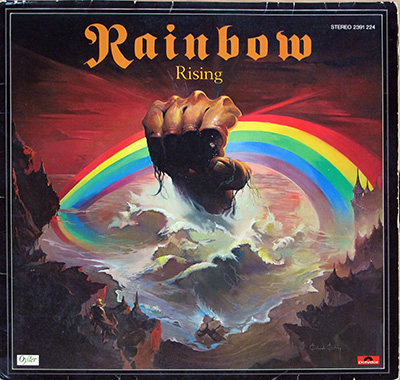
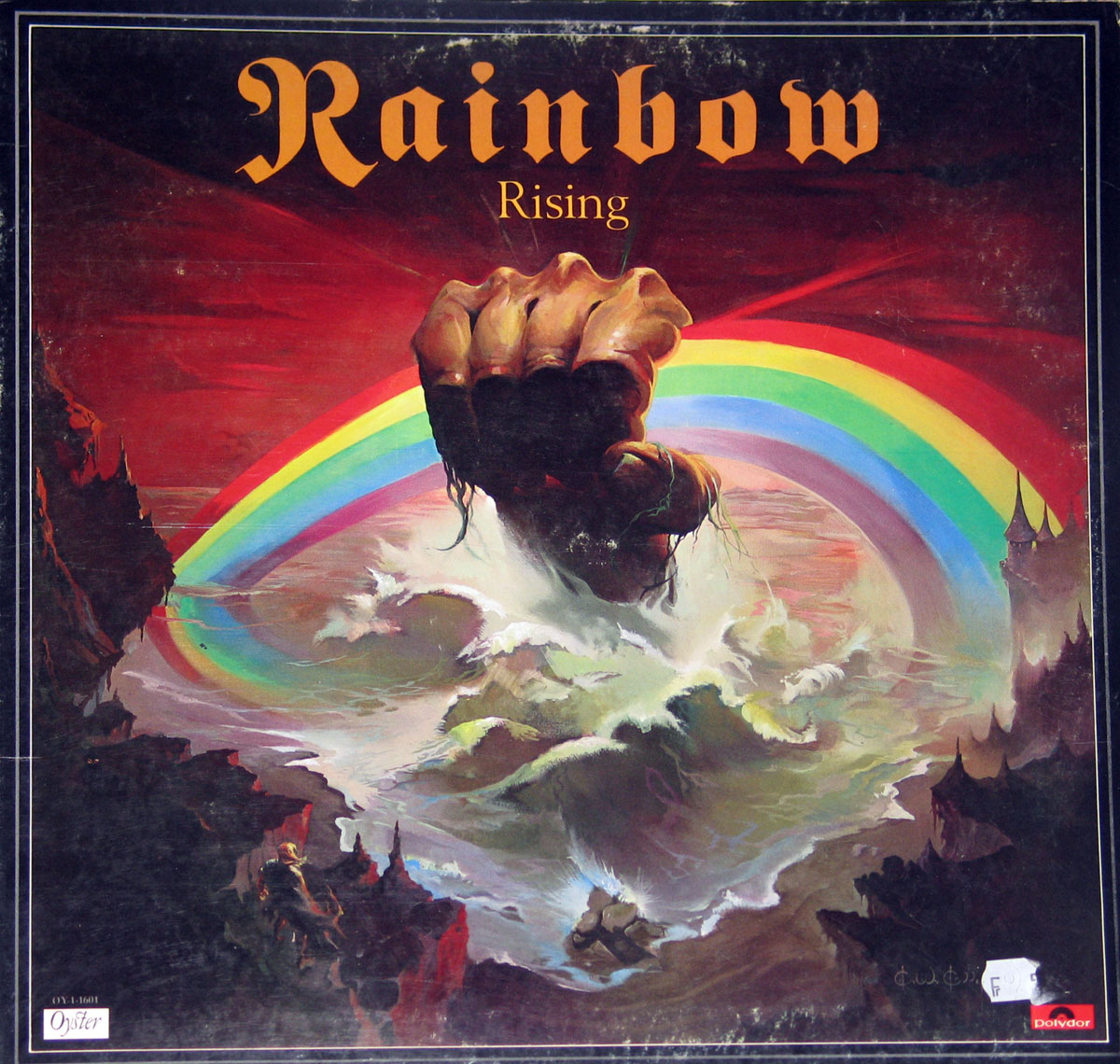
Rising is the 2nd heavy metal album by Rainbow, released in 1976 With founder Ritchie Blackmore retaining only Ronnie James Dio from the previous album, Rising has become known as the best album of Rainbow's career. Rising is characterized by its heavy guitar riffs and the keyboard skills of Tony Carey, together with the powerful drumming of Cozy Powell. Recorded in Munich in less than a month, the album has surprisingly few overdubs and was overseen by famous Deep Purple engineer and rock producer Martin Birch. This web-page has hi-res photos of the album covers, record label and a detailed description.
In the smoke-filled haze of 1976, amidst the glitter and glam of a waning rock scene, a thunderclap echoed from the depths of England. It was the sound of Ritchie Blackmore's Rainbow, and their album Rising was not just a record, it was a declaration. A declaration that rock 'n' roll wasn't dead, it had simply been kidnapped by fairies and dragons, and Blackmore, the guitar wizard, was here to lead the rescue mission.
Fresh off his departure from Deep Purple, Blackmore was a man on a quest. Not for fame or fortune, but for a sound that resonated with the ancient, the mystical, the epic. He found his bard in Ronnie James Dio, a vocalist whose voice could summon storms and soothe savage beasts. Together, they assembled a band of virtuosos: Tony Carey on keyboards, Jimmy Bain on bass, and the human drum machine, Cozy Powell.
Rising was recorded at Musicland Studios in Munich, a place where the ghosts of Wagner and Beethoven might have wandered in to witness the birth of a new mythology. Produced by Martin Birch, the album's sound is colossal, every instrument honed to a razor's edge. Blackmore's guitar solos aren't just displays of technical prowess; they're sonic tapestries woven with fire and ice. Dio's lyrics aren't just words, they're incantations, conjuring images of stargazers and tarot women, of wolves and warriors.
The album opens with "Tarot Woman," a seven-minute odyssey that lurches from delicate acoustic passages to a full-blown heavy metal assault. It's a statement of intent: this is not your older brother's rock 'n' roll. "Run with the Wolf" is a galloping anthem, a call to arms for the wild at heart. "Stargazer" is the album's centerpiece, a sprawling epic that builds from a mournful lament to a triumphant crescendo, complete with a full orchestra. It's the kind of song that makes you want to raise your fist to the sky and howl at the moon. It's no wonder it remains a staple of classic rock radio and a shining example of Dio's vocal prowess and Blackmore's ability to craft iconic riffs.
Rising wasn't without its controversies. Some critics dismissed it as pretentious, overblown, a throwback to a bygone era. But Blackmore and Dio weren't interested in following trends. They were creating their own world, a world where fantasy and reality blurred, where the music was as powerful as the myth. This unique blend of hard rock and fantastical themes set Rising apart from its contemporaries, solidifying its place as a pioneering album in the burgeoning heavy metal scene.
Beyond its musical and visual impact, Rising is also celebrated for its raw energy and powerful performances. Recorded in a remarkably short time, the album captures a band at the peak of their creative powers, with each musician delivering their best. This sense of urgency and passion is palpable throughout, contributing to the album's enduring appeal.
Rising wasn't just an album, it was a portal. It transported listeners to a realm where anything was possible, where the mundane gave way to the magical. It was a reminder that rock 'n' roll could still be dangerous, exciting, and transformative. In a world that was growing increasingly cynical and jaded, Rising was a beacon of hope, a celebration of the enduring power of the human imagination. And with its powerful performances, enduring songwriting, and undeniable influence, Rising continues to inspire and captivate listeners, leaving an indelible mark on the history of rock music.
Music Genre: Hard Rock |
Album Production: Produced by Martin Birch Treat Martin Birch like the invisible band member: you don’t see him on the sleeve, but you sure hear him in the punch, the bite, and that “turn it up” clarity. His run is legendary—starting as an engineer in the late 1960s, sharpening the sound with Deep Purple in the early 1970s, helping Rainbow hit that dramatic hard-rock stride in the mid-to-late 1970s, powering the Dio-era Black Sabbath in 1980–1981, then basically going exclusive with Iron Maiden from 1981 to 1992 before he bowed out. Read more... Martin Birch, to my ears, is the guy who made heavy records feel both massive and surgical—tight low end, bright attack, and a midrange that cuts like fresh steel without turning into ear-pain. He built long relationships instead of quick drive-bys: Deep Purple, Rainbow, Whitesnake, Black Sabbath, and then that famous Iron Maiden stretch from "Killers" (1981) through "Fear of the Dark" (1992), after which he retired. That’s not just a resume, that’s a whole era with his fingerprints on it. |
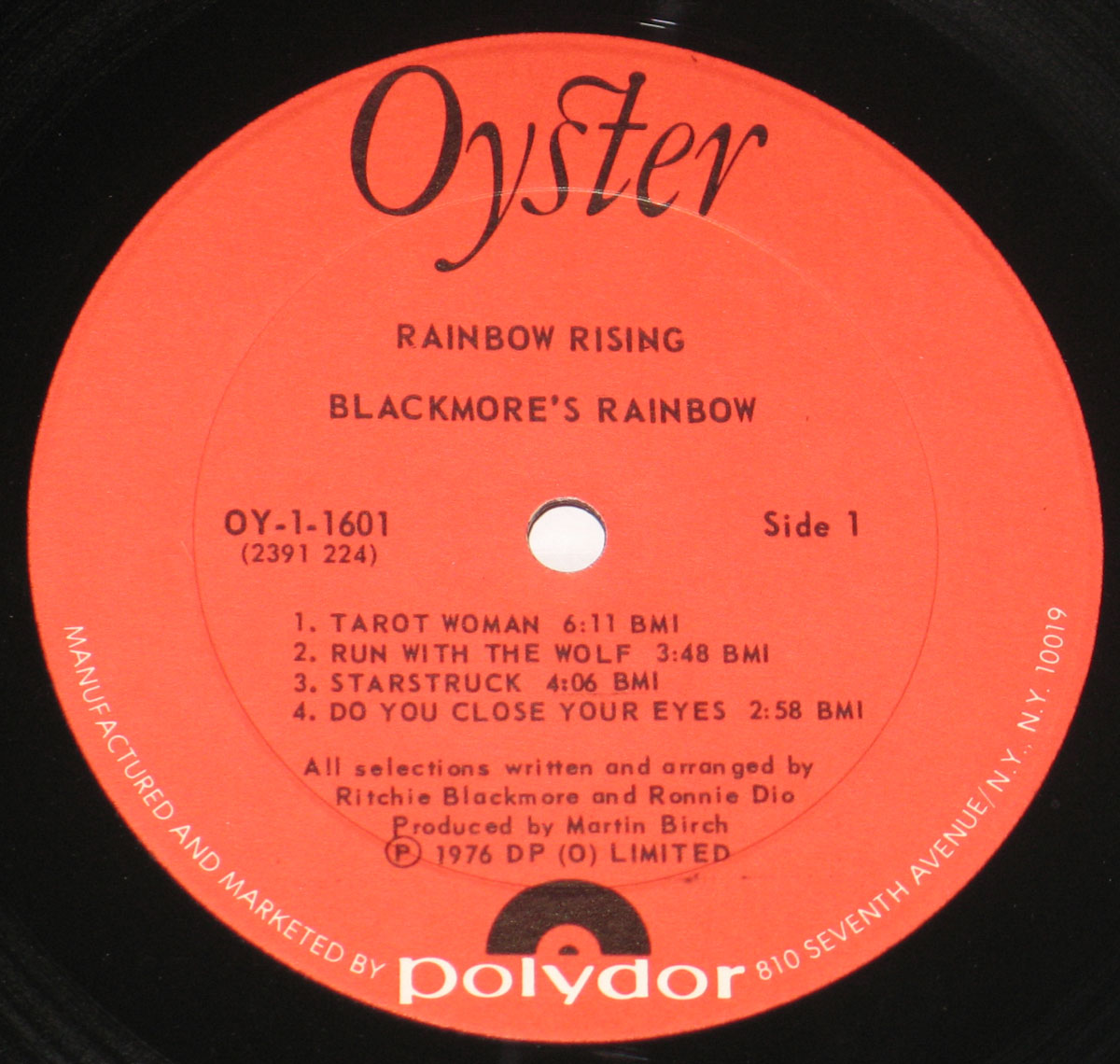
Record Label & Catalognr: Oyster OY-1-1601 |
Album Packaging: Gatefold/FOC (Fold Open Cover) Album Cover Design, |
| Record Format 12" Vinyl LP Record |
Year & Country: 1976 Made in USA |
Band Members and Musicianson: Ritchie Blackmore Rainbow - Rising |
Jimmy Bain is one of those bass players I call “quietly essential”: he doesn’t steal the spotlight, he just makes the whole thing hit harder and feel bigger. His lines have that no-nonsense weight that lets the guitars fly and the vocals preach without the bottom end turning to soup. Read more...
Jimmy Bain, for me, is a perfect example of how a great bassist can be both glue and engine at the same time—solid timing, fat tone, and just enough bite to keep things from getting polite. Timeline-wise, I always track him from Harlot (early 1970s) into Rainbow (1975–1977), then a long stretch with Dio (1982–1989, plus later returns like 1993–1994 and 2004), with plenty of side quests in between—most famously with Vivian Campbell’s band Riverdogs (1990–1993). Jimmy Bain Wiki
The guy who made the guitar sound both medieval and radioactive, often in the same solo. Read more...
Ritchie Blackmore is the sort of name I see on a sleeve and instantly expect sparks: born Richard Hugh Blackmore (1945), he’s an English guitarist who helped hard-rock riffing grow teeth and then politely refused to stop. His era-stamps are basically whole chapters of rock history: Deep Purple (1968–1975, 1984–1993), where the riffs got louder, sharper, and more dramatic; Rainbow (1975–1984, 1993–1997), where he leaned into melody and fantasy like it was a weapon; and Blackmore’s Night (1997–present), where the electric storm calms down into Renaissance-folk textures without losing that unmistakable Blackmore touch. I love that arc: from amp-stacks and arena thunder to lutes-and-candles vibes, like he just swapped dragons for different dragons.
Tony Carey (Full-name: Anthony Lawrence Carey was born in Watsonville, Santa Cruz County, California, United States on 16 Oct 1953.
During 1976 Carey's work on the album included the keyboard introduction to the opening track "Tarot Woman", and an extended keyboard solo on "A Light in the Black", the last cut on the album in "Rising", Ritchie Blackmore's Rainbow . He was 22 years old at that point. During 1977 he works as a keyboards in "On Stage", Ritchie Blackmore's Rainbow . He was 23 years old at that point. His occupation is Keyboard player.
I clock Dio as one of those once-in-a-generation voices: pure power, crazy control, and a storyteller vibe that turns metal into a myth. I always track his timeline like chapters I keep re-reading: Elf (1967–1975) where he sharpened the blues-rock grit, Rainbow (1975–1979) where the fantasy thunder really took off, Black Sabbath (1979–1982, 1991–1992) where he helped reboot the doom machine, Dio (1982–2010) where he built his own kingdom, and Heaven & Hell (2006–2010) where the classics came roaring back live. Read more...
Ronnie James Dio, I don’t just hear a singer here — I hear a frontman who could make a chorus feel like a battle standard and a quiet line feel like a warning whispered in a cathedral. Whether he’s riding Rainbow’s hard-rock drama, giving Black Sabbath a second life, or planting the flag with Dio, the guy’s signature is the same: huge hooks, bigger conviction, and that unmistakable “this matters” intensity. Ronnie James Dio Wiki
Cozy Powell is the kind of drummer I file under “human avalanche”: big hands, bigger feel, and a groove that hits like a freight train in leather pants. Read more...
Cozy Powell, for me, is the textbook example of “power that still swings”—he can be thunderous without turning stiff, flashy without turning messy, and he always leaves space for the riff to breathe. When I hear him, I hear commitment: the snare cracks, the toms roll like incoming weather, and the whole band suddenly sounds like it got upgraded to arena mode. Timeline-wise, I always map his career in loud chapters—The Jeff Beck Group (1970–1972), Rainbow (1975–1980), Michael Schenker Group (1980–1982), Whitesnake (1982–1985), Emerson, Lake & Powell (1985–1986), Black Sabbath (1988–1991, 1994–1995), and the Brian May Band (1991–1992, 1993–1994, 1998).
Complete Track Listing of: Ritchie Blackmore Rainbow - Rising |
Photos of the LP's cover: Ritchie Blackmore Rainbow - Rising |
|
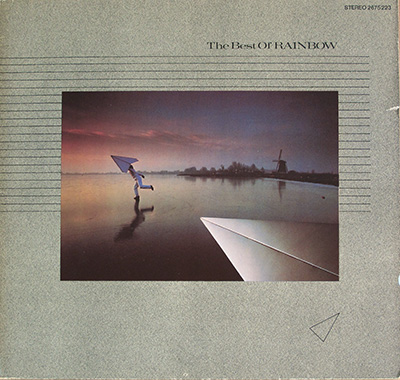
"Rainbow Best of Rainbow" is a compilation album by the British rock band Rainbow, which was released in 1981. It features some of Rainbow's most popular and well-known tracks from their first six studio albums
Best of Rainbow 12" Vinyl LP
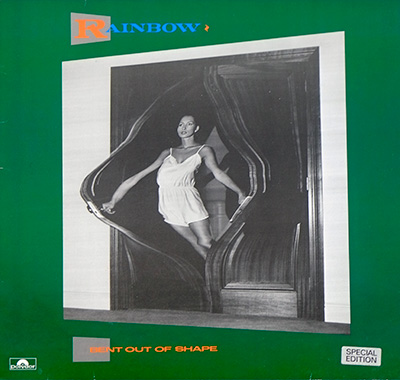
"Bent Out of Shape," a final studio album pre-Deep Purple reunion, marked a pivotal moment in the band's history. Released on vinyl LP in Germany, it showcased Ritchie Blackmore and Roger Glover before their return to Deep Purple.
- Bent Out of Shape (1983, France) - Bent Out of Shape (1983, Germany)
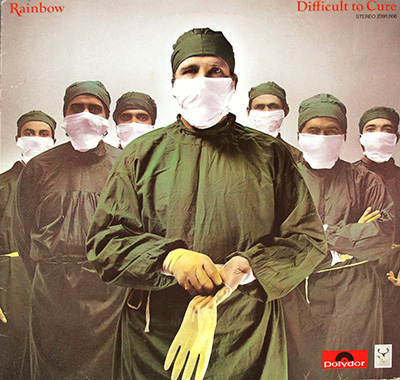
Rainbow's fifth studio album, "Difficult to Cure" (1981), marked a pivotal moment in the band's evolution. Led by Ritchie Blackmore and featuring Joe Lynn Turner, the album blended hard rock with classical influences
Difficult to Cure
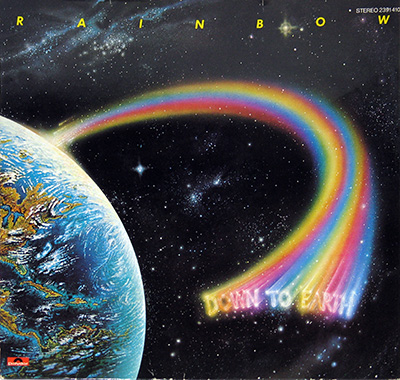
"Down To Earth" album is a timeless classic that showcases the band's exceptional talent and musical prowess. With its memorable songs, exceptional performances, and the added visual element of the 12" photo insert/leaflet
Down To Earth 12" Vinyl LP
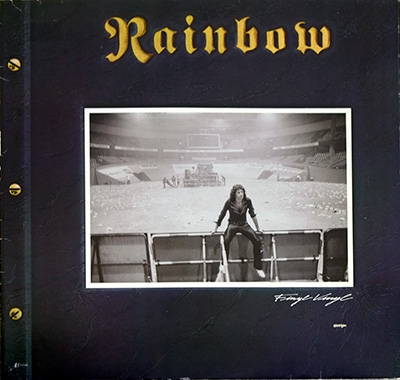
"Final Vinyl" is a collection of live recordings and B-sides by Rainbow and was released in 1986, after the band had already ceased to be when Blackmore and Glover were part of the Deep Purple reformation.
Finyl Vinyl 12" Vinyl LP
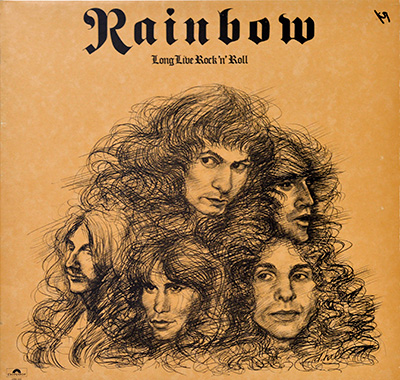
"Long Live Rock and Roll," released on 9 April 1978, represents a pivotal moment in rock history. The collaboration between Ritchie Blackmore and Ronnie James Dio produced a groundbreaking album
- Long Live Rock 'n' Roll (1978, Germany) - Long Live Rock 'n' Roll ( 1978 , Netherlands ) - Long Live Rock 'n' Roll (1978, West-Germany)
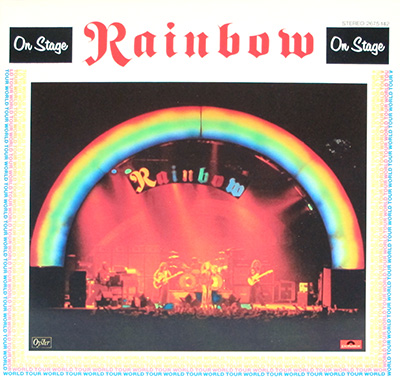
"Rainbow - On Stage" is a live album by the English rock band Rainbow, recorded in 1977 and released in 1978. It was recorded at Long Beach Arena in California and captures the band's performance during the "On Stage" tour in support of their album "Rising"./p>
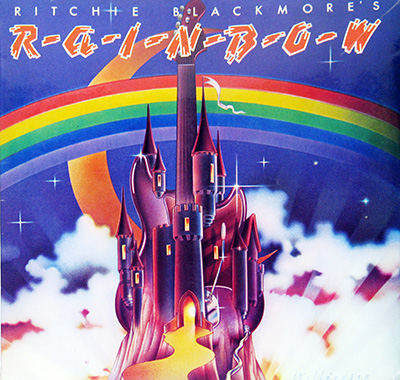
On Stage 12" Vinyl 2LP“Ritchie Blackmore’s Rainbow” (1975) sounds like thunder trapped in crystal — a hard rock masterpiece infused with mysticism. Blackmore’s lyrical guitar and Dio’s soaring vocals ignite tracks like “Man on the Silver Mountain” and “Catch the Rainbow,” where medieval imagery collides with amplifier power in one timeless debut.
"Rising" is the 2nd heavy metal album by Rainbow, released in 1976 . With founder Ritchie Blackmore retaining only Ronnie James Dio from the previous album, Rising has become known as the best album of Rainbow's career
- Rising (1976, Austria) - Rising (1976, Germany) - Rising (1978, USA)
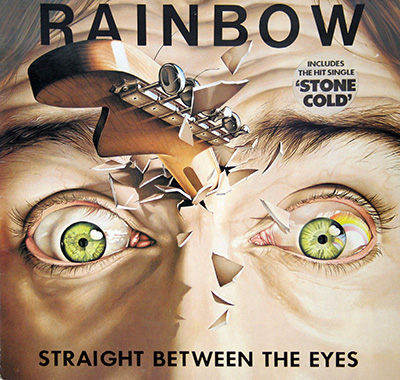
Released in 1982, Rainbow's "Straight Between the Eyes" is a hard rock album featuring vocalist Joe Lynn Turner. Backed by Ritchie Blackmore's guitar, the album blends strong vocals with melodic hard rock
- Straight Between the Eyes (1982, Germany) - Straight Between the Eyes (1982, Netherlands) - Straight Between the Eyes (1981, UK)