- first recording with Jason Newsted, raw back-to-basics thrash reset from 1987
"The $5.98 EP: Garage Days Re-ReVisited" landed in 1987 as Metallica’s deliberate reset button, recorded fast and loud in Los Angeles during their first sessions with Jason Newsted on bass. Cut in just six days at A&M and Conway Studios, this 12" EP captures the band stripping away ambition and polish in favor of instinct, speed, and sweat. The sound is raw thrash with punk nerves, powered by ferocious covers like “Helpless”, “The Small Hours”, and the Misfits medley “Last Caress / Green Hell”. Self-produced by Metallica and wrapped in no-frills artwork, original vinyl pressings remain essential collector pieces for anyone who wants the band unfiltered and unapologetic.
"The $5.98 EP: Garage Days Re-ReVisited" is Metallica deliberately slamming the brakes and swerving back into their own past. Released in 1987 but mentally parked somewhere between sweaty garages and battered cassette decks, this EP isn’t about moving forward — it’s about reconnecting with the spark. It sounds like a band reminding itself who it is, loudly and without apology.
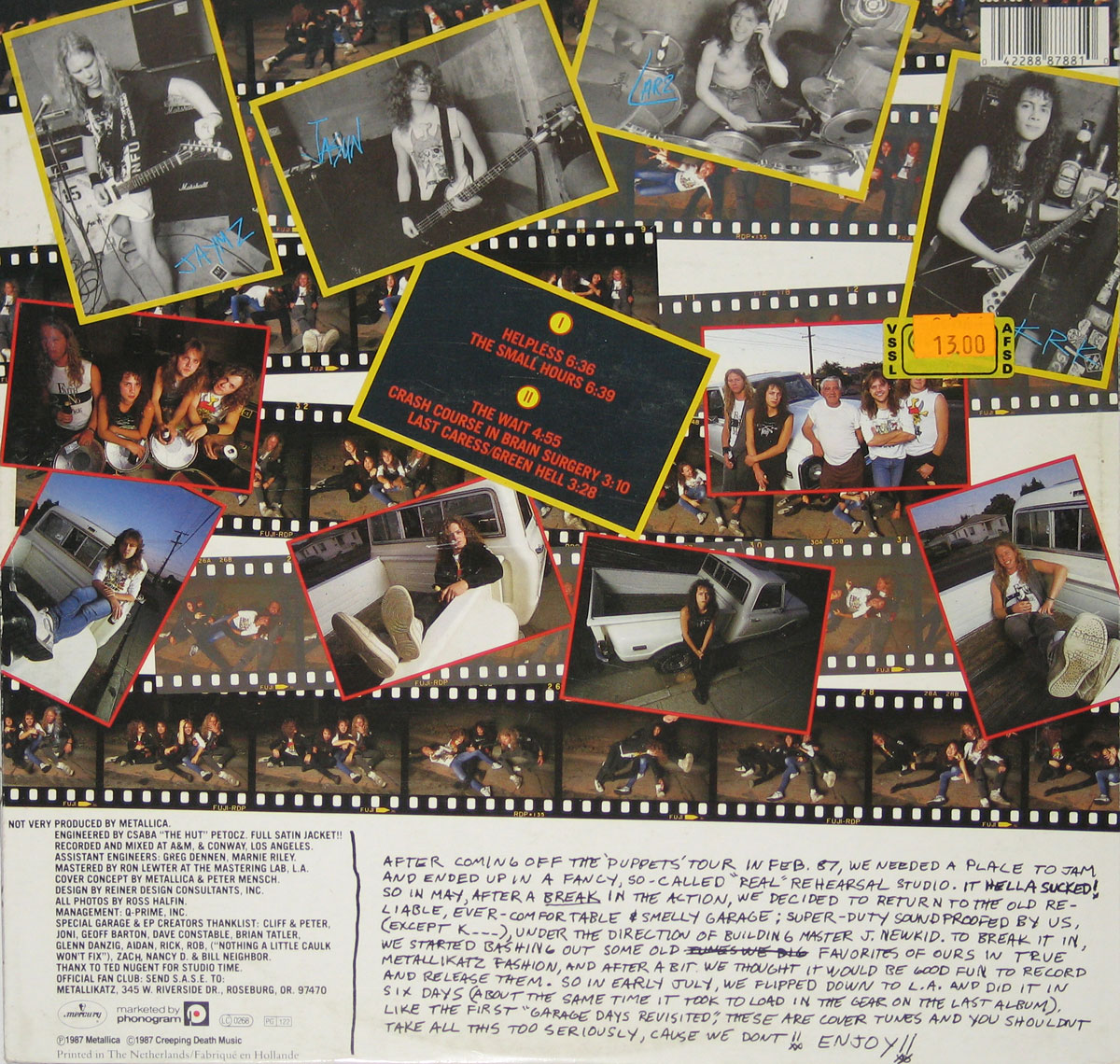
This EP explains itself in its own handwriting. Written by a band member on the back cover, the note places the record squarely in early 1987, right after the exhausting “Puppets” tour ended. Instead of embracing the growing professionalism of the metal world, Metallica actively rejected it, abandoning a “real” rehearsal studio and retreating back into a smelly, self-soundproofed garage.
That context matters more than the release date. Although issued in late 1987, the mindset here belongs to Metallica’s formative years — the period shaped by NWOBHM singles, punk attitude, and basement-level volume. “Re-ReVisited” isn’t nostalgia; it’s a deliberate reset at a moment when the band needed grounding, not growth.
According to the handwritten note, these songs started as a way to break in a newly reclaimed rehearsal space, nothing more ambitious than bashing out old favorites for fun. Only later did the idea emerge to record and release them, precisely because they felt loose, unimportant, and honest. That lack of pressure is the point.
In early July 1987, the band went to Los Angeles and recorded the EP in six days — a detail emphasized with typical Metallica humor, comparing it to the time it once took just to load gear. The message is clear: don’t overthink this record. It exists to capture chemistry, momentum, and the sound of a band reconnecting with itself.
This EP was born out of transition and tension. Jason Newsted had just stepped into the band after the loss of Cliff Burton, and everything still felt raw, unresolved, and unstable. Rather than overanalyze that situation, Metallica plugged in and played the songs that originally made them fall in love with heavy music.
The short, intense recording schedule says everything. No long debates, no conceptual overthinking — just capture the chemistry, test the lineup, and move forward with momentum. It feels less like a release strategy and more like a necessary purge.
Sonically, this EP is tight, aggressive, and gloriously stripped down. The guitars slash instead of sculpt, the drums push forward without restraint, and the vocals sound like they’re being shouted across a rehearsal room rather than delivered from a control booth. Everything is immediate.
Tracks like “Helpless” and “The Small Hours” don’t aim to improve their originals — they weaponize them. The Misfits medley closes the record with punk attitude intact, proving Metallica never forgot that speed and attitude matter as much as precision.
Compared to the increasingly complex and structured metal releases of the late ’80s, this EP feels almost defiant. Where albums like "Master of Puppets" showcased discipline and compositional growth, "Garage Days" throws discipline out the window on purpose. It has more in common with early Exodus, Diamond Head singles, or hardcore punk 12-inches than with contemporary “serious” metal statements.
There was no major outrage, but there was mild confusion. Some listeners expected new original material and instead got a covers EP that sounded like it was recorded on instinct alone. Others immediately understood the message and cranked it louder — this wasn’t regression, it was reaffirmation.
Beneath the surface, this record documents a band rebalancing itself. Newsted is locking in, the rest are testing trust, and nobody is pretending the wounds have healed yet. That friction doesn’t weaken the EP — it gives it bite.
Initially treated as a fun side project, the EP has aged into something more revealing. It explains how Metallica bridged grief, pressure, and massive expectations without losing their core identity. For longtime listeners, it’s a reminder that the band’s foundation was always about hunger first.
Decades later, this record still smells faintly of beer, amps warming up, and unfinished conversations. I drop the needle and hear a band choosing instinct over image, memory over momentum. Sometimes going backward is the only way to move on.
American Speed / Thrash Metal
Rooted in the aggressive late-’70s and early-’80s underground, this EP sits squarely in the speed-thrash zone: sharp-edged riffs, punk-level urgency, and a raw, no-polish attitude. These songs move fast, hit hard, and wear their NWOBHM and punk influences proudly, filtered through Metallica’s increasingly disciplined thrash machine.
Record Format: 12" Vinyl (EP)
Mercury 888 788.1
1987
A&M Studios & Conway Studios – Los Angeles, United States
After coming off the “Puppets” tour in Feb. ’87, we needed a place to jam and ended up in a fancy so-called “real” rehearsal studio. It hella sucked!
So in May, after a break in the action, we decided to return to the old reliable, ever-comfortable & smelly garage; super-duty soundproofed by us, (except K…), under the direction of building master J. Newkid.
To break it in, we started bashing out some old favorites of ours in true MetalliKatz fashion, and after a bit we thought it would be good fun to record and release them. So in early July, we flipped down to L.A. and did it in six days (about the same time it took to load in the gear on the last album).
Like the first “Garage Days Revisited”, these are cover tunes and you shouldn’t take all this too seriously, ’cause we don’t!!
ENJOY!!!
Disclaimer: Track durations shown are approximate and may vary slightly between different country editions or reissues. Variations can result from alternate masterings, pressing plant differences, or regional production adjustments.
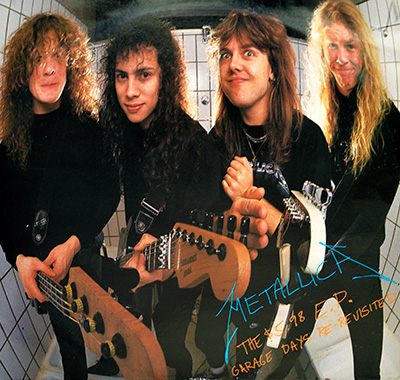
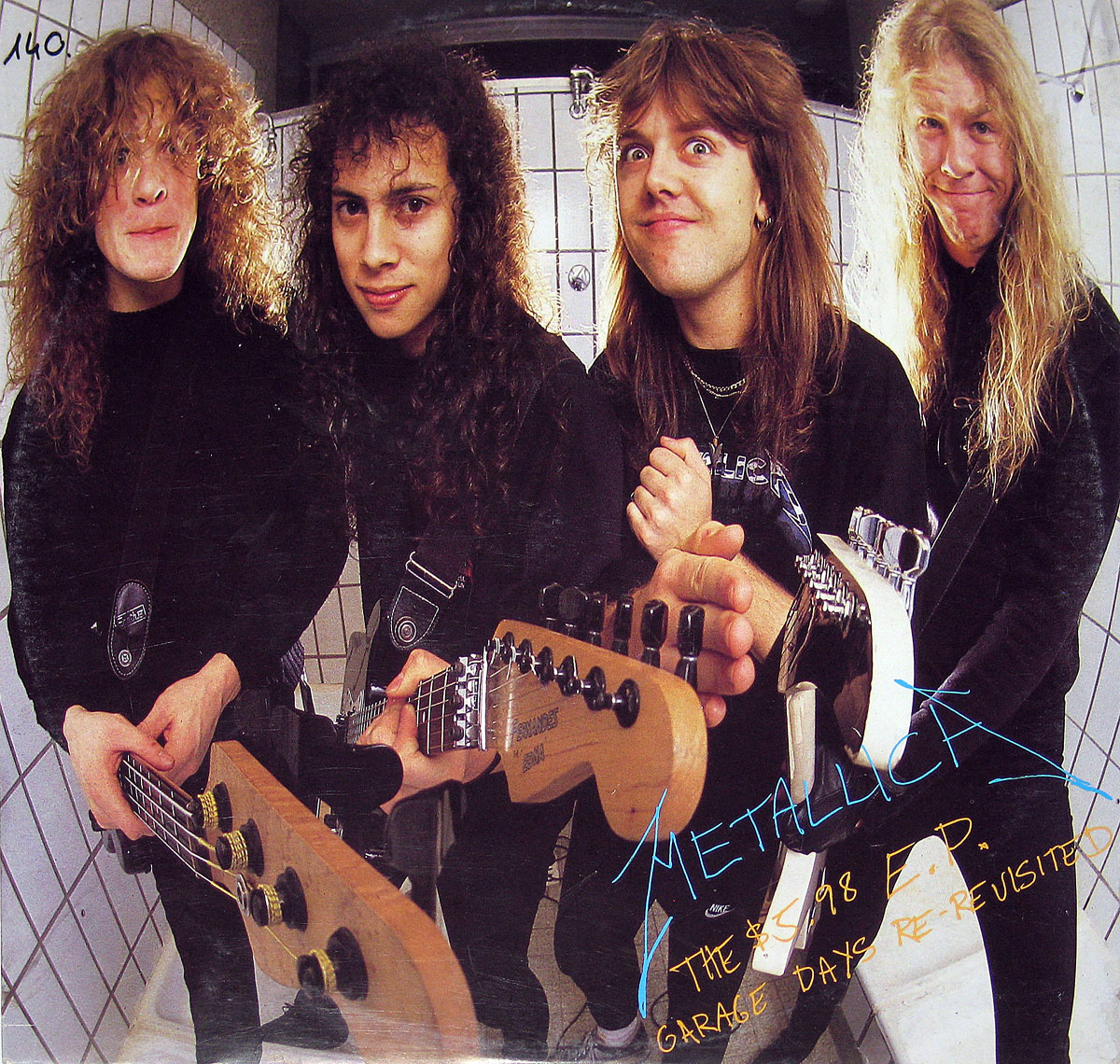
This front cover hits straight at eye level with four band members crammed into what looks like a tiled bathroom or utility room, white square tiles wrapping around the walls and amplifying the claustrophobic, deliberately low-rent atmosphere. The camera sits slightly below face height and very close, creating distortion at the edges and making instruments and hands feel oversized, an intentional snapshot effect rather than a polished studio photograph.
From left to right, each person is dressed almost entirely in black, reinforcing the stripped-down visual identity. Hair is long, loose, and unstyled, ranging from tight curls to straight blond lengths. Expressions are playful, confrontational, and slightly unhinged: wide eyes, crooked grins, and exaggerated stares aimed directly into the lens. This is not a posed “band promo” look but a moment frozen mid-joke, mid-noise, mid-energy.
Instruments are pushed forward aggressively. A bass neck dominates the lower left foreground with tuning pegs clearly visible, while guitar headstocks and fretboards cut diagonally across the image. The perspective exaggerates scale, making the instruments feel intrusive and physical, exactly matching the EP’s back-to-basics, no-distance sound. Strap buttons, strings, and worn finishes are visible, underscoring use rather than display.
The image surface shows visible wear, light scuffing, and subtle color aging consistent with original late-1980s print production. Over the photo, handwritten text appears in bright blue and yellow marker: the band name “Metallica” and the title “The $5.98 E.P. Garage Days Re-Revisited.” The lettering is rough, uneven, and intentionally casual, reinforcing the DIY attitude and rejecting polished typography entirely.
From a collector’s perspective, this cover matters because it visually documents a reset moment. No label logos dominate the front, no barcodes intrude, and no marketing gloss interferes. The design reads like a snapshot taped to a wall, reproduced onto vinyl. Original pressings preserve this raw contrast and marker color saturation, which later reproductions sometimes soften or clean up too much.
This back cover is visually busy by design, built as a full-bleed collage that mimics strips of photographic negatives laid out across the sleeve. Rows of perforated film frames run horizontally, creating a contact-sheet look that immediately signals documentation rather than decoration. Nothing here is centered or minimal; the eye is forced to wander, exactly like flipping through loose photos on a table.
Scattered across the surface are candid black-and-white and color photos of the band in rehearsal rooms, backstage corners, parking lots, and casual hangouts. The images are framed with thick yellow and red borders, unevenly angled, as if taped down in a rush. Several photos carry handwritten signatures or short notes in marker, reinforcing the informal, personal nature of the artwork.
Near the center sits a black rectangular panel with red and yellow text listing the tracks and exact running times for Side One and Side Two. The typography is utilitarian and highly legible, prioritizing information over style. This layout makes it immediately clear this is an EP, short and sharp, with no wasted space or ambiguity about content.
The lower portion of the sleeve is dense with text. On the left, tightly packed production credits list engineers, studios, mastering, cover concept, design consultants, management, and fan club details. On the right, a large block of handwritten liner notes explains the context of the recording in blunt, conversational language. The handwriting is uneven and raw, reproduced exactly as written, without cleanup.
A barcode is placed in the upper right corner, small and unobtrusive, while copyright and pressing information appear along the bottom edge, including the 1987 copyright notice and Dutch manufacturing credit. From a collector’s standpoint, this back cover is essential: original pressings preserve the sharpness of the handwriting and the contrast of the film-strip imagery, details that often soften or blur on later reissues.
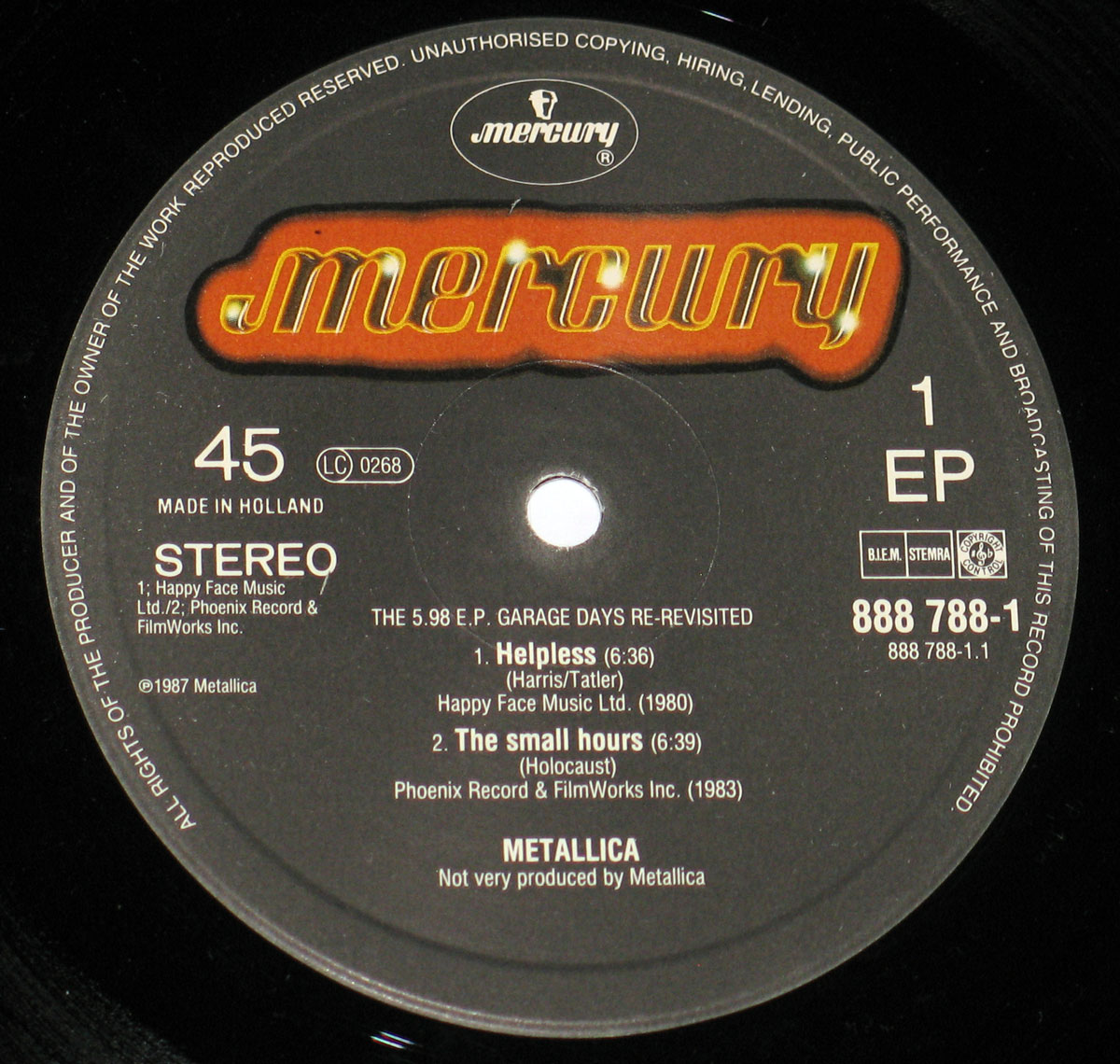
This is the Side One label of the original 12-inch EP, printed on a dark grey to near-black background typical for late-1980s European Mercury pressings. At the top sits the large, stylized Mercury logo in orange and yellow with a soft gradient and rounded lettering, visually dominant and immediately recognizable. Above it, in smaller white type, is the circular Mercury emblem featuring the classical winged head icon, reinforcing the label’s long-standing brand identity.
The label is cleanly laid out and information-dense. On the left side, the speed designation 45 confirms this EP plays at 45 RPM, paired with the boxed LC 0268 label code used for European distribution tracking. Just below, MADE IN HOLLAND is printed in clear capitals, identifying this as a Dutch pressing. The STEREO marking appears prominently, followed by publishing credits referencing Happy Face Music Ltd. and Phoenix Record & FilmWorks Inc.
Centered beneath the spindle hole is the album title printed in uppercase: THE 5.98 E.P. GARAGE DAYS RE-REVISITED. Below that, the Side One track listing is neatly stacked and numbered, showing “Helpless” (6:36) and “The Small Hours” (6:39), with songwriter credits in parentheses and original publishing years noted. The typography is functional and precise, prioritizing readability over decoration.
On the right side, the side designation 1 EP is printed large and bold, with the catalogue number 888 788-1 and sub-number 888 788-1.1 placed just below. Rights society logos for BIEM and STEMRA appear in small boxed form, confirming European mechanical rights handling. Along the outer rim, fine-print legal text runs in English, warning against unauthorized copying, hiring, lending, public performance, and broadcasting.
At the bottom, METALLICA is printed in uppercase, followed by the tongue-in-cheek line “Not very produced by Metallica”, a deliberate joke that aligns perfectly with the EP’s stripped-down, anti-polish ethos. From a collector’s standpoint, the sharpness of the orange Mercury logo, the clarity of the small rim text, and the deep contrast of the dark background are key indicators of a clean, early pressing.
This Mercury label represents the late-1980s European design language: information-forward, restrained, and instantly identifiable. The focus is on clarity, legal accuracy, and consistent branding rather than decorative flair. This particular label design was used by Mercury during the mid-to-late 1980s.
All images on this site are photographed directly from the original vinyl LP covers and record labels in my collection. Earlier blank sleeves were not archived due to past storage limits, and Side Two labels are often omitted when they contain no collector-relevant details. Photo quality varies because the images were taken over several decades with different cameras. You may use these images for personal or non-commercial purposes if you include a link to this site; commercial use requires my permission. Text on covers and labels has been transcribed using a free online OCR service.
After diving deep into one of Metallica’s albums, this section pulls the camera back for the wide shot — the full vinyl legacy. Here you’ll find every Metallica release lined up in their fierce chronology, from the garage-born chaos of the early ’80s to the heavyweight pressings of later decades. Each record listed below links to its own detailed gallery, letting you trace the evolution of sound, artwork, and attitude that made Metallica unstoppable.
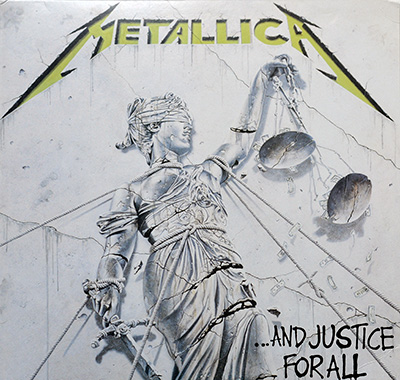
This release on "Blackened Records" label, is the 2018 audiophile re-issue of ""...And Justice for All" the first album released by Metallica after the death of Cliff Burton. It is also the first album with Jason Newsted on Bass guitar.
- ..And Justice For All (Blackened Records) - ..And Justice for All (1988, Netherlands)
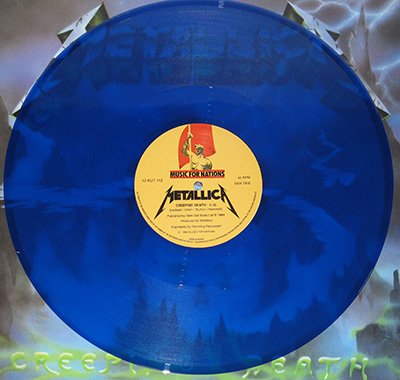
Creeping Death by the American Thrash Metal band "Metallica" is a 12" EP Vinyl record from 1984. Un-official versions from France (with different labels) have been released in the colors: Blue, Green, Red, White and Yellow Vinyl.
- Creeping Death Blue Vinyl (1984, France) - Creeping Death Green Vinyl (1984, France) - Creeping Death Red Vinyl (1984, France) - Creeping Death White Vinyl (1984, France) - Creeping Death Yellow Vinyl (1984, France)
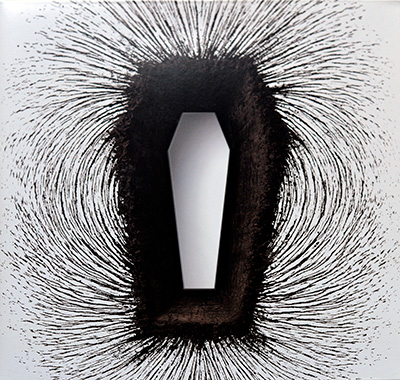
This is the audiophile re-release of "Death Magnetic" the 2009 album released by the American Thrash Metal band "Metallica". This re-release comes in a gatefold album cover and two audiophile quality 180grams records.
Death Magnetic ( Blackened Records ) 12" Vinyl LP
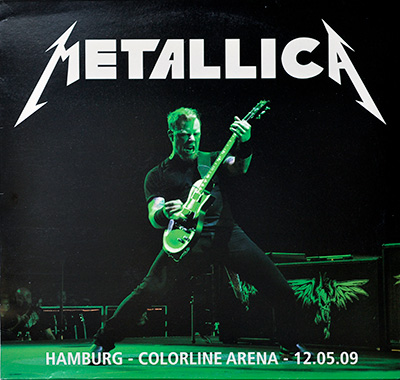
Issued as a limited edition 12" vinyl LP, "Hamburg Colorline 12 May 2009" has become a coveted collector's item. Its raw, unfiltered energy transports listeners back to the heart of that explosive concert.
Hamburg Colorline 12" Vinyl LP
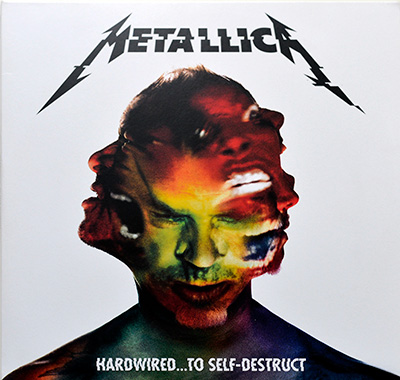
"Hardwired to Self Destruct" is the 2016 double album released by the American Speed / Thrash Metal band "Metallica". It was released 8 years after their previous album "Death Magnetic"
Hardwired to Self Destruct 12" Vinyl LP
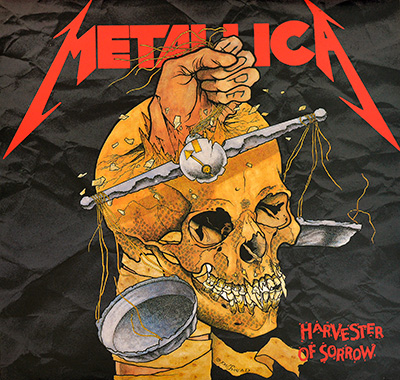
The A-side explodes with the relentless energy of "Harvester of Sorrow." This track, a centerpiece of their landmark album "...And Justice For All," exemplifies Metallica's progressive thrash metal sound.
Harvester of Sorrow 12" Vinyl Single
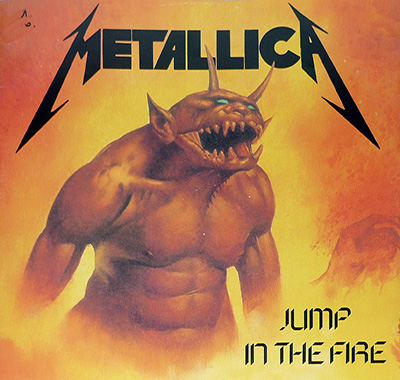
"Jump in the Fire" is a single derived from Metallica's debut studio album, "Kill 'em All", released in 1983.
- Jump in the Fire (1983, England) - Jump in the Fire (1983, Holland)
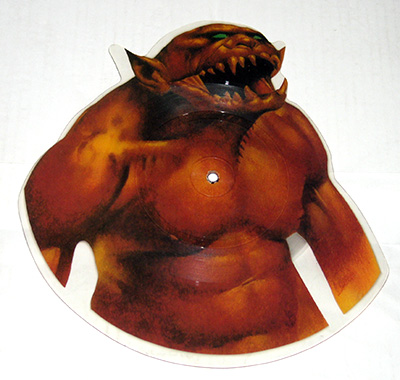
The cover art for "Jump In The Fire" is as iconic as the track itself. Created by artist Les Edwards, the image features a demon-like creature surrounded by flames, inviting the listener to literally "jump in the fire."
Jump in the Fire 12" Shaped Picture Disc
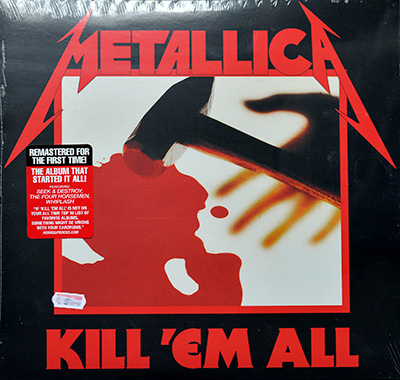
Metallica’s Kill ’Em All is the explosive debut that defined thrash metal. Released in 1983, this 12” vinyl LP is raw, aggressive, and uncompromising, blending speed, power, and razor-sharp riffs. Featuring iconic tracks like ‘Seek & Destroy’ and ‘Whiplash,’ it captures the band’s youthful intensity, setting the stage for their legendary rise in the metal world.
- Kill 'Em All ( Blackened Records ) - Kill 'em All 2LP (1983, England) - Kill 'Em All (1983, France) - Kill 'Em All (1983, Holland) - Kill 'Em All (1983, UK)
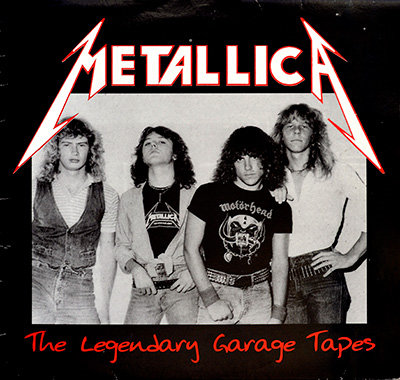
Before the polished production of "Kill 'Em All," Metallica's sound was a volatile beast, unleashed in the cramped confines of a garage. "The Legendary Garage Tapes" serve as a time capsule, showcasing the thrash metal titans
Legendary Garage Tapes 12" Vinyl LP
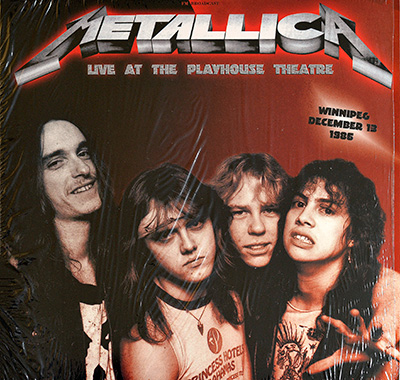
This 500-copy limited edition is a treasure trove for devotees of Metallica's raw, uncompromising roots. The setlist reads like a greatest hits collection of their early years.
Live at the Playhouse Theatre 12" Vinyl LP
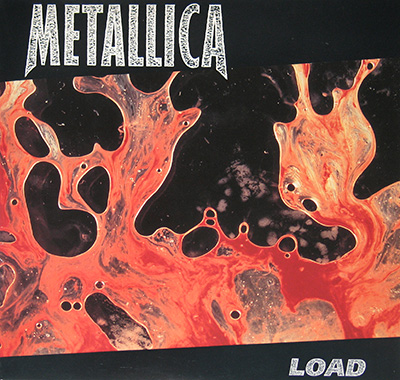
Metallica's "Load" is a sonic journey capturing the band's evolution. Released in 1996, the controversial album's vinyl edition enriches the listening experience, offering warmth and authenticity.
METALLICA - Load ( 2LP Blackened Records ) - Load (1996,E/M Ventures Elektra )
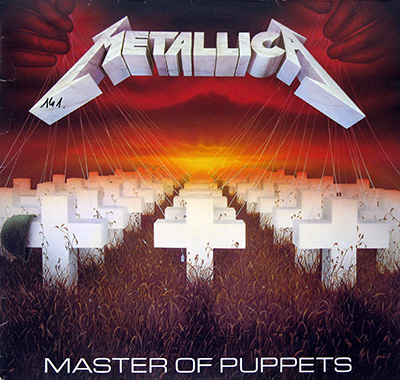
Metallica's 1986 album "Master of Puppets" stands as a towering achievement in heavy metal history. Its complex compositions, blistering aggression, and socially conscious themes cemented the band's reputation as leaders
- Master of Puppets (1986, Netherlands)
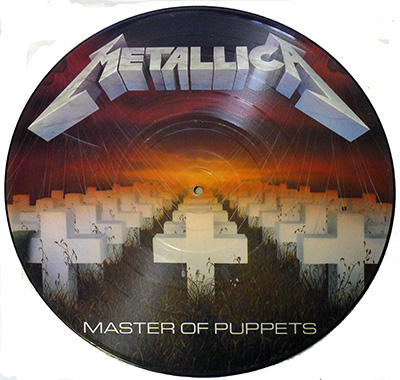
The METALLICA "Master of Puppets" 12" Vinyl Picture Disc, a 1986 UK 1st ISSUE with no barcode, is a rare gem for collectors. This limited edition features unique artwork on the vinyl picture disc, adding to its allure.
Master of Puppets 12" Vinyl Picture Disc
This the high-end audiophile release pressed on two 12" vinyl records each on 180 gram vinyl of the self-titled Metallica album and because of the black front and back cover, it is also known as "The Black Album".
METALLICA - Self-Titled The Black Album 12" Vinyl LP
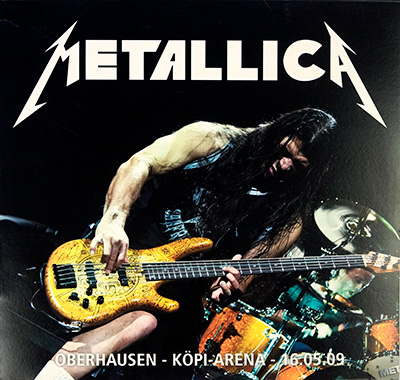
Recorded at the Kopi Arena, this album transports listeners back in time to a pivotal moment in Metallica's career. The band was riding high on the success of their album *Death Magnetic*
Oberhausen Kopi Arena 12" Vinyl LP
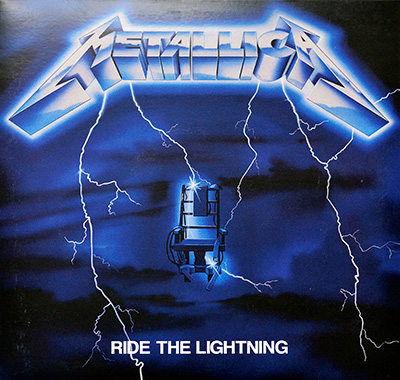
Metallica's "Ride the Lightning" 12" Vinyl LP is a collector's gem. This iconic album marked a turning point in metal history, blending thrash metal and intricate compositions.
- Ride The Lightning (1984, England). - Ride the Lightning (Roadrunner, 1984, Holland) - Ride The Lightning (Vertigo, 1984, Netherlands) - Ride The Lightning (Blackened Records, 2006)
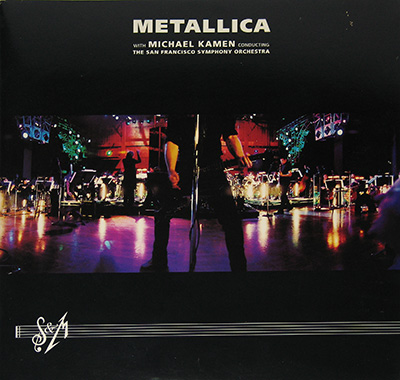
This is METALLICA's ninth album, recorded live with the San Francisco Symphony on April 21-22 of 1999. The set list contains songs from Ride the Lightning through ReLoad, as well as two new songs: "- Human" and "No Leaf Clover".
S&M 12" Vinyl LP
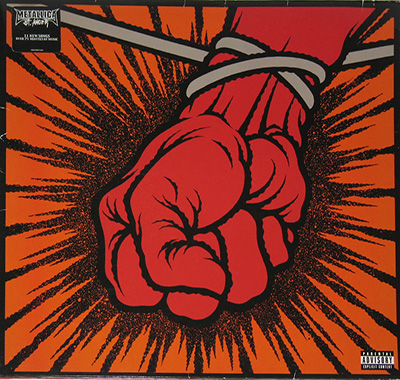
St. Anger is the eighth studio album by American heavy metal band Metallica, released on 5 June 2003. The album was originally to be released on June 10, 2003, but because of fears of extended music piracy over filesharing network
St. Anger 12" Vinyl LPThis EP sounds like Metallica forcing themselves back into a sweaty room with the amps cranked and the clock running. No polish, no restraint — just raw thrash energy, punk attitude, and Jason Newsted hitting the low end hard from the first spin. Cut at 45 RPM, it rips fast and loud, capturing a band reconnecting with speed, grit, and zero compromises.
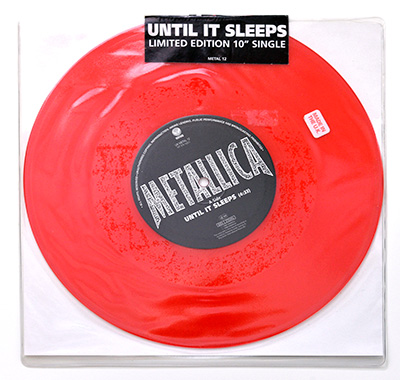
This limited edition album "Until It Sleeps" is the first single and the fourth song from Metallica's 1996 album Load. This version is pressed on Red Vinyl and comes in a transparent sleeve.
Until It Sleeps Red Vinyl (1996) 12" Vinyl LP