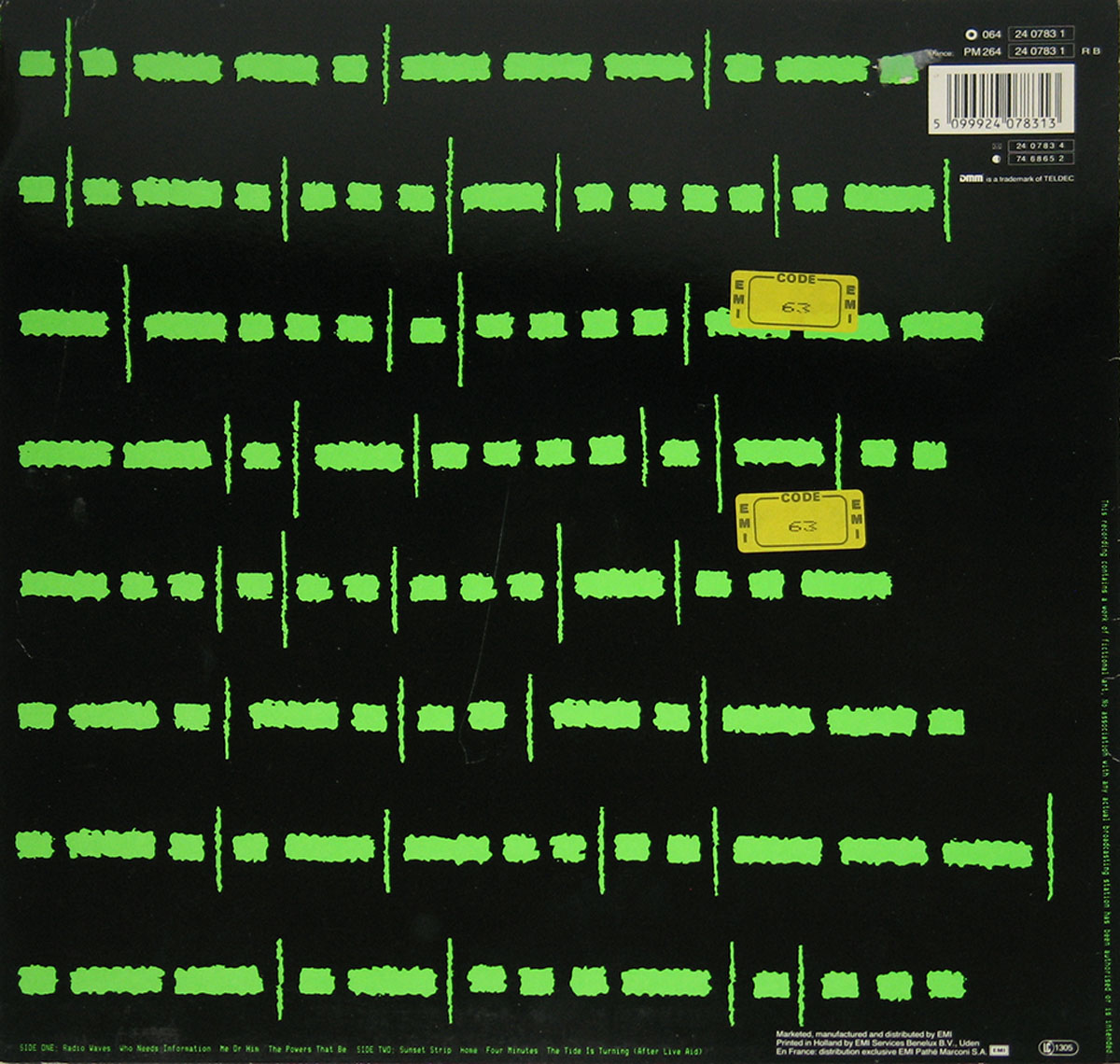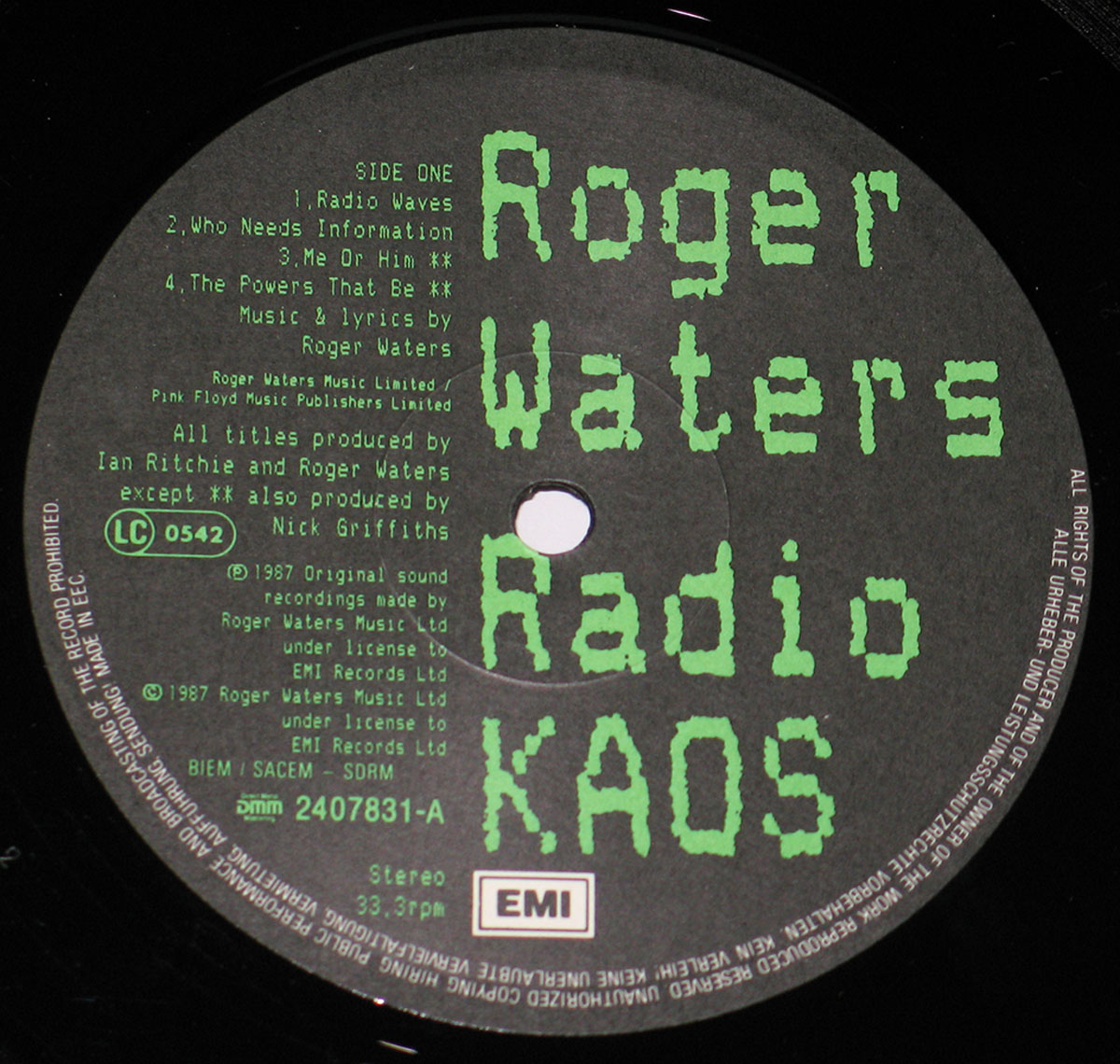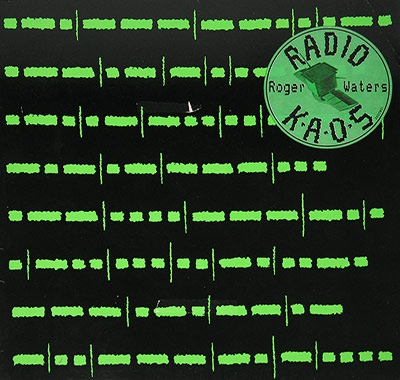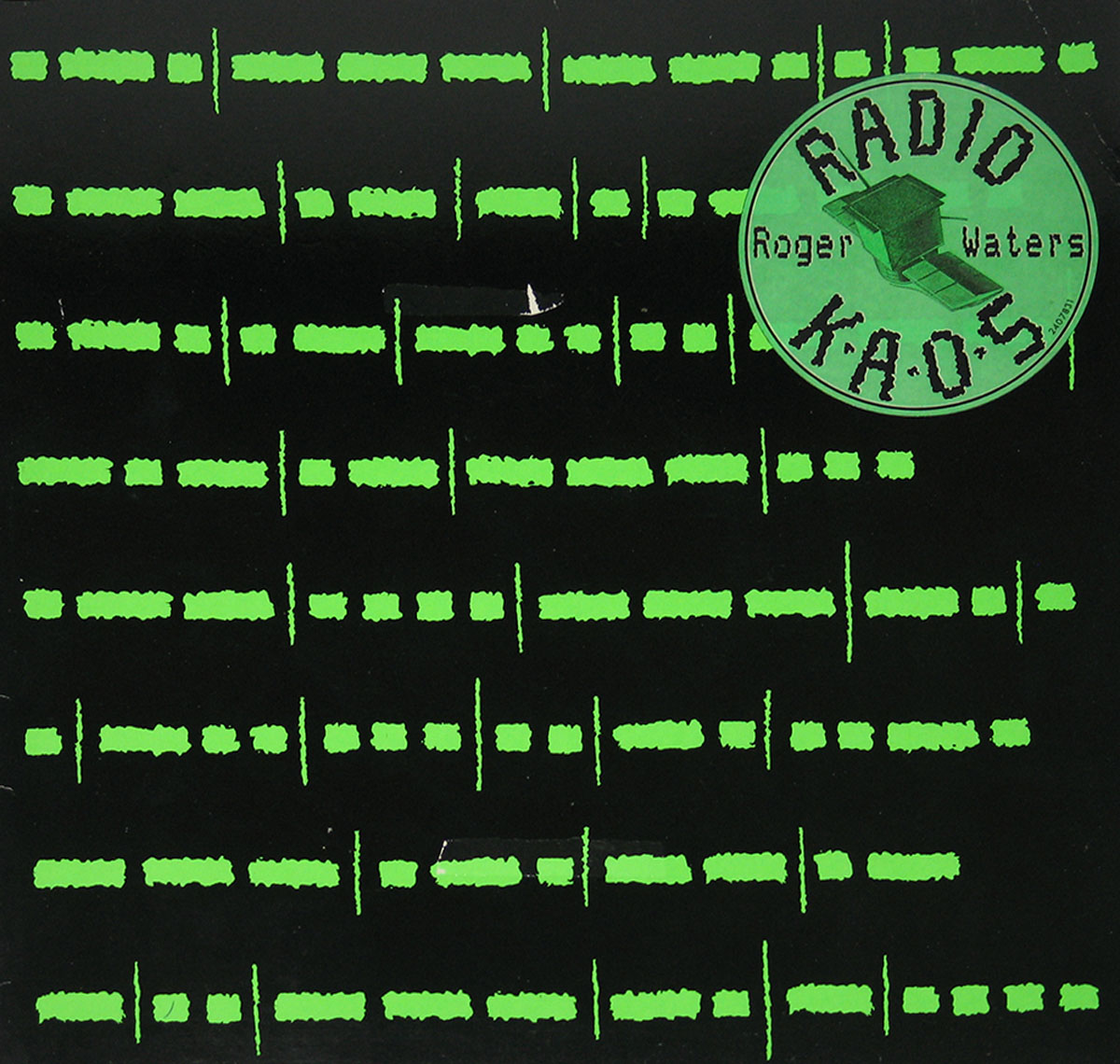
"Radio K.A.O.S." Album Description:
"Radio K.A.O.S." hit the shops in June 1987, and it feels like Waters walking out of the studio with his coat still smoking. Not a farewell note. More like a broadcast interruption. You can almost hear him glaring at the radio industry while he borrows its toys.
This is a concept album, sure, but not the cosy kind with dragons and capes. The story hangs on Billy: a young Welshman with cerebral palsy, stuck in a wheelchair, written off by everyone around him, and yet able to hear radio waves in his head. That one idea is pure Waters: take somebody ignored by the world, then hand him the power to hijack it.
The plot zig-zags from the South Wales valleys to Los Angeles, with Billy learning to speak through machines and phone lines, turning a radio station into a confessional booth. It is bleak, oddly tender in places, and then it snaps back into that late-Cold-War paranoia where the news feels like a weapon. Waters does not whisper these themes. He points.
Sonically, it swerves away from the old Floyd fog. More electronics. More synth punch and programmed rhythm. You can tell Waters is enjoying the cold, bright edges for a change, even if he still can not resist turning every chorus into an argument with modern life. Tracks like "Radio Waves" and "The Powers That Be" stomp forward like headlines; "The Tide Is Turning" tries to open a window, even while he is grumbling at the weather.
The credits matter here, because this is not some lone-genius myth. Waters wrote the album, yes, but the production is credited to Roger Waters with Ian Ritchie and Nick Griffiths, and the record is stacked with players who know how to make a polished studio machine move (without turning it into wallpaper). That mix of control and collaboration is exactly why it feels so tense: it is designed, but it is not relaxed.
At the time, reviews were split, and the chart story is modest rather than victorious: the UK Albums Chart peak was No. 25. Not exactly a mass singalong. More like a late-night signal for the people who enjoy their records with a side of unease.
Collector note from the real world: the original LP came with a custom inner sleeve with album details, full lyrics, and photos. That stuff is half the experience. You pull the record out, the sleeve slides in your hands, and suddenly the album is not just sound anymore, it is a little paper dossier of the world Waters wanted you to live in for forty-odd minutes.
"Radio K.A.O.S." is not here to make you comfortable. It is here to make you notice what is coming through the speakers, and who is holding the microphone. Then it dares you to pretend you did not hear it.