Heretic Band Description:
I didn’t “discover” Heretic. Nobody discovers Heretic. You stumble into them the way you stumble into a half-lit club memory: too loud, too close, and somehow still sharp decades later. Los Angeles, mid-80s. Not the glam postcard version. The sweaty, suspicious version where the riffs feel like they’re trying to elbow their way out of the speakers.
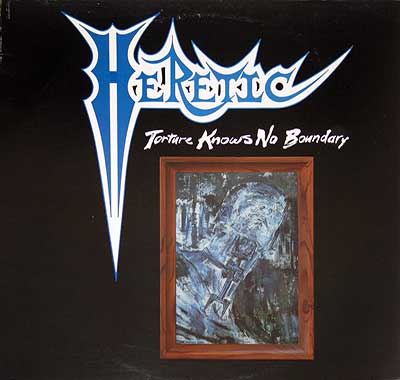
My entry point is the 12" Metal Blade EP, "Torture Knows No Boundary" (December 1986). Five cuts, no apologies. Side A opens with a left-field move: a Russ Ballard cover, "Riding with the Angels"—Heretic taking something familiar and shoving it through a grinder. Then it gets meaner: "Blood Will Tell," "Portrait of Faith," "Whitechapel." The title track turns up as an instrumental, like the band briefly stops talking and just clenches its fists.
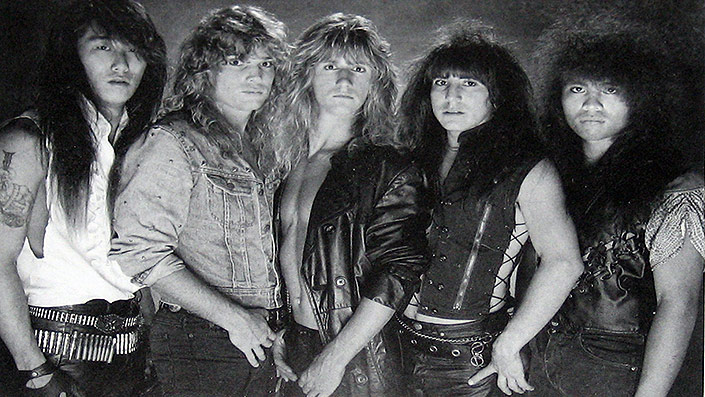
That EP lineup is the one I picture when someone says the name: Julian Mendez on vocals; Brian Korban and Bobby Marquez slicing the air on guitars; Dennis O’Hara holding the low end; Rick Merrick driving the whole thing like the kit owes him money. And yeah, it matters that it’s a real 12" artifact. Big sleeve. Big attitude. The kind of record you flip over carefully because you know you’ll regret it if you scuff it.
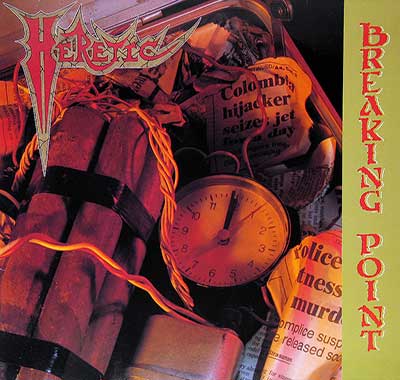
Then comes the full-length "Breaking Point" (August 1988) on Metal Blade, and the voice changes: Mike Howe takes the mic. That alone gives the album a different bite. The track list reads like a warning label: "The Circle," "Enemy Within," "Time Runs Short." Bill Metoyer is in the production mix again (this time alongside Kurdt Vanderhoof), and you can hear that push toward bigger, tougher definition without sanding off the band’s edges. I like edges. Polite metal is just hard rock wearing a costume.
The story after that is classic metal economics: good noise, bad timing, not enough oxygen. The original run ends in 1988. Howe heads to Metal Church, and other members splinter into Reverend. It’s not tragic. It’s just how scenes work: bands break, parts get reused, and the records stay behind like fingerprints.
Fast forward and Heretic crawls back out in 2011, with Korban and Mendez back at the center. "A Time of Crisis" lands on 26 July 2012, and it doesn’t pretend the world got nicer while they were gone. Song titles like "Police State" and "Raise Your Fist" don’t exactly whisper. New lineups come and go, but the mood stays consistent: a street-level anger, aimed outward, not inward. I’ll take that over theatrical misery any day.
Here’s my quiet anchor for all of this: Heretic is a band I file by feel, not by fame. When the room is too tidy and the day is trying to behave, I reach for that Metal Blade 12" or the "Breaking Point" LP and let it rough up the air a little. Not because it’s “important.” Because it’s alive. And because sometimes you need music that doesn’t smile back.
References
- Metal Archives: Heretic (band profile)
- Metal Archives: "Torture Knows No Boundary" (EP, 1986)
- Metal Archives: "Breaking Point" (LP, 1988)
- Metal Archives: "A Time of Crisis" (2012)
- Metal Blade Records: Heretic "Breaking Point" release page
- Metal on Metal Records: Heretic page ("A Time of Crisis")
- Discogs: Heretic "Breaking Point" (1988 vinyl release)
- Discogs: Heretic "Torture Knows No Boundary" (1986 12")
- Vinyl-Records.nl: Heretic "Torture Knows No Boundary" (hi-res cover photos)
- Vinyl-Records.nl: Heretic "Breaking Point" (hi-res cover photos)