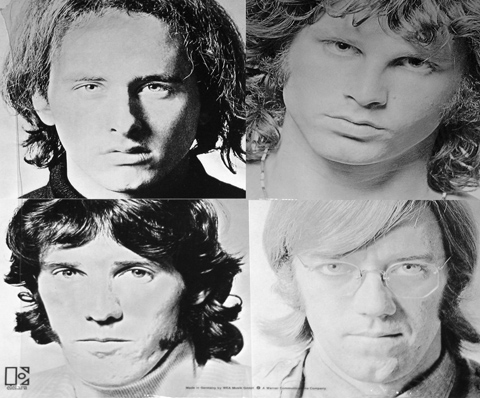
The DOORS with Jim Morrison Vinyl LP Albums Gallery


The DOORS with Jim Morrison

The Doors vinyl LP collection isn’t just a stack of records; it’s a slow-burning time machine with a pulse. From the narcotic swirl of “Light My Fire” to the apocalyptic crawl of “The End” and the rain-soaked cool of “Riders on the Storm,” these albums don’t politely age—they brood. This was Los Angeles, 1967–1971, where blues grit, jazz tension, and Morrison’s baritone glare rewired rock’s nerve endings. Drop the needle on L.A. Woman and you can feel the asphalt heat; spin the debut and the room tilts slightly off balance. Pressings vary, sleeves wear, but the mood stays intact: dark velvet, cigarette smoke, and a band that still sounds mildly dangerous when played after midnight.

THE DOORS Band Description

The Doors didn’t arrive like a friendly new band. They showed up like a dim hallway you weren’t planning to walk down. Los Angeles, 1965: Jim Morrison up front, Ray Manzarek turning an organ into a weather system, Robby Krieger cutting sharp lines on guitar, John Densmore shifting the ground under your feet on drums. Four people. Big sound. No apology.

The “no bassist” thing still makes people nervous, like a missing chair at the table. That nervousness is part of the point. Manzarek’s left hand handled the low end live, and it leaves this strange open space where Morrison can prowl and the songs can breathe… or bite. Plenty of bands are loud. The Doors were spacious, and that’s a different kind of dangerous.

Their self-titled debut hit on 4 January 1967 (Elektra), and it still sounds like it was recorded in a room with the curtains pulled tight. “Break On Through,” “Light My Fire,” “The End” — those aren’t just tracks, they’re trapdoors. The band didn’t “blend genres” so much as drag blues, jazz instincts, and rock volume into the same smoky argument and refuse to let anyone leave early.

Morrison’s lyrics weren’t written to explain themselves. They’re half invitation, half threat. One minute it’s seduction, the next it’s a glare. That’s why people either worship him or roll their eyes — and honestly, both reactions are healthier than pretending he was just a normal pop singer with a leather hobby.

The controversies weren’t background noise; they were part of the electrical charge. After the Miami concert in March 1969, the legal mess followed: warrant, charges, and later a conviction that hung over him while he kept moving. He died in Paris in 1971 at 27, with the case still tangled in appeal, and Florida eventually issued a posthumous pardon in December 2010. Life is poetic like that, in the meanest possible way.

The legacy part is easy to list and boring to read, so here’s the practical test: play them late, not in the background, and notice how the room changes. They went into the Rock & Roll Hall of Fame in 1993, sure — but that’s just paperwork. The real legacy is that the best Doors songs still don’t feel “old.” They feel awake. Slightly annoyed. Like they’ve been waiting for you to stop scrolling.

References

Plenty of bands want to be remembered. The Doors act like they don’t care — and somehow that’s exactly why they stick.
The Doors: Formation, Core Band Members, and Enduring Legacy

Band Core Members:

The first time I really heard The Doors, it didn’t feel like “classic rock.” It felt like a room with the lights turned down and the air turned strange. My old vinyl copy of their debut still does that trick: needle drops, and suddenly Los Angeles is sweating through a black shirt.

Formation

The origin story isn’t complicated, which is probably why it stuck. Jim Morrison and Ray Manzarek were UCLA film students, and in the summer of 1965 they ran into each other again on Venice Beach. Morrison had words. Manzarek heard a band inside those words and basically said, “Fine. Let’s make it loud.” That’s the whole spark.

Krieger and Densmore came in soon after, and the four of them clicked in that unnerving way: not “nice chemistry,” more like a door quietly unlocking. They took the name from Aldous Huxley’s book The Doors of Perception, and if you’ve ever listened to “The End” at the wrong hour, you already know they meant it.

And yes: the bass thing. People keep trying to “fix” it, like the band forgot to hire somebody. They didn’t. Bassists auditioned, but live it was Manzarek’s left hand doing the dirty work down low, leaving this weird open space where the songs could breathe… or stalk you. It’s a big reason the Doors sound like the Doors.

Core Band Members

Jim Morrison (Vocals): Morrison wasn’t a “charismatic frontman.” He was a lit match with a poetry notebook. Baritone voice, sharp edges, and that stare that made a crowd feel complicit. He didn’t sing to entertain you; he dared you to follow him into the song and then acted mildly annoyed when you actually did.

Robby Krieger (Guitar): Krieger played like he had one foot in blues and the other in something more sideways. He could make riffs slither instead of march. And he wasn’t just “the guitarist” either—he wrote “Light My Fire,” which is basically the moment a lot of people accidentally became Doors fans and never fully recovered.

Ray Manzarek (Keyboards): Manzarek is the machine room. Organ lines that swirl, stab, and hypnotize—while his left hand holds down the bass lines like it’s nothing. That split-brain approach is why the band could sound huge with four people. It’s also why a lot of so-called “Doors-inspired” bands sound like they bought the outfit but forgot the menace.

John Densmore (Drums): Densmore didn’t just keep time. He steered. Jazz-influenced, quick to shift gears, and perfectly willing to let a groove simmer until it boils over. Listen to how the drums move under “Riders on the Storm” and tell me that’s just a guy counting beats.

Music Themes and Controversies

The Doors wrote about sex, fear, freedom, and the parts of the mind polite society likes to padlock. They didn’t “explore themes.” They kicked the door in and stood there smiling. That attitude didn’t play nice with TV censors either—on The Ed Sullivan Show (17 September 1967), they were asked to change the “higher” lyric in “Light My Fire,” and Morrison sang it as written anyway. Subtle? No. Effective? Completely.

Then there’s Miami, 1969: the concert that turned into a legal and cultural hangover for years. Charges, a conviction, and decades later a posthumous pardon. You don’t have to romanticize the mess, but pretending it didn’t happen is just rewriting history with a clean shirt on.

Enduring Legacy

The boring way to say it is “their influence endures.” The honest way is: their records still sound slightly dangerous. Morrison died in 1971 at 27, and the surviving trio kept going—two more albums without him, then later “An American Prayer” built around Morrison’s poetry recordings. Some people treat the band like a myth. I treat them like a test: if “Break on Through” doesn’t wake you up a little, check your pulse.

References

The Doors didn’t ask permission, didn’t wait for approval, and didn’t tidy up after themselves. That’s why the songs still feel alive. Polished bands come and go. These guys left fingerprints.

Index of The DOORS Album Cover Gallery and Vinyl Records Discography

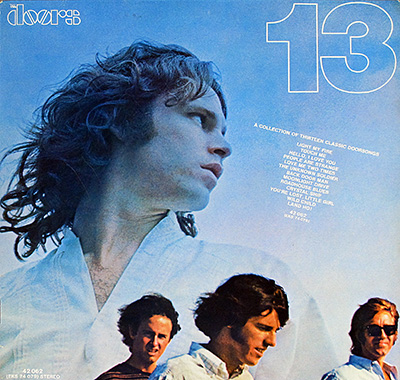
THE DOORS - 13
the doors 13 album front cover photo vinyl mediumsize

"13" is a fantastic compilation album showcasing the early magic of The Doors. It features iconic hits like "Light My Fire". This collection is ideal for newcomers and a nostalgic trip for dedicated fans of the band.

13 12" Vinyl LP
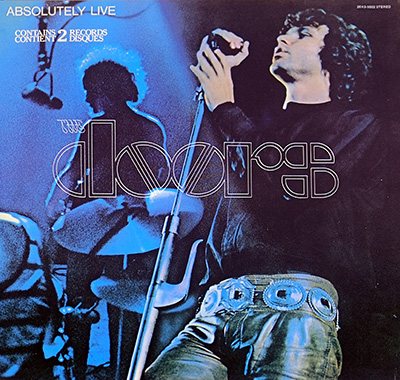
THE DOORS - Absolutely Live (Canadian and German Releases) 12" Vinyl LP
THE DOORS - Absolutely Live  (Canadian and German Releases)  album front cover vinyl record

"DOORS - Absolutely Live" is the first live album released by American rock band The Doors in July 1970. Many shows were recorded during the 1970 tour to create the "Absolutely Live" album.

Absolutely Live 2LP (1970, Canada) Absolutely Live 2LP (1970, Germany)
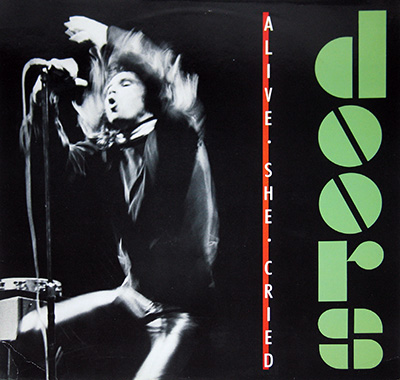
THE DOORS - Alive She Cried
THE DOORS - Alive She Cried album front cover vinyl record

The title of this album is taken from a line in the song "When the Music's Over". The recordings are from various concerts during the period 1968–1970;

Alive She Cried 12" Vinyl LP
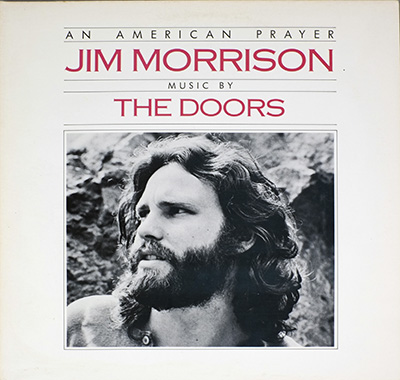
THE DOORS - An American Prayer Jim Morrison (Netherlands and USA Releases) 12" Vinyl LP
THE DOORS - An American Prayer Jim Morrison (Netherlands and USA Releases)  album front cover vinyl record

is the ninth and final studio album by The Doors. In 1978, seven years after lead singer Jim Morrison died and five years after the remaining members of the band broke up

An American Prayer Jim Morrison (1978, Netherlands) An American Prayer Jim Morrison (1978, USA)
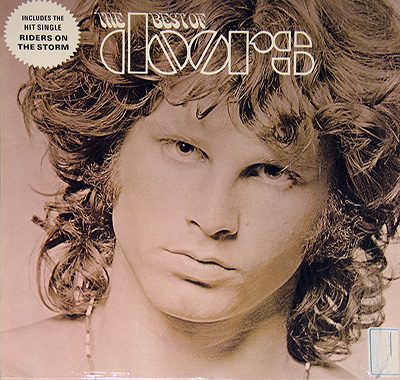
THE DOORS - The Best of the Doors
THE DOORS - The Best of the Doors album front cover vinyl record

"DOORS - The Best Of The Doors 1976" is a compilation album featuring the greatest hits of the iconic rock band, The Doors, released in 1976. This 12" vinyl LP album showcases the timeless music

The Best of the Doors 12" Vinyl LP
THE DOORS - S/T Self-Titled (1973, Germany)
THE DOORS - S/T Self-Titled (1973, Germany) .  album front cover vinyl record

"The Doors" is the self-titled debut album by the band The Doors, recorded in 1966 and released in 1967. It features the breakthrough single "Light My Fire", extended with a substantial instrumental section omitted on the single release

THE DOORS 12" Vinyl LP
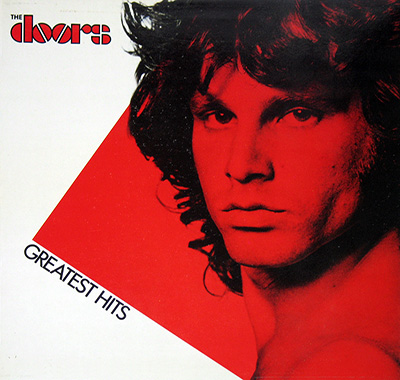
THE DOORS - Greatest Hits (1985, Czechoslovakia)
THE DOORS - Greatest Hits  (1985, Czechoslovakia)  album front cover vinyl record

"The Doors - Greatest Hits" is a compilation album by the American rock band, The Doors, released in Czechoslovakia in 1985. This 12" vinyl LP album, distributed by Elektra Records, brings together some of the band's most beloved songs.

Greattest Hits 12" Vinyl LP
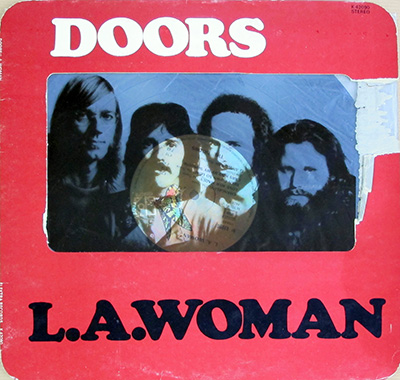
THE DOORS - L.A. Woman (European and French Releases)  album front cover vinyl record
THE DOORS - L.A. Woman (European and French Releases)

"L.A. Woman" was the last Doors album released with Jim Morrison before his death in July 1971. The album's style is arguably the most hard rock blues-like of the band's catalogue

L.A. Woman (1971, EEC Europe) L.A. Woman Bespoke Album Cover (1971, France)
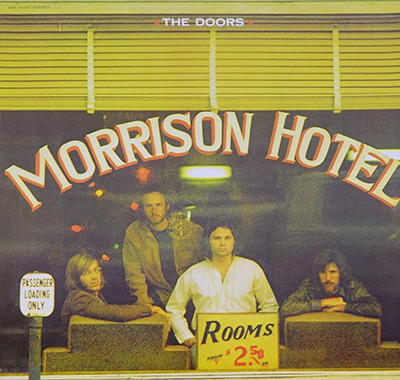
THE DOORS - Morrison Hotel Hard Rock Cafe (Canadian and German Releases) 12" Vinyl LP
THE DOORS - Morrison Hotel Hard Rock Cafe (Canadian and German Releases)  album front cover vinyl record

After their experimental work "The Soft Parade" was not as well-received as anticipated, the group went back to basics and back to their roots.

Morrison Hotel Hotel Hard Rock Cafe (1970, Canada) Morrison Hotel Hard Rock Cafe (1970, Germany)
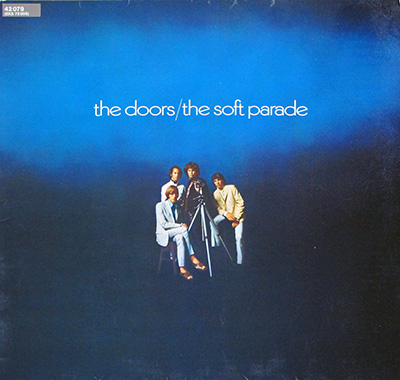
THE DOORS - Soft Parade
THE DOORS - Soft Parade album front cover vinyl record

This is the fourth studio album by The Doors, released in 1969. The album met with some controversy among fans and critics due to its inclusion of brass and string instrument arrangements

Soft Parade 12" Vinyl LP
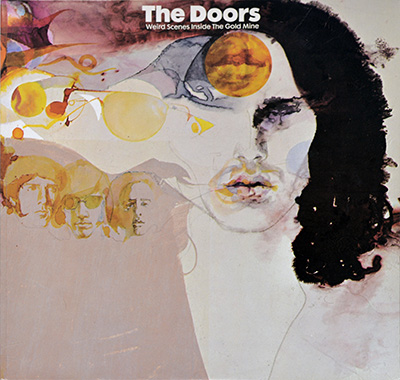
THE DOORS - Weird Scenes inside the Gold Mine
THE DOORS - Weird Scenes inside the Gold Mine album front cover vinyl record

"Weird Scenes Inside the Gold Mine" isn't The Doors' debut, but a 1972 Elektra compilation (orange label) on vinyl. It features hits like "Riders on the Storm" and "Light My Fire"

Weird Scenes inside the Gold Mine 12" Vinyl LP