"Play Dirty" (1983) Album Description:
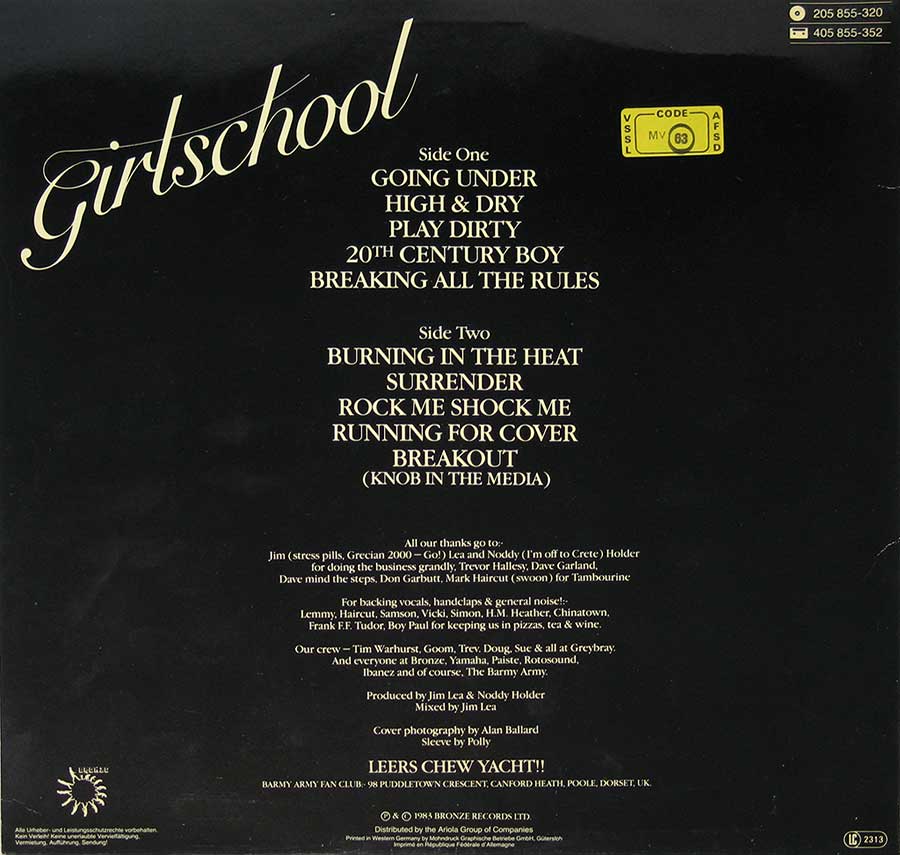
"Play Dirty" is the moment Girlschool tried to keep one boot in the NWOBHM alleyway while stepping into the brighter, louder showroom of 1983 rock. Released in November 1983 on Bronze, produced by Slade's Noddy Holder and Jim Lea, it traded some of the early grit for sharper edges, bigger hooks, and a gloss that felt like a dare. It did not crack the UK Top 40 and peaked at No. 66, which tells you exactly how the scene heard that dare in real time.
Where the UK and NWOBHM were in 1983
Britain in 1983 was tense, strapped, and loud, with Thatcher-era pressure cooking everything from youth culture to the gig economy of clubs and tours. NWOBHM was still alive, but the first-wave shock had worn off: the big names were leveling up into arenas, while the rest fought for oxygen against American hard rock, radio polish, and the next trend waiting in the wings. In that squeeze, bands either got sharper, got poppier, or got left behind, and "Play Dirty" sits right in the middle of that knife-edge.
The sound: less street grime, more spotlight
This record sounds like the lights came on in the rehearsal room and nobody had time to hide the fingerprints. The guitars still bite, but they do it with cleaner teeth; the drums hit harder because the mix is more disciplined; the choruses feel engineered to stick. It is not soft, but it is controlled, and control was the currency of 1983 rock production.
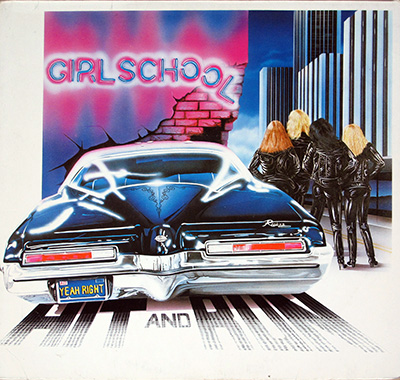
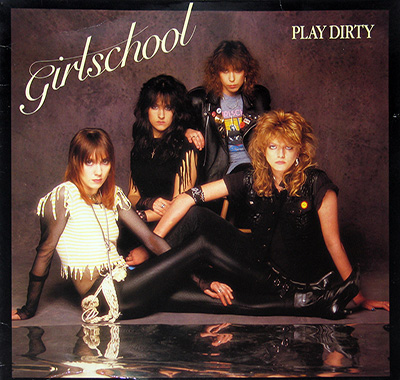
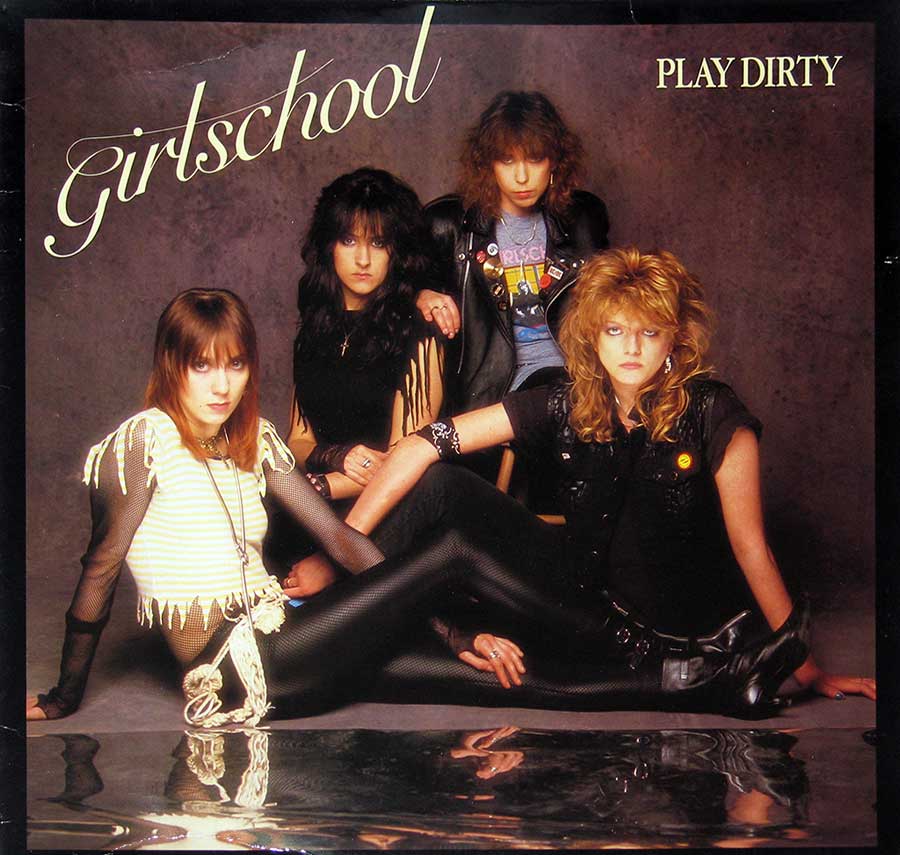
A band photo cover in 1983 was not subtle: it was a statement that the group mattered as a unit, not just as a sound.
Girlschool in motion: formation and the line-up you are hearing
Girlschool began in London in 1978, growing out of Painted Lady and quickly locking into the fast, tough, club-ready language of early NWOBHM. By the time "Play Dirty" arrived, the biggest internal shift had already happened: founding bassist Enid Williams was out and Gil Weston was in, bringing a firmer low-end that fits the record's tighter production. The core attack remained the same: Kim McAuliffe and Kelly Johnson up front with guitars and vocals, Denise Dufort driving from the kit.
What other bands were doing that year
In 1983, the UK metal pipeline was split into two lanes: the arena lane and the survival lane. Iron Maiden were turning precision into spectacle, Def Leppard were welding metal muscle to pop aerodynamics, and Saxon were still swinging heavy on the road. "Play Dirty" reacts to that climate by leaning into song shape and finish, as if Girlschool were saying: fine, we can play this game too.
Musical exploration: what changed, specifically
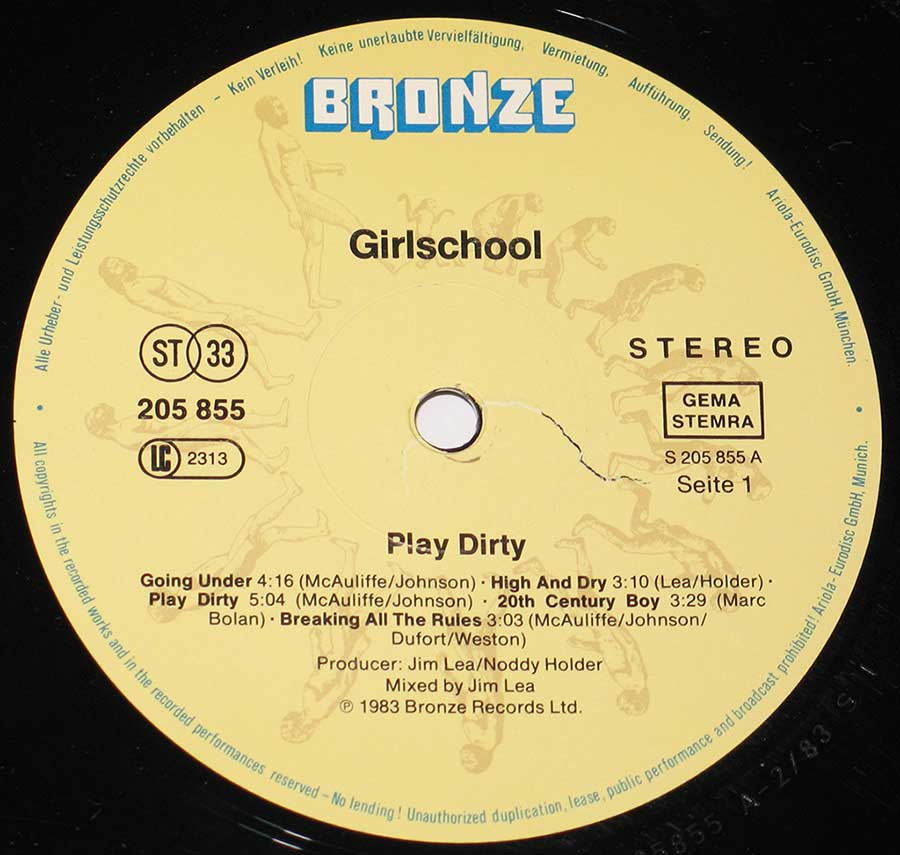
The big change is how the riffs behave: less brawl, more stride. "Going Under" hits like a compact headline, the title track pushes a slicker kind of menace, and "Burning in the Heat" rides a chorus that feels built for a larger room than the pubs that birthed the band. Then they throw in the T. Rex cover "20th Century Boy" like a grin in a fistfight, reminding you their roots are rock and roll as much as metal.
Key people behind the console
Noddy Holder and Jim Lea did not produce this like a basement document; they produced it like a record that had to compete with everything else on the rack in late 1983. The sound is tightened, the edges are sanded just enough to let the hooks land, and the band is pushed toward a bigger, more radio-aware frame. Cover photography is credited to Alan Ballard, and even that matters here because the whole presentation is about clarity and presence.
"Play Dirty" sounds like Girlschool refused to be a cult band on principle, even if the charts refused to cooperate.
Controversies and the backlash baked into the release
The first controversy was aesthetic: a chunk of the metal audience heard the cleaner production as a sellout move, and the timing made it worse because 1983 was the year polish became a weapon. The second controversy was lyrical reception, with at least one mainstream pop press review swatting the album as cliche-ridden and taking shots at the band for delivering the same sexist tropes the genre already had too much of. Add the chart stumble, and you get a record that arrived with arguments attached before the needle even hit the groove.
If you want the fast read: what to listen for
- How the guitars are brighter and more separated in the mix, making riffs feel more "designed" than "captured."
- How the choruses land earlier and cleaner, especially on "Play Dirty" and "Burning in the Heat."
- How "20th Century Boy" reframes the band as hard rock lifers, not just NWOBHM participants.