GIRLSCHOOL - SCREAMING BLUE MURDER 12" Vinyl LP Album

- the 1982 NWOBHM shockwave that proved heavy metal didn’t need permission

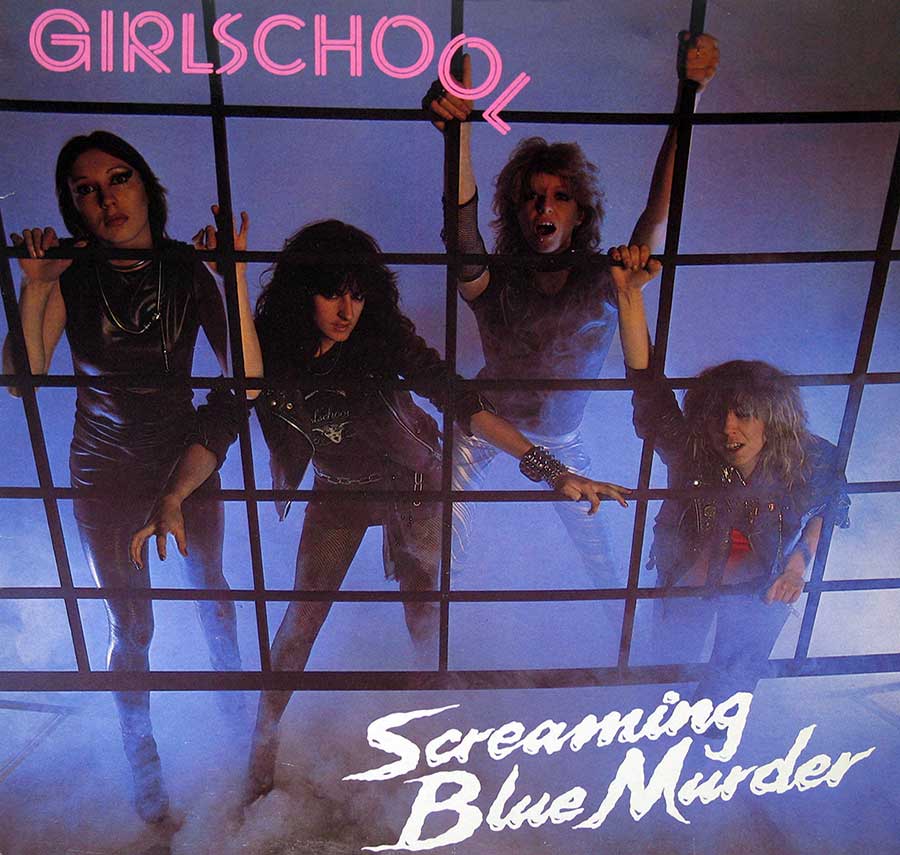
Album Front Cover Photo of GIRLSCHOOL - Screaming Blue Murder Visit: https://vinyl-records.nl/

Girlschool's "Screaming Blue Murder" (1982) marked a pivotal moment for the band, featuring new bassist Ghislaine 'Gil' Weston. Produced by Nigel Gray, known for his work with The Police, the album blended fierce riffs and powerful vocals, earning critical acclaim and commercial success. With anthemic tracks like "Don't Call It Love," it solidified Girlschool's status as heavy metal trailblazers, defying stereotypes in a male-dominated genre.

Table of Contents

"Screaming Blue Murder" (1982) Album Description:

"Screaming Blue Murder" hits like a cold, clean slap in 1982: fast songs, hard edges, and a production style that keeps the band’s punch intact instead of drowning it in studio perfume. This is Girlschool leaning into the NWOBHM moment with intent—tight performances, hook-first writing, and a sense that every track is built to land in three minutes, not meander for five. The album’s big move is balance: tough riffing and pop-sharp choruses living in the same room without turning into either bubblegum or sludge.

Where Britain Was at in 1982

Britain in ’82 is tense, loud, and slightly broke in spirit: recession pressure, youth unemployment, and a country that feels like it’s grinding its teeth through the Thatcher years. Rock reacts the way rock always reacts—turn it up, sharpen the edges, and make the chorus feel like a fist on a table. Heavy music is also splintering at speed: punk’s urgency is still in the air, and metal is accelerating into something faster and leaner.

NWOBHM in Real Life, Not a Museum Label

NWOBHM is a late-’70s to early-’80s British surge where bands fuse punk’s push-forward energy with classic metal’s riff DNA and stage volume. In 1982, that scene is crowded and competitive, with bands like Iron Maiden, Saxon, Def Leppard, Diamond Head, Angel Witch, and Tygers of Pan Tang all chasing different versions of “the new metal.” Girlschool aren’t tourists here; they’re part of the same sprint, just with a different angle and a different set of expectations thrown at them.

Band Story and the Line-Up Shift

Girlschool formed in London in the late 1970s and earned their place through relentless gigging and a hard-rock-to-metal approach that never needed a gimmick to justify itself. By the time "Screaming Blue Murder" arrives, a key change lands: bassist Ghislaine “Gil” Weston steps in, and the rhythm section stays tight and forward-driving. That matters on a record built around momentum, because a stable low-end turns fast songs into clean punches instead of messy scrambles.

What the Songs Are Doing

The track list is blunt and efficient, and that’s a compliment: short runtimes, clear structures, and choruses that show up on time. The title track “Screaming Blue Murder” opens with urgency and sets the album’s pace, while “Don’t Call It Love” leans into a hooky, radio-aware shape without sanding off the bite. Even when the material nods toward familiar rock templates, the performances keep it in the heavy lane—tight, fast, and unromantic about filler.

Two Videos, Same Era Energy

The page’s live clip for “Screaming Blue Murder” and the separate video for “Don’t Call It Love” underline the record’s main trick: this band sells the songs as a unit, not as studio illusions. One side is about speed and impact; the other shows the band can push a more melodic angle without losing credibility. Seeing both back-to-back makes the album’s range feel intentional, not accidental.

Key People Behind the Glass

Producer and engineer Nigel Gray keeps the sound disciplined: guitars stay sharp, drums stay punchy, vocals sit where the hooks can do their job. The production isn’t about showing off; it’s about making sure the band’s attack reads clearly at full volume. Chris Tsangarides is also credited in the production orbit on this page, and his presence signals a heavy-music ear for weight and definition—keeping things aggressive without turning the mix into a foggy brawl.

Surrey Sound Studios, February–March 1982

Recording at Surrey Sound Studios in February and March 1982 puts the album in a practical, working-band reality: get in, capture the performances, get out with something that moves. The studio credit matters because the record’s best quality is control at speed—tight takes, solid separation, and a mix that doesn’t smear the riffs into mush. This is “band in a room” energy filtered through professional discipline, not studio trickery.

Pressure and Pushback Around the Release

The real controversy orbiting a band like Girlschool in this period isn’t a single scandal headline; it’s the constant friction of being a heavy band in a scene that still treated women as an exception to be explained. That tension shows up in press angles, audience expectations, and the lazy habit of judging the packaging before the playing. The album’s response is simple and kind of ruthless: deliver tight songs, play hard, and let the volume do the arguing.

Quick Snapshot
  • Year: 1982
  • Producer/Engineer: Nigel Gray
  • Recording: Surrey Sound Studios (February–March 1982)
  • Standout tracks on this page: “Screaming Blue Murder,” “Don’t Call It Love”

“This album moves like a setlist—fast starts, quick hooks, no dead air.”
References

Album Key Details: Genre, Label, Format & Release Info

Music Genre:

NWOBHM New Wave Of British Heavy Metal

NWOBHM, short for New Wave of British Heavy Metal, was a late-1970s to early-1980s UK movement where bands fused punk’s raw urgency with classic metal’s riffs and speed, rebooting heavy metal into something louder, faster, and street-level dangerous.

Label & Catalognr:

Bronze – Cat#: 204 757

Album Packaging

This album "GIRLSCHOOL - Screaming Blue Murder" includes the original 12" insert with complete lyrics of all songs by Girlschool

Media Format:

Record Format: 12" LP Vinyl Stereo Gramophone Record
Total Weight: 230g

Release Details:

Release Date: 1982

Release Country: Made in Germany

Production & Recording Information:

Producers:
  • Nigel Gray – producer, engineer

    The control-room compass that kept this LP tight, sharp, and moving.

    Nigel Gray, the album’s credited producer and engineer, ran the February–March 1982 sessions with a steady hand, keeping the guitars biting, the drums punching, and the vocals sitting right where the songs need them. Production here isn’t about fancy tricks; it’s about catching Girlschool at full throttle and making sure every chorus lands clean, every riff stays pointed, and the whole record feels like one fast, well-aimed statement instead of a messy rehearsal tape.

  • Chris Tsangarides – mixing, producer/engineer on select tracks
  • Chris Tsangarides – Grammy-nominated producer, sound engineer

    The guy who made heavy music sound expensive, dangerous, and very alive.

    Chris Tsangarides was a Grammy-nominated producer and sound engineer, and when I first clocked his work in the late 1970s, it felt like someone finally figured out how to bottle voltage. I followed his early years at Morgan Studios in London, then watched him come into his own through the late seventies and early eighties with bands like Judas Priest, Thin Lizzy, and Tygers of Pan Tang. By the mid-1980s he was shaping the bite of heavy metal and hard rock for acts such as Anvil and Gary Moore, keeping things raw but never sloppy. In the 1990s and beyond, he proved his ears hadn’t aged a day, working with Black Sabbath, Helloween, and other lifers who needed weight without mud.

Recording Location:

Surrey Sound Studios – Recorded February and March 1982

  • Surrey Sound Studios – recording studio (Leatherhead, Surrey)

    The room that captured the band in-motion, not in-theory.

    Surrey Sound Studios, the credited recording location for February and March 1982, is where these tracks were actually put on tape, with the band working through performances until the hooks hit hard and the tempos stayed mean. That matters, because this album lives on momentum: tight takes, clear separation, and that “everyone in the room is playing like it counts” energy that only shows up when a studio lets a band move fast without losing control.

Band Members / Musicians:

Band Line-up:
  • Kim McAuliffe – vocals, rhythm guitar

    The band’s vocal spine and riff engine, carrying the attitude and grit on tracks 1, 2, 3, 5, 6, and 8.

    Kim McAuliffe, Girlschool’s steady hand on rhythm guitar and a main vocal force, gives this album its street-level bite by fronting most of the lead vocals while keeping the riffs locked and driving underneath. Lead vocals land on tracks 1, 2, 3, 5, 6, and 8, and that spread matters: the record’s punchy momentum keeps returning to her phrasing and her chord work, the kind that makes a chorus feel like it’s leaning into you rather than politely waiting to be admired.

  • Kelly Johnson – vocals, lead guitar

    A sharp, melodic lead voice on guitar, stepping up vocally on tracks 1, 4, 6, and 9 with fearless confidence.

    Kelly Johnson, the album’s lead guitarist with a gift for cutting lines, puts the shine and sting on “Screaming Blue Murder” by threading leads through the songs without sanding off their aggression. Vocals take the spotlight on tracks 1, 4, 6, and 9, and the combination works like a two-pronged attack: guitar lines that snap and climb, plus a vocal presence that keeps the band’s swagger feeling earned instead of dressed up.

Band Line-up:
  • Gil Weston – bass, vocals

    Holding the low end together while adding backing vocals on tracks 7 and 10, solid and unflashy in the best way.

    Gil Weston, the bassist keeping the floor from falling out, anchors this album with a no-drama low-end that lets the guitars stay loud without turning the whole thing into a blur. Vocals show up on tracks 7 and 10, and the placement is perfect: those moments add weight and contrast while the bass stays glued to the kick, making the songs feel fast, tight, and properly physical.

  • Denise Dufort – drums

    The rhythmic backbone, driving the album with punchy, no-nonsense drumming that never wastes a beat.

    Denise Dufort, Girlschool’s engine room behind the kit, powers the entire record with a direct, hard-hitting approach that keeps every track moving like a live set with something to prove. Drums don’t just keep time here; they shape the album’s attitude, punching the transitions, tightening the grooves, and giving the guitars a runway to sprint on without the songs wobbling or losing their teeth.

Complete Track-listing:

Tracklisting Side A:
  1. Screaming Blue Murder (3:34)
  2. Live with Me (3:20)
  3. Take It from Me (2:51)
  4. Wildlife (2:48)
  5. It Turns Your Head Around (3:08)
Video: Girlschool - Screaming Blue Murder - Live 1982
Tracklisting Side B:
  1. Don’t Call It Love (3:42)
  2. Hellrazor (2:38)
  3. When Your Blood Runs Cold (3:23)
  4. You Got Me (3:16)
  5. Flesh & Blood (2:27)
Video: Girlschool - Don't Call It Love 1983

Disclaimer: Track durations shown are approximate and may vary slightly between different country editions or reissues. Variations can result from alternate masterings, pressing plant differences, or regional production adjustments.

Album Front Cover Photo
Front cover of Girlschool’s "Screaming Blue Murder": four band members framed behind thick black window-bar grid lines, lit in cold blue-purple haze with smoke pooling along the bottom edge. The band name "GIRLSCHOOL" sits top-left in neon-pink outlined, retro tube-style lettering, while the album title "Screaming Blue Murder" is scrawled bottom-right in bold white brush-script. The whole design screams early-’80s metal attitude: glossy black/leather looks, big hair, dramatic lighting, and a ‘locked-in’ visual motif that pops cleanly on a square LP sleeve.

Front cover photo of the 12" vinyl LP, shot from my own copy, and it’s a classic early-’80s sleeve that knows exactly how to sell attitude in one square frame. Four persons (the band) are seen behind a heavy black grid of thick horizontal and vertical bars, like a window, a cage, or a stage barrier depending on your mood. The background is drenched in cool blue and violet light, with a misty, smoky haze that gets denser toward the bottom edge of the cover. That fog isn’t subtle; it’s part of the drama and it helps the white title lettering punch through.

Up top-left, the band name GIRLSCHOOL is written in a neon-pink outline font that looks like glowing tubing or a retro sign; the letters are rounded and stylized, with the word stretching across the upper area and slightly angled, giving the cover a nightlife vibe. Down at the lower-right, the album title Screaming Blue Murder is rendered in thick, rough white brush-script, slanted and energetic, like it was painted fast and loud. This contrast is the whole point: sleek neon identity above, raw scream-scrawl below.

Clothing and pose details matter here because they’re part of the collector-grade “time stamp.” On the far left, one person wears a shiny black outfit that reads like leather or latex under the lights, with strong eye makeup and a direct, steady stare. Next to them, another person stands slightly forward with dark, voluminous hair and a more aggressive stance, legs angled and hands interacting with the bars; the outfit looks darker, layered, and textured (fishnet-like patterns are visible on the legs). Near the center-right, a person with lighter, teased hair raises both arms high, gripping the grid above, with a bright, reflective outfit that catches the blue light (silvery tones stand out), plus chunky wrist accessories that sparkle like metal studs. On the far right, the fourth person leans in from the edge, hair blown-out and messy in the best 1982 way, with a jacket that reads as denim or a light fabric under the lighting, and a hint of red clothing underneath for contrast.

From a sleeve-design perspective, everything is built for instant recognition: the grid creates strong geometry, the neon logo anchors the top, and the white title sits low where the fog can frame it. Condition-wise, the photo shows typical minor color shifts you’d expect from flash and lighting (the blues and purples can lean warmer or cooler depending on camera), but the important collector detail is that the typography remains crisp and readable, with the neon pink and the white brush text staying high-contrast against the smoky background.

Note: The photos on this page are taken from albums in my personal collection. Slight differences in color may exist due to the use of the camera's flash. Images can be zoomed in/out ( eg pinch with your fingers on a tablet or smartphone ).

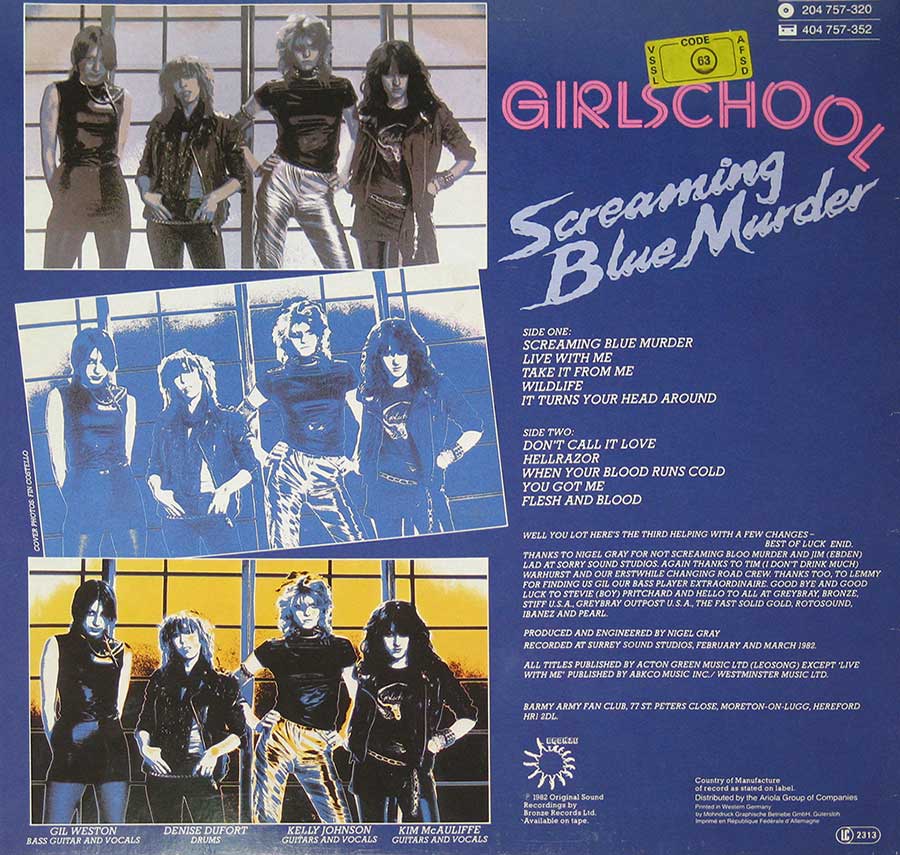
Album Back Cover Photo
Sleeve photo for Girlschool’s "Screaming Blue Murder": four band members posed behind thick black grid bars, lit in cold blue-purple light with fog pooling along the bottom edge. Neon-pink outlined "GIRLSCHOOL" lettering sits across the top area, while "Screaming Blue Murder" is written bottom-right in bold white brush-script. Strong early-’80s metal styling—big hair, dark outfits, dramatic lighting—captured as a square LP sleeve image for collector reference.

This sleeve photo is all about bold geometry and early-’80s attitude: four persons are framed behind a heavy black grid, the bars running both horizontally and vertically like a window, cage, or stage barrier. Lighting is drenched in cool blue and violet tones, with a smoky haze that gets thickest along the bottom edge, creating a fog bank that partially softens legs and lower details while leaving faces and typography readable. The grid isn’t a background detail—it’s the main visual hook, slicing the image into rectangles and forcing your eye to scan face-by-face, hand-by-hand.

Typography is doing real collector work here. Across the upper portion, GIRLSCHOOL appears in neon-pink outlined lettering that looks like glowing tubing, a clean contrast against the darker, cold-lit scene. At the bottom-right, the title Screaming Blue Murder is slammed down in thick, rough white brush-script, tilted and energetic, the kind of lettering that reads fast at a record fair from two tables away. Pink neon above + raw white scrawl below = instant era stamp, no guesswork.

The band styling lands squarely in that NWOBHM / hard rock visual language: dramatic hair, dark stagewear, and strong makeup under harsh light. On the left, one person wears a glossy black outfit that reflects light like leather or latex, staring forward with a steady, controlled expression. Center-left shows a person leaning forward with dark, voluminous hair, hands interacting with the bars; fishnet-like texture is visible on the legs, adding gritty detail. Center-right shows raised arms gripping the grid overhead, with bright silvery fabric catching the light and chunky wrist accessories that flash like studs. On the far right, another person leans in from the edge with teased hair and a jacket that reads lighter under the blue lighting, with a small punch of red clothing visible beneath.

From a practical collector angle, the key thing is clarity: the high-contrast logo and title remain crisp, and the grid lines are sharp enough to show alignment and edge definition—useful when comparing sleeve prints or photo reproductions on different pages. Color can drift slightly depending on camera flash and screen, but the core palette stays consistent: cold blues and purples, neon pink, and bright white lettering, with that low-lying fog effect anchoring the composition.

Back cover of the original LP sleeve, photographed directly from the vinyl in my collection.

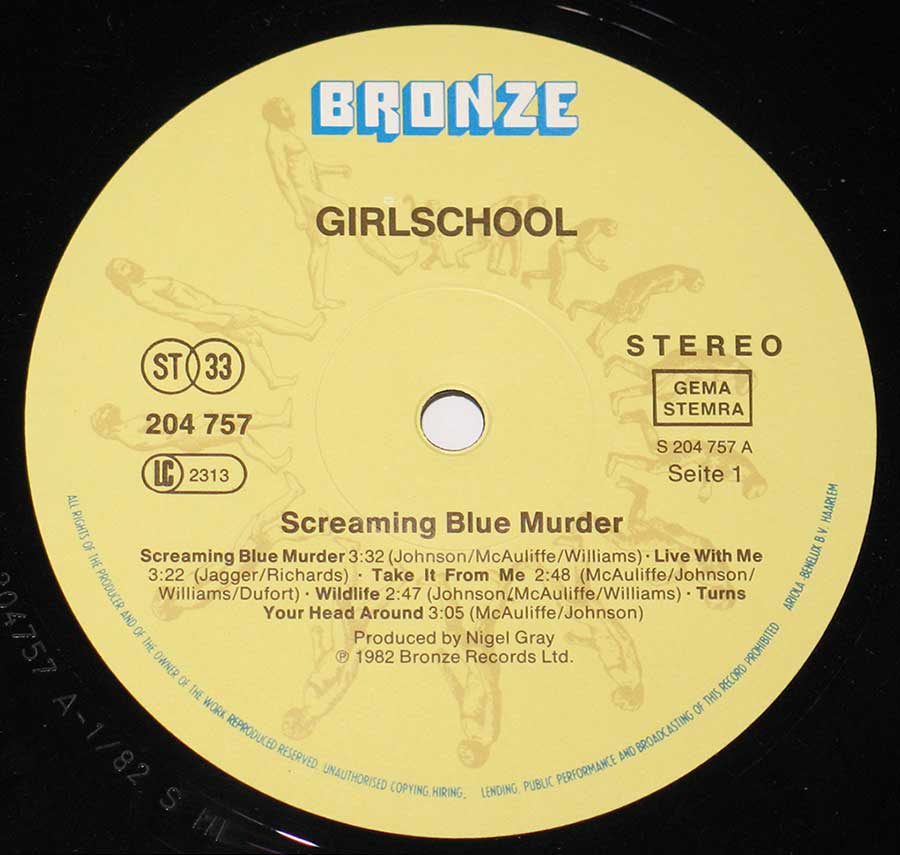
Close up of Side One record’s label
Close-up of the Side One center label on Girlschool’s "Screaming Blue Murder" 12" LP: pale yellow <em>BRONZE</em> label with blue-outlined logo at top, "GIRLSCHOOL" printed beneath, <em>ST 33</em> and catalog <em>204 757</em> on the left with <em>LC 2313</em>, and <em>STEREO</em> plus <em>GEMA/STEMRA</em> on the right. Side marking reads <em>S 204 757 A</em> and <em>Seite 1</em>. Track list and timings are printed at the bottom, with ‘Produced by Nigel Gray’ and © 1982 Bronze Records Ltd., surrounded by fine legal rim text.

This is the money shot for collectors: a clean, dead-center close-up of the Side One label on the 12" vinyl LP, where all the boring-but-crucial identifiers live. The label is a pale yellow circle surrounded by glossy black vinyl grooves, and the top is crowned with the BRONZE logo in chunky block letters—white fill with a bold blue outline that pops hard against the warm background. Directly beneath that sits GIRLSCHOOL in solid black caps, centered and confident, no decorative fluff.

On the left side, the format and catalog info is stacked for quick verification: the circular ST 33 mark (stereo, 33⅓ RPM) sits above the catalog number 204 757, with the boxed LC 2313 label code below. On the right, STEREO is printed large, and a neat rectangular box reads GEMA STEMRA, the rights society indicator that instantly signals a European pressing context. Just under that, the side/matrix-style print reads S 204 757 A and the side designation Seite 1 (German-language “Side 1”), which is exactly the kind of detail that helps confirm you’re looking at the German-market label variant.

The track block at the bottom is dense but readable and packed with collector-grade specifics: the side title Screaming Blue Murder is printed prominently, followed by the full Side One program with timings and songwriter credits. The list includes “Screaming Blue Murder” 3:32 (Johnson/McAuliffe/Williams), “Live With Me” 3:22 (Jagger/Richards), “Take It From Me” 2:48 (McAuliffe/Johnson/Williams/Dufort), “Wildlife” 2:47 (Johnson/McAuliffe/Williams), and “Turns Your Head Around” 3:05 (McAuliffe/Johnson). That Jagger/Richards credit is the instant “yup, that’s the Stones cover” confirmation without even touching the sleeve.

Production credit is printed right under the track text—Produced by Nigel Gray—followed by © 1982 Bronze Records Ltd. Around the outer edge, tiny curved legal text wraps the label like a warning label on a machine, and along the right rim a blue vertical line reads ARIOLA BENELUX B.V. HAARLEM, a distribution/manufacturing breadcrumb that’s gold for pressing-variation nerds. The center hole is perfectly visible, with a faint ring around it from the label’s printed design, and even a hint of runout etching peeks in from the black vinyl area—subtle, but it’s there.

All images on this site are photographed directly from the original vinyl LP covers and record labels in my collection. Earlier blank sleeves were not archived due to past storage limits, and Side Two labels are often omitted when they contain no collector-relevant details. Photo quality varies because the images were taken over several decades with different cameras. You may use these images for personal or non-commercial purposes if you include a link to this site; commercial use requires my permission. Text on covers and labels has been transcribed using a free online OCR service.

Index of GIRLSCHOOL Vinyl Album Discography and Album Cover Gallery

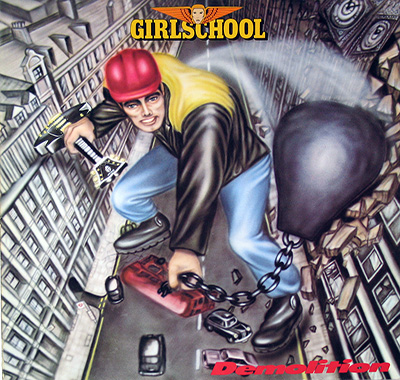
GIRLSCHOOL - Demolition
GIRLSCHOOL - Demolition  album front cover vinyl record

BRONZE 202 426   , 1980 , Germany

"Demolition" Girlschool's 1980 debut, crashed into the male-dominated NWOBHM scene, proving women could rock just as hard. This scorcher of an album mixed punk energy with metal riffs,

Demolition 12" Vinyl LP
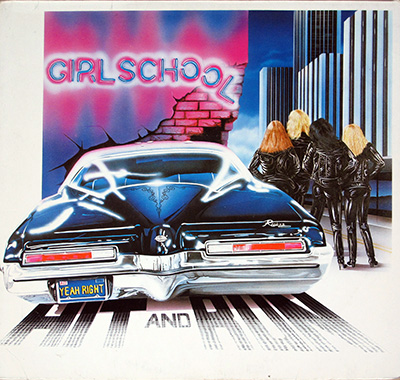
GIRLSCHOOL - Hit and Run
GIRLSCHOOL - Hit and Run  album front cover vinyl record

BRONZE 203 556 , 1981 , Germany

"Girls just wanna rock! Dive into the NWOBHM era with Girlschool's 'Hit and Run' LP. This album packs a punch with anthemic tracks and commercial success, solidifying its status as a timeless classic in heavy metal lore."

Hit and Run 12" Vinyl LP
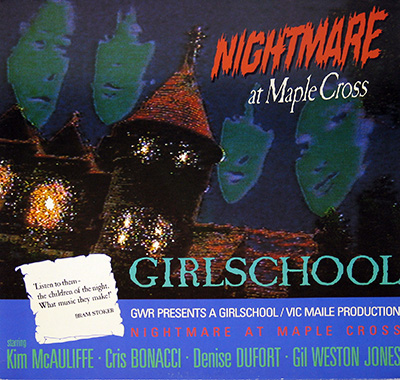
GIRLSCHOOL - Nightmare at Maple Cross
Girlschool - Nightmare at Maple Cross  album front cover vinyl record

GWR Records RR 9671 , 1986 , Holland

Girlschool's 1986 album "Nightmare At Maple Cross" marked a return to their heavy metal roots after a brief detour. Produced by the legendary Vic Maile, it features classic Girlschool with driving anthems & a glam-tinged Mud cover. This LP cemented their place in NWOBHM history.

Nightmare at Maple Cross 12" Vinyl LP
GIRLSCHOOL - Play Dirty
GIRLSCHOOL - Play Dirty  album front cover vinyl record

BRONZE 205 855   , 1983 , Germany

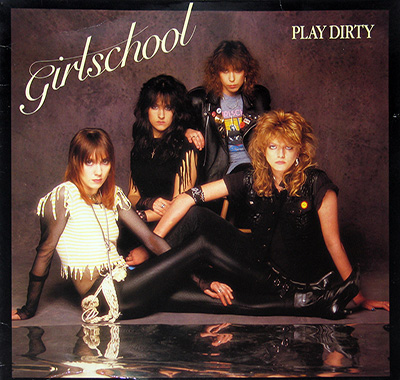
1983's Play Dirty saw Girlschool, pioneers of NWOBHM, turn up the heat. Produced by Slade's Noddy Holder & Jim Lea, the album is a fist-pumping collection of heavy anthems & scorching riffs, a must-listen for any metal fan.

Play Dirty 12" Vinyl LP
GIRLSCHOOL - Screaming Blue Murder album front cover vinyl LP album https://vinyl-records.nl

The 1982 Bronze pressing that hits like a siren — loud, fast, and impossible to ignore

GIRLSCHOOL - Screaming Blue Murder

Girlschool hit 1982 like a steel-toe boot: "Screaming Blue Murder" pairs NWOBHM bite with big hooks, powered by Nigel Gray’s crisp production and a new bassist in the engine room. Fast, tight, and loud in all the right places, with "Don’t Call It Love" as the instant anthem that sticks.