"Relics" Album Description:
In the musical landscape of the early 1970s, Pink Floyd's "Relics" emerged as a compilation album that not only captured the essence of the band but also paid homage to the creative genius of Syd Barrett. This article delves into the nuances of this 12" vinyl LP, a remarkable piece made in France for distribution in Germany, and explores the distinctive attributes that make it a collector's treasure.
Album Cover Aesthetics: A Fusion of Art and Identity
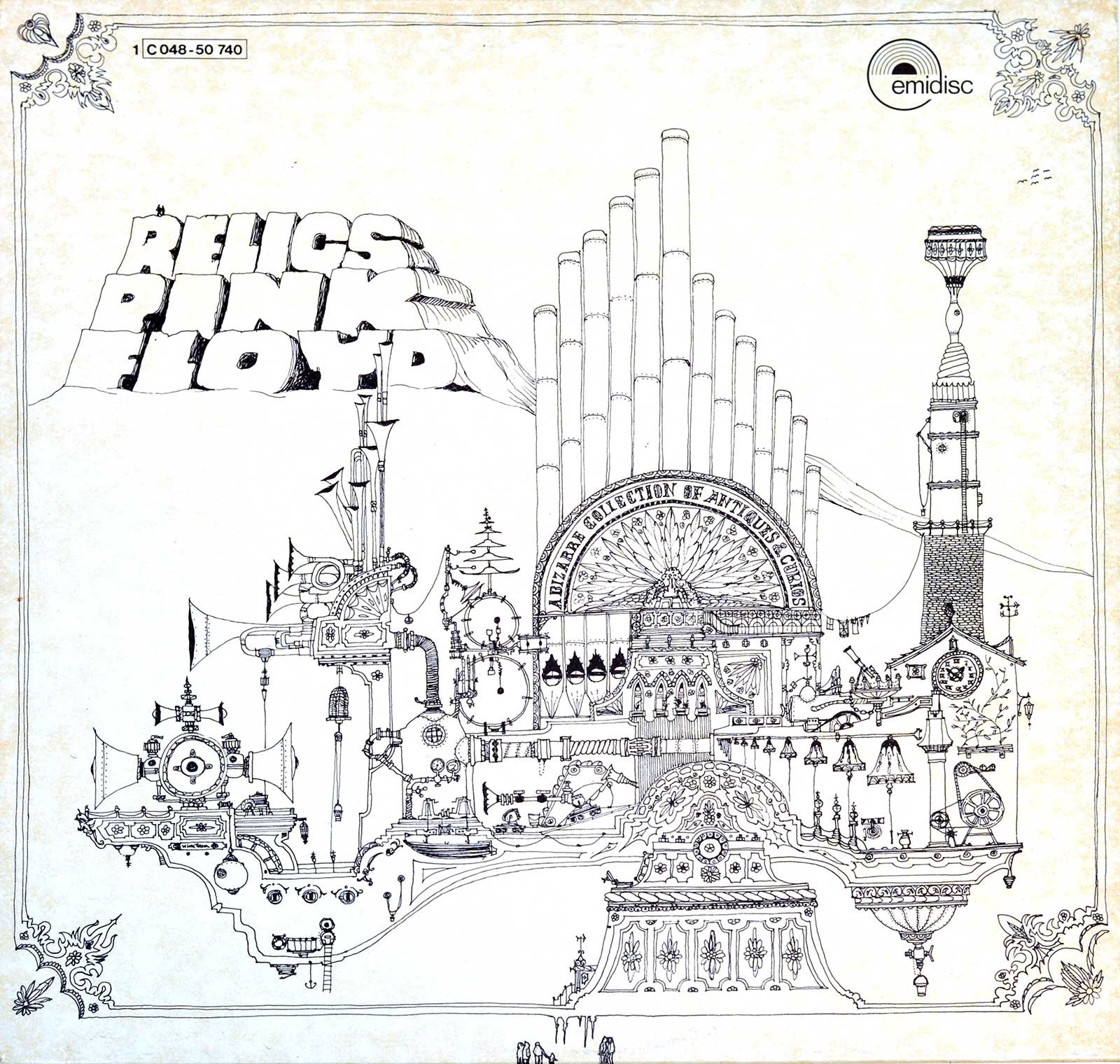
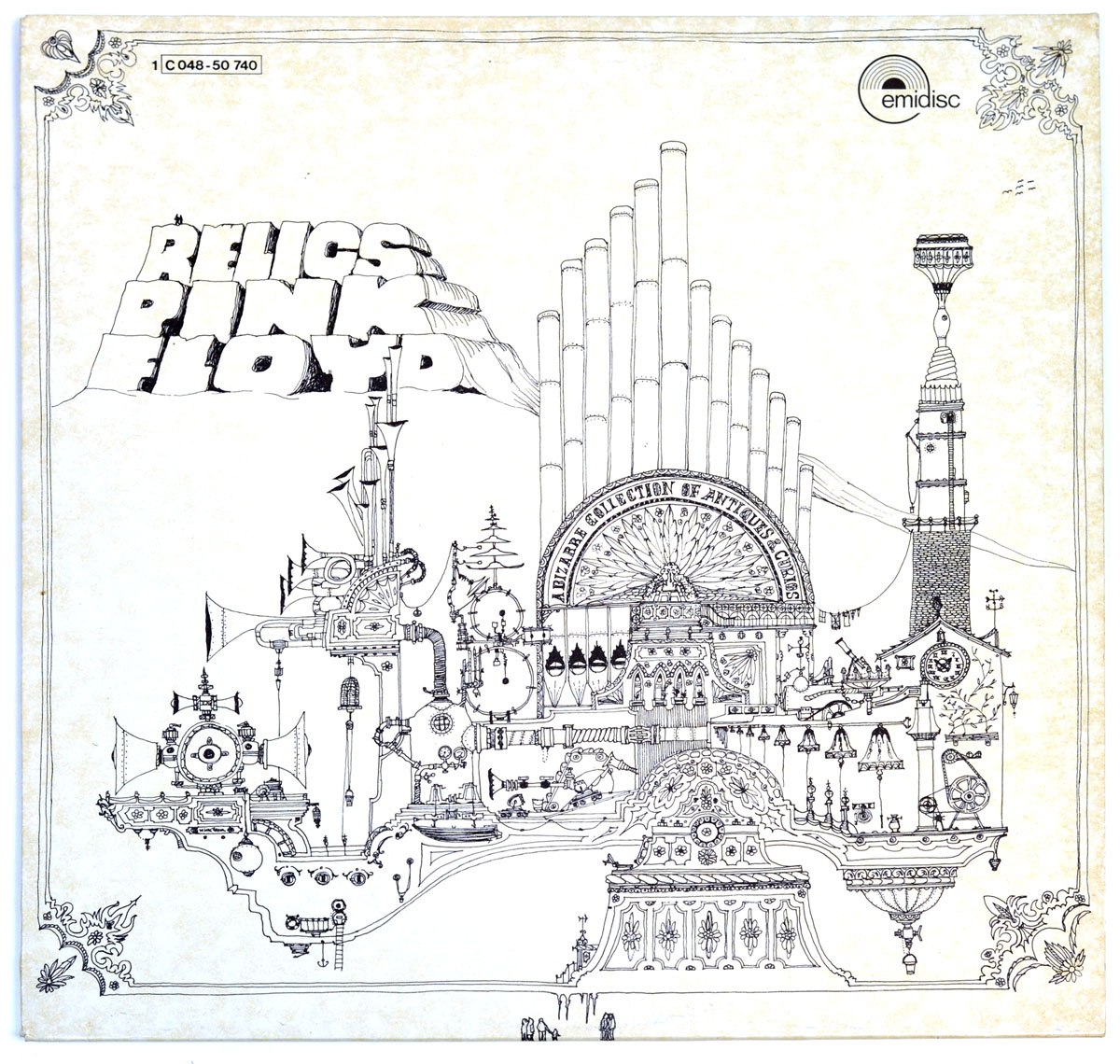
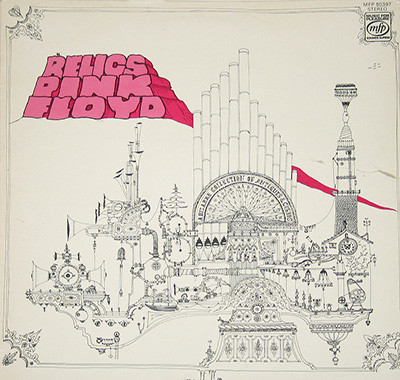
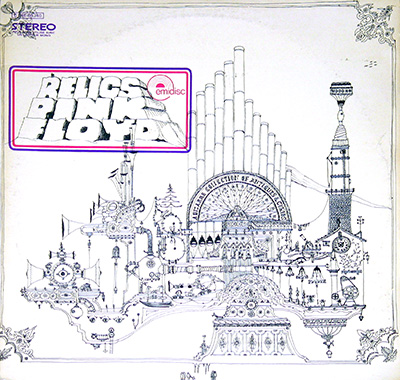
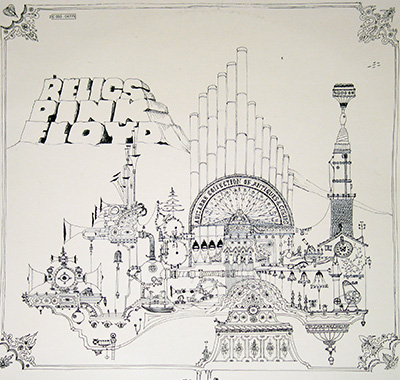
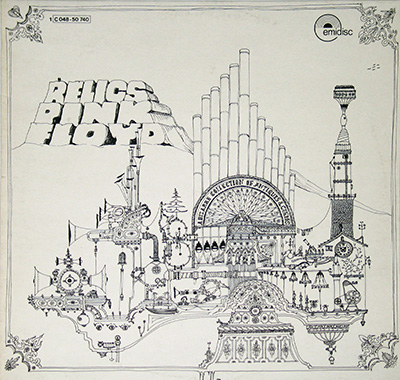
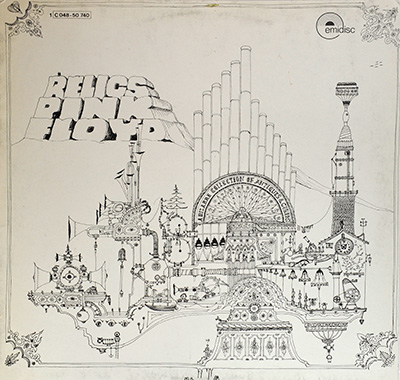
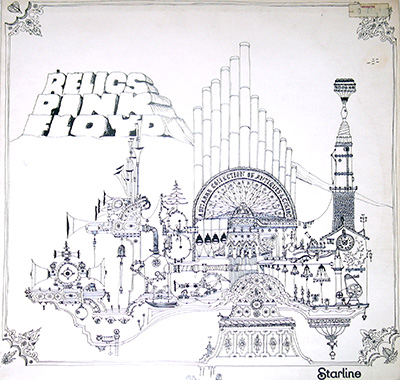
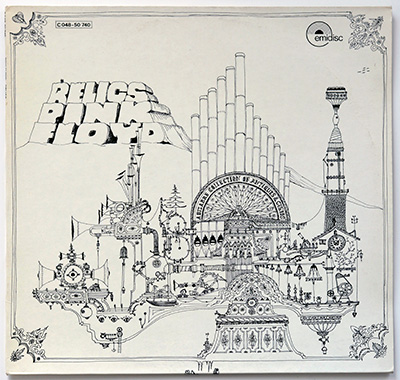
The front cover of "Relics" is a visual symphony where the album's title and the iconic Pink Floyd band name grace the upper left, setting the tone for the musical journey within. The catalog number "1 C 048-50 740" is elegantly printed in the top left corner, while the EMIDISC logo, a hallmark of quality, finds its place in the top right corner.
Decoding the Back Cover: Unraveling Unique Features
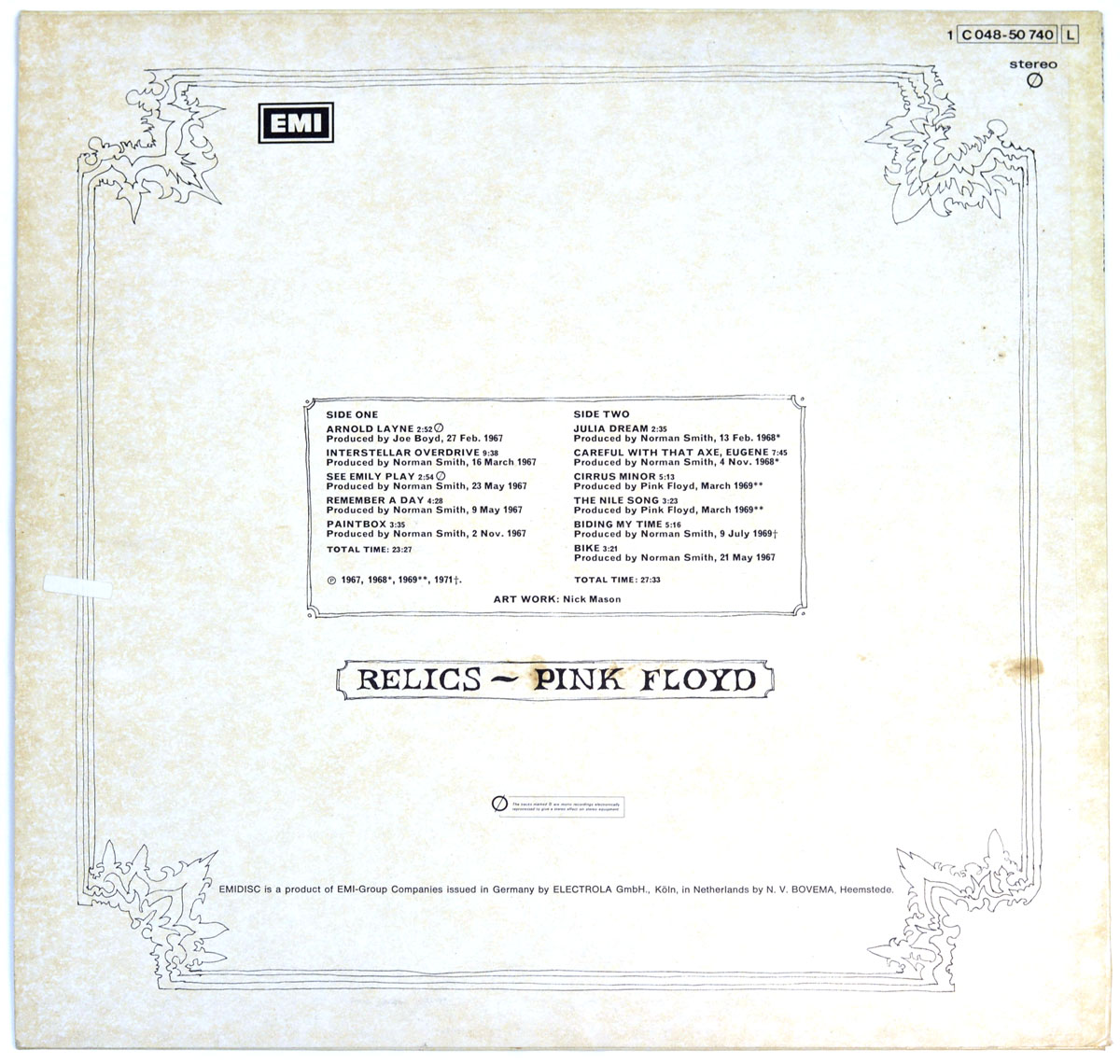
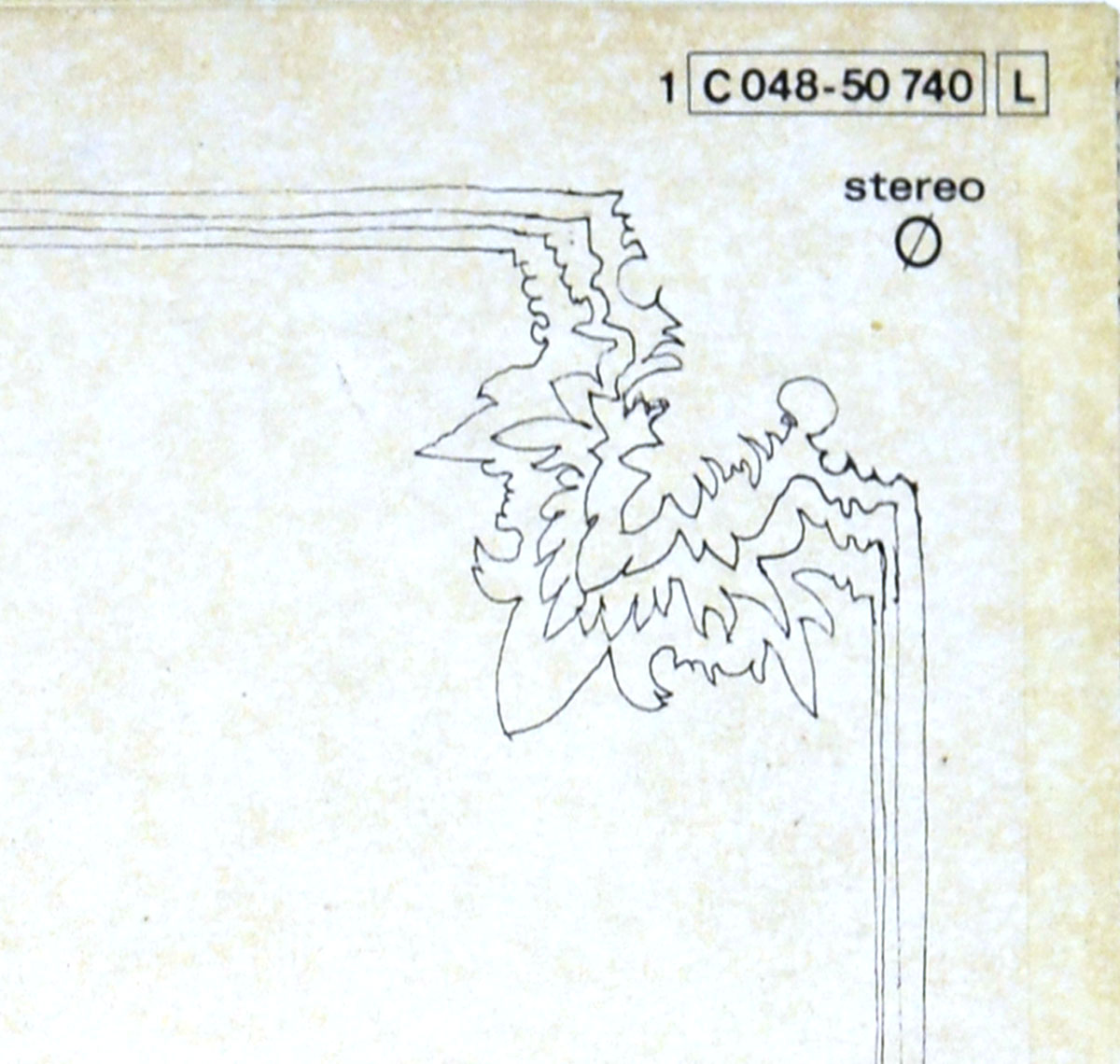
The back cover of this version stands out with the boxed EMI Company logo in the top left and the catalog number "1 C 048-50 740 L" in the top right. A notable detail near the bottom provides insight into the album's distribution, stating, "EMIDISC is a product of EMI-Group Companies issued in Germany by ELECTROLA GMBH., Köln, in Netherlands by N.V. Bovema, Heemstede."
Exploring the Record Label: A Feast for the Eyes and Ears
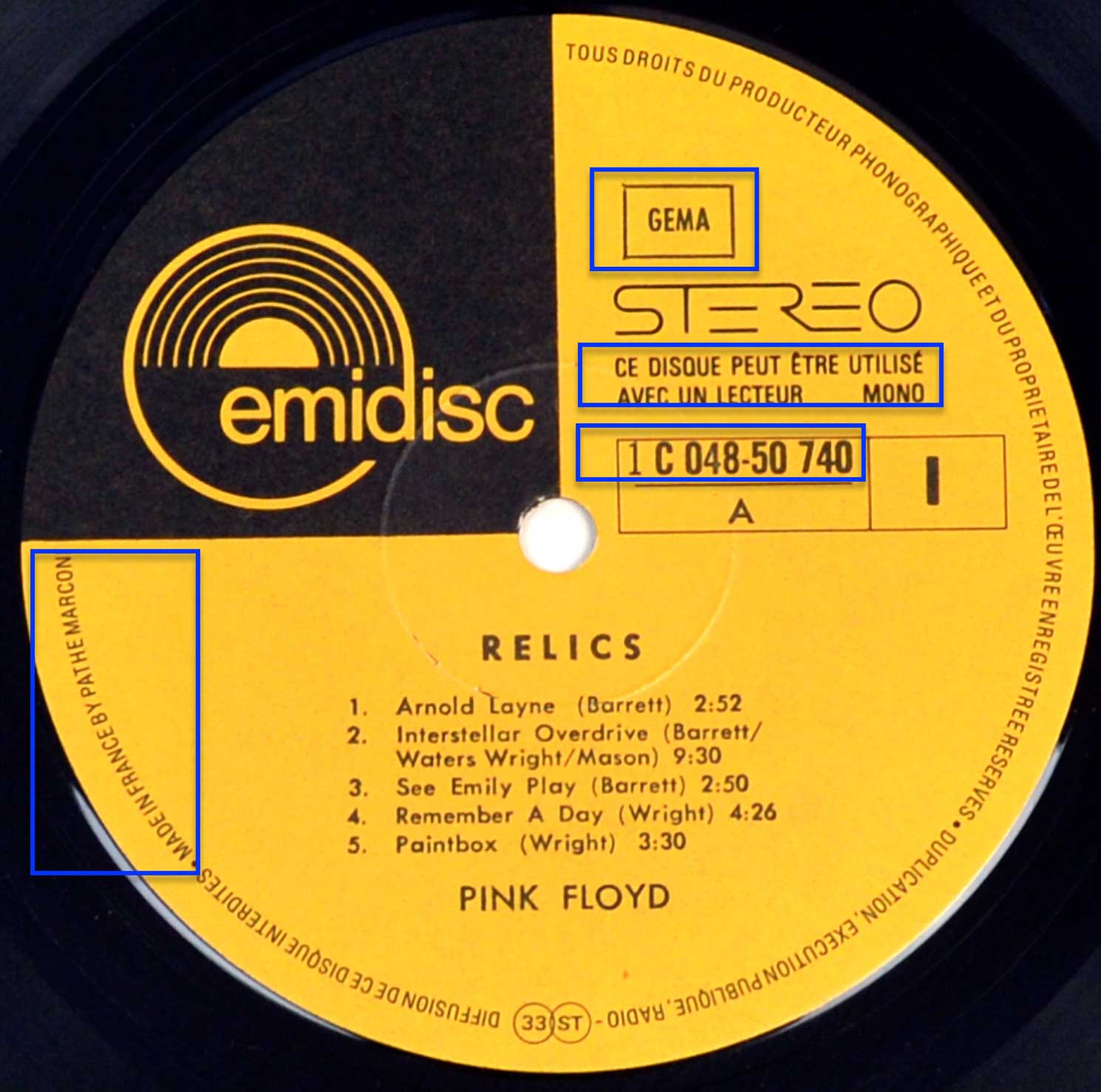
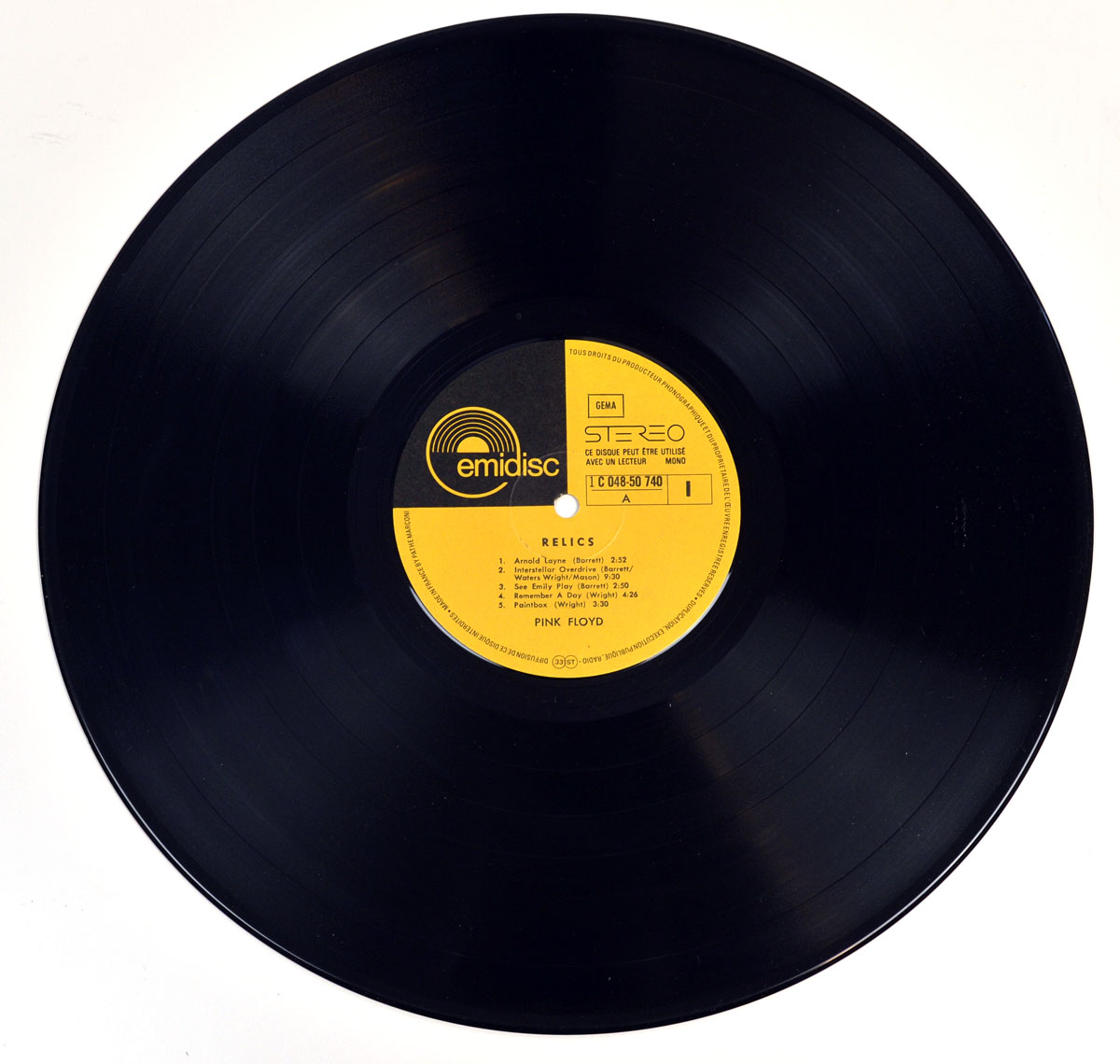
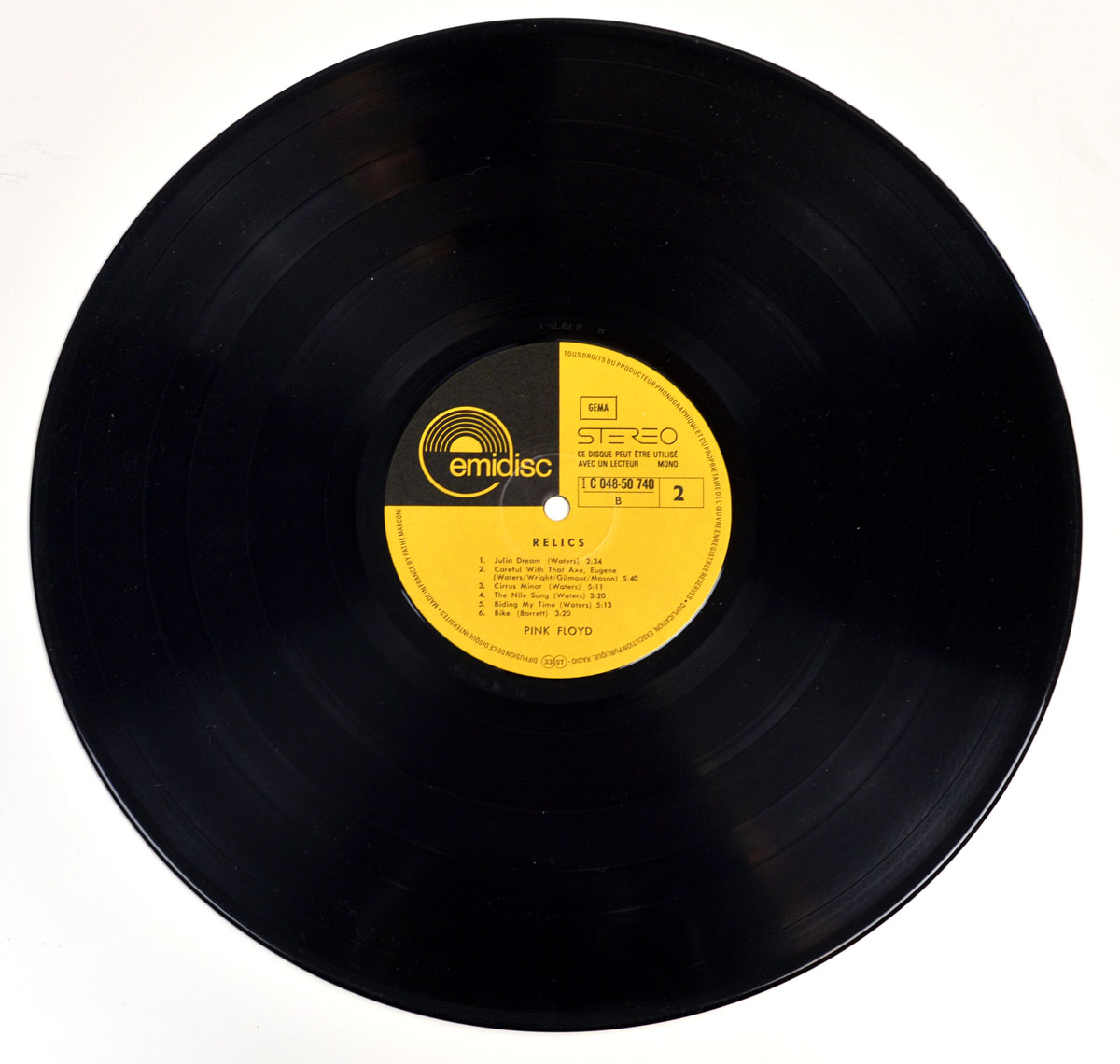
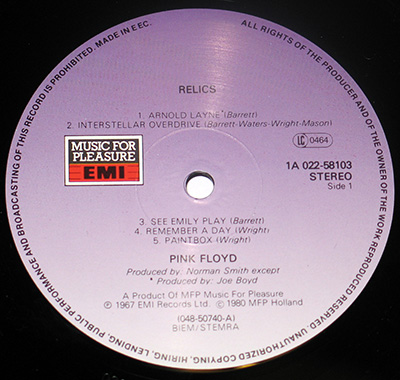
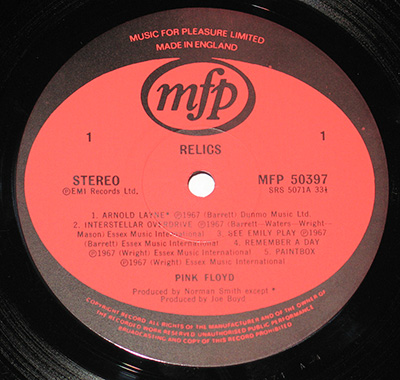
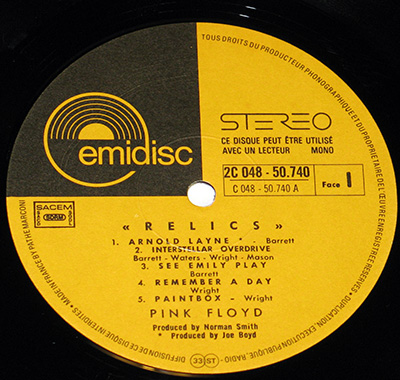
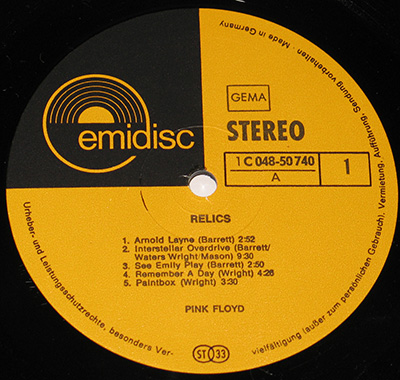
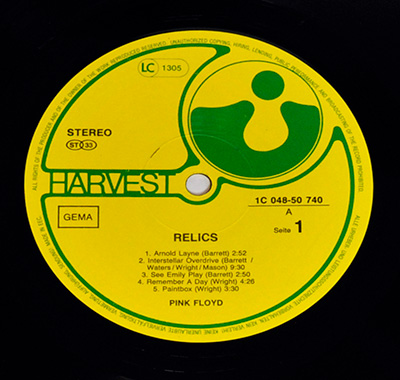
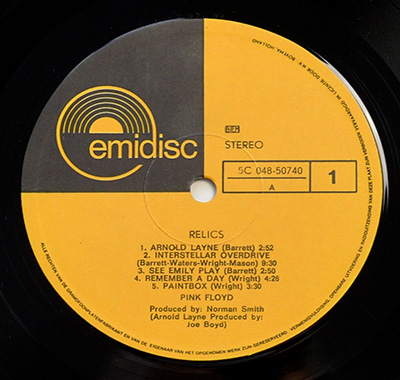
Turning our attention to the record label, this particular release of "Relics" boasts a Black/Yellow(Orangish) design, a visual delight for vinyl enthusiasts. Notably, there is no label code on the record's label, but the presence of the Rights Society "GEMA" in the upper right half emphasizes the album's association with German music copyright protection.
The catalog number "1 C 048-50 740" is strategically placed right of the spindle hole, guiding collectors to its unique identity. The rim-text, intriguingly printed in the French language, gracefully runs from 12 o'clock to 9 o'clock, with the final words declaring, "MADE IN FRANCE BY PATHE MARCONI."
Matrix and Run-out Code: A Glimpse into the Manufacturing Process
The matrix and run-out codes further authenticate the provenance of this vinyl masterpiece. Stamped on the A side is the matrix/run-out code: "50740 A 21 C M6 279506," while the B side proudly displays "50740 B 21 D M6 279751."
Personnel/Band Members and Musicians on: PINK FLOYD - Relics |
Band-members, Musicians and Performers
- Syd Barrett – Lead And Rhythm Guitar , Vocals
- David Gilmour
- – Lead And Rhythm Guitar
, Vocals
- David Gilmour – Guitar, vocals
David Gilmour is the voice-and-fingers combo I hear whenever Pink Floyd turns from “spacey” into straight-up cinematic: he joined in 1967 and basically helped define what “guitar tone with emotions” even means. Read more... David Gilmour is, for me, the calm center of Pink Floyd’s storm: an English guitarist, singer, and songwriter whose playing can feel gentle and devastating in the same bar. His earliest band period worth name-dropping is Jokers Wild (1964–1967), before he stepped into Pink Floyd in 1967 as Syd Barrett’s situation unraveled. From there his main performing era is Pink Floyd (1967–1995), including the post-Roger Waters years where the band continued under his leadership and released "A Momentary Lapse of Reason" (1987) and "The Division Bell" (1994), with a later studio coda in "The Endless River" (2014). Outside Floyd, he’s had a long solo run (1978–present) with albums ranging from "David Gilmour" (1978) to "Luck and Strange" (2024), and he even did a sharp side-quest in 1985 with Pete Townshend’s short-lived supergroup Deep End. And for one historic night, the classic lineup reunited at Live 8 in Hyde Park, London on 2 July 2005—one of those “you had to be there (or at least press play)” moments.
- Nick Mason – Drums, Percussion
- Roger Waters – Bass Guitar, Vocals
- Roger Waters – Bass, vocals, songwriter
Roger Waters is the guy I blame (politely) when a Pink Floyd song stops being “spacey vibes” and starts staring straight through you with lyrics that feel like a courtroom cross-examination. Read more... Roger Waters is, to my ears, Pink Floyd’s razor-edged storyteller: bassist, singer, and the main lyric engine who pushed the band from psychedelic drift into big, human-scale themes. His key band period is Pink Floyd (1965–1985), where he became the dominant writer through the 1970s and early 1980s, before leaving and launching a long solo career (1984–present). After years of public tension, he briefly reunited with Pink Floyd for a one-off performance at Live 8 in London on 2 July 2005—basically the musical equivalent of spotting a comet: rare, bright, and gone again. Since the late 1990s he’s toured extensively under his own name, staging huge concept-driven shows that revisit Floyd classics like "The Dark Side of the Moon" (notably on the 2006–2008 tour) and "The Wall" (2010–2013), because apparently subtlety is not the point when you’ve got something to say.
- Rick Wright – Organ, Piano, Mellotron, Vocals
- Guest Musicians:
- Norman Smith – Drums And Backing Vocals
- Norman Smith – Producer, Sound Engineer
The Beatles called him "Normal". Pink Floyd collectors call him the guy who made the chaos sound expensive. Read more... Norman Smith - the calm EMI wizard I still hear in the grooves whenever early Floyd turns the lights weird. He cut his teeth at Abbey Road, engineering The Beatles' EMI sessions from 1962 through autumn 1965 (yes, up to "Rubber Soul"), then stepped out from behind the glass as a producer. In 1967-1969 he steered Pink Floyd through "The Piper at the Gates of Dawn", "A Saucerful of Secrets" and "Ummagumma", keeping Syd's sparkle and the chaos on tape. In 1968 he produced The Pretty Things' "S. F. Sorrow", and in the early 1970s he shaped Barclay James Harvest (including "Once Again"). Later he even popped up as Hurricane Smith, because rock history loves a plot twist. |