Norman Smith - the calm EMI wizard I still hear in the grooves whenever early Floyd turns the lights weird. He cut his teeth at Abbey Road, engineering The Beatles' EMI sessions from 1962 through autumn 1965 (yes, up to "Rubber Soul"), then stepped out from behind the glass as a producer. In 1967-1969 he steered Pink Floyd through "The Piper at the Gates of Dawn", "A Saucerful of Secrets" and "Ummagumma", keeping Syd's sparkle and the chaos on tape. In 1968 he produced The Pretty Things' "S. F. Sorrow", and in the early 1970s he shaped Barclay James Harvest (including "Once Again"). Later he even popped up as Hurricane Smith, because rock history loves a plot twist.
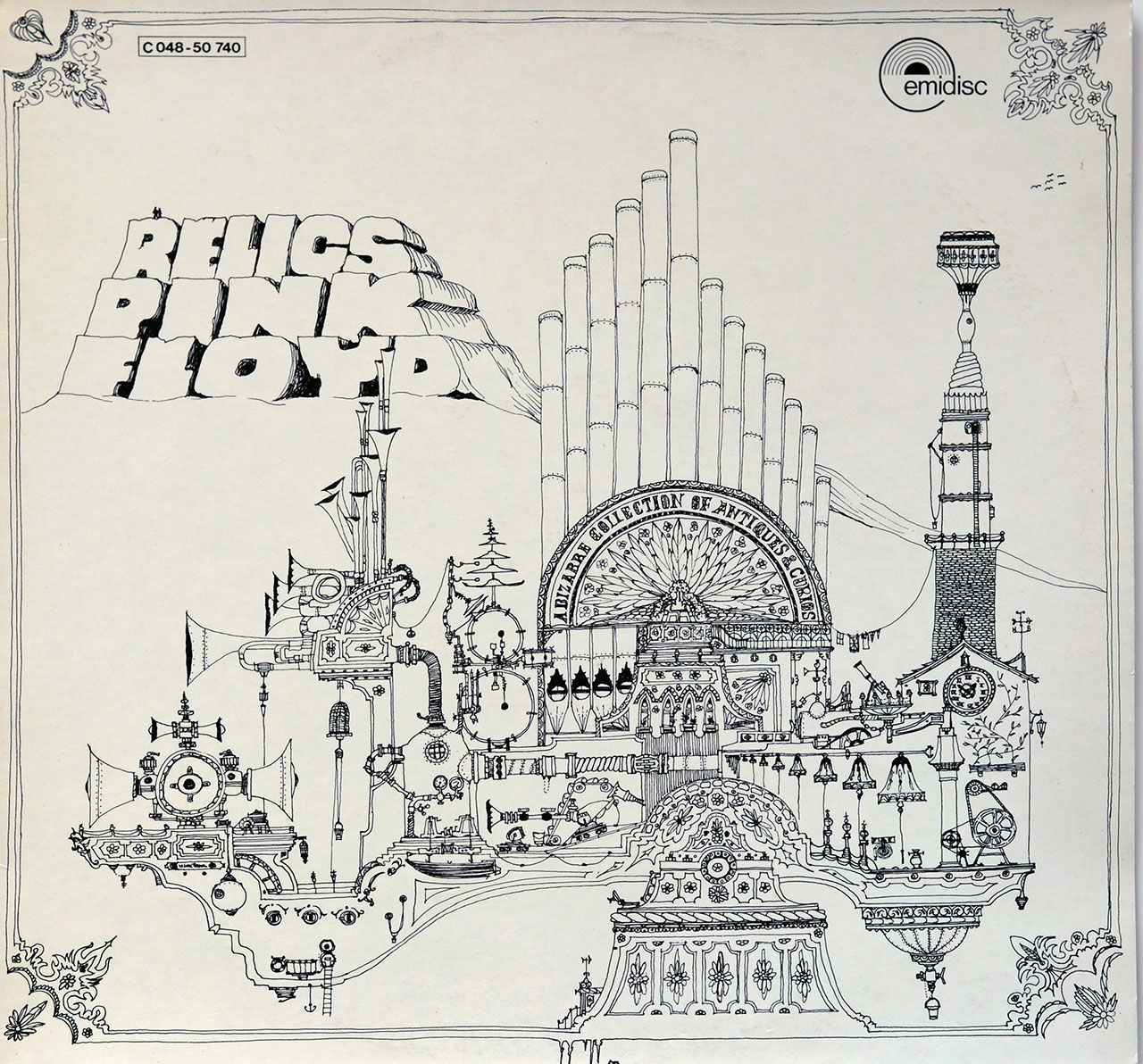
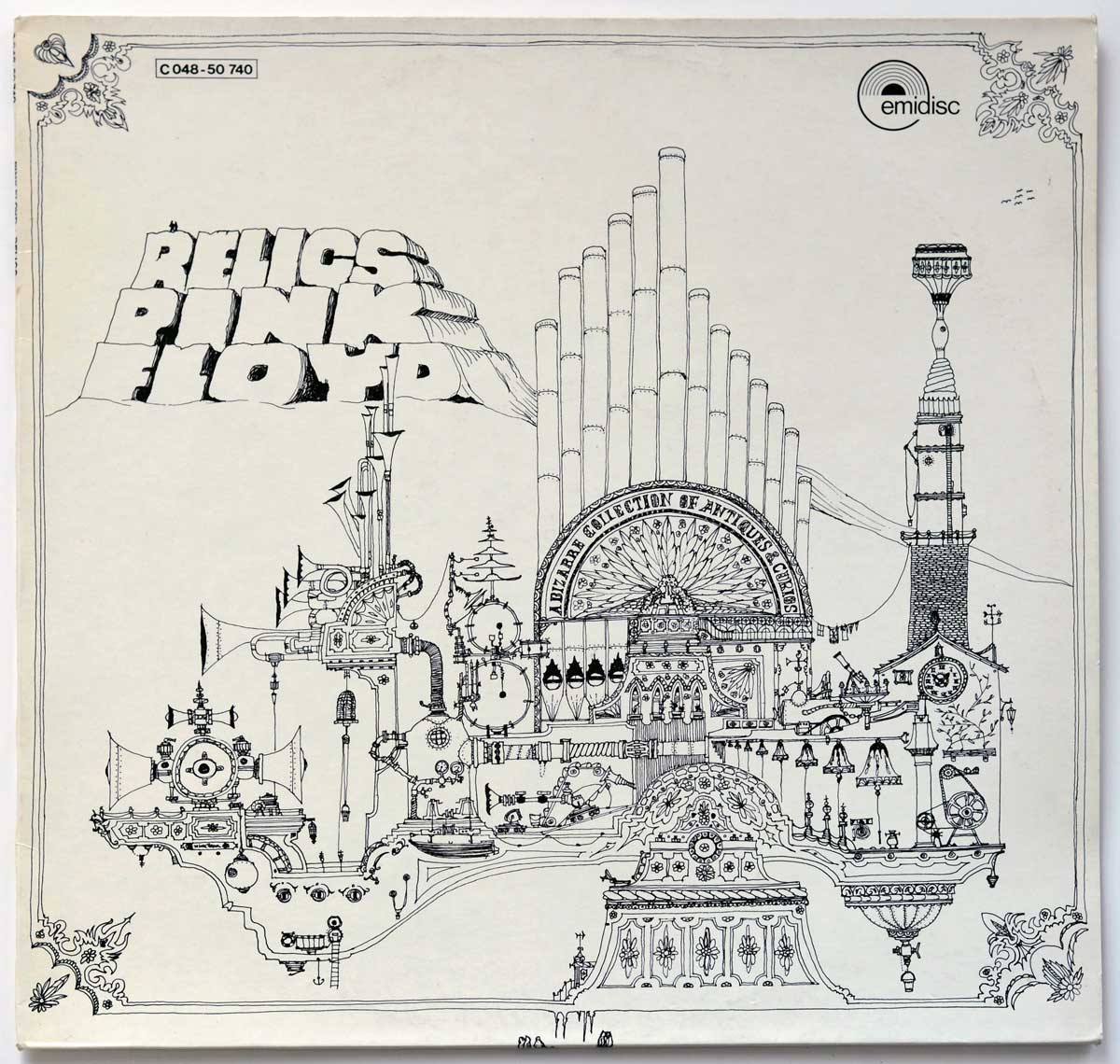
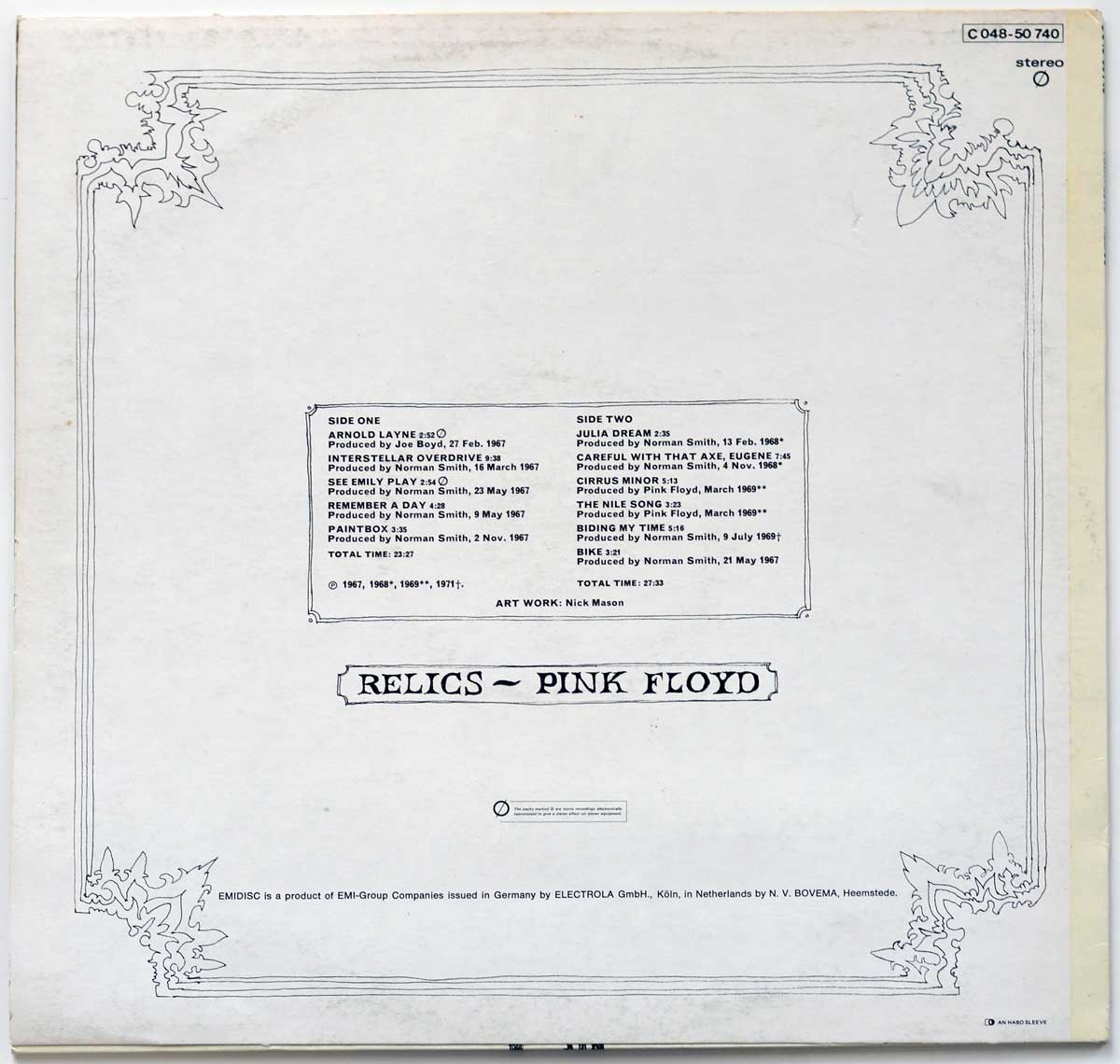
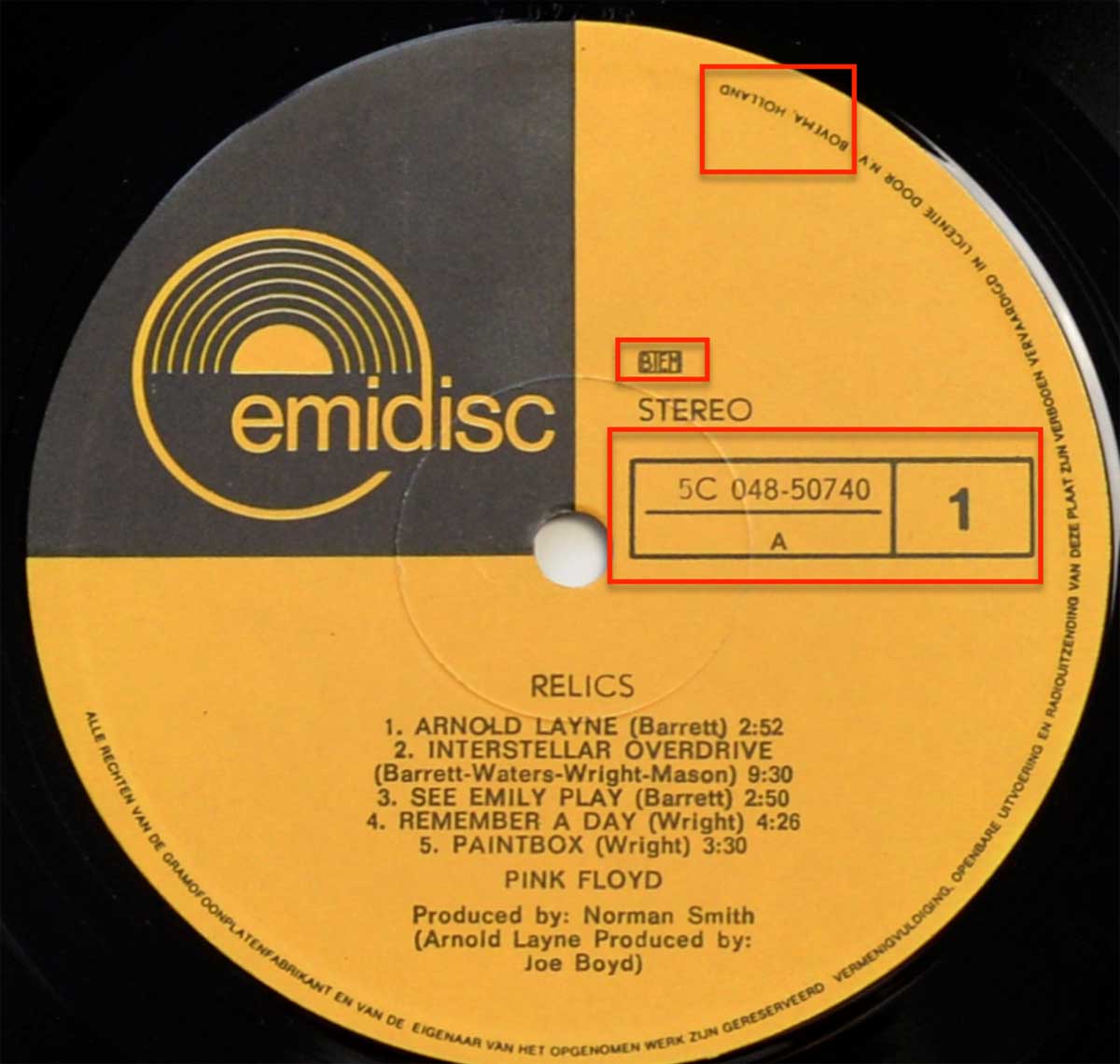
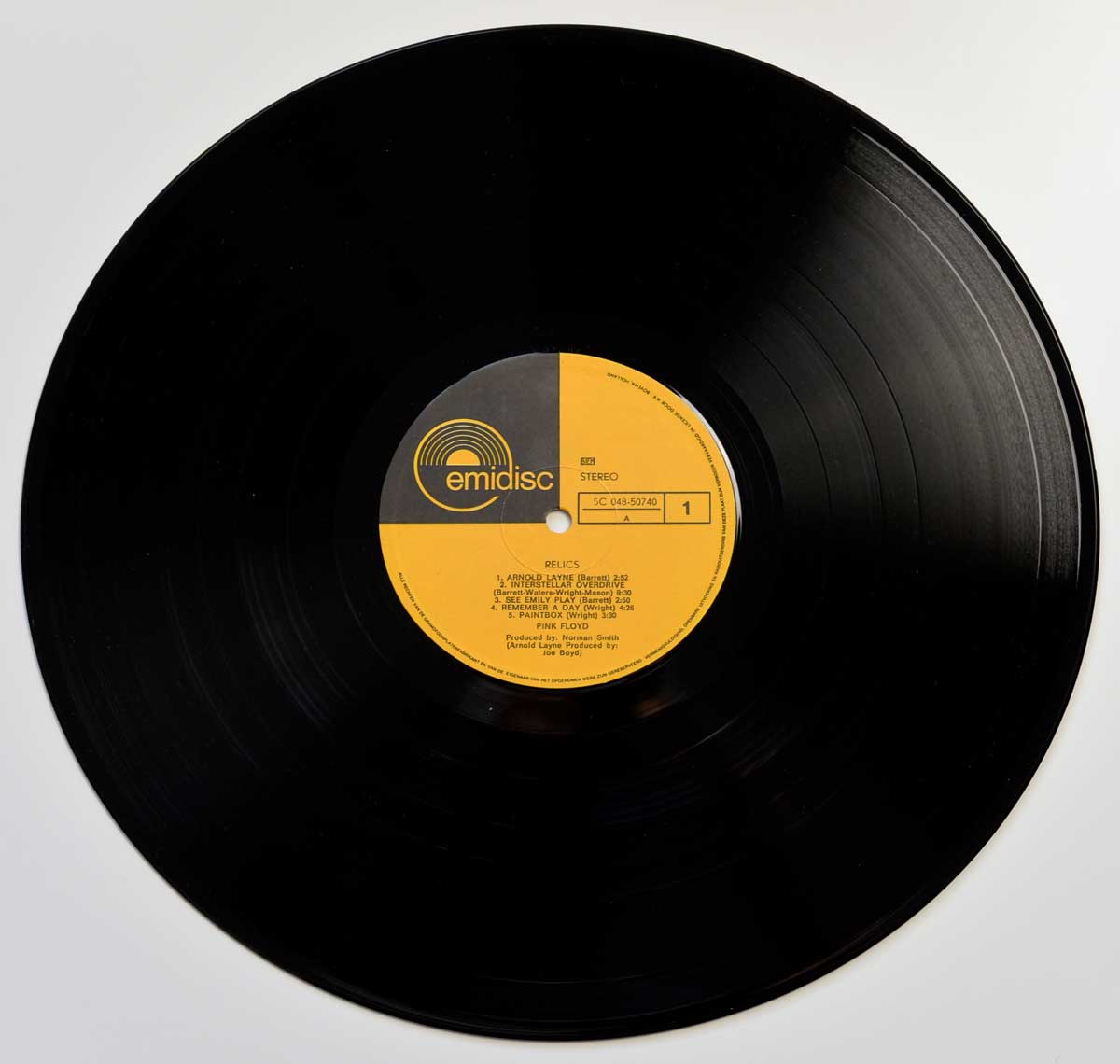
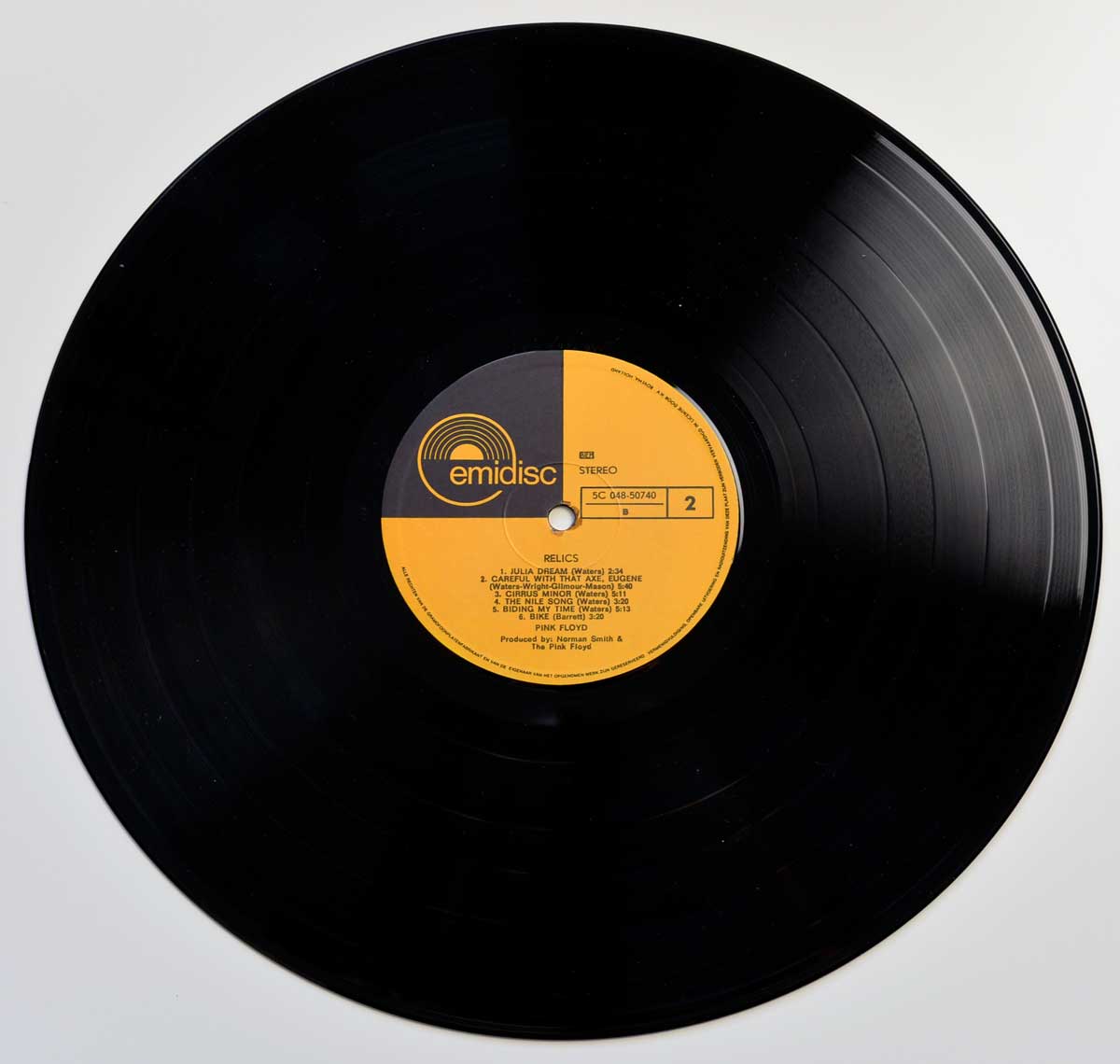
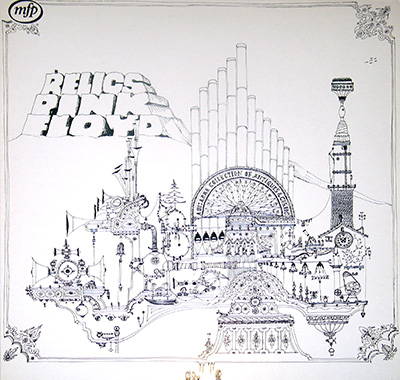
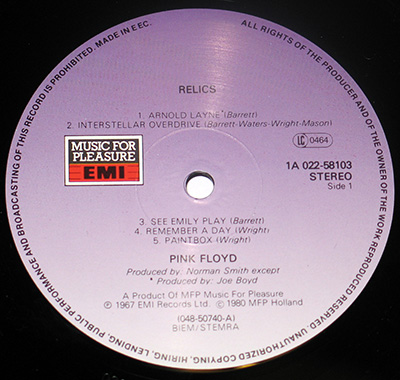
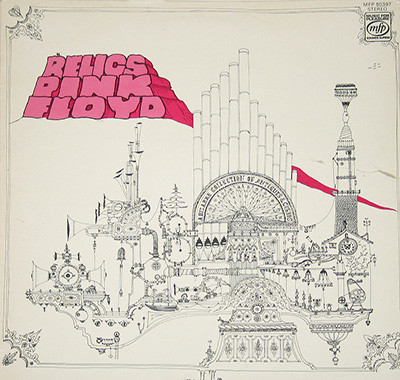
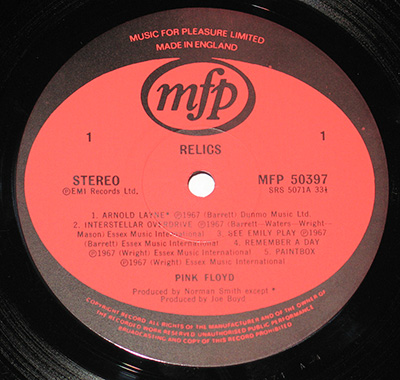
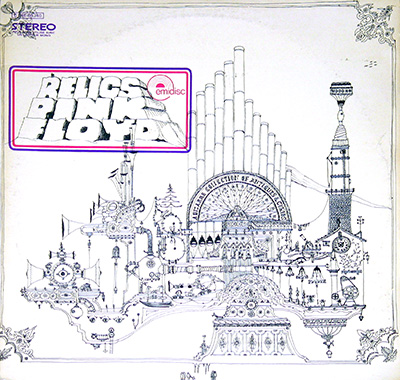
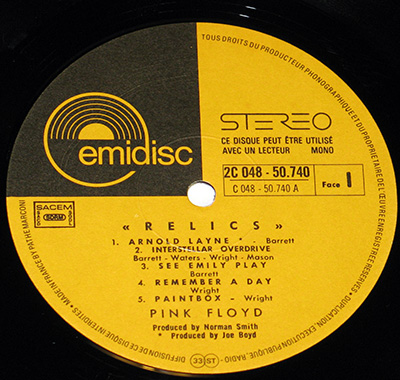
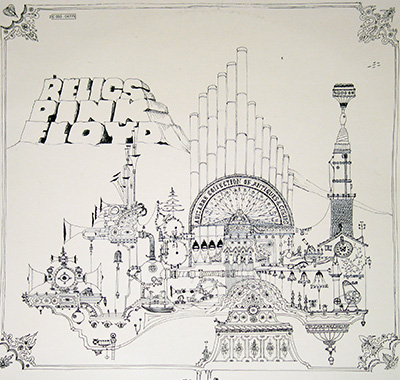
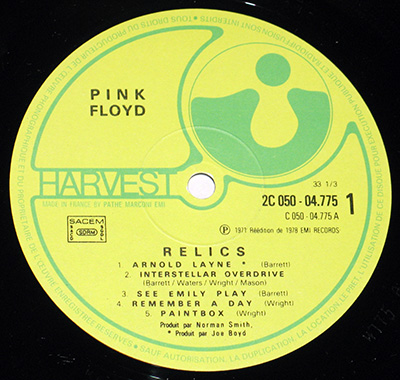
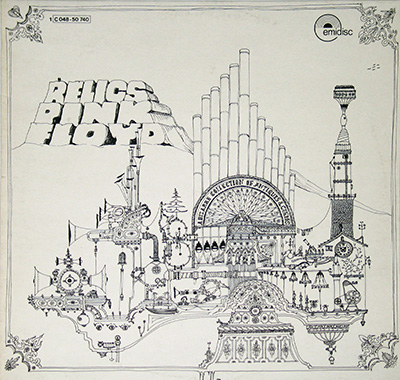
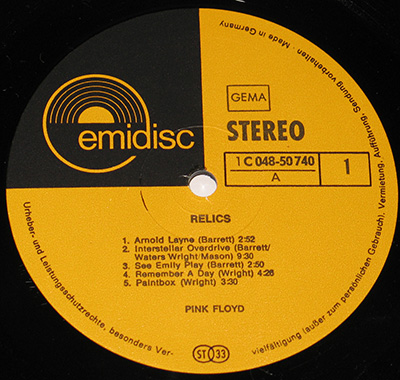
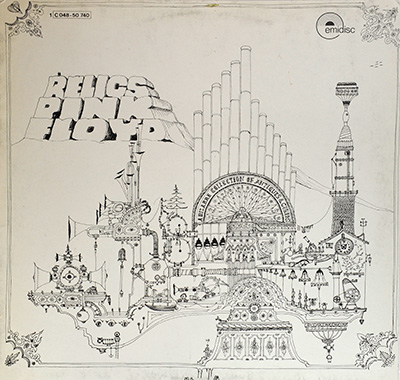
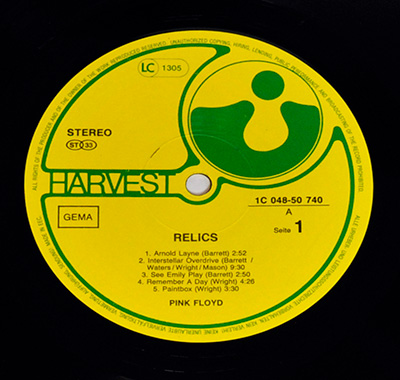
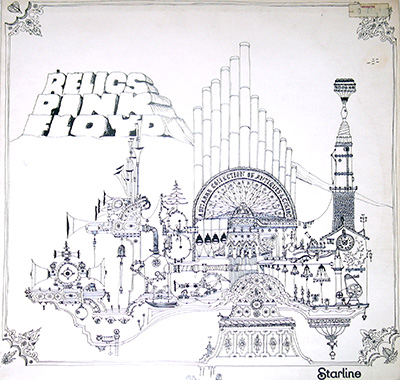
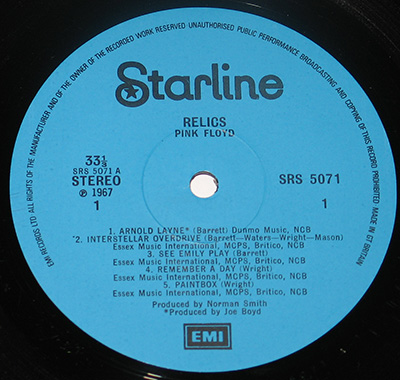
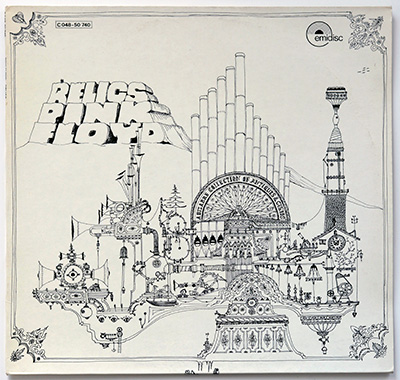
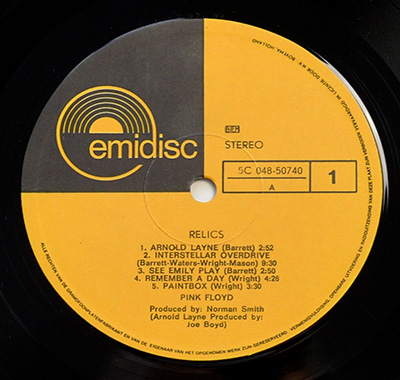
PINK FLOYD - Relics 12" Vinyl LP Album
- Release from the Netherlands
This album "Relics" is a compilation album of early "Pink Floyd" recordings and is most noted for its inclusion of Syd Barrett-era hit singles, "Arnold Layne" and "See Emily Play", as well as B-sides to three other singles. It also includes a previously-unreleased, studio recording of a Roger Waters composition, "Biding My Time", which had otherwise only been heard by live audiences as part of "The Man/The Journey" concert sequence.