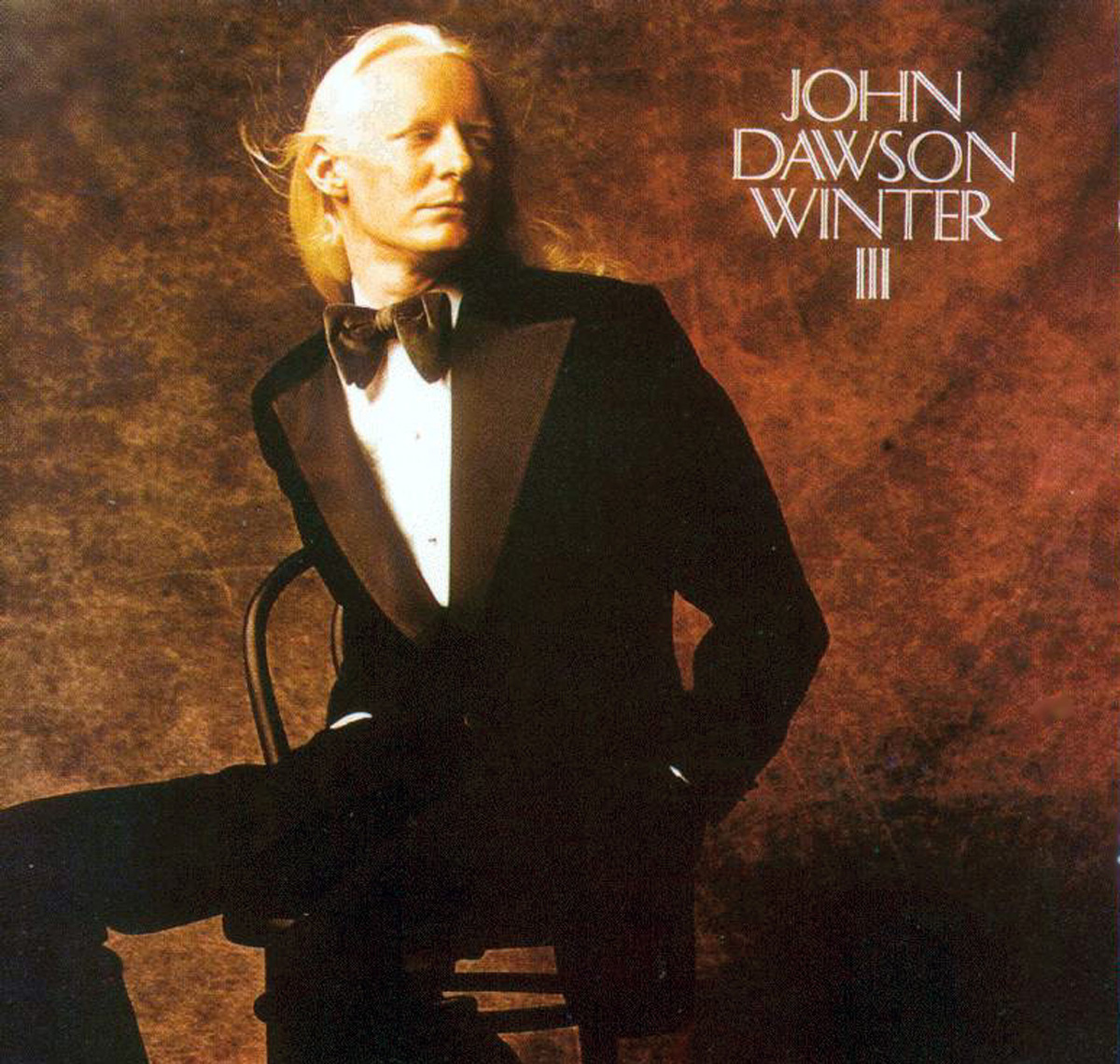
"John Dawson Winter III" (1974) Album Description:
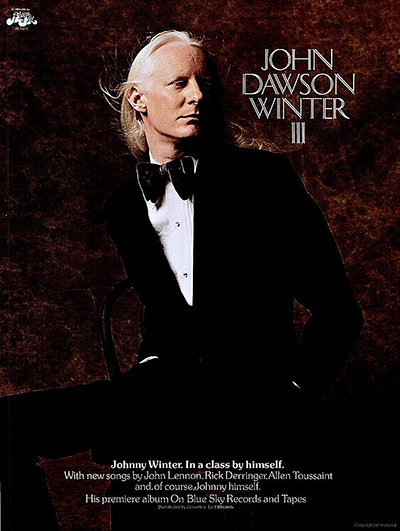
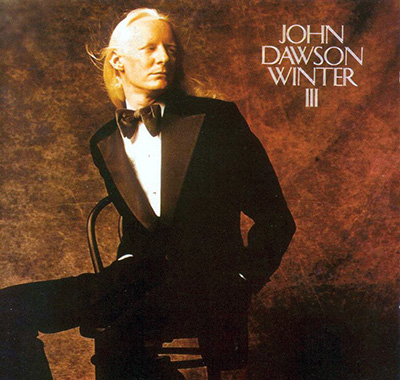
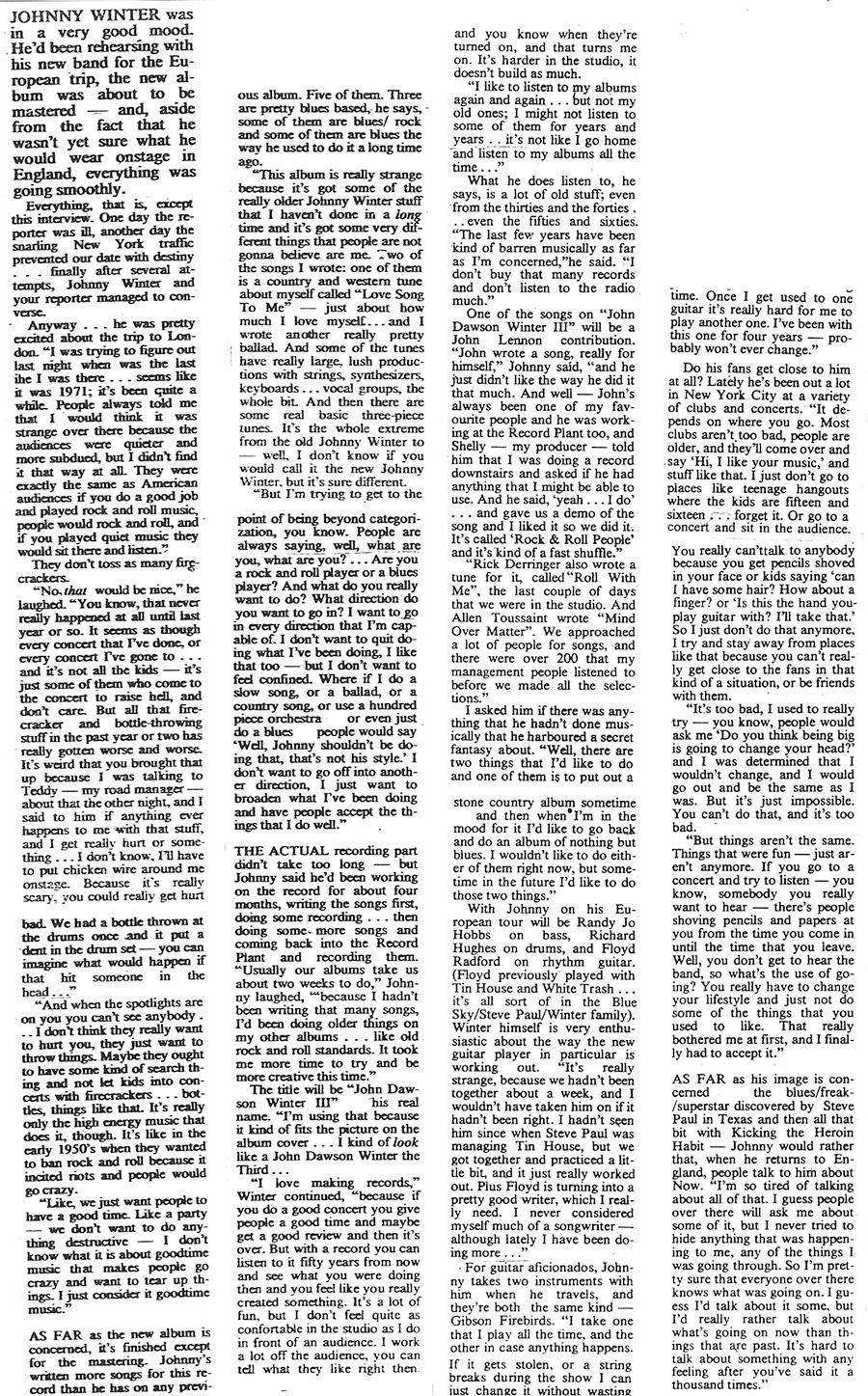
Black-tie cover, back-alley lungs. "John Dawson Winter III" walks in wearing a tuxedo, then immediately starts leaning on the mic like it owes him money. This is Johnny Winter’s first lap for Steve Paul’s Blue Sky imprint, cut in New York with Shelly Yakus in the producer’s chair, and it sounds like somebody finally opened a window in the room without letting the grit escape.
1974 in America: the mood was loud, the air was thin
The United States in 1974 felt like it was running on fumes and television glare. Watergate had just finished turning the national stomach, gas lines were still a recent memory, and everybody who owned a loud guitar was being asked—by managers, labels, radio—whether they were “real” enough, “heavy” enough, “roots” enough, or simply sellable. Nobody was asking if the amplifiers were telling the truth; they were asking if the chorus could survive a commute.
Winter doesn’t sound like a man chasing new clothes here. He sounds like a man trying to keep the room honest while the decade starts putting on makeup. The irony is that he’s literally in formalwear on the front cover, but the record itself keeps wiping its hands on its jeans.
Where it sits: not Southern rock, not British blues, not polite
Put it next to what was moving in 1974 and the contrasts get interesting fast. The Allman Brothers band had already pushed blues into something widescreen and gospel-tinged, while Lynyrd Skynyrd were turning bar-band electricity into a regional flag. ZZ Top were tightening the Texas groove into something lean and grin-heavy, and Rory Gallagher was still proving that feel can be a weapon without needing arena choreography.
Winter’s lane is different. He’s not building epics and he’s not trying to sound like a British blues revivalist playing dress-up. The songs tend to hit, bite, move on. Even when horns show up and backing vocals widen the frame, the center remains that hard, stinging attack—rock rhythm with blues muscle underneath it, like a clenched fist wearing a ring.
The sound: open space, sharp edges, and no fake fog
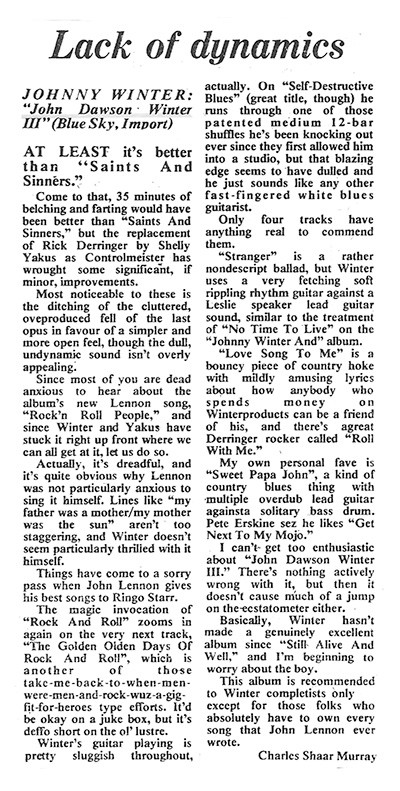
Yakus’ practical contribution is simple: the album breathes. The previous record had a reputation for being cluttered; this one behaves like somebody cleared the counters and let the band set up properly. Guitars stay forward without becoming a bright, brittle mess. The rhythm section isn’t buried in studio varnish. When Winter leans into a phrase, you can hear the air around it instead of just the grit.
Recording at The Record Plant East in New York matters in a non-romantic way: it’s a room built for volume that still knows how to separate instruments. The mastering at The Master Cutting Room gives the album a firm outline—punchy, stable, built to survive repeated plays without turning into a smeared gray blur.
Horns appear on a couple of tracks and they’re the main fork in the road for listeners. One camp hears “finally, color.” The other camp hears “keep the brass away from my blues.” Both camps have a point, and the record doesn’t apologize to either.
The cast: a tight trio, plus visitors who actually do something
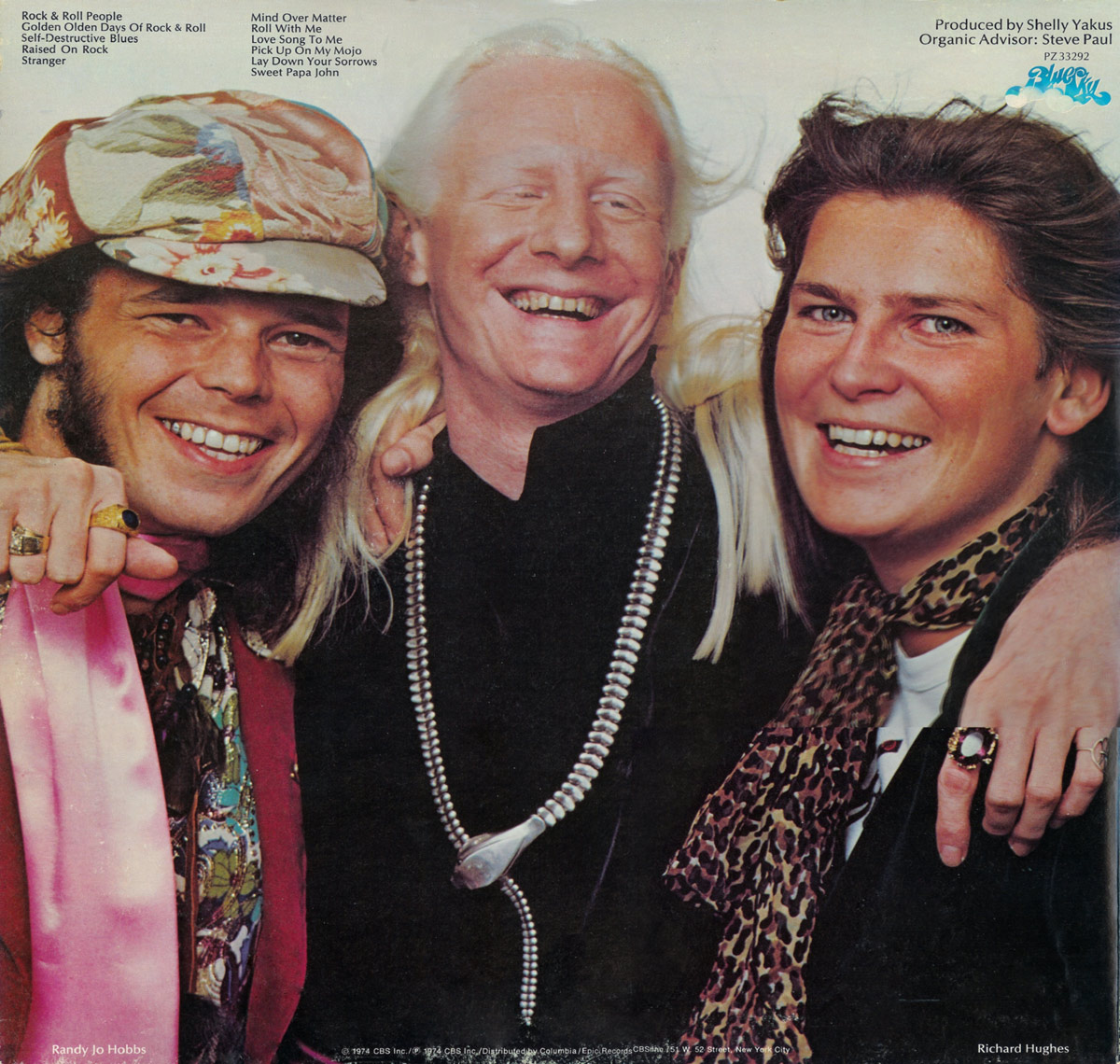
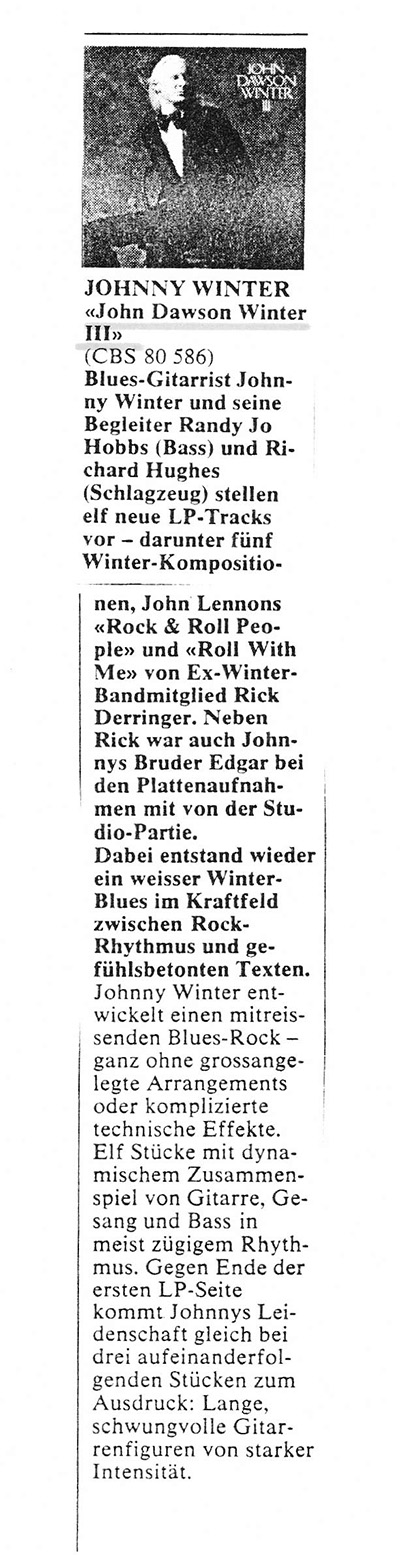
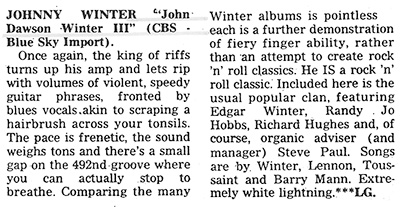
The core band is a three-piece engine: Johnny Winter up front, Randy Jo Hobbs on bass, Richard Hughes on drums. Hobbs doesn’t just keep time; he keeps the songs wired. Hughes isn’t decorative—he drives, pushes, and yanks the tempo back into line when it starts to run away.
Then the guest list walks in. Edgar Winter shows up with extra horsepower and a sense of arrangement, nudging the record toward bigger shapes without turning it into a Broadway production. Rick Derringer contributes guitar and a song, and his presence is felt in the way certain grooves tighten up and smirk. Kenny Ascher’s piano adds body where a second guitar might have crowded things, and the additional instruments—banjo, dobro, lap steel—aren’t there to “go country,” they’re there to roughen the edges with a different grain.
The horn players (trumpets, tenor sax, baritone sax, trombone) operate like punctuation. They don’t take the album over; they jab, lift, underline. The backing vocal crew does what a good backing vocal crew should do: make choruses feel like a room full of people, then disappear before anyone starts clapping for the wallpaper.
Willie Dixon said it best: “The blues are the roots; everything else is the fruits.” Winter keeps the roots visible even when the fruit bowl shows up.
Songs: what hits first, what creeps up later
The album opens with John Lennon’s “Rock & Roll People,” and that decision tells you the confidence level. It’s a statement track: loud, forward, and not shy about its intent. Some listeners wanted Lennon to keep his songs for himself; Winter takes it and treats it like a workingman’s vehicle—get in, turn the key, drive it hard.
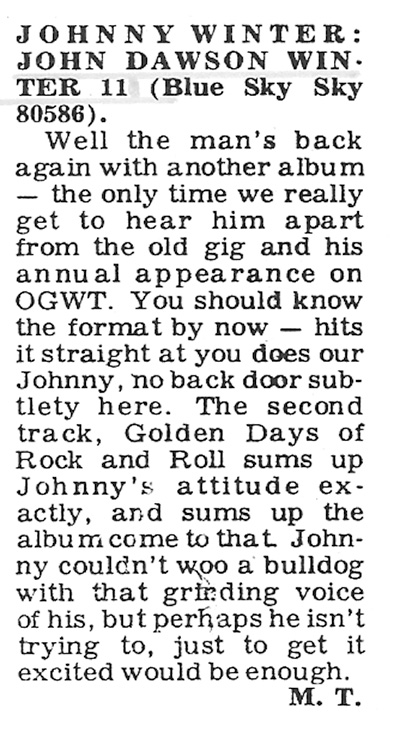
“Golden Olden Days of Rock & Roll” follows like a wink, and then Winter starts feeding you originals that behave like they’ve lived outside. “Self-Destructive Blues” does exactly what the title implies: medium shuffle, stubborn, not begging for approval. “Raised on Rock” is a rock statement with a blues spine, the kind of thing that sounds simple until you try to play it and realize your hands aren’t that honest.
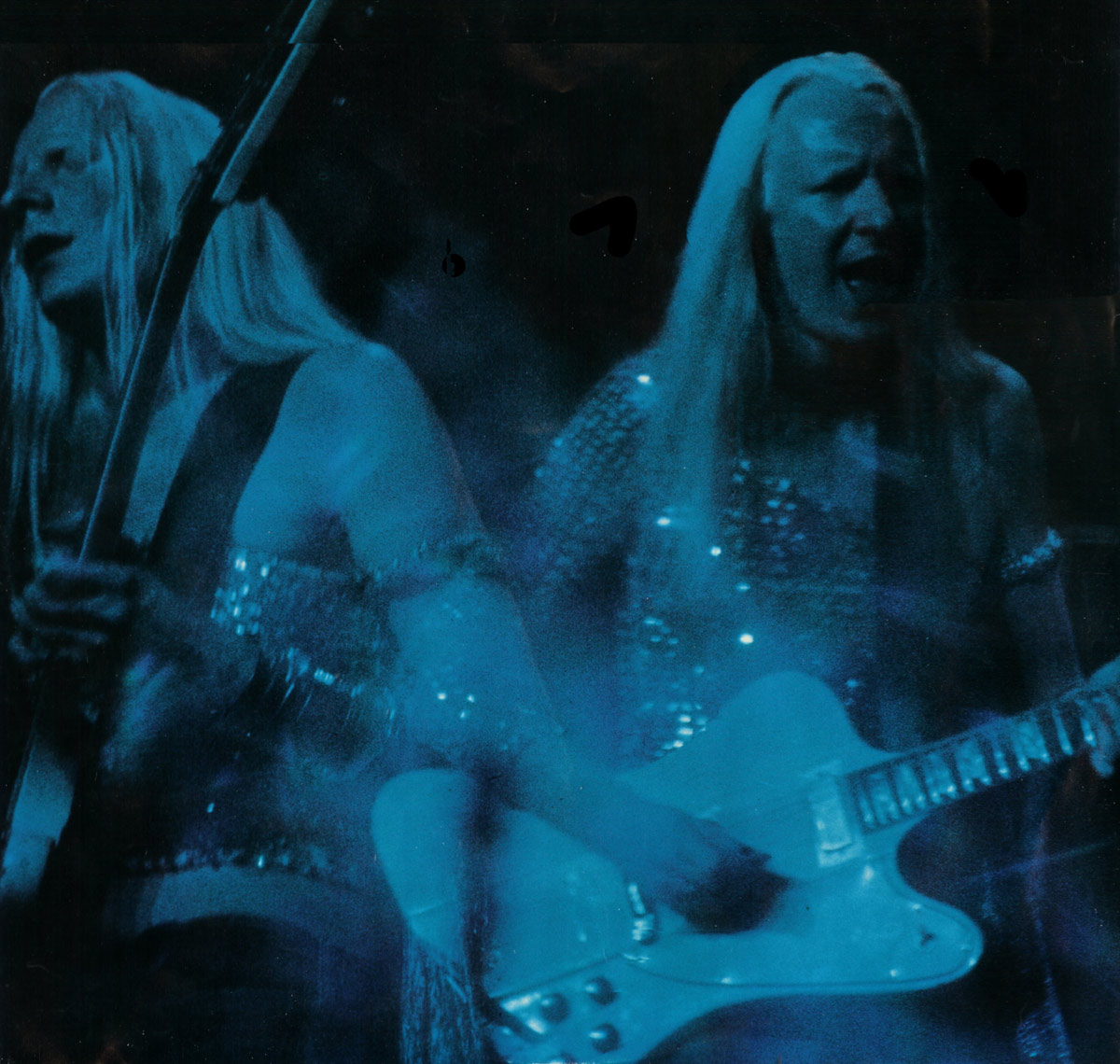
“Stranger” is where the album briefly steps away from the bar fight and lets the lights dim. The guitar tone has that swirling, haunted quality—like the sound is rotating in the air—while the vocal sits in a more careful place. It’s not soft; it’s controlled. Different kind of danger.
Side two starts with Allen Toussaint’s “Mind Over Matter,” and that’s the record showing its cards: Winter is willing to borrow a New Orleans kind of funk and still keep the bite. Derringer’s “Roll with Me” is the fast handshake—simple, pushy, designed for the road. “Love Song to Me” is the curveball: country attitude, self-mockery, and a grin that’s either charming or irritating depending on your mood and your patience.
“Pick Up on My Mojo” and “Sweet Papa John” bring it back to where Winter is most himself—blues structure, rock voltage, and that sense that every chorus is a small argument he intends to win. “Lay Down Your Sorrows” opens the frame again with fuller arrangement, then hands the mic back to the main story: Winter’s voice, Winter’s guitar, Winter’s refusal to sand off the rough parts for anybody.
Controversy: no scandal, just the usual arguments
No big public meltdown came packaged with this release. No headline-worthy feud. The noise lives in smaller places: people arguing about the horns, and people arguing about whether Lennon’s song was a gift or a leftover. Critics also split on Winter’s voice—some hear ferocious character, others hear a rasp that refuses to behave. That isn’t controversy so much as proof the record is actually alive.
The most common misconception is that this album is “straight blues” because Winter’s name triggers that expectation. It isn’t. It’s blues-rock with detours: a funk-informed moment, a country aside, arranged brass in spots, backing vocals that widen the door. The trio remains the spine, but the record isn’t trapped in a single room.
One quiet personal anchor
Late-night radio is where this album makes the most sense: lights low, volume slightly irresponsible, the kind of hour where a guitar tone can feel like a streetlamp buzzing outside your window. The next day, the same songs look different in the record shop bin—tuxedo cover staring out, pretending it isn’t going to get your speakers dirty.
References
- Vinyl Records NL: "John Dawson Winter III" page
- Wikipedia: "John Dawson Winter III"
- Wikipedia: Blue Sky Records (Steve Paul / Columbia custom label)
- Wikipedia: Record Plant (NYC studio background)
- Record Plant Diaries: studio history (official site)
- YouTube: “Sweet Papa John” (Live in California – September 1975)
Nothing here begs to be called “mature” or “redeemed.” It just plays like a band that wants the groove to stay upright and the volume to stay dangerous—and if the tuxedo cover bothers you, good. It’s supposed to.